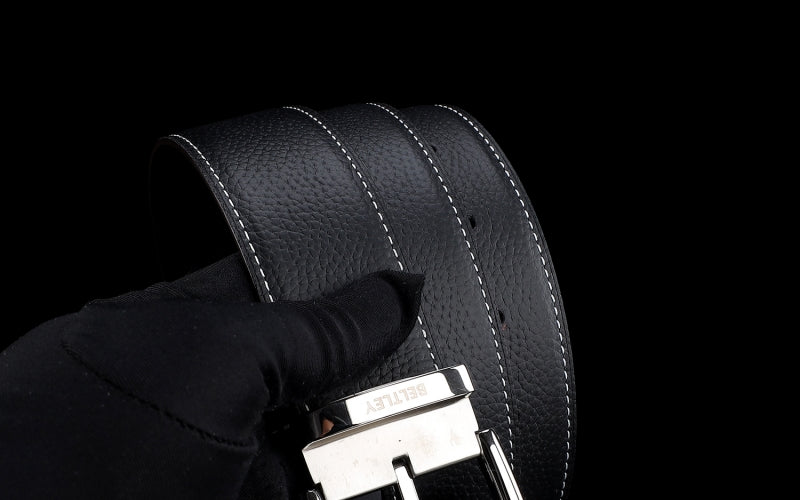
Why Full-Grain Calfskin Is Considered the Gold Standard of Leathercraft?
TL;DR:
- Full-grain calfskin combines two of the best things in leather: the youngest, finest hide (calfskin) and the most intact, undamaged top layer (full-grain).
- Every other leather grade is, in some way, a compromise of one or both of those traits.
- Luxury houses like Hermès, John Lobb, and Berluti build their flagship pieces on full-grain calfskin for the same reason: nothing else looks and ages quite like it.
- It costs more because it's rare, hard to tan cleanly, and unforgiving of flaws — there's no sanding away mistakes.
- If a brand says "calfskin" but doesn't say "full-grain," ask. The difference is the entire reason it's premium.
The phrase "full-grain calfskin" gets thrown around the luxury world like it's a single word. But it's actually two ideas stacked on top of each other — and once you understand why they belong together, the whole hierarchy of luxury leather suddenly makes sense. There's a reason the same combo keeps showing up on the very best dress shoes, watch straps, and belts on Earth. Let's break it down.
What Does "Full-Grain Calfskin" Actually Mean?
Full-grain calfskin is leather that meets two conditions: the hide comes from a calf (cattle under six months old), and the top "grain" layer of the hide is left completely intact during tanning. No sanding, no buffing, no correction. The natural surface stays on.

Most leather you'll encounter has had something done to it — the top layer sanded for uniformity (top-grain), the surface coated with paint and embossed with a fake grain (corrected grain), or worse. Full-grain calfskin is the version with nothing hidden. What you see is the actual hide.
That sounds simple. In practice, it's hard. Calfskin's smooth surface shows every fly bite, every fence scratch, every tiny imperfection — and full-grain means none of that can be sanded out. So the tannery has to start with cleaner hides and reject more pieces. That's the price of "the real thing."
Why "Full-Grain" Matters in the First Place
The top grain layer of a hide is where the strongest, tightest fibers live. Sand it off and you lose the leather's structural integrity, water resistance, and ability to develop a patina. According to Encyclopaedia Britannica's leather production overview, the dense outer layer of skin — the papillary layer — is what gives leather its strength and natural beauty. Everything below it is softer, weaker, and less durable.
Full-grain leather keeps that layer. Top-grain shaves it off. "Genuine leather" usually means split leather glued together with finish painted on. The hierarchy is real, and it's why we spent a whole article on full-grain vs. top-grain leather and another on leather grades explained.
What Makes Calfskin the Premium Hide?
Calfskin is premium because the animal is young, the fibers are dense, and the surface is unspoiled. A calf hasn't lived long enough to scar, stretch, or grow coarse follicles. The result is leather with a tighter grain structure, finer feel, and crisper dye absorption than any adult cowhide can match.
Per square inch, calfskin actually has higher tensile strength than cowhide because of that fiber density. It's just thinner overall, so it's not as bulletproof in raw thickness. For the full breakdown, see our complete guide to calfskin leather and our piece on calfskin vs cowhide.
Why the Combo Beats Everything Else
Full-grain plus calfskin stacks the two strongest traits in all of leather: the finest available hide, with its strongest layer untouched. Most "premium" leathers compromise on at least one. Full-grain cowhide is durable but coarser. Top-grain calfskin is refined but structurally weaker. Only full-grain calfskin gives you both refinement and integrity in the same hide.

Think of it like a chef's knife. You can have a great blade with a cheap handle, or a beautiful handle on a cheap blade. Full-grain calfskin is the version where both are right. That's why it's the default at the top of the market — there's nowhere to go up from there.
How Luxury Houses Use It
A short list of where full-grain calfskin lives in the luxury world:
- Dress shoes — John Lobb, Edward Green, Crockett & Jones build their best uppers on it.
- Handbags — Hermès's classic Box and Togo lines, Chanel's signature calfskin pieces.
- Watch straps — premium watchmakers spec full-grain calfskin for refined dress straps.
- Wallets and small leather goods — most "Made in France" or "Made in Italy" tags on serious wallets mean full-grain calfskin.
- Dress belts — including ours.
There's a reason these names converge on the same material. Tanneries certified by the Leather Working Group supply most of the global luxury industry, and the top-tier hides they produce are nearly all full-grain calfskin. Less than 1% of the world's leather production qualifies — supply data tracked by the UN FAO's hides and skins reports consistently shows calf hides as a small fraction of total bovine production.
Is Full-Grain Calfskin Worth the Premium Price?
Yes — if you actually wear refined clothing and care how the leather looks at year five, not just year one. No — if you're going to abuse the belt in jeans-and-boots conditions. The premium pays for itself in longevity and aesthetics when used in the right role. It does not pay for itself if you wear it to mow the lawn.

A well-cared-for full-grain calfskin belt easily clears 10–20 years of regular wear, and our piece on whether full-grain leather belts are worth it digs into the math. The short version: the cost per wear on a 15-year belt is laughably low compared to replacing a $30 fast-fashion belt every 18 months.
How Can You Tell Real Full-Grain Calfskin?
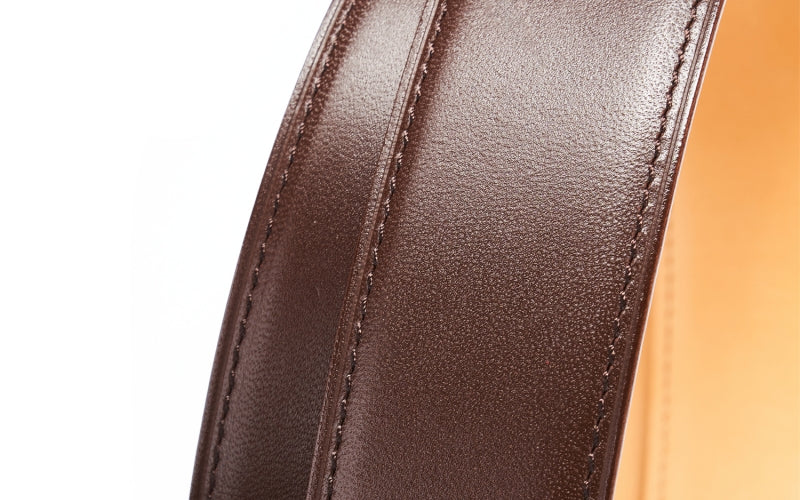
Look for natural surface variation, faint natural pores, a smooth-but-not-plastic feel, and a faint leather smell. Avoid anything with perfectly uniform grain — that's almost always corrected or embossed. Real full-grain calfskin has the subtle inconsistency of a real animal. Fake leather looks too perfect.
A few quick tests:
- Smell it. Real leather smells like leather. Fake or heavily painted leather smells like chemicals or plastic.
- Feel it. Full-grain calfskin warms up to your skin fast. PU stays cold.
- Look at the edges. Real full-grain has a leather-fiber cross-section. Bonded leather has a sandwich of paper and dust.
- Bend it. Full-grain calfskin creases gently and recovers. Cheap material cracks or shows a painted layer flaking.
For more clues specific to belts, see how to tell if a belt is full-grain leather.
What About Full-Grain Cowhide?
Full-grain cowhide is also gold-standard within its category — but its category is "rugged" rather than "refined." It's the right answer for work belts, casual belts, and heirloom heavy-duty leather. Just not the right answer for a black-tie event.
The two leathers aren't competing for the same job. Full-grain cowhide wins on raw toughness and absolute lifespan; full-grain calfskin wins on refinement, dye crispness, and dressy aesthetics. We covered the head-to-head in our calfskin vs full-grain belt longevity post. Different tools, different days.
The Leather Hierarchy at a Glance
| Tier | Leather | Typical Use | Premium Reason |
|---|---|---|---|
| Gold standard (refined) | Full-grain calfskin | Luxury dress shoes, dress belts, fine bags | Finest hide + intact top layer |
| Gold standard (rugged) | Full-grain cowhide | Work belts, casual belts, saddlery | Tough, ages beautifully, lifetime durability |
| Premium | Top-grain calfskin | Mid-luxury bags, shoes | Smooth but sanded — less structural |
| Mid | Top-grain cowhide | Mainstream belts, mid-tier bags | Corrected surface, sanded grain |
| Entry | "Genuine leather" | Mass-market belts and accessories | Split leather, finished/painted |
| Avoid | Bonded / PU | Throwaway accessories | Glued leather scraps or plastic |
How BELTLEY Uses Full-Grain Calfskin
We build dress belts on full-grain calfskin because nothing else delivers the look-and-feel a tailored outfit deserves. Small-batch production, master artisans, stainless steel buckles, and a 10-year warranty backing the whole thing. Our Classic Calfskin Dress Belt at 1.38" pairs cleanly with any dress shoe, and the full dress belts collection has options for different widths and buckle styles.

The DTC model is the part most people don't see. Traditional luxury markups for full-grain calfskin belts can run 5–10× the production cost because the leather passes through multiple middlemen. We skip that. Same leather, same craftsmanship, fair price. You can read more about how we operate on our about us page.
The Bottom Line
Calling full-grain calfskin the "gold standard" isn't marketing language — it's the literal top of the leather quality hierarchy, with nothing technically above it in the refined-leather category. Every claim about luxury leather you'll hear is downstream of this single combination: the finest hide, with its strongest layer kept honest. That's the whole reason it costs more, lasts longer, ages better, and ends up on the best dress shoes, watch straps, and belts in the world. At BELTLEY we use it because we'd rather build one belt that looks right at year ten than ten belts that fall apart by year two — and the math, the leather, and the craftspeople all agree.
Frequently Asked Questions
Q: What is full-grain calfskin leather?
It's leather made from young cattle (under six months old) where the top grain layer of the hide is left completely intact during tanning. It's the highest tier of refined leather available — finer than full-grain cowhide and structurally stronger than top-grain calfskin.
Q: Is full-grain calfskin better than full-grain cowhide?
For refined, dressy use — yes. For rugged, heavy-duty use — no, full-grain cowhide is the better tool. Both are gold-standard within their categories. Pick by role, not by ranking.
Q: Why is full-grain calfskin so expensive?
Three reasons: calf hides are smaller and rarer (most cattle are raised to maturity), the fine grain shows every imperfection so tanneries reject more pieces, and there's no surface correction possible. It's premium because it's unforgiving.
Q: How long does a full-grain calfskin belt last?
With proper care — conditioning every 3–6 months, kept out of moisture and direct sun — a full-grain calfskin belt easily lasts 10–20 years. Some clear 25+. Our leather care guide has the routine.
Q: How can I make sure I'm buying real full-grain calfskin?
Look for natural variation in the surface, faint visible pores, a real leather smell, and a smooth-but-organic feel. Avoid anything with a perfectly uniform grain — that's corrected or embossed. Buy from brands that specify "full-grain" plainly, and check whether they back it with a real warranty.

%20and%20the%20most%20intact,%20undamaged%20top%20layer%20(full-grain).%0AEvery%20other%20leather%20grade%20is,%20in...)