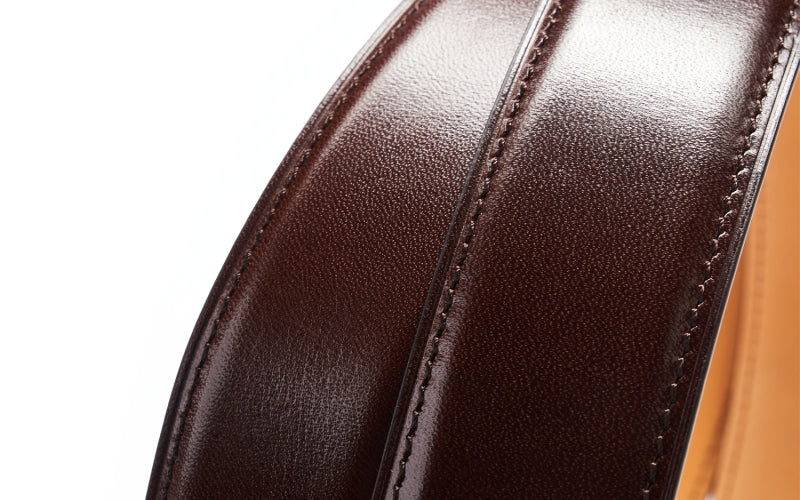
Calfskin vs Cowhide: An Expert Tanner Explains the Real Difference
TL;DR:
- Calfskin comes from young cattle (under 6 months). It's thinner, denser, and finer-grained.
- Cowhide comes from adult cattle. It's thicker, tougher, and built for hard wear.
- Per square inch, calfskin actually has higher tensile strength than cowhide — but cowhide wins on raw thickness.
- Calfskin is the leather of dress belts, fine wallets, and luxury bags. Cowhide is the leather of work belts, holsters, and saddles.
- The price gap is real, and it's not a luxury markup — calf hides are smaller, rarer, and harder to tan cleanly.
So here's a fun thing about leather: most people assume thicker = stronger. The marketing copy hammers this in. "Heavy-duty full-grain cowhide" sounds tougher than "fine Italian calfskin," right? Not so fast. The tanners who actually run the vats tell a more interesting story, and once you hear it, calfskin vs cowhide stops being about "fancy vs. tough" and starts being about picking the right tool for the job. Let's get into it.
Calfskin or Cowhide: Assign the Right Hide to the Job
A tanner's question with a wearer's answer:
| The job | The hide |
|---|---|
| Dress belt, suit wear | Calfskin — finer grain, denser fibers, the refined option |
| Daily workhorse, jeans, hard use | Cowhide — raw thickness wins where elegance doesn't matter |
| Strength geek | Per square inch calfskin is actually stronger; per belt, cowhide's thickness usually wins |
| Price-watcher | Calf costs more for real reasons — smaller, rarer hides — not markup. BELTLEY calfskin runs $100–$148 |
Both hides live in the full-grain collection. The tanner's explanation:
What's the Quick Answer? Calfskin vs Cowhide in One Sentence
Calfskin is finer, denser, and dressier; cowhide is thicker, more rugged, and longer-wearing under abuse. Both are real leather. Both come from cattle. They're just at different life stages, which changes the grain, the thickness, and the entire personality of the finished leather.

If you're shopping for a belt to wear with a suit, you want calfskin. If you're shopping for a belt to wear with jeans for the next 20 years, you want cowhide. That's the short version. Stick around for the long version — there's a twist.
What Is Cowhide Leather?
Cowhide is leather made from the hide of an adult cow. It's the most common leather on Earth, accounting for the majority of global leather production. Hides typically measure 1.5–5 mm thick, take dye well, and are the workhorse material for belts, boots, jackets, sofas, and saddlery.
Cowhide grain is coarser than calfskin because the animal has lived longer. More time alive = more scars, more stretch marks, bigger hair follicles, and more "character" in the grain. That character can be a feature (rugged charm) or a flaw (visible blemishes), depending on the grade. We covered the full grade hierarchy in leather grades explained, and we have a whole full-grain leather belts collection if you want to see what good cowhide looks like in real product form.
According to Encyclopaedia Britannica's overview of leather production, cattle hides have been the dominant raw material for the leather trade for centuries — there's a reason every leather supply chain starts there.
What Is Calfskin Leather?
Calfskin is leather from cattle under about six months old. Because the animal hasn't fully grown, the skin hasn't stretched, the fibers haven't spread out, and the grain is much tighter. The result is a thinner, smoother, more refined hide that takes a polish like nothing else.
We wrote a full primer on this — if you want the deep version, see our complete guide to calfskin leather. For this post, the one fact you need to remember is: smaller animal, tighter grain. Everything else follows from that.
How Does an Expert Tanner Describe the Difference?
Tanners describe calfskin as "denser" because the hair follicles and collagen fibers are packed closer together than in adult cowhide. When a cow grows up, its skin stretches to cover a much bigger body. The fibers literally spread apart. Calfskin never gets that chance, so the structure stays compact.

The clearest version of this I've seen comes from a Stridewise interview with master tanner Ed Gallun, who put it plainly: "The hair follicles are much more tightly packed because of the age of the animal." As cattle age, the follicles spread out and become more pronounced — which is why mature cowhide has that visible, almost pebbly natural grain, while calfskin looks like glass.
That's not marketing fluff. It's anatomy. And it's the reason a 1 mm sheet of calfskin can sometimes out-tear a 2 mm sheet of low-grade cowhide.
Is Calfskin Stronger Than Cowhide?
Per square inch, yes — calfskin has higher tensile strength than cowhide because of its denser fiber structure. But in absolute terms, thicker cowhide handles more abuse. It's a paradox: the more refined leather is actually stronger by weight, but the rougher leather is tougher in practice because there's simply more of it.
Think of it like a piece of rebar versus a piano wire. The piano wire is stronger per millimeter. The rebar is harder to break with your bare hands. Both true. Same logic here. If you stab a calfskin belt with a screwdriver, the tight grain resists tearing impressively. But a 4 mm cowhide work belt has four times the material between you and the screwdriver, so the math wins.
Which Looks Better — Calfskin or Cowhide?
This one depends on what you're going for. Calfskin looks dressy. The smooth surface reflects light evenly, the dye sits crisp, and the leather almost glows. It belongs in a boardroom, a wedding, or a tailored suit. The downside: every scratch shows.

Cowhide looks honest. The grain has texture, the surface develops a patina, and small scuffs disappear into the character of the leather. It belongs with denim, work boots, leather jackets, and weekend bags. The downside: you can't pretend a heavy harness belt is formalwear.
Quick rule of thumb:
- Suit, tie, dress shoes → calfskin.
- Jeans, boots, jacket → cowhide.
- Both wardrobes → own one of each. They're different tools.
For more on the dressy/casual split, see our dress belt vs. casual belt guide.
Which Lasts Longer?
With proper care, cowhide outlasts calfskin in heavy-use scenarios, while calfskin can match it in light-use, formal-wear scenarios. A daily-driver full-grain cowhide belt can hit 20–30 years. A calfskin dress belt worn twice a week and conditioned regularly will easily clear 10–15 years, often more.
The real lifespan killer isn't the leather — it's neglect. Calfskin dries out faster because it's thinner. Cowhide gets stiff if you never condition it. Either way, our leather care guide covers the routine that doubles either leather's life. Five minutes a season. Worth it.
Calfskin vs Cowhide Price: Why the Gap?
Calfskin costs more because calf hides are smaller, rarer, and harder to tan without surface defects. Most cattle are raised to maturity for beef, so calf hides represent a small slice of global supply. According to FAO commodity data on hides and skins, calf hides command a noticeable premium per square foot over adult bovine hides.
A few reasons the math works out that way:
- Smaller yield. A handbag may need 1.5 calf hides where 1 cowhide would do.
- Tighter QC. The fine grain shows every flaw, so tanneries reject more pieces.
- Specialty finishing. Box calf, patent, and vachetta finishes need extra steps.
- Lower volume. Less supply, same demand = higher price.
If you want a deeper dive on why even regular cowhide isn't cheap, our piece on why cowhide leather is so expensive breaks it down. Spoiler: real leather is never "cheap" — anything genuinely cheap is usually bonded or PU pretending.
Reputable tanneries on both sides — calf and cow — are typically certified by the Leather Working Group, which audits environmental practices and traceability. That certification adds cost too, but it's the cost of doing it right.
Calfskin vs Cowhide: Side-by-Side
| Feature | Calfskin | Cowhide |
|---|---|---|
| Source age | Under 6 months | Adult (1+ year) |
| Thickness | 0.6–1.2 mm | 1.5–5 mm |
| Grain | Fine, smooth, tight | Coarser, textured |
| Tensile strength | Higher per mm | Higher in absolute terms |
| Scratch visibility | High | Low |
| Dye crispness | Excellent | Good |
| Best for | Dress belts, wallets, luxury bags | Work belts, casual belts, boots, saddlery |
| Lifespan (with care) | 10–20 years | 20–30+ years |
| Price | Higher | Lower |
| Vibe | Refined, polished | Honest, rugged |
Which Should You Buy?
Honestly, both, eventually. But if you can only pick one right now, ask yourself one question: what am I wearing this with most of the time?

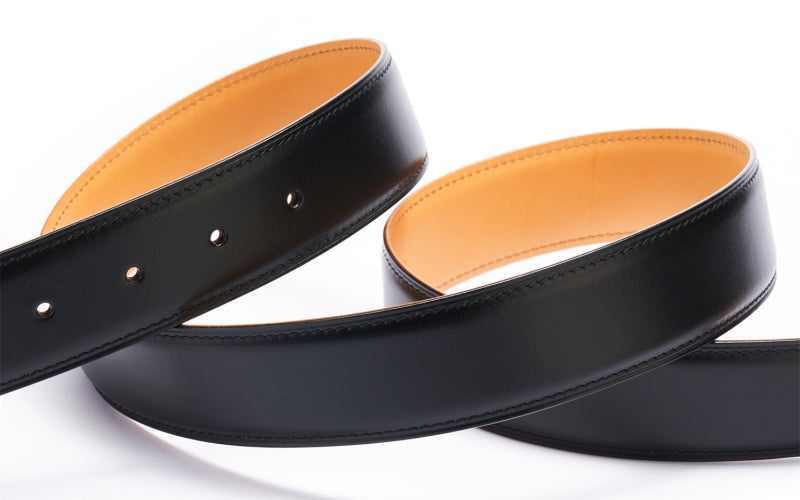
- Mostly suits, blazers, dress shoes? Buy a calfskin dress belt first. Our Classic Calfskin Dress Belt at 1.38" pairs cleanly with any dress shoe.
- Mostly jeans, chinos, boots? Buy a full-grain cowhide belt first. Browse our full-grain leather belts collection — start with 1.5" if you want a versatile width.
- Both wardrobes? Own one of each. They're not interchangeable. Trying to wear a cowhide work belt with a tux looks exactly as bad as you'd guess.
For a wider look at the leathers used in belts beyond just these two, our breakdown of 10 iconic leather types for belts is a good next stop.
The Bottom Line
Calfskin vs cowhide isn't a fight. It's a fork in the road. One leather is engineered by nature to look refined; the other is engineered by nature to take a beating. Both are real, both are durable when made well, and both belong in a thoughtful wardrobe. The "twist" we promised at the top? It's that the dressier leather is technically stronger per square inch — calfskin's tight grain genuinely outperforms cowhide on a per-mm basis. Cowhide just brings more raw material to the fight.
Frequently Asked Questions
Q: Is calfskin actually stronger than cowhide?
Per square inch, yes — its tighter fiber density gives it higher tensile strength. But cowhide is usually 2–4× thicker, so for heavy-duty wear, cowhide wins on absolute toughness. Both are real leather; they just play different positions.
Q: Is cowhide more durable than calfskin for a daily belt?
For a true daily-driver belt that sees jeans, work, travel, and the occasional rough day — yes, full-grain cowhide is the more forgiving choice. Calfskin is durable too, but it shows scratches faster and is built for refined wear.
Q: Can I use a calfskin belt every day?
You can, especially if your days are office-friendly. Just rotate it with a second belt, condition every few months, and avoid wet conditions. Treat it like a leather watch strap, not a hauling strap.
Q: Why does calfskin scratch so easily?
The same fine, smooth grain that makes calfskin look luxurious also means there's nothing to hide a scratch behind. The good news: most light scratches buff out with a soft cloth or a dab of conditioner. Deeper marks darken into the patina.
Q: Is full-grain cowhide better than calfskin?
Neither is "better" — they're different tools. Full-grain cowhide is better for ruggedness and longevity under heavy use. Calfskin is better for refinement, smoothness, and dressy wear. Our full-grain vs top-grain leather guide explains the grain side of that equation.
.%20It's%20thinner,%20denser,%20and%20finer-grained.%0A%0ACowhide%C2%A0comes%20from%20adult%20cattle.%20It's%20thicker,%20tougher,%20and%20built%20for%20hard%20wear.%0APer%20square%20inc...)