What Is Calfskin Leather? A Complete Guide to the Premium Hide
TL;DR:
- Calfskin leather comes from young cattle (usually under 6 months old), which is why the grain is so fine, smooth, and tight.
- It's softer and thinner than regular cowhide, but pound-for-pound it's actually denser and stronger.
- Calfskin is the leather luxury houses reach for when they want a hide that feels expensive the second you touch it.
- It costs more because it's rarer, harder to tan, and less forgiving of flaws.
- It's the right pick for dress belts, fine wallets, and elegant bags — not for hauling firewood.
Calfskin gets thrown around in luxury copy like a magic word. Hermès uses it. Chanel uses it. Your favorite dress shoe brand probably uses it. But what is it, really — and is it worth the price tag? Let's break it down in plain English, no leather-snob vocabulary required. By the end you'll know exactly what calfskin is, how it stacks up against cowhide, and whether it belongs in your closet (spoiler: if you wear a suit, yes).
What Is Calfskin Leather, Exactly?
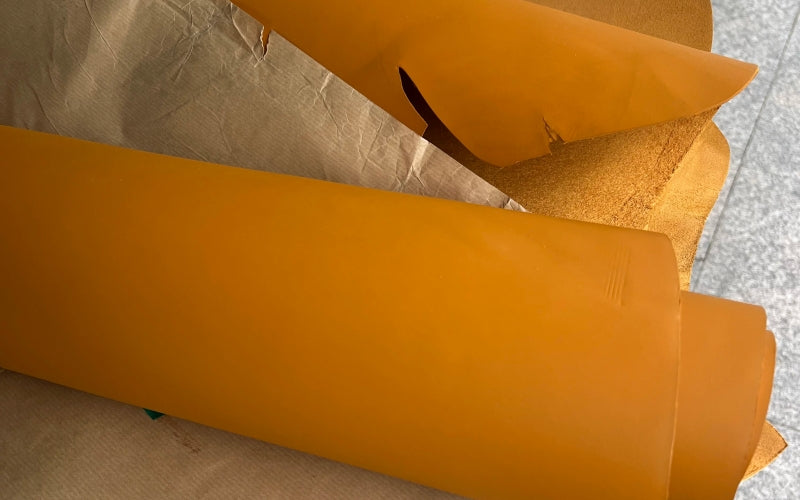
Calfskin leather is leather made from the hide of a young cow, typically under six months old. Because the animal is still growing, the skin has a much finer fiber structure, smaller pores, and a smoother surface than mature cowhide. That's what gives calfskin its signature soft hand-feel and refined look.

Think of it like baby skin versus grown-up skin. Same species, totally different texture. The collagen fibers in a calf's hide are packed tighter and lie flatter, which is why finished calfskin can be sliced thinner than cowhide without getting flimsy. According to traditional leather classifications documented by Encyclopaedia Britannica's overview of leather production, age at slaughter is one of the single biggest factors that determines the grade and price of a finished hide.
How Is Calfskin Different From Regular Cowhide?
Calfskin is thinner, softer, and finer-grained than cowhide. Cowhide is thicker, tougher, and built for abuse. Calfskin typically measures 0.6–1.2 mm thick. A heavy work belt in cowhide can hit 4–5 mm. Different jobs, different leathers.
Here's the funny part: people assume thicker means stronger. Not always. A respected interview with master tanner Tony Gaziano on Stridewise's calf vs. cow leather breakdown makes the point that calfskin's tighter grain gives it surprisingly high tensile strength for its thinness. The trade-off is that calf marks more easily — a fingernail scratch shows up where it wouldn't on a rough work hide. Calfskin is the leather you wear to dinner. Cowhide is the leather you wear to move apartments.
If you want a deeper apples-to-apples comparison, we've written about full-grain vs. top-grain leather and leather grades explained. Those guides pair nicely with this one.
Why Is Calfskin So Smooth and Soft?
Calfskin feels soft because the calf's collagen fibers haven't yet matured into the coarse, ropey bundles found in adult cattle. The fibers are finer, more uniform, and packed closer together. That tight, even structure reflects light beautifully — which is why a good calfskin belt almost looks like it's glowing.
There's also less surface damage. A cow that's been alive for four years has scars, bug bites, scratches from fences, and stretch marks from weight gain. A six-month-old calf simply hasn't lived long enough to mess up its skin. More usable surface area = higher-grade leather = higher price.
How Calfskin Leather Is Made
The process starts the same as any other leather: hides are salted to preserve them, then sent to a tannery. From there, calfskin is usually tanned in one of two ways:

- Chrome tanning — fast (1–3 days), produces soft, supple leather, takes color brilliantly. Used for most fashion calfskin.
- Vegetable tanning — slow (weeks to months), uses tannins from tree bark, produces firmer leather that patinas over time. Used for premium dress belts and saddlery.
If you're curious which is better, we get into the weeds on vegetable-tanned vs. chrome-tanned leather belts. Both methods are legitimate — they just produce very different leathers. Tanneries certified by the Leather Working Group are the gold standard for environmental and traceability reporting, and most reputable luxury houses source from LWG-rated facilities.
After tanning, calfskin is shaved to the right thickness, dyed, finished, and sometimes embossed or polished. The finishing stage is where a tannery either earns its money or ruins a beautiful hide.
What Are the Main Types of Calfskin Leather?
Not all calfskin looks or feels the same. The main varieties you'll see on a luxury tag:
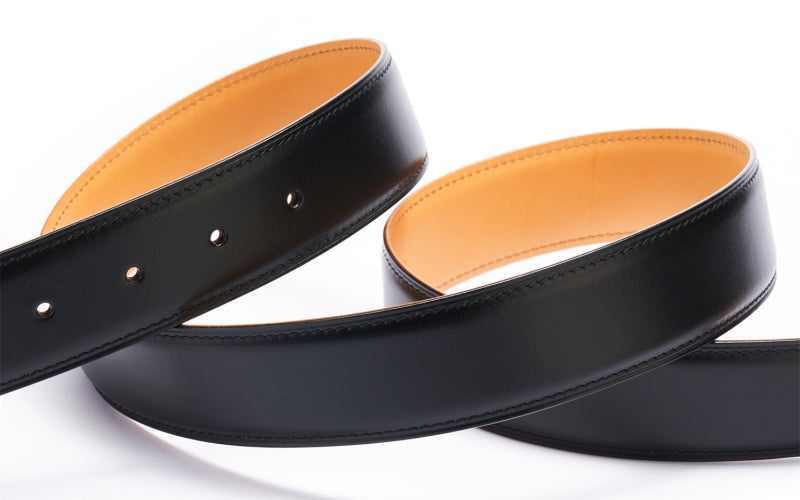
- Box calf — chrome-tanned, smooth, polished to a clean shine. The classic dress-shoe and dress-belt leather.
- Suede calf — the flesh side buffed to a soft nap. Great for casual belts and pouches.
- Nubuck calf — the grain side lightly sanded for a velvety touch. Tougher than suede.
- Patent calf — coated for a glassy, mirror-like finish. Tuxedo territory.
- Pebbled (grained) calf — embossed with a textured pattern. Hides minor scuffs better than smooth calf.
- Vachetta — vegetable-tanned, undyed calfskin that darkens dramatically with use. Famous as the trim on certain French luxury bags.
So when a brand says "calfskin," it can mean half a dozen different finishes. Always check what kind. For a broader leather vocabulary, our guide to 10 iconic leather types used in belts covers the rest.
Is Calfskin Leather Durable?
Yes — calfskin is durable, but it's elegant-durable, not bulletproof-durable. Its tight fiber structure gives it excellent tensile strength and tear resistance. With normal wear and basic care, a quality calfskin belt or wallet will easily last 10–20 years. It just won't survive a chainsaw.

The thing to understand is that calfskin shows wear differently than rough cowhide. It develops a soft sheen and a gentle patina rather than the rugged "broken-in" look of thick saddle leather. A scratch on calfskin is usually buffable. A scratch on a beat-up work belt just adds character. Different aesthetic, same long lifespan — if you treat it right.
According to the UN Food and Agriculture Organization's data tracked in its hides and skins commodity reports, calf hides represent a small slice of global leather production, which is partly why they cost more. Less supply, same demand.
Why Is Calfskin Leather So Expensive?
Calfskin is expensive because it's scarce, smaller per hide, and harder to tan without ruining. A single calf produces a fraction of the usable square footage of an adult cow. Tanners also have to work more carefully — the fine grain shows every mistake — and rejection rates for cosmetic flaws are higher. All of that compounds at the price tag.
A few honest cost drivers:
- Limited supply. Most cattle are raised to maturity for beef. Calves aren't slaughtered for hides.
- Smaller hides = less yield. A bag might need 1.5 calf hides where 1 cowhide would do.
- Tight quality control. Tanneries reject more pieces for tiny imperfections.
- Specialty finishing. Box calf, patent, and vachetta require extra steps.
At BELTLEY we believe a fair price is the result of honest math — not a logo tax. Our Classic Calfskin Dress Belt is priced to reflect the leather and the labor, full stop.
What Is Calfskin Best Used For?
Calfskin shines in items where look, feel, and refinement matter more than brute toughness — dress belts, dress shoes, wallets, watch straps, handbags, and book bindings. It's also the go-to for anything that needs to take dye crisply, since the fine grain reflects color like nothing else.
Where to use it:
- Dress belts — slim widths (32–38 mm), polished buckles, paired with a suit. Browse our dress belts collection or read our dress belt vs. casual belt guide.
- Wallets and small leather goods — calfskin's thinness keeps them slim in the pocket.
- Luxury handbags — soft hand-feel, tailored shape.
- Watch straps — refined enough for a dress watch, supple enough to break in fast.
Where to skip it: heavy-duty work belts, tactical gear, anything that lives in the rain. For those, go thick cowhide — see our full-grain leather belts collection.
How to Care for Calfskin Leather
Calfskin is low-drama but not zero-drama. The basics:

- Wipe with a soft, dry cloth after each wear to lift dust and skin oils.
- Condition every 3–6 months with a leather conditioner suited for fine leathers (not heavy mink oil — too greasy for calfskin).
- Avoid prolonged sun and heat. Calfskin dries out faster than thick saddle leather.
- Store on a hanger or rolled loosely, never folded sharply.
- Blot water immediately if it gets wet. Don't rub.
For a deeper care routine, our full leather care guide walks through products and seasonal maintenance. Treat your calfskin belt like you'd treat a good leather watch strap, not like a workhorse, and it'll outlive most things in your wardrobe.
Calfskin vs. Other Leathers at a Glance
| Leather | Thickness | Hand-feel | Best for | Lifespan |
|---|---|---|---|---|
| Calfskin | 0.6–1.2 mm | Soft, fine, refined | Dress belts, wallets, dress shoes | 10–20+ years |
| Full-grain cowhide | 2.5–5 mm | Firm, rugged | Work and casual belts | 20–30+ years |
| Crocodile | 1.5–2.5 mm | Structured, scaled | Statement belts, luxury bags | Lifetime |
| Suede (split) | 1–2 mm | Velvety, soft | Casual belts, jackets | 5–10 years |
| Patent calfskin | 0.8–1 mm | Glossy, stiff | Tuxedo / formal wear | 10–15 years |
The Bottom Line
Calfskin leather is what happens when nature gives you a finer canvas and skilled tanners don't waste it. It's the leather of choice when you want something that looks dressed-up, feels good against your skin, and quietly signals quality without yelling about it. It's not the right material for every job — you wouldn't build a saddle out of it — but for a dress belt, a wallet, or a handbag that lives in nice rooms, nothing else does it quite the same way. At BELTLEY we work with calfskin because it lets us build pieces with the precision and finish a suit deserves, then price them honestly. If a dress belt is on your shortlist, our Classic Calfskin Dress Belt is the place to start.

Frequently Asked Questions
Q: Is calfskin real leather?
Yes. Calfskin is 100% real leather, just made from a younger animal. It sits at the top of the genuine leather hierarchy alongside full-grain cowhide, well above bonded or split leather.
Q: Is calfskin more durable than cowhide?
For weight, calfskin is impressively strong because of its tight grain. But for absolute toughness — heavy abrasion, thick straps, long work hours — adult cowhide wins. Pick calfskin for refinement, cowhide for ruggedness.
Q: Does calfskin scratch easily?
It scratches more visibly than rough leather because the smooth surface shows everything. Most light scratches buff out with a soft cloth or a tiny dab of conditioner. Deeper marks add character.
Q: How can I tell if a belt is real calfskin?
Real calfskin has a fine, even grain, a soft but firm hand-feel, and a faint natural leather smell. It also warms up to your skin quickly. Bonded or fake leather feels plasticky and cool. For more telltale signs, see our guide on how to tell if a belt is full-grain leather.
Q: Is calfskin waterproof?
No leather is truly waterproof, and calfskin is more sensitive to water than thick cowhide. Blot spills quickly, let it air-dry away from heat, and condition once dry to prevent stiffness.

,%20which%20is%20why%20the%20grain%20is%20so%20fine,%20smooth,%20and%20tight.%0AIt's%20softer%20and%20thinner%20than%20regular%20cowhide,%20but%20pound-for-pou...)