Full Grain vs Top Grain Leather: What's the Difference?
TL;DR:Quick answer
- Full grain leather retains the complete outer hide surface — strongest fibers, ages beautifully, lasts 15–20+ years
- Top grain leather has been sanded to remove surface imperfections — softer and more uniform, but weaker fibers mean a 5–10 year lifespan
- For belts, full grain wins on every long-term metric: durability, patina, and value per year of wear
- The marketing overlap is real — always check specs, not just labels
Walk into any leather goods store and you'll see "top grain leather" positioned as a premium material. The name certainly sounds impressive. The reality? It's the second tier — not the best. Full grain leather sits above it, and the gap matters a great deal for anything you're going to bend and flex daily, like a belt.
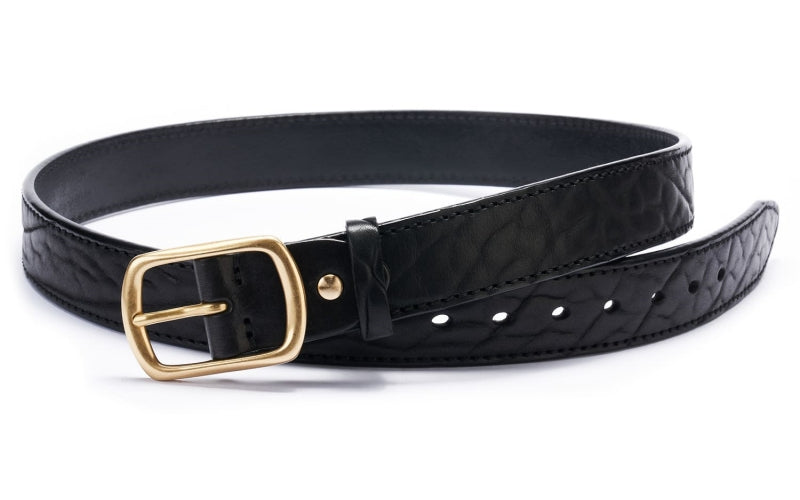
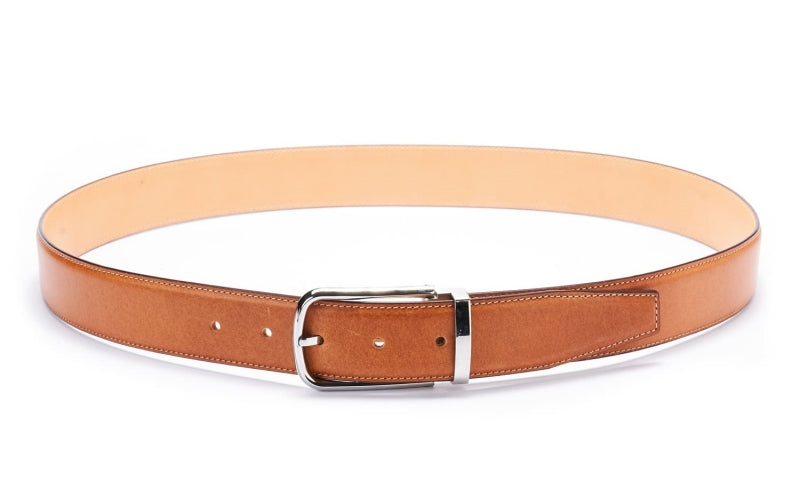
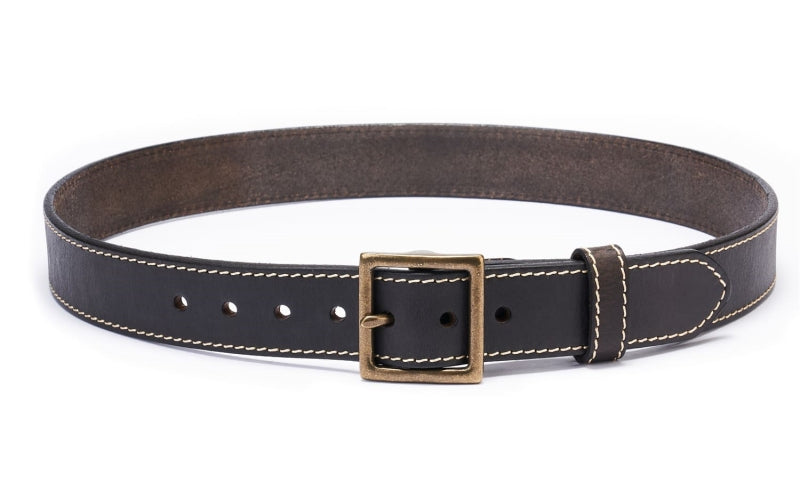
Here's the full breakdown, without the spin. BELTLEY's full-grain leather belts are built on this distinction — it's why we specify the grade rather than just saying "real leather."

Full Grain or Top Grain: Pick by Priority
Both are real leather. They just serve different buyers:
| Your priority | Go with |
|---|---|
| Maximum lifespan | Full grain — 15–20+ years vs. top grain's 5–10 |
| A softer, more uniform look out of the box | Top grain — the sanding that weakens it is also what makes it smooth |
| Patina that improves with age | Full grain only — sanded leather can't develop it |
| You're confused by the marketing | You should be — "top grain" sounds premium and isn't. Check specs, not labels |
| Best value per year of wear | Full grain wins this on every metric — the math is below |
For belts specifically, full grain is the answer for most people. What each grade actually is:
What Is Full Grain Leather?
Full grain leather is the outermost layer of the hide, used exactly as it comes from the tannery — with zero surface correction. No sanding, no buffing, no polymer coating to hide imperfections. The natural grain pattern, pores, and fiber structure remain completely intact.
That intact surface is what makes full grain leather the most durable grade available. The Leather Research Laboratory at the University of Northampton documents that the outermost hide layer contains the tightest, most interlocked collagen fiber bundles — and any processing that removes or alters that layer directly reduces tensile strength and abrasion resistance.
Full grain leather also develops a patina over time: a deepening of color, a slight sheen at high-contact points, a richness that grows with wear. This isn't cosmetic damage — it's the natural oils from use penetrating the uncoated surface and transforming the leather's appearance. Properly made full grain belts genuinely look better at year five than they did on day one.

What Is Top Grain Leather?
Top grain leather comes from the same outer section of the hide as full grain — but the surface has been sanded or buffed to remove natural marks, scars, and grain inconsistencies. What remains is then typically coated with a finish or embossed with an artificial grain to create a uniform appearance.
The result is leather that looks consistent and polished straight out of production. It's also softer and easier to work with in manufacturing, which is why it's widely used in mid-range leather goods.
The tradeoff is structural. According to ASTM International's leather testing standards, the sanding process that creates top grain leather removes the tightest fiber layer — the very layer that gives full grain its superior strength. What remains is still real leather, but with reduced resistance to stretching, cracking, and surface wear.

How Do Full Grain and Top Grain Compare for Belts?
| Feature | Full Grain | Top Grain |
|---|---|---|
| Fiber integrity | Complete outer layer intact | Surface sanded, fibers removed |
| Surface finish | Natural, uncoated | Coated or embossed |
| Durability | 15–20+ years | 5–10 years |
| Patina development | Yes — improves with age | Minimal — surface coating prevents absorption |
| Scratch resistance | Improves with use (patina) | Coating scratches, shows wear |
| Feel | Firm, structured | Softer, more uniform |
| Price range | Higher | Moderate |
| Best for | Daily wear, long-term investment | Occasional use, budget-conscious buyers |
For a belt that gets worn every day, the durability gap is significant. A top grain belt worn five days a week will show visible wear at the buckle holes and surface coating within two to four years. A full grain belt in the same rotation develops character — not deterioration.

Is Full Grain Leather Worth the Higher Price?
Full grain leather costs more upfront but typically less over time. A $90 full grain belt that lasts 15 years costs $6 per year. A $60 top grain belt that lasts 5 years costs $12 per year. The math consistently favors full grain for anyone planning to wear a belt regularly.
The Leather Working Group, the industry's primary sustainability and quality certification body, uses grain retention as a core quality indicator in hide grading. This isn't marketing language — it's an industrywide standard that professional buyers and tanneries use to evaluate leather before it's ever cut into a product.
For anyone uncertain whether full grain belts justify the investment, our post on whether full grain leather belts are worth it walks through the cost-per-wear calculation in detail.
Does Top Grain Leather Develop a Patina?
Top grain leather does not develop a true patina. The coating applied after sanding seals the surface, preventing the natural oil absorption that creates patina on uncoated leather. Instead of deepening in color and richness, a top grain leather belt's coating gradually scratches, dulls, and wears through — revealing the base leather underneath, which then absorbs inconsistently.
Full grain leather, by contrast, absorbs conditioning oils, the natural oils from handling, and environmental moisture directly into the fiber structure. That absorption is what produces patina — a gradual, beautiful transformation that uncoated leather undergoes and coated leather cannot.
This is why vegetable-tanned full grain leather is particularly prized for belts: veg-tan leather starts firm and develops maximum patina over time. Chrome-tanned full grain leather is softer from the start but still patinas, just more slowly.
How to Tell Full Grain from Top Grain
A few quick checks work for both in-store and online evaluation:
Surface variation — Full grain has a slightly uneven, natural surface with visible pores. Top grain looks more uniform, sometimes too uniform if it's been embossed with an artificial grain.
Edge condition — Full grain edges, when burnished properly, show clear, tight fiber layers. Top grain edges sometimes show a coated or painted finish over a less distinct fiber structure.
Flex test — Bend the belt and watch the surface. Full grain recovers cleanly. Top grain may show fine coating cracks at flex points, especially in cold conditions.
Smell — Full grain leather (especially veg-tanned) has a natural earthy leather smell. Top grain often smells more neutral or slightly chemical due to the finish coating.
For a complete field guide, our post on how to tell if a belt is full grain leather covers seven tests you can run without any equipment.
What About "Genuine Leather" — Where Does It Fit?
Genuine leather sits below both grades. It's made from split hides — the lower layers of the skin after the top section has been separated for full or top grain use. Split hides are significantly weaker, often coated heavily to mimic the appearance of higher grades, and typically last 1–3 years in a belt application.
The confusing part: "genuine leather" is technically accurate as a label. It does contain real animal hide. But the term has been so widely applied to low-grade split leather that it functions as a warning sign rather than a quality indicator for informed buyers.
For a direct comparison of how these grades play out in real belt wear, see our breakdown of full grain leather belts vs genuine leather.
The Bottom Line
Full grain leather and top grain leather both come from real hides — but they're not the same product. Full grain keeps every advantage the natural hide offers: tight fiber structure, surface integrity, the ability to develop patina, and decades of durability. Top grain trades those advantages for a more uniform, processed surface that's easier to produce consistently but shorter-lived in use.
For a belt you plan to wear regularly for years, full grain is the practical choice — not just the premium one. At BELTLEY, every belt in the full-grain collection uses single-piece construction with stainless steel hardware, and each comes with a 10-year warranty because we're confident in what full grain leather actually does over time.
Frequently Asked Questions
Q: Is full grain leather better than top grain for belts?
Yes — for daily-wear belts, full grain leather is the stronger choice. It retains the hide's complete outer fiber layer, which resists stretching and cracking better than sanded top grain. It also develops patina, improving in appearance with age rather than deteriorating. Top grain is a reasonable budget option but won't match full grain's lifespan.
Q: Is top grain leather real leather?
Yes, top grain leather is genuine animal hide. The distinction is grade, not authenticity — the surface has been sanded and processed, which removes some of the hide's strongest fibers. It's real leather, just not the highest quality tier. See our post on whether top grain leather counts as real leather for the full explanation.
Q: Which lasts longer — full grain or top grain leather?
Full grain leather lasts significantly longer. A well-made full grain belt used daily typically lasts 15–20+ years. Top grain leather in comparable daily use typically lasts 5–10 years before showing significant surface wear. The difference comes down to fiber integrity — full grain keeps the tightest, most durable hide layer intact.
Q: Can you tell full grain from top grain by looking at it?
Yes, with practice. Full grain leather has a slightly uneven natural surface with visible pores and grain variation. Top grain leather often looks more uniform and perfectly finished — sometimes artificially so, if an embossed grain has been applied. Full grain also burnishes and develops sheen at contact points over time; top grain's coating dulls instead.
Q: Why do brands use top grain instead of full grain?
Top grain leather is easier to process uniformly and produces fewer cosmetic inconsistencies during manufacturing. It's also less expensive than full grain. For brands focused on appearance over longevity — or on keeping production costs low — it's a practical material choice. The consumer tradeoff is a shorter lifespan and no true patina development.