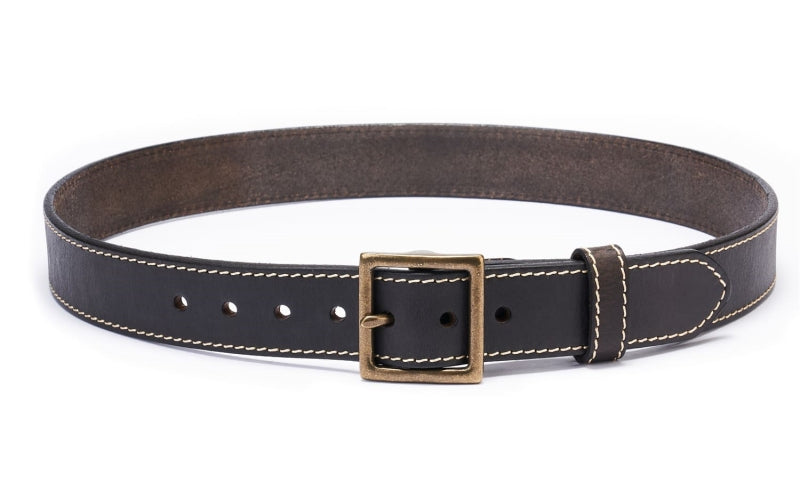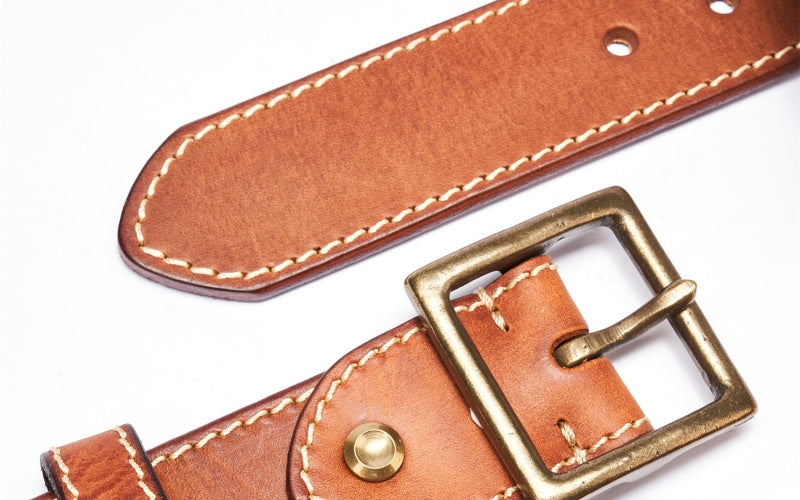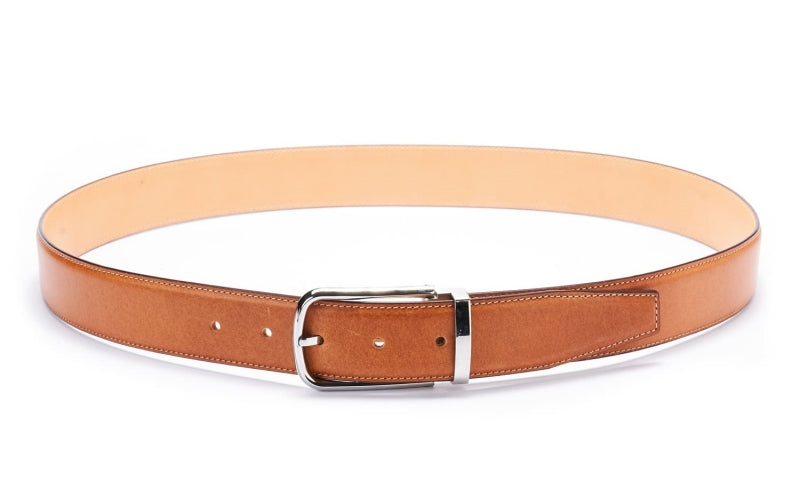
Full Grain Leather Belt vs Genuine Leather: The Real Difference
TL;DR:Quick answer
- Full grain leather is the highest quality hide grade — unaltered outer surface, strongest fibers, lasts 15–20+ years
- "Genuine leather" is a legal label that means almost nothing about quality — it's the industry's lowest usable grade, often made from split hides
- Full grain leather develops patina and improves with age; genuine leather peels, cracks, and degrades
- The price gap between the two is real, but the cost-per-year math almost always favors full grain
Here's something the leather industry doesn't advertise clearly: "genuine leather" doesn't mean good leather. It means real leather — as opposed to synthetic — but it says nothing about quality, durability, or how long the belt will last. A genuine leather belt can be made from the lowest-grade scraps of a hide and still carry that label legally.
Full grain leather is a different proposition entirely. If you're trying to figure out which is actually worth buying, this is the clearest breakdown you'll find. And if you want to skip straight to belts that are built to last, BELTLEY's full-grain leather belts are a good place to start.
Which One Is Right for You?
Before the leather-grade lesson, here's the decision in plain terms:
| Your situation | Go with |
|---|---|
| One belt to wear daily for a decade | Full grain, no contest — it's the only grade that improves with wear instead of falling apart |
| You wear suits to the office | A full grain dress belt in 1.25"–1.38" width — genuine leather's coated surface looks fine for months, not years |
| You love the aged, broken-in look | Full grain only — it's the single grade that develops real patina |
| You need a cheap belt for occasional wear | Genuine leather will do — just treat it as an 18-month purchase, not an investment |
| Buying a gift | Full grain — it's the safe answer, because it still looks good on their fifth anniversary of wearing it |
If full grain is your answer, BELTLEY's full-grain leather belts start at $58 — DTC pricing, no Brand Tax. Here's what those labels actually mean:
What Does "Genuine Leather" Actually Mean?
"Genuine leather" is not a quality grade — it's a legal term confirming animal hide content. In the leather industry, it typically refers to split leather: the lower layers of a hide left over after the top section (used for full grain and top grain leather) has been separated. These inner layers have a loose, weak fiber structure that requires heavy coating to hold together as a finished product.
The US Federal Trade Commission's guidelines on leather labeling permit "genuine leather" as a descriptor for any product containing real animal hide — regardless of grade. This means a belt made from compressed hide scraps bonded with polyurethane can legally carry the same "genuine leather" label as a top-quality split.
The result: a label that sounds premium but signals bottom-of-the-barrel in most contexts. Experienced leather buyers treat "genuine leather" as a red flag, not a selling point. If a belt's quality claim starts and ends with "genuine leather," the manufacturer is telling you exactly what they chose not to say.

What Is Full Grain Leather?
Full grain leather uses the outermost layer of the hide — the surface that faced the animal's exterior — with zero surface correction. No sanding, no buffing, no polymer coat to hide natural marks. Every pore, grain variation, and subtle healed scar stays intact.
That intact surface is the source of full grain leather's strength. According to ASTM International's leather testing standards, the outermost hide layer contains the densest, most interlocked collagen fiber network in the entire hide. Any processing that removes or alters that layer — sanding for top grain, splitting for genuine leather — directly reduces tensile strength, abrasion resistance, and flexibility under repeated stress.
A full grain leather belt flexes thousands of times each year. The fiber integrity of the outer hide layer is what prevents stretching at the buckle holes, cracking along the edges, and surface breakdown over time. Genuine leather, with its loose split-hide structure and coating, can't match it.

How Do They Compare in Real Use?
| Feature | Full Grain Leather | Genuine Leather |
|---|---|---|
| Hide layer used | Outermost — unaltered | Inner split — coated |
| Fiber density | Highest | Lowest |
| Surface finish | Natural, uncoated | Polyurethane or heavy coating |
| Lifespan (daily wear) | 15–20+ years | 1–3 years |
| Aging behavior | Develops patina, improves | Cracks, peels, delaminates |
| Flex durability | Excellent — fibers hold under stress | Poor — coating separates from base |
| Smell | Earthy leather scent | Often neutral or synthetic |
| Cost per year | Lower (long lifespan) | Higher (frequent replacement) |
The lifespan gap is the critical number. A genuine leather belt worn five days a week typically shows visible cracking at the buckle holes and coating delamination within one to two years. A full grain belt in identical use develops a worn-in richness — the leather deepens in color and character without structural failure.
This is exactly why leather belts keep cracking and breaking — and why the problem is almost always grade, not maintenance.

Does Genuine Leather Develop a Patina?
Genuine leather does not develop a true patina. The coating applied over split leather seals the surface and prevents the natural oil absorption that creates patina on uncoated full grain leather. Over time, genuine leather's coating scratches and wears through — revealing dull, inconsistently colored base material underneath.
Full grain leather, by contrast, is uncoated and absorbs conditioning oils, handling oils, and environmental exposure directly into the fiber structure. This creates a patina: a gradual shift in color, depth, and sheen that makes the leather look better at year five than it did on day one. Vegetable-tanned full grain leather develops the most dramatic patina of all, starting firm and deepening richly with wear.
Patina is the clearest real-world signal that a leather belt is full grain. If your belt is two years old and the surface is flaking rather than glowing, it wasn't full grain.

Is Full Grain Leather Worth the Higher Price?
Full grain leather costs more per belt — but less per year of use. The cost-per-wear math is straightforward:
- A $70 genuine leather belt replaced every 2 years = $35/year
- An $89 full grain leather belt lasting 15 years = $6/year
The Leather Working Group, the industry's primary quality and sustainability certification body, uses fiber integrity as a core grading criterion precisely because longevity is directly tied to hide layer quality. It's not a premium marketing tier — it's a measurable structural difference.
For anyone on the fence, the detailed breakdown in are full grain leather belts worth it walks through this calculation across different price points.

How to Spot the Difference When Shopping
Most buyers can't distinguish full grain from genuine leather by label alone. Here's what actually works:
Check the surface — Full grain has natural variation: visible pores, slight grain irregularity, occasional natural marks. Genuine leather (and heavily corrected leather) looks too uniform, often because it's been embossed with an artificial pattern.
Check the edges — Full grain belts have burnished or stitched edges that show clean, tight fiber layers. Genuine leather belts often have painted edges that chip or reveal a crumbly interior.
Flex it — Full grain recovers cleanly. Genuine leather with heavy coating may show fine surface cracks under flexing, especially in cold temperatures.
Ask for the grade explicitly — A quality brand will state "full grain" in product specs. If the listing only says "genuine leather" or "real leather," that's your answer.
For a full seven-point checklist, our guide on how to tell if a belt is full grain leather covers every test you can run before or after purchase.

The Bottom Line
The full grain leather belt vs genuine leather comparison comes down to one core fact: they use different parts of the same hide, and those parts perform completely differently under daily use. Full grain keeps the strongest, densest fibers intact. Genuine leather uses the weakest inner layers and compensates with coatings that eventually fail.
"Genuine leather" is a legal minimum, not a quality standard. Brands that lead with it are telling you they chose not to spend more on the hide. At BELTLEY, every belt is specified as full grain — because that's the grade that earns a 10-year warranty with confidence. Browse the full-grain leather belt collection to see what that actually looks like in a finished belt.
Frequently Asked Questions
Q: Is genuine leather good quality for a belt?
Genuine leather is the lowest usable grade in the leather hierarchy. It's made from split hides — the inner layers left after full grain and top grain sections are removed. These layers have loose fiber structure and require heavy coating to function. A genuine leather belt typically lasts 1–3 years under daily wear before cracking or peeling.
Q: What is the difference between full grain and genuine leather?
Full grain leather uses the unaltered outer surface of the hide — the densest, strongest layer. Genuine leather uses inner split sections with looser fiber structure, typically coated to simulate the appearance of higher grades. The practical difference is lifespan: full grain lasts 15–20+ years; genuine leather rarely exceeds 3 years in daily use.
Q: Is genuine leather real leather?
Yes — genuine leather contains real animal hide. The term confirms authenticity (not synthetic) but says nothing about quality or grade. In industry usage, "genuine leather" almost always indicates a split-hide product, which is the least durable form of real leather. See our full explainer on whether a genuine leather belt is actually real leather.
Q: Why do genuine leather belts crack so quickly?
Genuine leather belts crack because the coating applied over split hides can't flex indefinitely. Every time you bend the belt, the coating and base material flex at different rates. Over time — usually 12–18 months of daily wear — the coating separates and cracks. Full grain leather doesn't have this problem because its uncoated surface flexes as a single continuous material.
Q: How can I tell if my belt is full grain or genuine leather?
Check the surface for natural grain variation and visible pores (full grain) versus a too-perfect, uniform finish (genuine leather). Check the edges — burnished tight fibers indicate full grain; painted or crumbly edges indicate split leather. Flex the belt: full grain recovers cleanly, genuine leather may show micro-cracks in the coating. Full details in our full grain leather identification guide.