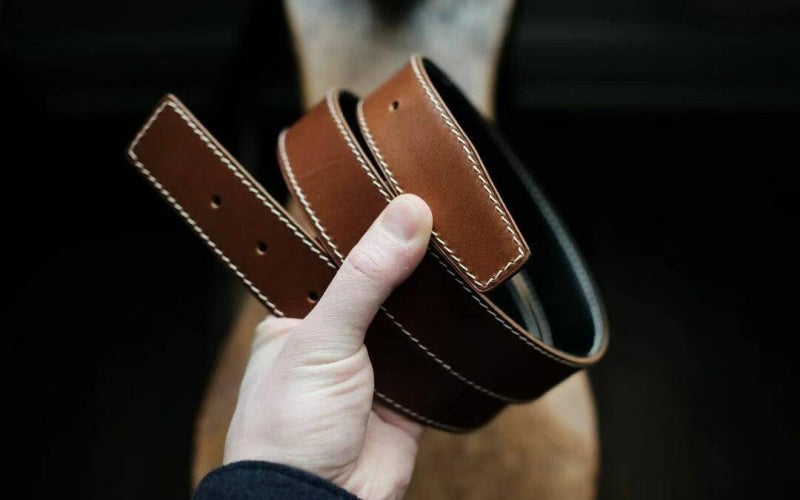
What Is a Vegetable-Tanned Leather Belt? (And Is It Actually Superior?)
TL;DR: Quick Answer
- A vegetable-tanned leather belt is made from leather processed with natural plant tannins (tree bark, leaves, fruits) instead of chemicals. The process takes weeks. Chrome tanning takes days. Patience has a price.
- Veg-tan belts develop a rich patina over time — they actually get better looking with age. Chrome-tanned leather mostly just gets older.
- They're stiffer initially (3-7 day break-in), more durable long-term (decades, not years), and better for the environment (no chromium salts).
- The trade-off: higher cost, fewer color options, and a break-in period that tests your commitment. Worth it? Absolutely.

Some leather just sits on your waist. Other leather earns its place there.
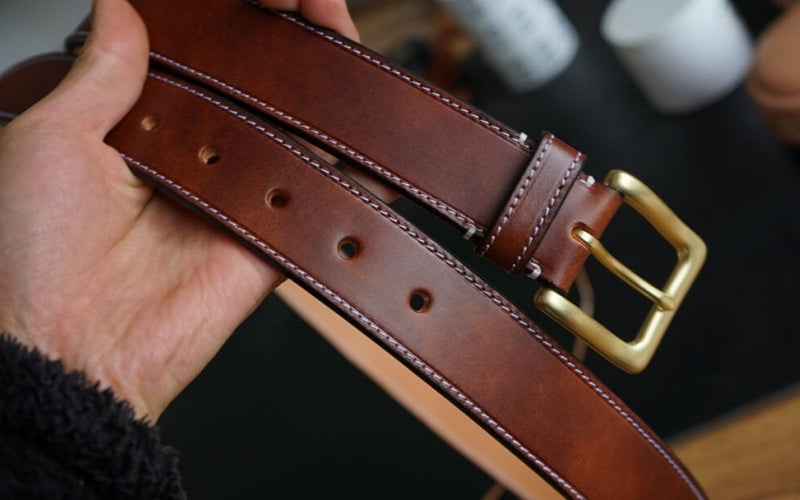
Vegetable-tanned leather is the second type. It starts stiff. It starts plain. It starts looking like it doesn't know you yet. Then you wear it. The oils from your hands darken it. Sunlight deepens the color. Scratches blend in instead of standing out. After six months, it looks like it was made specifically for you. Because it basically was.
A vegetable-tanned leather belt is the slowest, most traditional, and arguably most rewarding belt you can own. Here's what makes it different — and whether it's worth the premium. For the broader leather comparison, our guide on what type of leather is best for belts ranks every option.

What Does "Vegetable-Tanned" Actually Mean?
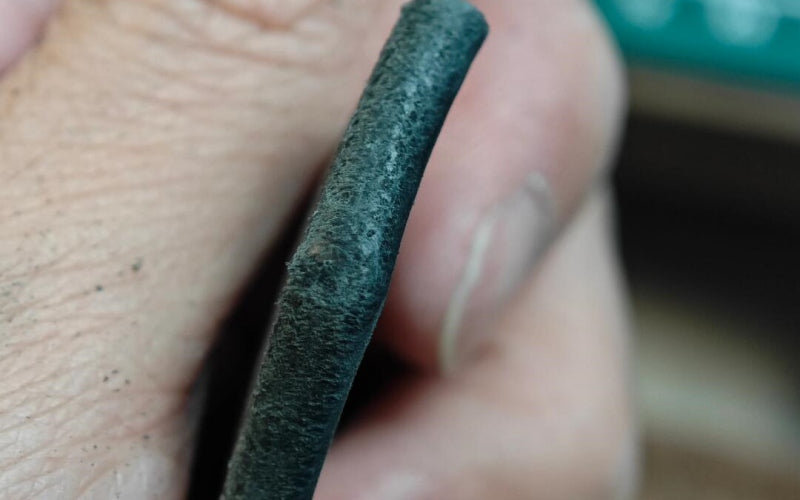
Vegetable-tanned leather is processed using natural tannins derived from tree bark, leaves, and plant matter — not synthetic chemicals. The hides soak in progressively stronger tannin solutions over several weeks, allowing the plant compounds to bind with the leather's protein fibers. This slow penetration creates a dense, firm leather that holds its shape and develops character over time.
According to Steel Horse Leather's veg-tan guide, the process "can take up to two months to complete, substantially longer than chrome tanning which typically finishes within days." Wickett & Craig, one of America's oldest tanneries, describes the process as a series of progressively concentrated tannin baths — the leather is moved from weak solutions to strong ones until fully saturated.
Think of it like slow-cooking versus microwaving. Both produce food. One produces better food. The leather equivalent is the same trade-off.
Common tanning agents include:
- Oak bark — The classic. Rich, warm brown tones.
- Mimosa — Fast-absorbing. Lighter, pinkish undertones.
- Chestnut — Deep, reddish-brown color.
- Quebracho — Dense and hard-wearing. South American origin.
According to Proven Hands' complete tanning guide, different plant tannins produce different leather characteristics — color, firmness, and grain texture all vary based on the source. That's why veg-tan belts from different makers can look and feel quite different.

How Is It Different from Chrome-Tanned Leather?
Vegetable-tanned leather is firmer, develops patina, and lasts longer. Chrome-tanned leather is softer, more colorful, and cheaper. Both are real leather. They're processed differently, age differently, and serve different purposes.
According to Tanner Bates' tanning comparison, the fundamental difference is chemistry: veg-tanning uses plant compounds, chrome-tanning uses chromium salts. Everything else — durability, patina, stiffness, cost — flows from that single distinction.
| Feature | Vegetable-Tanned | Chrome-Tanned |
|---|---|---|
| Tanning agent | Plant tannins (bark, leaves) | Chromium salts (chemical) |
| Processing time | 2-8 weeks | 1-3 days |
| Initial feel | Firm, stiff | Soft, supple |
| Break-in period | 3-7 days | None |
| Patina development | Rich, deepening | Minimal |
| Color options | Earth tones (natural palette) | Unlimited (accepts all dyes) |
| Durability | Decades (with care) | Years |
| Stretch resistance | High — holds shape | Moderate — can sag |
| Environmental impact | Lower (plant-based) | Higher (chemical process) |
| Water resistance | Low initially (improves with conditioning) | Moderate |
| Price | Higher | Lower |
| Best for belts? | Excellent — firm, durable, molds to body | Good — soft, flexible, more colors |
According to Proven Hands' work belt comparison, chrome-tanned leather "doesn't have the same backbone" as veg-tan for belts, making it "more likely to stretch out, lose its shape, and start looking tired way before a vegetable-tanned belt would." Gentleman's Gazette confirms that chrome-tanned leather "is much less likely to darken or deepen with age like vegetable tanned leather can."
For a full breakdown of full-grain leather belts — which are often vegetable-tanned — see our collection.

Why Do Veg-Tan Belts Develop Patina?
Vegetable-tanned leather develops patina because its open fiber structure absorbs oils, sunlight, and environmental exposure — gradually darkening and gaining a rich, glossy surface layer that chrome-tanned leather rarely achieves. The plant tannins react with UV light and body oils in ways that chromium salts don't.
According to Galen Leather's veg-tan guide, "normal wear will darken the leather as air, light, the oils of your skin, and other environmental factors do their work, eventually developing a rich color and patina." Axess Wallets' comparison adds that patina development is "one of the defining hallmarks of vegetable tanned leather."

The patina timeline on a belt:
| Time Period | What Happens |
|---|---|
| Week 1-2 | Stiff. Slightly uncomfortable. You question your purchase. |
| Month 1 | Starting to soften. Color beginning to shift subtly. |
| Month 3 | Noticeably darker. Starting to mold to your body shape. |
| Month 6 | Visible patina. Scratches blending in. Getting compliments. |
| Year 1 | Rich, deep color. Completely personalized fit. Looks better than day one. |
| Year 3+ | Full patina. Unique to you. Nobody else's belt looks like this. |
This is why leather enthusiasts specifically seek out veg-tan. Your belt literally becomes one-of-a-kind through the simple act of wearing it. No two patinas are identical. Our guide on are full-grain leather belts worth it covers why this aging process adds value rather than diminishing it.

What Are the Downsides?
Veg-tan isn't perfect. Being honest about the trade-offs helps you decide if it's right for you.
1. The break-in period. New veg-tan belts are stiff. Sometimes uncomfortably stiff. It takes 3-7 days of wear before they start conforming to your body. Chrome-tanned belts are soft from day one. If instant comfort is your priority, veg-tan requires patience. According to Andrii Art's veg-tan guide, this stiffness is actually a quality signal — "denser, tougher" leather that maintains its shape long-term.
2. Limited natural colors. Veg-tan leather starts in earth tones — natural tan, honey, brown. It can be dyed, but it accepts dyes differently than chrome-tan. The vibrant reds, blues, and greens you see on fashion belts? Usually chrome-tanned. Veg-tan lives in the warm, natural palette.
3. Water sensitivity. Fresh veg-tan absorbs water quickly and can develop dark spots. According to MAHI Leather's benefits guide, veg-tan "needs to be treated with leather conditioner" to improve water resistance. Once conditioned and patina'd, it handles moisture much better — but new veg-tan and rain are not friends.
4. Higher price. Weeks of tanning instead of days. Plant tannins instead of bulk chemicals. Small-batch production instead of industrial volume. All of this costs more. According to Carl Friedrik's veg-tan guide, the "labor-intensive approach contributes to the higher cost" — but also to the superior quality.
5. Sun sensitivity (early on). New veg-tan darkens with sun exposure. This is part of the patina journey — but if you want a belt that stays the exact same color forever, veg-tan isn't your material. It changes. That's the feature, not the bug.
For care instructions specific to premium leather, our leather care page covers conditioning, storage, and maintenance.

Is a Vegetable-Tanned Belt Worth the Price?
Yes — if you value longevity, patina, and craftsmanship over immediate comfort and color variety. A quality veg-tan belt lasts decades, looks better every year, and develops a character that's uniquely yours. The higher price per belt translates to a lower cost per year when measured against its lifespan.
According to Denimhunters' veg-tan belt roundup, veg-tan belts represent the "buy it for life" philosophy — paying more upfront for something you'll never need to replace. Maverick Made's leather guide confirms that "with appropriate care, vegetable tanned leather goods can last for decades or even generations."
Buy veg-tan if you:
- Appreciate leather that gets better with age
- Don't mind a 3-7 day break-in period
- Want a belt that lasts 10-20+ years
- Prefer natural earth tones
- Care about craftsmanship and environmental impact
Choose chrome-tan if you:
- Want immediate softness and comfort
- Need specific colors (blue, red, green)
- Prefer a belt that stays the same color
- Want a lower price point
The smart move: Own both. A vegetable-tanned belt for your daily workhorse. A chrome-tanned or exotic leather belt for occasions that demand color or texture variety. Our guide on how many belts should a man have breaks down the ideal rotation.

The Bottom Line
A vegetable-tanned leather belt is leather processed with natural plant tannins over weeks instead of chemicals over days. It's firmer initially, develops a rich patina with wear, lasts decades instead of years, and molds to your specific body shape.
The trade-offs — higher cost, break-in period, limited color palette, and water sensitivity when new — are real but manageable. For anyone who values a belt that gets better over time rather than just older, veg-tan is the answer.
At BELTLEY, our full-grain leather belts are crafted from premium hides with stainless steel hardware — built for the kind of long-term ownership where patina isn't just possible, it's guaranteed. 10-year warranty. Free worldwide shipping. Browse the men's collection or women's collection and start a belt that actually improves on the job.

Frequently Asked Questions
Q: What is a vegetable-tanned leather belt?
A leather belt made from hides processed with natural plant tannins — tree bark, leaves, and fruit extracts — instead of synthetic chemicals like chromium salts. The tanning process takes 2-8 weeks (vs. 1-3 days for chrome tanning), producing a firm, durable leather that develops a rich patina over time.
Q: Is vegetable-tanned leather better than chrome-tanned for belts?
For durability and longevity, yes. Veg-tan is denser, resists stretching, holds its shape, and develops a beautiful patina. Chrome-tan is softer, offers more color options, and requires no break-in. Both are quality leather — they serve different priorities. Veg-tan wins on lifespan. Chrome-tan wins on immediate comfort.
Q: How long does a vegetable-tanned leather belt last?
Decades — often 10-20+ years with proper care. The dense fiber structure resists wear and tear far better than chrome-tanned leather. Many veg-tan belts outlast their owners. Compare that to chrome-tanned belts, which typically last 3-7 years before showing significant wear.
Q: Why are vegetable-tanned leather belts more expensive?
The tanning process takes weeks instead of days, uses natural plant tannins (more expensive than bulk chemicals), and typically involves smaller-batch production. The labor-intensive nature of vegetable tanning directly increases the cost — but also the quality and longevity of the finished belt.
Q: Do vegetable-tanned belts really develop patina?
Yes — it's the defining characteristic. Body oils, sunlight, and environmental exposure gradually darken the leather and create a glossy, rich surface unique to your wearing patterns. Visible patina typically develops within 3-6 months. By year one, the belt looks dramatically different (better) than it did new.
Q: How do you care for a vegetable-tanned leather belt?
Condition with leather balm or cream every 3-6 months. Avoid prolonged water exposure (especially when new). Store hanging or flat — never coiled tightly. Let it rest between wears to release moisture. The patina will develop naturally; don't try to accelerate it with oils or heat. Patience is the best care routine.
%20instead%20of%20chemicals.%20The%20process%20takes%20weeks.%20Chrome...)