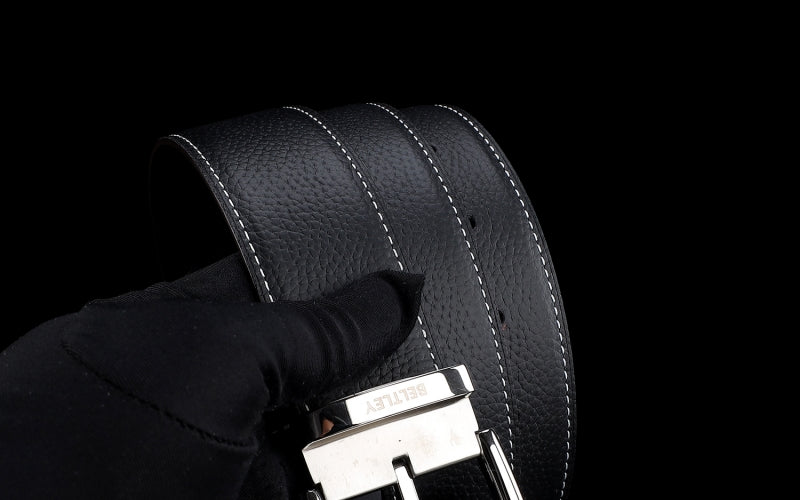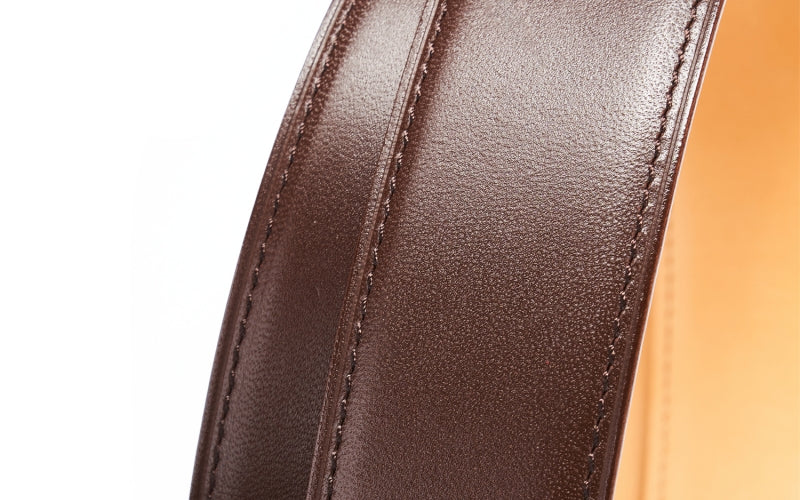
Vegetable-Tanned vs Chrome-Tanned Calfskin Belts: What Changes Over Time
TL;DR:
- Vegetable-tanned calfskin starts stiff, ages slowly, and develops a deep, dramatic patina over years. Think "wine that gets better."
- Chrome-tanned calfskin starts soft, ages gracefully but subtly, and holds its original color far longer. Think "denim that stays looking new."
- Both are real leather. Both can last decades. They just take totally different journeys to get there.
- Vegetable tanning takes weeks; chrome tanning takes days. That speed difference is why one belt costs more than the other.
- Neither is "better" — they're built for different relationships with time.
If you've ever picked up two calfskin belts that looked nearly identical in the photo and felt like completely different animals in your hand, the answer is almost always tanning method. Vegetable tanning and chrome tanning are the two big roads a hide can travel from "raw skin" to "finished belt." They produce leather that ages in opposite ways. One gets richer with time. One stays steady. Let's walk through what each looks like in year one, year three, and year ten — so you know which one you actually want strapped around your waist for the next decade.
Wine or Denim: Which Aging Do You Want?
The tanning choice is really an aging choice:
| Your situation | Go with |
|---|---|
| Want visible character by year three | Vegetable-tanned — the wine path; stiff start, dramatic patina payoff. |
| Want it looking new for a decade | Chrome-tanned — the denim-that-stays-new path; soft from day one, color holds. |
| Gifting (recipient unknown tastes) | Chrome-tanned — no break-in period to apologize for. |
| Eco-priorities | Veg-tan — oak bark beats chromium salts on every environmental scorecard. |
Both journeys begin at BELTLEY's men's collection — calfskin $100–$148.
The Quick Answer: Which Ages Better?
It depends on what "better" means to you. Vegetable-tanned calfskin develops a dramatic patina and gets visually richer over the years. Chrome-tanned calfskin holds its original color and stays softer for longer. Neither is universally superior — they just take time differently.

If you love the idea of a belt that looks more characterful at year five than year one, you want vegetable-tanned. If you want a belt that still looks "new" at year five, chrome-tanned is your friend.
What Is Vegetable Tanning?
Vegetable tanning uses tannins from tree bark, leaves, and plant matter to turn raw hide into leather. The process takes anywhere from a few weeks to several months in giant pits or drums. It's the oldest tanning method on Earth — versions of it have been around for thousands of years.
The slowness is the whole point. Tannins penetrate the hide gradually, binding to the collagen fibers in a way that preserves the leather's natural oils, structure, and ability to change over time. The result is a firmer, more "alive" leather that responds to use, light, and skin contact. For a deeper dive, see our piece on what vegetable tanning is and why it matters for belts. Japanese Oak vegetable tanning, like what we use in some pieces, is among the most patient methods on Earth.
What Is Chrome Tanning?
Chrome tanning uses chromium salts (specifically chromium sulfate) to turn raw hide into leather. The process is fast — typically 1 to 3 days in rotating drums. Invented in the late 1800s, it's now the dominant method globally, producing over 80% of the world's leather.
Chrome tanning produces softer, more pliable leather that takes vibrant color and resists water better than veg-tan. The trade-off is that it ages more subtly — the leather essentially "freezes" closer to its original appearance instead of evolving over time. Our deep dive on chrome tanning and why it's controversial covers the environmental angle (more on that below).
If you want the full side-by-side, our existing vegetable-tanned vs chrome-tanned leather belt guide is the companion read to this one.
Year One: How Each Calfskin Belt Feels Off the Shelf
Pick them up at the store and they feel like different products entirely.

Vegetable-tanned calfskin is firmer, drier, and slightly heavier. It might even feel a little stiff at the buckle and around the holes. That's not a defect — that's the leather waiting to break in to your body. Color is usually warmer and more natural (think honey, tan, deep brown).
Chrome-tanned calfskin is soft, supple, and immediately comfortable. The color is sharper and more saturated — true blacks, deep blues, bright reds. It bends easily and rarely needs a real "break-in" period. You can put it on day one and forget about it.
For the first month, chrome-tan belts feel objectively better. That's where vegetable tanning starts losing the argument with impatient buyers — and where it eventually wins it back.
Year Three: Where the Paths Diverge
This is when the difference becomes obvious to anyone paying attention.
Vegetable-tanned calfskin has darkened noticeably. The lighter areas are now medium-toned; the medium-toned areas have gone richer. Sunlight and skin oils have begun an oxidation process that deepens the color the way good whiskey deepens in a barrel. The leather has also softened considerably — it's molded to your waist shape and the buckle hole you actually use.
Chrome-tanned calfskin still basically looks the way it did at year one. The color is a hair muted from sun exposure but still recognizably the same shade. The leather has softened slightly, but not as dramatically. If you saw the year-one and year-three versions side by side, you'd struggle to tell them apart.
According to Encyclopaedia Britannica's overview of leather production, this difference comes down to chemistry: plant tannins create bonds that allow the leather to keep "breathing" and absorbing oils, while chrome salts lock the fiber structure in a more stable, finished state.
Year Ten: The Patina Test
Now we're at the part veg-tan fans live for.

Vegetable-tanned calfskin at year ten looks like an heirloom. The color has deepened into a layered, almost three-dimensional finish. There's a sheen on the surface where it touches skin most. The leather is supple where you've used it and firm where you haven't. No two veg-tan belts at year ten look the same — they each become a fingerprint of how their owner lived.
Chrome-tanned calfskin at year ten is the surprise. It still looks remarkably close to year one — maybe a touch lighter, maybe a faint sheen where the buckle sits, but fundamentally unchanged. That's the magic and the limit of chrome tanning. If you want a belt that looks the same as the day you bought it for a decade, this is the road. If you wanted patina, you should have bought the other belt.
Both, with proper care, can clear 15–20 years. The leather care guide routine works for both.
Which Develops Patina?
Vegetable-tanned calfskin develops real, dramatic patina. Chrome-tanned calfskin develops a faint, subtle patina at best. This is the single biggest functional difference between the two methods, and it's the main reason buyers who care about how leather ages reach for veg-tan.
A few honest notes:
- Patina isn't damage. It's accumulated oxidation, oil absorption, and gentle wear in the right places.
- The same belt won't patina identically on two different people. Skin oils, climate, and lifestyle all factor in.
- Patina can't be faked well. Chemically "aged" belts look obvious next to the real thing.
If patina is your thing, look for vegetable-tanned calfskin or full-grain cowhide. Our Japanese Oak vegetable-tanned dress belts are designed specifically for this kind of long-term aging.
Which Is More Environmentally Responsible?
Properly run, both methods can be environmentally responsible. Vegetable tanning uses natural materials but consumes more water and time; chrome tanning uses chemicals that require careful effluent treatment but is faster and more resource-efficient per hide. The real question isn't "which method" — it's "which tannery."
Tanneries certified by the Leather Working Group audit both veg-tan and chrome-tan facilities on water use, energy, traceability, and chemical management. A well-run chrome tannery with proper effluent treatment can be cleaner than a poorly-run veg-tan tannery. The certification is what matters, not the method.
Global leather supply trends tracked by the FAO's hides and skins reports show both methods continuing in parallel — neither is going away, because they produce genuinely different leathers for genuinely different uses.
Vegetable-Tanned vs Chrome-Tanned Calfskin: Side-by-Side Aging
| Time | Vegetable-Tanned Calfskin | Chrome-Tanned Calfskin |
|---|---|---|
| Day one | Firm, dry, warm natural color | Soft, supple, vibrant color |
| Month six | Beginning to soften and darken | Already broken in, color unchanged |
| Year three | Visibly darker, molded to body | Slightly softer, color holding |
| Year ten | Rich layered patina, heirloom look | Looks close to year one |
| Year twenty | Deep, complex, character-laden | Slightly muted but recognizable |
| Color behavior | Darkens, deepens, gains complexity | Holds original color closely |
| Break-in | Real (1–3 months) | Minimal |
| Best for | Patina lovers, slow-style buyers | "Stays new" buyers, vibrant colors |
Which Calfskin Belt Should You Buy?
Buy vegetable-tanned if you want a belt that becomes more "yours" over the years and you don't mind a break-in period. Buy chrome-tanned if you want a belt that's comfortable on day one and stays looking close to original. Both are legitimate choices — the right one is the one that matches the relationship you want with the leather.

Quick logic:
- You love patina, vintage looks, slow aging → vegetable-tanned.
- You want a sharp dress belt in a specific color and want it to stay that color → chrome-tanned. Our Classic Calfskin Dress Belt is chrome-tanned for exactly this reason.
- You want one of each → smart move. They serve different moods.
For more background on what makes calfskin itself premium, our complete guide to calfskin leather and our piece on why full-grain calfskin is the gold standard pair well with this one.
The Bottom Line
Tanning is the invisible step that decides what your calfskin belt will look like ten years from now. Vegetable tanning is the slow road — more patient, more dramatic, more "lived in" at the finish line. Chrome tanning is the consistent road — faster, softer, steadier in appearance. There's no winner because there's no single race. At BELTLEY we work with both methods because the same customer often wants different things from different belts: a chrome-tan dress belt that stays sharp under a suit, and a veg-tan piece that earns its character over years of wear. Pick the road that matches your patience, condition it like you mean it, and either calfskin belt will quietly outlast every cheap belt you'd otherwise replace along the way.
Frequently Asked Questions
Q: Is vegetable-tanned calfskin better than chrome-tanned?
Neither is universally better. Vegetable-tanned calfskin ages with more visible character; chrome-tanned calfskin stays looking newer for longer. Pick based on whether you want patina or color preservation.
Q: Does chrome-tanned calfskin develop patina at all?
A little — a faint sheen where it contacts skin and a slight color softening from sun exposure. But nothing like the dramatic darkening of vegetable-tanned leather. If patina is the point, go veg-tan.
Q: How can I tell if a calfskin belt is vegetable-tanned or chrome-tanned?
Vegetable-tanned calfskin tends to feel firmer, smells more strongly of natural leather, and is often warmer in color tone. Chrome-tanned calfskin is softer, comes in more vivid colors (especially crisp blacks and bright shades), and feels more uniform.
Q: Is chrome tanning dangerous?
Chrome tanning uses trivalent chromium, which is safe in finished products when properly processed. The environmental concern is effluent treatment — poorly-run tanneries can release hexavalent chromium, which is harmful. Leather Working Group certified tanneries audit this carefully. Buying from reputable brands solves it.
Q: Which lasts longer — vegetable-tanned or chrome-tanned calfskin?
With proper care, both easily clear 15–20 years. Vegetable-tanned leather is sometimes slightly tougher; chrome-tanned is slightly more flexible and water-resistant. Lifespan differences come down to care, not tanning method. See our leather care guide for the routine that maxes out either belt.