Calfskin Belt vs Crocodile Belt: When to Buy Which?
TL;DR:
- A calfskin belt is the refined, dress-uniform classic. Quiet luxury, suit-friendly, $150–$300 range.
- A crocodile belt is the statement piece. Loud-ish luxury, lifetime-investment territory, $500–$2,000+ depending on hide grade and finish.
- Buy calfskin first if you want a versatile dress belt you'll wear weekly.
- Buy crocodile when you want a belt that will outlast every other belt you've ever owned and look unmistakably high-end doing it.
- They're not competitors — they're different chapters of the same wardrobe.
So here's a question luxury buyers wrestle with at some point: "Do I get the calfskin belt or the crocodile belt?" Both are legitimate top-tier choices. Both will outlast almost everything else in your closet. But they answer different questions, and once you see what each one is actually for, the decision gets a lot easier. Let's walk through it.
Calfskin or Croc: Match the Belt to the Moment
They're not competitors — they're different chapters. Which chapter are you in?
| Your situation | Go with |
|---|---|
| You need a dress belt for weekly suit wear | Calfskin — quiet luxury, suit-native, from $100 at DTC pricing (boutiques charge $150–$300 for the same grade) |
| You want a lifetime statement piece | Crocodile — it will outlast every other belt you own, and look it |
| Budget caps around $150 | You can have either at DTC pricing — calfskin runs $100–$148, and genuine croc starts at $118. Pick by look, not price |
| Heirloom-grade gift | Crocodile — nothing else says "keep this forever" as clearly |
Browse the dressier end of the men's collection for calfskin, and the crocodile collection when it's chapter-two time. The full when-to-buy-which logic:
The Quick Answer: Which Should You Buy?
Buy a calfskin belt first if you wear belts often and want a versatile dressy option. Buy a crocodile belt when you want a true statement piece, a milestone belt, or something that will become a family heirloom. They're not interchangeable, and you'll likely own both eventually if leather goods are your thing.

Calfskin is the daily-luxury answer. Crocodile is the "I made it" or "I love beautiful objects" answer. Both are right answers — they just answer different questions.
What Is a Calfskin Belt Best At?
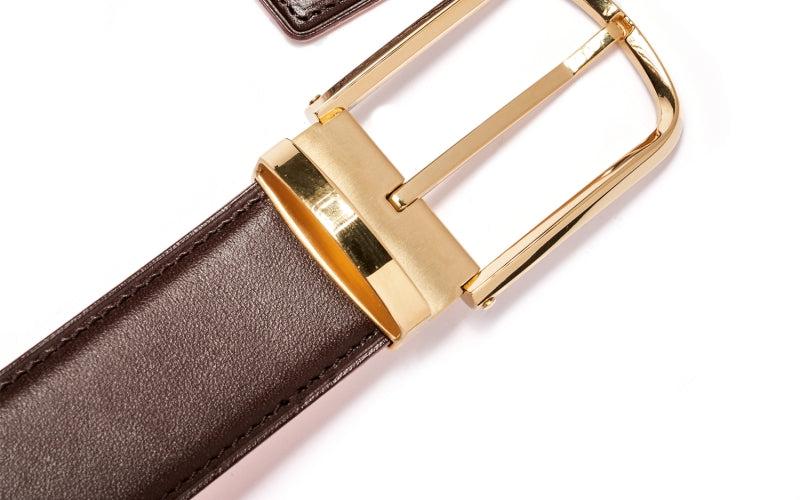
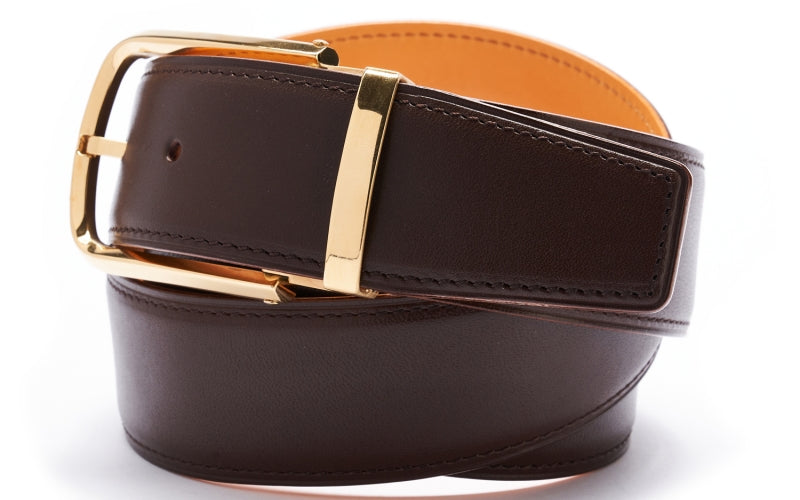
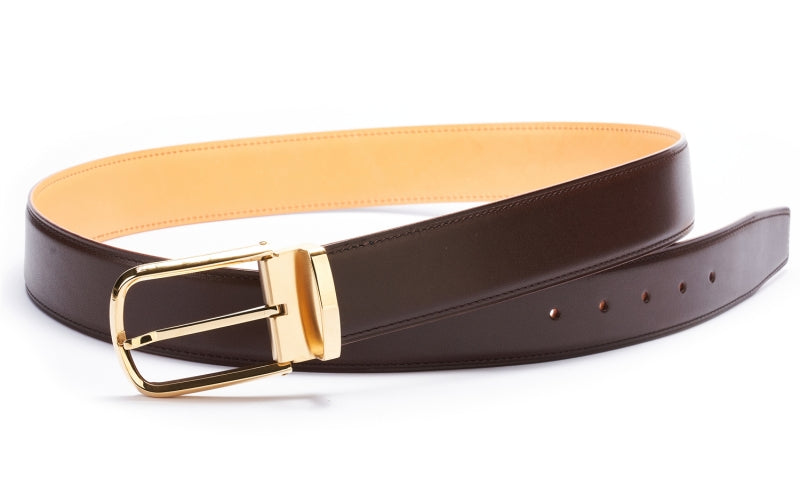
Calfskin shines at refined, daily, suit-and-blazer wear. It's the smooth, finely-grained leather of dress belts and dress shoes — quiet, versatile, and unmistakably premium without shouting. It's the belt you wear five days a week without thinking about it.
A few things calfskin gets right:
- Versatility. Black or brown calfskin pairs with virtually any business outfit.
- Refinement. The smooth surface reads as serious-but-understated.
- Maintenance. Light scratches buff out; conditioning is a 5-minute seasonal task.
- Price-to-quality ratio. Best dress belt you can get without crossing into exotic territory.
For the full background on what makes calfskin premium, see our complete guide to calfskin leather. Our Classic Calfskin Dress Belt at 1.38" is built for this exact role.
What Is a Crocodile Belt Best At?
Crocodile belts are statement luxury — visibly different, instantly recognizable as a tier above standard leather, and built to last a lifetime. The natural scale pattern, the leather thickness, and the craftsmanship required all put crocodile in its own category. This is the belt you reach for when you want the leather itself to be part of the outfit.
Crocodile shines at:
- Visible luxury. The scale pattern is instantly recognizable. There's no hiding it.
- Longevity. A well-made crocodile belt can clear 30+ years. See our piece on crocodile leather belt durability.
- Aging. Quality crocodile develops a deep, lustrous patina that genuinely improves over decades.
- Conversation value. This is a belt people notice.
Price Reality Check: What Each One Actually Costs
Here's where most buyers get sticker-shocked, so let's be honest.

Calfskin belts (BELTLEY pricing): $100–$148 for dress belts. Premium dress-belt territory is $150–$300 at quality brands. Anything claiming to be calfskin under ~$80 is usually top-grain or lower with a "calfskin" label slapped on.
Crocodile belts: $500–$2,000+ depending on the hide (Nile crocodile vs. American alligator vs. Siamese), the grade, the part of the hide used (belly is most prized), and the craftsmanship. Real crocodile cannot be cheap. If you see a "crocodile belt" for $50, it's embossed cowhide pretending — and our piece on embossed cowhide vs. real crocodile belts explains the tells.
Why the price gap? Crocodile hides take 3–7 years to farm to usable size, each hide yields only one or two belts, and the craftsmanship to align scales and finish edges is genuinely specialist work. For the deep dive, our crocodile leather belt price guide breaks down the math.
When to Buy Calfskin Over Crocodile
A calfskin belt is the right call when:
- You wear suits or blazers regularly and want a daily-driver dress belt.
- You're new to premium leather and want to start at the top of "classic" before going exotic.
- You travel often — calfskin draws less attention through customs and at meetings than a $1,500 crocodile belt.
- You want maximum outfit versatility — calfskin disappears into the outfit, crocodile becomes the outfit.
- Budget is $300 or under. Real crocodile starts above that range.
Calfskin is also the smarter pick if you're not 100% sure you want a statement piece. You can always add crocodile later — but it's much harder to "tone down" a crocodile belt once you've bought it.
When to Buy Crocodile Over Calfskin
A crocodile belt is the right call when:
- You already own multiple dress belts and want a true upgrade tier.
- You're marking a milestone — promotion, anniversary, business win.
- You're buying a forever belt — crocodile is the closest thing to a one-purchase-for-life belt.
- You want a leather that visibly says "luxury" without a logo on it.
- You appreciate craftsmanship — handmade exotic leatherwork is some of the most skilled in the industry.
If you wear suits to important events and want one belt that elevates every formal outfit you own, crocodile pays for itself across decades. For more on the wardrobe context, see our piece on when to wear an alligator belt. Browse the crocodile and alligator belts collection for the full range.
Are Crocodile Belts Ethical?
Yes, when sourced from CITES-regulated farms. Modern crocodile and alligator leather is one of the most strictly regulated wildlife products in the world, governed by the Convention on International Trade in Endangered Species (CITES). Reputable brands source only from licensed farms with full traceability documents.

The short version: wild-caught crocodile skins were a real problem decades ago. Today, the global trade in crocodile and alligator leather is overwhelmingly farm-raised under CITES Appendix II permits, which require traceability tags on every hide. Farming has actually contributed to species conservation by giving rural communities economic incentive to protect crocodile habitats rather than destroy them. The CITES species database tracks the regulated species and trade volumes.
Always buy from brands that disclose their source. If a brand can't (or won't) tell you where the hide came from, that's a red flag regardless of the species.
Which Lasts Longer?
Crocodile lasts longer in raw years — typically 30+ with care, sometimes a lifetime. Calfskin lasts 10–20 years with similar care. Both are excellent, but crocodile's thicker, denser hide and natural scale armor give it a longevity edge that's hard to match.
A few notes on the lifespan gap:
- Crocodile hides are 1.5–2.5 mm thick and exceptionally fiber-dense.
- The natural scale pattern hides scratches and wear better than smooth calfskin.
- Crocodile leather has natural oils that take longer to deplete.
- That said, a neglected crocodile belt won't outlast a well-cared-for calfskin belt. Care matters more than material.
For more on the care side, our piece on how long crocodile leather belts really last walks through real-world wear patterns, and our calfskin care 101 guide covers the routine for calfskin.
How Different Do They Actually Look?
Dramatically different. Calfskin is smooth, glossy, and uniform. Crocodile is textured, scaled, and visually rich — the scale pattern is instantly recognizable from across a room. This is the single biggest aesthetic difference in luxury belts.

A calfskin belt blends into a tailored outfit. A crocodile belt becomes a focal point. Neither is "better" — it depends on whether you want the belt to support the outfit or be part of the conversation. Generally:
- Conservative business → calfskin.
- Confident luxury → crocodile.
- Black tie → either works; calfskin is more traditional, crocodile is more memorable.
If you want to understand how crocodile compares to its closest sibling, our pieces on alligator vs crocodile belts and crocodile leather types for belts dig into the variations.
Calfskin vs Crocodile Belt: Side-by-Side
| Feature | Calfskin Belt | Crocodile Belt |
|---|---|---|
| Price range | $58–$300 | $500–$2,000+ |
| Look | Smooth, refined, understated | Textured, scaled, statement |
| Versatility | Pairs with almost any suit | Best with confident, polished outfits |
| Lifespan (with care) | 10–20 years | 30+ years, often lifetime |
| Scratch behavior | Shows; usually buffable | Hidden in scale pattern |
| Patina development | Subtle | Rich, lustrous |
| Visibility level | Quiet luxury | Visible luxury |
| Wardrobe role | Daily-driver dress belt | Statement / milestone belt |
| Sourcing transparency | Standard | CITES-regulated, traceable |
| Best buyer | First serious dress belt | Upgrade tier, heirloom buyer |
Which Should You Buy First?
If this is your first premium belt, buy calfskin. If you already own quality dress belts and want a real upgrade, buy crocodile. The smart sequence is calfskin → crocodile, not the other way around. A crocodile belt without a calfskin foundation in your rotation leaves you under-equipped for regular wear.

Quick decision logic:
- Don't own a quality dress belt yet → start with calfskin.
- Own 1–2 quality dress belts, want to upgrade → crocodile.
- Special occasion / gift / milestone → crocodile.
- Daily wear, business setting, suits 3+ days a week → calfskin first, crocodile second.
For context on the upgrade path specifically, see our piece on upgrading from a cowhide belt to crocodile.
The Bottom Line
Calfskin and crocodile aren't a competition. They're two chapters of a complete leather wardrobe. Calfskin handles the daily formal life — meetings, weddings, the office, the dinners that matter. Crocodile handles the moments where the leather itself is part of the message — milestone events, true heirloom buying, the belt you'll still own and wear in twenty years.
At BELTLEY we make both because the same customer eventually wants both, and we'd rather build them honestly than charge a logo tax on either one. Pick the one that matches where you are right now, take care of it, and either one will quietly outlast every fast-fashion belt you might otherwise buy in the meantime.
Frequently Asked Questions
Q: Is a crocodile belt worth the money?
For a well-made crocodile belt from a reputable source, yes — over a 30+ year lifespan, the cost per wear is genuinely low, and the aesthetic upgrade over standard leather is dramatic. Our piece on whether crocodile belts are worth it digs into the math.
Q: Can I wear a crocodile belt every day?
You can, but most owners rotate it with one or two other belts so each gets to rest. Daily wear is fine; daily wear without rotation halves the lifespan. Treat it like a luxury watch — rotation is part of the routine.
Q: Are crocodile belts in style?
Yes — and they've been "in style" continuously for over 100 years. Crocodile sits outside trend cycles. It's a classic luxury material the way black tie is a classic outfit. See our piece on whether crocodile belts are in style for the full take.
Q: Is calfskin or crocodile harder to care for?
Calfskin needs slightly more attention because the smooth surface shows scratches. Crocodile hides minor wear in its scale pattern but needs occasional specialty conditioning. Both follow similar routines — see our leather care guide.
Q: Can I tell real crocodile from embossed calfskin?
Yes. Real crocodile scales have natural irregularity, small surface pits inside each scale, and asymmetry between sections. Embossed calfskin has too-perfect repetition and uniform scale size. Our embossed cowhide vs real crocodile guide covers the tells in detail.