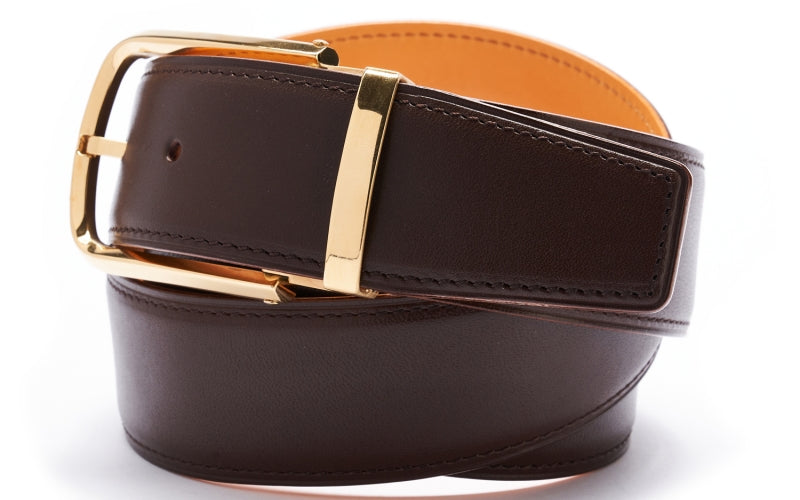
Calfskin vs Saffiano Leather Belt: Texture, Durability, and Use Case
TL;DR:
- Plain calfskin is smooth, natural-grained leather with the hide's original surface preserved.
- Saffiano is calfskin (usually) with a heated crosshatch pattern stamped into it and a wax coating applied on top.
- Saffiano wins on scratch resistance, water resistance, and "stays new" appearance.
- Plain calfskin wins on patina, refinement, and traditional luxury aesthetics.
- Underneath, they're often the same hide — the finish is the entire story.
If you've shopped luxury bags or belts in the last decade, you've seen Saffiano. Maybe without knowing it. That tight, almost machine-perfect crosshatch texture on Prada wallets, on premium business cardholders, on a lot of "modern luxury" belts — that's Saffiano. And here's the thing most people don't know: it's usually calfskin underneath. So this isn't really calfskin vs something else. It's calfskin vs calfskin-with-a-different-finish. Let's break down what changes and when each version is the right pick.
Saffiano or Smooth: Your Use Case Decides
Often the same hide — entirely different ownership:
| Your situation | Go with |
|---|---|
| Commuter, keys-and-bags life | Saffiano — the waxed crosshatch shrugs off what would scar smooth calf. |
| Traditional luxury taste | Plain calfskin — patina, refinement, and the surface nature made. |
| Want it identical in five years | Saffiano — "stays new" is its entire engineering brief. |
| Want it BETTER in five years | Plain calfskin — only natural surfaces improve with age. |
Natural-faced calfskin from $100: BELTLEY's men's collection.
What's the Actual Difference Between Calfskin and Saffiano?
Saffiano is calfskin that's been put through a heated crosshatch press and waxed on top. The base material is the same; the finish is completely different. Plain calfskin keeps its natural smooth surface. Saffiano gets a stamped texture and a protective wax coating.

That single finishing step changes the whole personality of the leather — how it handles scratches, how it looks under light, how it ages, and how much daily abuse it can shrug off. Same hide, two completely different end products.
What Is Saffiano Leather?
Saffiano is calfskin embossed with a fine, crosshatch (or "diagonal weave") pattern by a heated press, then sealed with a thin layer of protective wax. The technique was patented by Prada in 1913 in Milan, and the name comes from the Italian word saffianare, meaning to apply that distinctive finish.
The actual process is more interesting than the marketing usually admits. A premium calfskin hide is fed into a heated stamping machine for 10–15 seconds at high temperature. The crosshatch pattern is pressed into the surface, and a wax coating is applied to seal it. The result is leather that's harder, more rigid, more scratch-resistant, and more uniform than plain calfskin. According to a Carl Friedrik magazine breakdown of Saffiano, the patent has long since expired, so today many luxury brands produce their own versions — though the quality of the underlying hide varies wildly.
For background on the base material itself, see our complete guide to calfskin leather.
What Is "Plain" Calfskin?
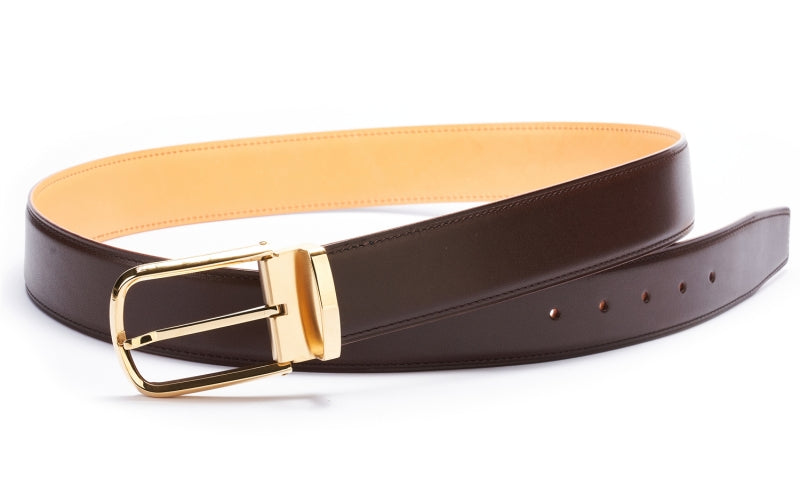
Plain calfskin is calfskin with its natural smooth surface preserved — no embossing, no heavy wax coating. The hide's original grain, pores, and subtle natural variations stay visible. It's the format used in classic dress belts, dress shoes, and the kind of luxury goods where the leather is meant to look like leather.
Plain calfskin includes finishes like box calf (glazed), pebbled grain calf (lightly embossed but in a softer way), suede calf, and vachetta. The common thread is that the leather retains its natural feel and ages organically. For more on the finish variations, see our 10 iconic leather types for belts guide.
Texture: Smooth vs Crosshatched
This is the most obvious difference, and it's instantly visible.

- Plain calfskin has a smooth, refined surface with subtle natural variation. Light reflects off it evenly. It looks polished, classical, almost glass-like in box calf form.
- Saffiano has a tight, machine-perfect crosshatch pattern that catches light in a textured way. It looks structured, modern, and uniform — every Saffiano panel looks like every other Saffiano panel.
That second point is important. Saffiano's appeal is its consistency. Two Saffiano belts side by side look identical in texture. Two plain calfskin belts have subtle individual variation. Whether that's a feature or a bug depends on your taste. Some buyers want each piece to feel one-of-a-kind. Others want machine-grade uniformity. Both preferences are legitimate.
Which Is More Durable?
Saffiano wins on day-to-day durability. The wax coating and embossed surface resist scratches, water, and stains far better than plain calfskin. A scratch that would show clearly on smooth calfskin often disappears into Saffiano's textured pattern, and the wax coating shrugs off light rain without leaving water marks.
A quick reality check on what each handles:
- Daily desk wear (zippers, bag handles, belt buckle contact) — Saffiano resists, plain calfskin shows.
- Light rain — Saffiano wax repels, plain calfskin needs immediate blotting.
- Pen ink, coffee splashes — Saffiano can usually be wiped clean, plain calfskin may stain.
- Heavy wear — both are robust, but Saffiano keeps looking new while plain calfskin shows wear.
That said, durable doesn't mean indestructible. The wax coating on Saffiano can wear through over years, and once that happens the surface is harder to restore than plain calfskin. Trade-offs again. Both leathers are still tanned at facilities ideally certified by the Leather Working Group for environmental standards — the finish is on top of an already-quality hide.
Which Is More Formal?
Plain calfskin reads as more traditionally formal. Saffiano reads as more modern luxury — clean, structured, contemporary. Neither is "casual," but they communicate different things in a formal context.
A simple rule of thumb:
- Black-tie, classic business, traditional wedding → plain calfskin (especially box calf).
- Modern business, tech-meets-finance, fashion-aware luxury → Saffiano works beautifully.
- Conservative legal or banking → plain calfskin is the safe pick.
- Smart office, daily-wear formal → either works; Saffiano survives the week better.
If your wardrobe leans classic, smooth calfskin is the more natural fit. If your wardrobe leans modern, Saffiano gives you a contemporary edge without sacrificing premium-leather credentials. For more on the formal/casual line, see our dress belt vs casual belt guide.
How Does Each One Age?
This is where the long-term personalities really diverge.

Plain calfskin ages organically. It develops a subtle patina, the color deepens slightly with sun and skin contact, and the surface gains a soft sheen over years of buffing and wear. A 10-year-old plain calfskin belt has visible history.
Saffiano ages by staying mostly the same. The wax coating protects the leather from the oxidation and oil absorption that drives patina, so the belt looks remarkably close to year one for a long time. Eventually the wax wears, the embossing softens slightly, and the leather underneath begins behaving more like plain calfskin — but that's often a decade or two in.
Neither is better. They're different relationships with time. According to Encyclopaedia Britannica's overview of leather production, surface finishing has always been the variable that decides whether a leather ages "naturally" or stays in a stabilized state — Saffiano is the modern luxury version of that older surface-sealing tradition.
When to Buy a Saffiano Belt
A Saffiano belt is the right pick when:
- You want a structured, modern-luxury aesthetic.
- You travel often and need a belt that survives airport security trays, bag jostle, and weather.
- You prioritize "looks new for years" over "develops character."
- Your wardrobe trends contemporary — slim suits, modern formal, fashion-aware luxury.
- You hate seeing scratches on a smooth surface.
Saffiano is the practical luxury answer — visible quality, low maintenance, daily-life durability.
When to Buy a Plain Calfskin Belt
A plain calfskin belt is the right pick when:

- You want classic, traditional, timeless luxury.
- You appreciate patina and natural aging over decades.
- Your wardrobe leans classical — traditional tailoring, conservative business, heritage style.
- You'll commit to seasonal conditioning and won't panic over occasional scratches.
- You want the belt to feel hand-finished rather than machine-uniform.
Plain calfskin is the heritage luxury answer — refined, evolving, slightly higher maintenance, deeply rewarding. Our Classic Calfskin Dress Belt is built in this tradition.
Calfskin vs Saffiano: Side-by-Side
| Feature | Plain Calfskin | Saffiano |
|---|---|---|
| Base material | Calfskin | Calfskin (usually) |
| Surface texture | Smooth, natural grain | Crosshatch embossed |
| Finish | Aniline dye, light glaze | Wax-coated, sealed |
| Scratch resistance | Lower (shows marks) | High (texture hides marks) |
| Water resistance | Lower | High (wax repels) |
| Stain resistance | Lower | High |
| Patina development | Real, gradual, dramatic | Minimal — stays new-looking |
| Aesthetic | Classical, refined | Modern, structured |
| Daily wear durability | Moderate | Excellent |
| Best wardrobe match | Traditional formal | Contemporary luxury |
Which Should You Buy?
If your week leans classical (suits, traditional formal events), buy plain calfskin first. If your week leans contemporary or you travel/commute heavily, Saffiano earns its place. A wardrobe with both covers more ground than either one alone.

Quick decision logic:
- Want patina + classical look → plain calfskin.
- Want low-maintenance + modern look → Saffiano.
- Heavy daily abuse → Saffiano.
- One-and-done dress belt → plain calfskin (it'll outlive the wax coating debate).
Browse our dress belts collection for the broader range, and our piece on why full-grain calfskin is the gold standard covers what's actually under both finishes.
The Bottom Line
Calfskin and Saffiano aren't really competitors — they're the same leather with different finishing philosophies. Plain calfskin is the heritage approach: keep the leather natural, let it age, accept that it'll show character. Saffiano is the modern approach: stamp, wax, seal, protect, keep it looking new. Both rely on the same premium calfskin underneath, so the question isn't "which is better leather?" — it's "which finishing philosophy fits how you live?" At BELTLEY we work in the traditional calfskin tradition because we like leather that becomes more yours over time. But if a Saffiano-style belt is what your week needs, there's nothing wrong with that — it's still real calfskin doing real work. Pick the version that matches your aesthetic, condition it on the right schedule, and either one will outlast the cheap belts you'd otherwise churn through.
Frequently Asked Questions
Q: Is Saffiano leather real leather?
Yes. Saffiano is real, full-grain (or top-grain) calfskin that's been embossed with a crosshatch pattern and wax-coated. It's a genuine leather finish, not an imitation. Just check that the base hide is calfskin — cheaper "Saffiano-style" goods may use lower-grade leather.
Q: Is Saffiano more durable than regular calfskin?
For scratch and water resistance, yes — the wax coating and texture protect the surface in ways plain calfskin can't match. For long-term lifespan, they're similar; the wax coating eventually wears, after which the underlying leather behaves like regular calfskin.
Q: Why is Saffiano leather so expensive?
Because the base material is premium calfskin and the finishing process is patented-quality work (Prada's original patent has expired, but the technique remains specialist). Cheap "Saffiano" exists, but it's usually on lower-grade base hides. Real Saffiano on real calfskin commands real prices.
Q: How do I care for a Saffiano belt?
Wipe regularly with a dry cloth. The wax coating handles light water, but blot any heavy spills quickly. Condition rarely (every 12–18 months at most) — over-conditioning Saffiano can soften the wax. See our leather care guide for the full routine on both Saffiano and plain calfskin.
Q: Can Saffiano develop a patina?
Minimally. The wax coating and embossed surface prevent the natural oxidation and oil absorption that drives patina in plain leather. If you specifically want patina, plain calfskin or full-grain cowhide are the better choices.
%20with%20a%20heated%20crosshatch%20pattern%20stamped%20into%20it%20and%20a%20wax%20coa...)