Calfskin vs Patent Leather Belt for Black-Tie
TL;DR:
- Patent leather is the historically traditional black-tie choice — mirror-glossy, designed to match silk lapels and patent dress shoes.
- Calfskin (specifically box calf, highly polished) is the modern-acceptable alternative — almost as formal, far more versatile.
- Confession from formal-wear history: real black-tie tuxedos traditionally don't use a belt at all. Cummerbunds and suspenders are correct. If you must wear a belt, this is the guide.
- For most modern black-tie events: polished calfskin belt + patent leather shoes = perfect.
- Patent leather belts work if you want maximum traditional correctness, but they're hard to wear with anything but a tuxedo.
So you've got a black-tie invitation, a tuxedo, and a question: "Do I need a patent leather belt, or will my calfskin one do?" Good news — you've already done better research than 95% of the room. Bad news — there's a small etiquette landmine hidden inside the question. Let's walk through what's traditionally correct, what's modern-acceptable, and what to actually buy.
Black-Tie Tonight: What Goes On?
The formal-wear decision, ranked by correctness:
| Your situation | Go with |
|---|---|
| Traditional tuxedo, proper dress code | No belt at all — cummerbund or suspenders; the trousers shouldn't have loops. |
| Modern tux with belt loops | Polished black box calf, slim, minimal buckle — the modern-acceptable answer. |
| Matching patent shoes strictly | Patent belt is the historical match — just know it's single-purpose forever. |
| Buying one formal belt for life | Polished calfskin — black-tie capable AND boardroom capable; patent is black-tie only. |
The versatile formal pick lives in BELTLEY's men's collection — calfskin $100–$148.
The Quick Answer for Black Tie
For maximum traditional correctness, patent leather. For maximum modern versatility, highly polished calfskin (box calf). Both are acceptable at virtually every black-tie event today. The patent route is the textbook answer; the calfskin route is what most well-dressed men actually do.

Tradition says match your belt finish to your shoe finish. If you're wearing patent leather opera pumps or patent Oxfords (the traditional black-tie shoes), a patent belt completes the look. If you're wearing well-polished calfskin Oxfords (the modern accepted alternative), a polished calfskin belt is the right partner.
What Is Patent Leather, Really?
Patent leather is leather (usually calfskin) coated with a high-gloss, mirror-finish lacquer or, in modern versions, a thin layer of polyurethane or acrylic. The result is a glassy, reflective surface designed to catch light dramatically. Originally invented in the 1800s using linseed oil and varnish, today's patent leather mostly uses synthetic coatings for consistency and durability.
The key thing to understand: most patent leather is still calfskin underneath. The mirror finish is the surface treatment, not the material itself. So when you choose patent over plain calfskin, you're choosing a different surface philosophy on top of (often) the same base hide. For background on calfskin itself, see our complete guide to calfskin leather.
What Is a Calfskin Belt?
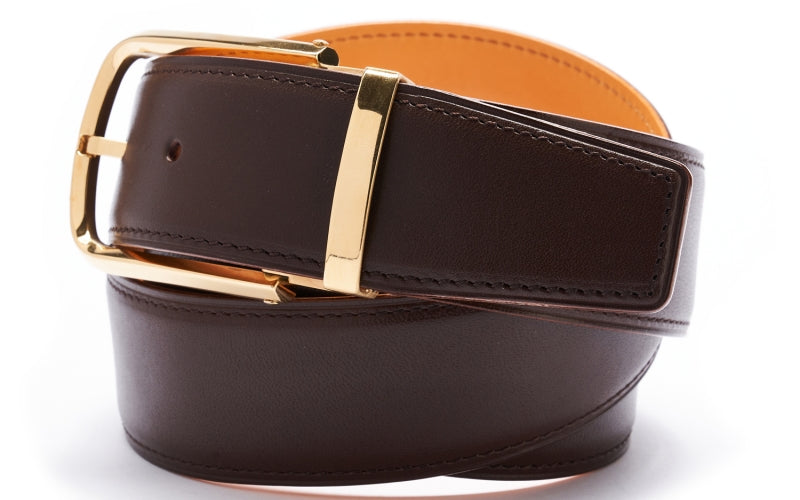
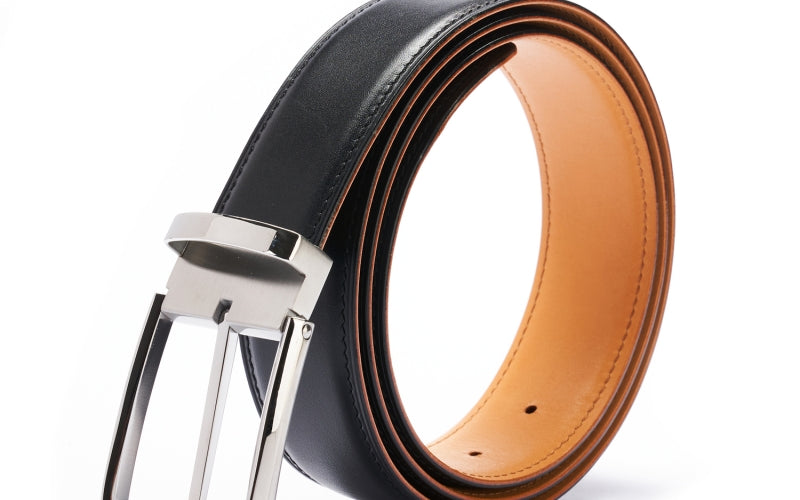
A calfskin belt is a belt made from the hide of a young cow, typically finished with a smooth grain (box calf), a light glaze, or a polished surface. It's the standard refined dress belt material — versatile across business and formal wear. Calfskin is what you'd wear with a dress shoe Monday through Friday, and a polished version (specifically box calf) is what most well-dressed men wear with their tuxedo today.
The two formal calfskin finishes that matter for black-tie are:
- Box calf — chrome-tanned, glazed smooth, takes a serious shine. Closest calfskin to patent.
- Polished calfskin — slightly less mirror, slightly more natural. Daily-luxury territory.
For the finish breakdown, see our piece on box calf vs grain calf.
Which Is Traditionally Correct for Black Tie?
Patent leather is the textbook traditional choice. From the 1850s through the 1950s, patent leather was effectively the black-tie material, chosen specifically to harmonize with the silk facings on tuxedo lapels. Polished calfskin became acceptable in the mid-20th century and is the dominant choice today — but patent remains the most "correct" by older etiquette books.

The reasoning was elegant: black-tie outfits feature high-contrast textures — matte wool, silk satin lapels, silk bow tie, silk waistband, polished leather shoes. Patent leather's mirror finish was designed to complement that silk shine. According to Gentleman's Gazette's black-tie shoe guide, the high gloss of patent shoes was meant to echo the silk facings as part of black-tie's signature texture contrast. The same logic applies to a belt.
According to Wikipedia's black-tie reference, modern black-tie etiquette accepts well-polished calfskin as an alternative — so neither choice is wrong, but patent edges out for pure tradition.
Is a Belt Even Worn With a Tuxedo?
Strictly traditionally, no — a tuxedo is worn with side adjusters, suspenders (braces), or a cummerbund instead of a belt. The waistband is meant to be uninterrupted by a buckle. This is the part most modern guides skip. If you're going fully by the book, your tuxedo trousers should have suspender buttons or side adjusters and no belt loops at all.
That said, modern tuxedo trousers often come with belt loops, and many men wear belts with their tuxedos without anyone noticing or caring. If your tuxedo has belt loops, you have three options:
- Skip the belt entirely — the loops will be hidden under a cummerbund or waistcoat.
- Wear suspenders under your tuxedo jacket — most formal, most comfortable.
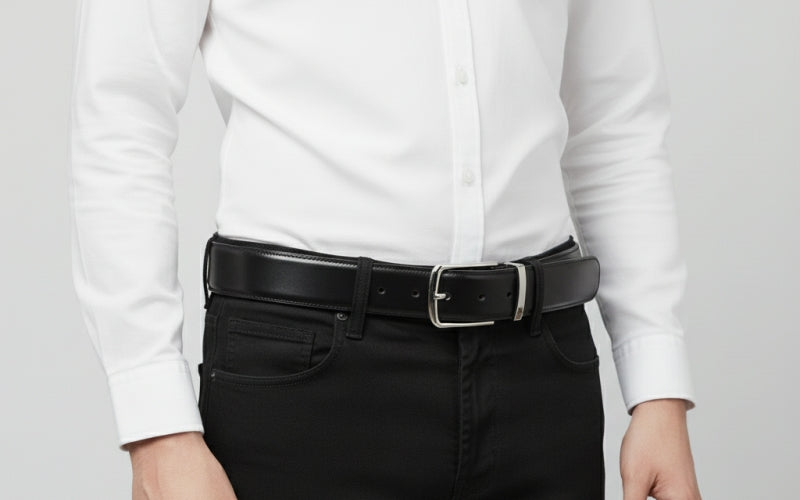
- Wear a slim, polished black belt — patent or polished calfskin, ~1.0–1.25" wide, minimal buckle.
Most real-world black-tie events fall into option 3. Which brings us back to the calfskin-vs-patent question.
When a Belt Is Necessary at Black-Tie
In practice, you'll want a belt when:

- Your tuxedo has belt loops and no side adjusters.
- You're not wearing a cummerbund or waistcoat to hide the waistband.
- Suspenders feel too retro or impractical for the event.
- The event is "black-tie optional" or "creative black-tie" where the rules are more relaxed.
In those cases, the belt should be slim (1.0–1.25" — not the chunky 1.5" daily-driver), in black, with a small polished buckle. Forget cowboy buckles, decorative hardware, or contrast colors. The belt should be invisible. Our Classic Calfskin Dress Belt at 1.38" is on the upper end of acceptable — go slimmer if you want stricter black-tie correctness.
Patent Leather Belt: Pros and Cons
The good:
- Maximum traditional correctness for black-tie.
- Mirror finish harmonizes perfectly with silk lapels and patent shoes.
- Stays glossy with minimal effort.
- Water-resistant (the lacquer/PU coating sheds light moisture).
The not-so-good:
- Essentially unwearable outside formal events. A patent belt with business casual looks costume-y.
- The coating can crack with heavy bending or extreme cold.
- Hard to repair once the patent finish is scratched deeply.
- Less versatile = lower cost-per-wear unless you attend black-tie events regularly.
If you go to 1–2 black-tie events a year, a patent belt is hard to justify financially. If you're in a city with regular formal events, gala fundraisers, or industries where black tie is normal, it's a legitimate purchase.
Calfskin Belt for Black-Tie: Pros and Cons
The good:
- Wearable across the entire formal-to-business-formal spectrum.
- Pairs with polished calfskin Oxfords (the modern black-tie shoe).
- Ages gracefully — develops a subtle patina over years.
- Cost-per-wear is excellent because the belt has 1,000 other uses.
The not-so-good:
- Slightly less "textbook" correct for strict black-tie.
- Needs occasional polishing to maintain the shine that matches patent shoes.
- A matte calfskin belt would actually be wrong here — you specifically want a polished box calf finish.
For most men, a high-quality polished calfskin belt is the smarter purchase. It handles black-tie and every other formal occasion you'll attend. For the broader leather-formality discussion, see our piece on why full-grain calfskin is the gold standard and our dress belt vs casual belt guide.
Patent vs Polished Calfskin Belt: Side-by-Side
| Feature | Patent Leather Belt | Polished Calfskin Belt |
|---|---|---|
| Black-tie correctness | Highest (traditional) | High (modern accepted) |
| Finish | Mirror gloss (lacquer/PU) | Polished smooth grain |
| Versatility outside formal | Very low | High |
| Pairs with patent shoes | Perfectly | Acceptably |
| Pairs with polished calf shoes | Acceptable | Perfectly |
| Maintenance | Wipe clean, minimal | Polish + condition seasonally |
| Lifespan | 5–15 years (coating-dependent) | 10–20+ years |
| Cost-per-wear | Poor unless formal-heavy | Excellent |
| What it signals | Old-school traditional | Modern refined |
| Right buyer | Frequent black-tie attendee | Most men |
What I'd Actually Buy
For most men, the right answer is a polished calfskin (specifically box calf) belt in black, slim profile (~1.0–1.25"), with a clean polished buckle. It will handle black-tie events convincingly and earn its keep at every other formal occasion you'll attend. Skip the patent unless your social calendar genuinely demands it.

The honest rule: if you can name three or more black-tie events per year, consider patent. If your calendar is mostly business formal with the occasional wedding or gala, a polished calfskin belt does the job and adds zero closet clutter. Our dress belts collection covers the range, and the Classic Calfskin Dress Belt is a clean, polished, formal-friendly option.
The Bottom Line
Black-tie tradition wants patent leather. Modern reality lets you get away with polished calfskin — and for most men, that's the smarter purchase. The cleanest move is to own one high-quality polished calfskin belt that handles every formal moment in your life, save the patent leather for shoes (where the tradition is much more strictly observed), and skip the belt entirely if your tuxedo has side adjusters or you're wearing a cummerbund. At BELTLEY we build dress belts in polished calfskin because that's the leather that lives in the gray zone between business and black-tie — refined enough for a tuxedo, versatile enough for a Tuesday meeting, and built to last decades when you treat it right.
Frequently Asked Questions
Q: Do I need a patent leather belt for black tie?
No — modern black-tie etiquette accepts well-polished calfskin as an alternative. Patent remains the most traditionally correct choice, but a polished calfskin belt is widely accepted at virtually every black-tie event today.
Q: Should I wear a belt with a tuxedo?
Strictly traditionally, no — tuxedos are designed with side adjusters or worn with suspenders or a cummerbund. But if your tuxedo trousers have belt loops, a slim, polished black belt is acceptable. Avoid wide, decorative, or contrast-colored belts.
Q: What kind of leather is a patent leather belt made from?
Most patent leather is calfskin underneath, finished with a high-gloss lacquer or polyurethane coating. Lower-end patent products may use other base leathers. The mirror finish is the surface treatment, not the leather itself.
Q: How wide should a black-tie belt be?
Slim — typically 1.0–1.25". A standard 1.5" daily-driver belt is too chunky for the slim silhouette of a tuxedo. The dressier the event, the thinner the belt.
Q: How do I care for a patent leather belt?
Wipe with a damp cloth after each wear. Skip leather conditioner — the patent coating doesn't absorb it. Avoid sharp folding (the coating can crack) and avoid temperature extremes. For polished calfskin belts, our leather care guide covers the routine.
%20is...)