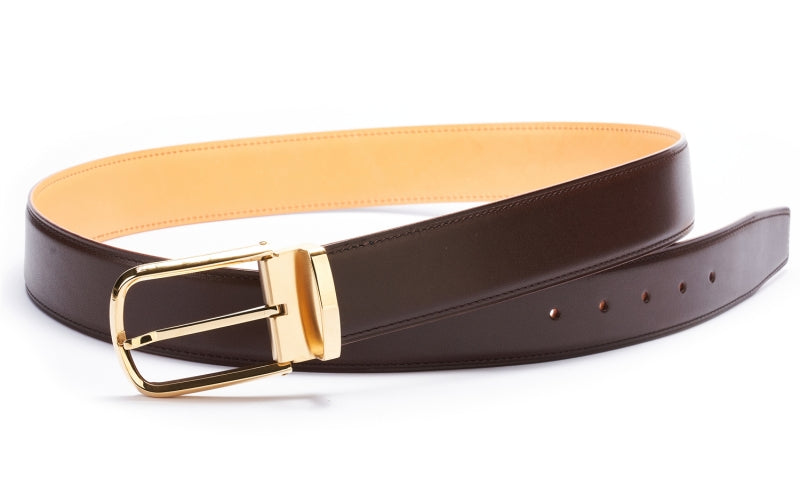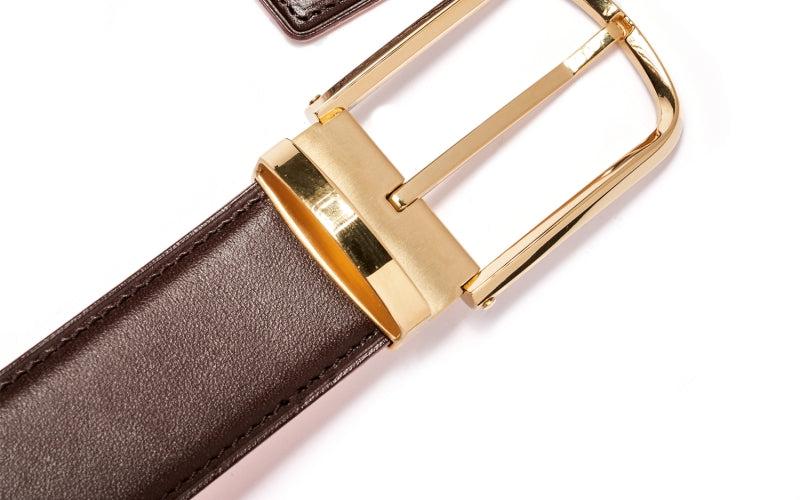
Calfskin Care 101: How to Keep It Looking New for Decades
TL;DR:
- Calfskin care is shockingly simple: wipe, condition, store, rotate. Five minutes a season is enough.
- The biggest killers of calfskin are moisture, complete dryness, and folding it the wrong way — not normal wear.
- Condition every 3–6 months with a soft cream made for fine leathers (not heavy oils).
- Rotate between at least two belts so each one gets to rest and breathe.
- Done right, a calfskin belt looks new at year ten and presentable at year twenty-five.
Here's the funny thing about calfskin care: most people either ignore it completely (and ruin a $200 belt in three years) or they obsess over it like it's a houseplant with feelings (and over-condition it into a greasy mess). The actual right answer is in the middle, and it takes about as long per season as making a cup of coffee. Let's walk through it.
What Kills Calfskin Faster Than Anything?
The biggest killers, in order: prolonged moisture, complete dryness, sharp folding, direct sunlight, salt and sweat, and storing it crammed in a drawer. Notice that "everyday wear" isn't on the list. Calfskin is tougher than people think. It's neglect and trauma that finish it off, not use.

A few specifics:
- Water leaves rings, stiffens fibers, and accelerates cracking once it dries.
- Heat and sun bake the natural oils right out of the leather.
- Folding creates permanent stress lines that eventually crack.
- Salt (from sweat or winter roads) corrodes the surface finish.
- No conditioner ever is the silent killer. Leather needs feeding the same way skin does.
If you avoid those five things, you've already done 80% of the job. Everything below is the other 20%. For the calfskin background that explains why these things hurt the leather, see our complete guide to calfskin leather.
Step 1: Wipe Down After Every Wear
This sounds excessive. It isn't. Skin oils, dust, and microscopic grit are what slowly grind down a leather surface over years. A quick wipe lifts them off before they have a chance to settle in.
What to do:
- Grab a clean, soft cotton cloth (an old T-shirt works perfectly).
- Run it gently along the strap and around the buckle holes.
- Pay extra attention to the spot where the buckle sits — that's where the most skin contact happens.
- Total time: 10 seconds. Less than putting the belt away.
That's it. No products, no spray, no fuss. Just a dry wipe. Do this most days and your belt will look noticeably better at year five than the same belt would without it.
Step 2: Condition Every 3–6 Months
This is the big one. Leather is essentially preserved animal skin, and like skin, it dries out over time. Conditioner replaces lost oils and keeps the fibers flexible. Skip this step and the leather eventually cracks. Do it too often and you'll over-saturate the surface.

How to do it:
- Wipe the belt clean with a slightly damp cloth (not wet — damp). Let it air-dry for 30 minutes.
- Apply a pea-sized amount of leather cream to a clean cloth.
- Rub it into the leather in small circles, working both sides of the strap.
- Let it sit for 10–15 minutes so the leather drinks it in.
- Buff off any residue with a clean dry cloth.
That's the entire routine. It takes five minutes and pays off for years. For the broader leather care framework, our leather care page and our ultimate guide to caring for full-grain leather belts cover the wider routine.
How Often Should You Really Condition Calfskin?
Every 3–6 months for daily-wear belts, every 6–12 months for occasional belts. Climate adjusts the timeline — dry climates need more frequent conditioning, humid climates need less. Anything more often than monthly is overkill and risks over-saturating the leather.
A practical rule: if the leather looks dry, dull, or feels tight against the buckle holes, it's time. If it still has a soft, supple feel and even sheen, leave it alone. According to Encyclopaedia Britannica's leather production overview, the natural oils in leather deplete gradually through normal wear and exposure — conditioning replaces them at roughly the same pace they leave.
Step 3: Store It Properly
Storage is the step most people skip entirely, and it costs them years of belt life.
The basics:
- Hang it on a belt hanger or a hook by the buckle end. This is the gold standard.
- Or roll it loosely (not tightly) and store it in a breathable cotton dust bag.
- Never fold it sharply. Folding creates a crease that eventually cracks.
- Don't cram it into a packed drawer where it's squashed against other belts.
- Keep it out of direct sun — sun-bleached calfskin is depressing to look at.
- Avoid plastic bags — they trap moisture and accelerate mold. Use cotton or muslin instead.
If you only have a drawer, at least lay the belt flat or roll it loosely. The goal is no permanent bend lines.
What If My Calfskin Belt Gets Wet?
Blot immediately with a dry cloth — never rub. Let the belt air-dry naturally at room temperature, away from heat. Once fully dry, condition it lightly to replace the oils the water displaced. Do not put a wet leather belt near a radiator, hair dryer, or direct sunlight. Heat is what finishes the job and cracks the leather.

Calfskin handles a quick rain shower fine if you address it the same day. Prolonged soaking is a different story — the natural oils get displaced, the fibers stiffen as they dry, and the surface can develop water rings. If your belt takes a real soaking:
- Blot, don't wipe.
- Stuff the belt loosely with paper towels if it's heavily wet.
- Let it air-dry slowly over 24–48 hours.
- Condition once fully dry.
- Accept that there may be a faint water mark — it's part of the patina now.
How to Buff Out Scratches
Calfskin's smooth surface is beautiful and slightly cursed — it shows every scratch. Good news: most light scratches buff right out.
For surface scratches:
- Rub gently with a soft cotton cloth. Skin oil on your finger helps too.
- The friction warms the leather slightly, which redistributes the natural finish.
- Most superficial marks disappear in 30 seconds.
For deeper scratches:
- Apply a tiny dab of matching leather cream to a cloth.
- Rub gently in small circles over the scratch.
- Buff off the excess.
- Repeat if needed.
For really deep marks: accept them as patina, or take the belt to a leather-care specialist. Cobblers who handle dress shoes will usually work on belts too.
What Products Should You Avoid?
Skip mink oil, neatsfoot oil, petroleum-based products, baby wipes, and anything labeled "saddle soap" for calfskin specifically. Those are built for thicker, rougher leathers — work boots and saddles — not refined calfskin. Use them on a calfskin dress belt and you'll over-saturate the leather, darken it unevenly, and possibly damage the finish.

What to use instead:
- A leather cream specifically labeled for fine or smooth leathers.
- Brands tanned at Leather Working Group certified facilities often recommend specific compatible care products — check the brand's recommendation.
What to never use:
- Furniture polish.
- Olive oil or cooking oils (rancidity is real).
- Alcohol-based wipes.
- Household cleaners.
When in doubt: less is more. A dry cloth and patience will do less damage than the wrong product.
The Rotation Rule
Owning at least two belts and rotating them roughly doubles the lifespan of each one. Leather needs rest between wears — 24–48 hours to recover from the day's body moisture and stress. This is the single highest-leverage care habit, and it doesn't involve any products at all.
Think of it like running shoes. Wear the same pair every day and they break down fast. Rotate between two pairs and each one lasts twice as long. Same principle, same biology of fibers under stress. A calfskin dress belt for suits + a casual belt for jeans is a perfectly justified rotation. Our dress belts collection has the formal half covered.
Calfskin Care Calendar at a Glance
| Frequency | Task | Time |
|---|---|---|
| After each wear | Quick dry-cloth wipe | 10 seconds |
| Monthly | Inspect for scratches, scuffs, dryness | 2 minutes |
| Every 3–6 months | Condition with a soft leather cream | 5 minutes |
| Seasonally | Check storage — still hung, no folds, no sun | 1 minute |
| Annually | Deep clean + condition + buckle polish | 15 minutes |
| As needed | Blot water immediately, buff scratches | 1–5 minutes |
That's the entire calendar. Less than an hour of total maintenance per year. Done consistently, this routine keeps a quality calfskin belt looking presentable for 20–30 years.

The Bottom Line
Calfskin doesn't ask for much, but the little it does ask matters. Wipe it after wearing. Feed it conditioner a few times a year. Hang it instead of stuffing it. Rotate it. Keep it out of soaking water and direct sun. That's the whole game. At BELTLEY we back every belt with a 10-year warranty on materials and construction (details on our warranty page) — but a warranty only matters if you're also doing your part to protect the leather. Our Classic Calfskin Dress Belt is built to last decades, but only if you give it the five minutes a season it deserves. For more on why calfskin earns this care in the first place, our piece on why full-grain calfskin is the gold standard explains what's actually under the finish.
Frequently Asked Questions
Q: How often should I clean my calfskin belt?
A quick dry-cloth wipe after every wear, plus a deeper conditioning every 3–6 months. That's the entire routine — no daily cleaning needed.
Q: Can I use shoe polish on a calfskin belt?
A neutral leather cream is safer than colored shoe polish, which can transfer pigment and darken the belt unevenly. If you do use a colored polish, match it carefully to the belt color and apply sparingly.
Q: What's the best conditioner for calfskin?
A cream-based leather conditioner labeled for fine or smooth leathers. Skip anything labeled for work boots, saddles, or heavy-duty leather — those are too rich for refined calfskin.
Q: How do I get water stains out of calfskin?
Lightly dampen the entire affected panel with a clean cloth so the moisture levels even out, let it air-dry slowly, then condition once dry. The stain usually fades dramatically. Deep water rings may permanently fade slightly into the patina — that's normal.
Q: How long should a properly cared-for calfskin belt last?
10–20 years comfortably, 25+ years with attentive care and rotation. Some calfskin pieces from heritage makers are still in service after 30+ years. The leather is the easy part — the care is what does it. See our piece on calfskin vs cowhide for the longevity comparison.