One Piece Crocodile Belt vs Multi-Piece: Why It Matters?
TL;DR:
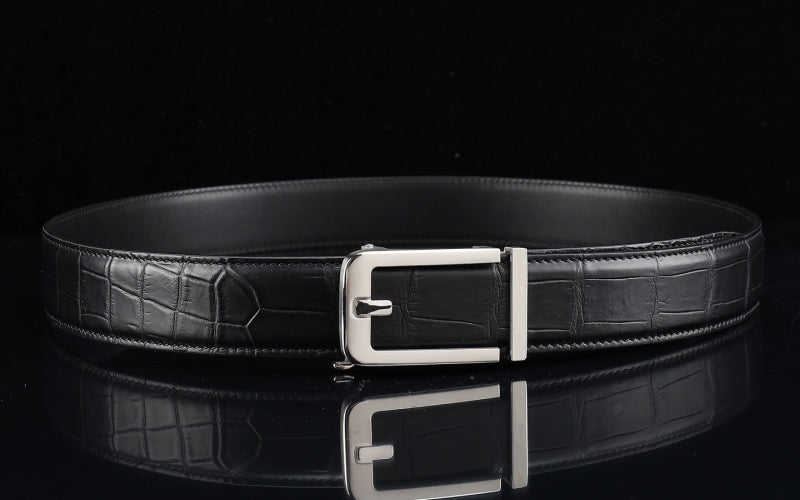
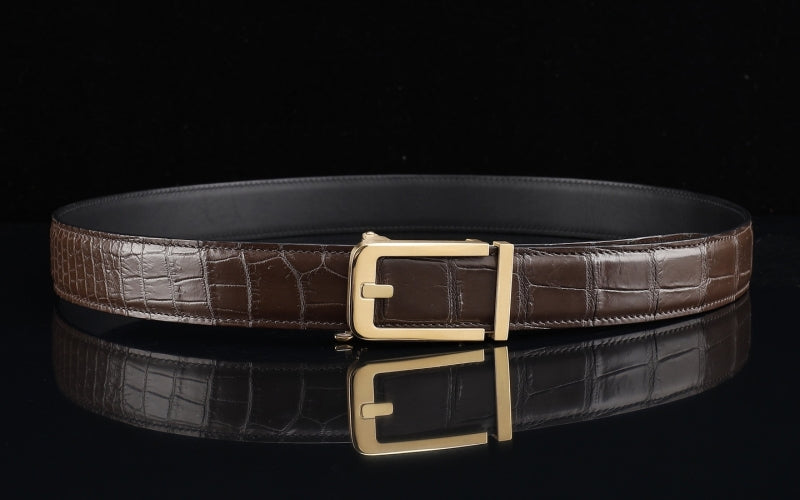
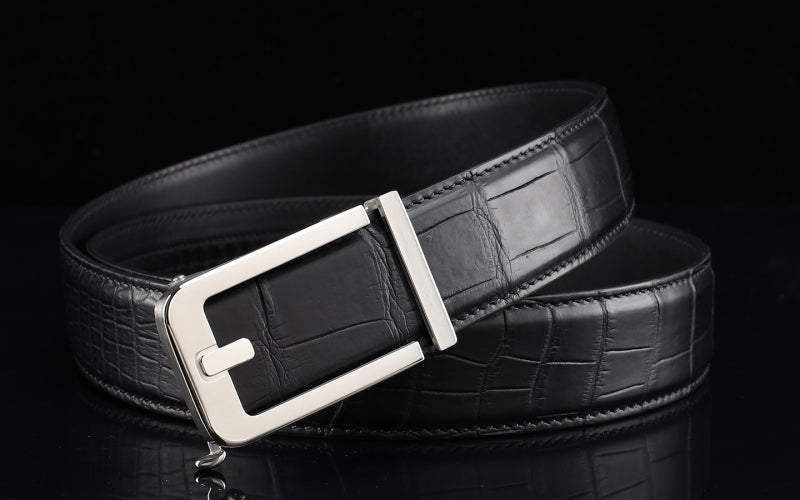
- A one piece crocodile belt is cut as a single continuous strap from one large hide — no joins, no transverse stitch line, scales flow naturally end to end.
- A multi-piece belt is two or more strap sections sewn together, usually because the hide was too small or because the maker was cutting cost.
- Single-piece is the gold standard used by Hermès, top Italian houses, and BELTLEY®. It costs more because it wastes more hide and demands a larger, flawless skin.
- The fastest way to spot a multi-piece belt: look for a thin transverse seam crossing the full width of the strap, often hidden under the keeper loop.
On my bench right now there is a 52-inch Porosus belly that took eleven minutes to cut — and three weeks of waiting for the right hide to arrive. That is what a one piece crocodile belt actually costs in workshop time, and it is the single quietest detail that separates a $1,800 belt from a $300 one. Below, the artisan's view of why single-piece construction is the harder, costlier, correct choice — and how to tell the difference in your hand.
One-Piece or Multi-Piece: What Should You Do?
Four buyers, four answers:
| Your situation | What to do |
|---|---|
| Buying an investment piece | One-piece only — no join, no failure point, natural scale flow end to end |
| Checking a belt right now | Hunt for a thin transverse seam, often hidden under the keeper loop — that's the multi-piece tell |
| On a tight budget | Multi-piece is legitimate when disclosed — the sin is selling it at one-piece prices |
| Wondering about BELTLEY | Single-piece is our standard — same construction tier as Hermès and the top Italian houses |
See the construction up close in the crocodile collection. Why one-piece costs more:
Quick Facts
| Detail | Single-Piece | Multi-Piece |
|---|---|---|
| Strap construction | One continuous cut | 2+ sections joined |
| Visible transverse seam | None | Yes (often under keeper) |
| Hide size required | 50"+ belly | Small/medium offcuts work |
| Scale flow | Natural gradient end to end | Interrupted / mismatched |
| Failure point at join | None | Stitching can fatigue |
| Typical price tier | $800–$5,000+ | $150–$600 |
| Used by | Hermès, BELTLEY, top maisons | Mass-market, mid-tier |
What is a one piece crocodile belt?
A one piece crocodile belt is a strap cut as a single continuous length from one large crocodile hide — most often the belly — with no joins, no transverse stitching, and an unbroken scale pattern from buckle end to tip. It is the original and still the benchmark method of luxury belt construction.

The geometry is unforgiving. A finished men's belt strap is roughly 48–54 inches long after trimming. To cut that cleanly down the center of a Porosus or Niloticus belly — avoiding bone scars, healed bites, and edge thinning — you need a hide that measures at least 50 cm wide and 130+ cm long. Hides like that are rare, expensive, and graded by the IUCN Crocodile Specialist Group trade system before they ever reach a tannery.
What is a multi-piece crocodile belt?
A multi-piece crocodile belt is a strap built from two or more separate hide sections stitched together end-to-end, then lined and finished so the join sits hidden — usually under the keeper loop or near the buckle. It looks finished from the outside, but the seam is structural.
Multi-piece construction exists for two honest reasons and one dishonest one. The honest reasons: the maker only had small or medium hides available, or the customer ordered an oversized strap (60"+) that no single belly could yield. The dishonest reason: the maker bought cheap offcuts from Leather Working Group-rated tanneries and joined them to fake the look of a premium full-length belt at a fraction of the material cost.
How can you tell if a crocodile belt is single-piece or jointed?
Flip the belt over and slide the keeper loop along the strap. If you find a thin transverse stitch line crossing the full width of the leather — perpendicular to the belt's length — it is a multi-piece belt. A true one piece crocodile belt has zero transverse seams; the only stitching runs along the long edges.

Three more tells, in order of reliability:
- Scale flow. On a single-piece belt, scales gradually shift size and shape from one end to the other. On a jointed belt, the pattern jumps abruptly at the seam — a row of large belly tiles can sit beside small flank scales with no transition.
- Color match. Even with the best dye lot, two pieces of crocodile pick up pigment slightly differently. Hold the belt under daylight and look for a faint tonal step.
- Flex test. Bend the belt sharply at suspicious points. A join will hinge stiffly because the stitch thread does not flex like the surrounding leather.
For a deeper look at hide quality before construction even begins, see our guide to center-cut vs side-cut crocodile belts.
Why does a single-piece crocodile belt cost more?
A one piece crocodile belt costs two to four times more than a multi-piece equivalent because it requires a larger, higher-grade hide, produces more waste during cutting, and rejects any skin with even a small flaw in the strap zone. You are paying for everything the artisan throws away.

Here is what the math actually looks like at the bench:
- A premium 55 cm Porosus belly costs roughly $900–$1,400 wholesale.
- From that hide, a single-piece belt yields one strap from the prime center channel.
- The same hide, cut as multi-piece sections, yields three to four straps.
- Per-belt material cost therefore drops from ~$1,200 to ~$300 the moment you allow joins.
That gap is the entire economic reason multi-piece construction exists, and it is closely related to the broader question of why crocodile belts cost $500 vs $5,000. It also explains how many crocodiles it takes to make one belt the proper way — usually one, and only the prime third of it.
Does single-piece construction actually last longer?
Yes — measurably. A one piece crocodile belt has no internal failure point, while a multi-piece belt's join is the first place stress concentrates every time you tighten the buckle. Over 5–10 years of daily wear, jointed straps can develop puckering, thread fatigue, or visible separation at the seam. Single-piece straps simply age.
This is why the Wikipedia entry on belts notes that traditional dress belts are historically single-strap constructions — multi-piece joining only became common with mid-20th-century mass production.
At BELTLEY, every exotic strap we cut is single-piece. That commitment is one reason we can offer a 10-year warranty on our crocodile belt collection and broader exotic leather range — there is no join to fail, so warranty claims are about hardware and edge finishing only, not structural separation.
Do all luxury houses make one-piece crocodile belts?
No. Hermès, the top Italian and French ateliers, and a handful of independent makers like BELTLEY commit to single-piece construction across their crocodile lines. Many "designer" belts in the $400–$900 range — including some recognizable monogram brands — quietly use multi-piece straps and rely on heavy lining and keeper placement to hide the seam.

There is no regulation forcing disclosure. A jointed belt can legally be sold as "100% genuine crocodile" because the leather itself is real — only the construction is compromised. The only protections you have are: ask the brand directly, demand to see the underside before purchase, and look for makers who publish their cutting standards. You can read ours on the BELTLEY about page.
Key Takeaways
- One piece = one continuous cut, zero transverse seams. The benchmark luxury construction.
- Multi-piece = stitched sections. Often legitimate for oversized straps, often used to cut cost.
- The seam is the tell. Slide the keeper loop and inspect the underside.
- You're paying for waste, not just leather. Single-piece rejects 70% of usable hide.
- BELTLEY commitment: Every crocodile strap we make is single-piece, in stock, and ships in 2–3 days from our atelier with a 10-year warranty.
The Bottom Line
A one piece crocodile belt is not a marketing tier — it is a structural decision the maker takes before the first cut. Single-piece costs more because it demands a larger, flawless hide and accepts massive yield loss. It lasts longer because there is nothing inside it to fail. Founded in 1999 and direct-to-consumer since 2025, BELTLEY refuses to compromise on this — no Brand Tax, no joined straps, no exceptions. Browse our in-stock crocodile belt collection — every piece cut single, handcrafted, and ready to ship in 2–3 days.
Frequently Asked Questions
Q: Is a one piece crocodile belt always better than multi-piece?
For straps under 54 inches, yes — single-piece is structurally superior and aesthetically cleaner. For very long custom straps (60"+), multi-piece may be unavoidable because no single hide is large enough.
Q: Where is the join usually hidden on a multi-piece crocodile belt?
Almost always under the keeper loop near the buckle, or 2–3 inches from the buckle end where the strap thins. Slide the keeper aside and look at the underside in daylight.
Q: Can you tell if a belt is multi-piece just from photos?
Sometimes. Look for an abrupt change in scale size or color partway down the strap. Reputable sellers will photograph the underside on request — if they refuse, assume it is jointed.
Q: Are BELTLEY crocodile belts always single-piece?
Yes. Every crocodile and alligator strap we produce is cut from a single continuous section of belly leather. It is a non-negotiable standard backed by our 10-year warranty.
Q: Does an embossed cowhide belt have the same construction concerns?
No — embossed cowhide is a single uniform material and almost always cut single-piece because cowhides are huge. The construction question only matters for genuine exotic leathers. See our comparison of embossed cowhide vs real crocodile.