Bony vs Soft Scales: Which Side Faces Out on a Crocodile Belt?
TL;DR:
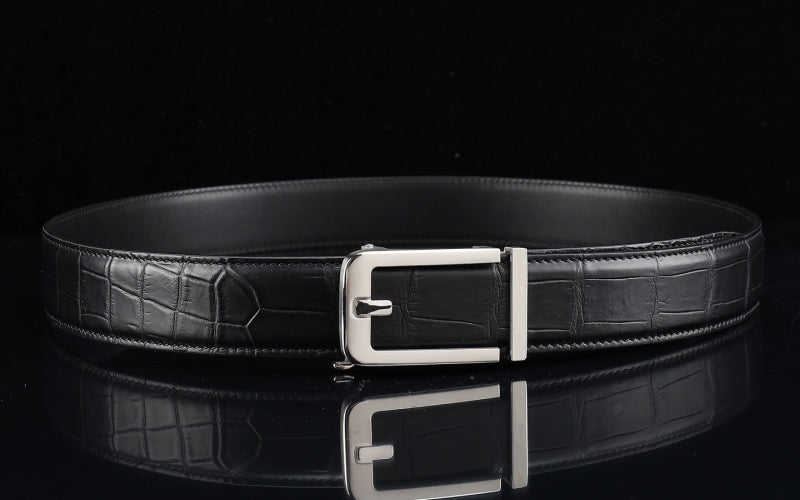
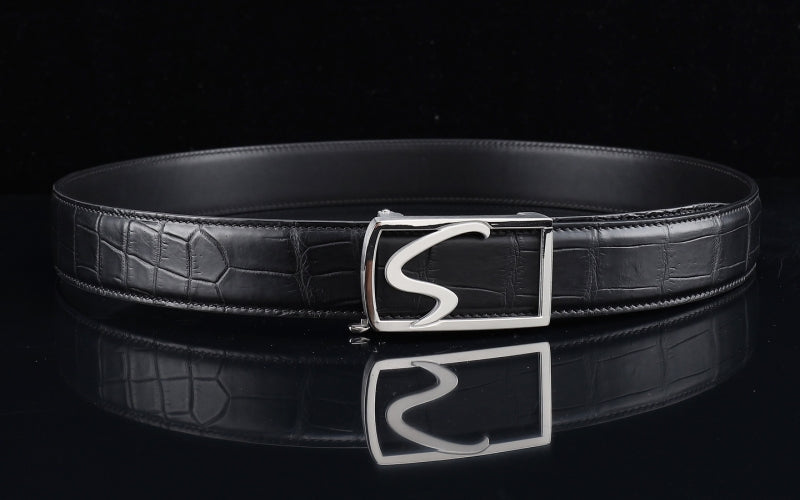
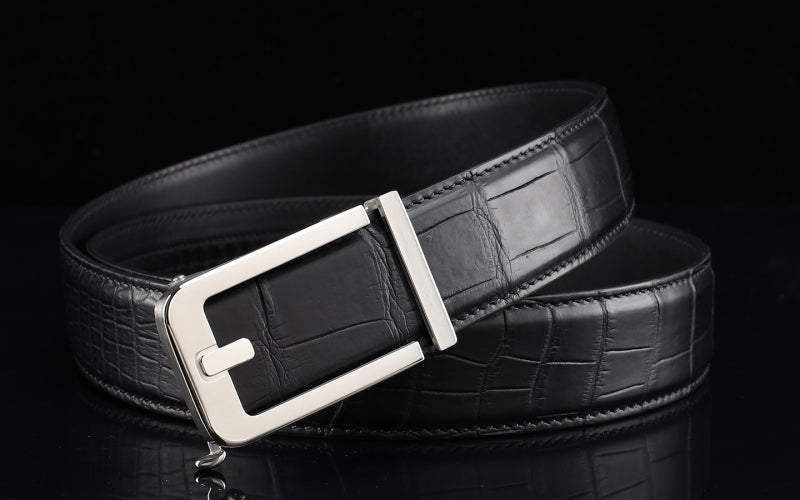
- On nearly every fine crocodile belt, the soft belly side faces out — flat, glossy tiles you can see and touch.
- The bony hornback (dorsal) side has raised osteoderms and is reserved for cowboy belts, boots, and dramatic accent pieces.
- BELTLEY uses belly-cut crocodile and alligator as the standard — handcrafted, in stock, and shipped in 2-3 days with a 10-year warranty.
A crocodile hide has two faces, and most buyers never learn the difference until they're holding the wrong belt. One side is the smooth, prized "belly" used by Hermès, Brioni, and serious leather houses. The other is the rugged "hornback" loved by Western boot makers. Understanding crocodile belt scale orientation — which side faces out, why, and how to spot a fake — is the single fastest way to shop exotic leather like a pro. Below, an artisan's plain-English guide.
Quick Facts
- A crocodile hide yields two distinct sides: belly (soft, flat tiles) and back (bony, raised osteoderms).
- ~95% of luxury crocodile belts use the belly side facing outward.
- The bony back is called hornback in the trade and is mostly used for boots and Western belts.
- The flesh (suede) side always faces inward, against your shirt.
- True belly tiles run square in the center, rounder toward the flanks.
- Hornback belts cost less per inch but are visually louder and harder to dress up.
Belly or Hornback for Your Belt?
The two faces of the hide, assigned correctly:
| Your situation | Go with |
|---|---|
| Dress belt, office, formal | Belly-cut (soft scales out) — the flat glossy tiles are the luxury standard for a reason. |
| Western, rugged, statement style | Hornback — the raised dorsal ridge is dramatic and built for boots-and-denim contexts. |
| Unsure what a listing is selling | Raised bumps in photos = hornback; flat rectangular tiles = belly. Now you can't be upsold the wrong one. |
| One croc belt to start | Belly-cut — it covers ten times the occasions hornback does. |
Belly-cut as standard, in stock and shipped in 2–3 days: BELTLEY's crocodile belts.
What are the two sides of a crocodile hide?
Every crocodile hide has a soft belly side with flat, square scales and a bony back side with raised, calcified bumps called osteoderms. Tanners split, trim, and grade the hide based on which side a craftsman wants showing. The belly is supple and lays flat; the back is armored and rigid.

That biological split exists because crocodiles evolved with armor on top to deflect predators and softer skin underneath for swimming, according to general references on crocodile anatomy. The leather industry inherited that anatomy, and roughly 200 years of luxury craft have settled on the belly as the premium working surface. For a deeper look at where on the hide the best belt strap is cut from, see our guide to center-cut vs side-cut crocodile belts.
Which side faces out on a crocodile belt?
On a standard luxury crocodile belt, the smooth scaled belly side faces outward (visible) and the suede flesh side faces inward (against your body). This is the universal default for dress belts, designer belts, and virtually every alligator or porosus crocodile strap sold above $300.

The reason is simple: the belly tiles are flat enough to bend cleanly through a buckle, smooth enough to take a glaze, and uniform enough to look intentional. The back side, with its bony lumps, would dig into the buckle plate and refuse to lay flat at the keeper. Heritage leather research from the IUCN Crocodile Specialist Group catalogs the species (Porosus, Niloticus, Mississippiensis) used in luxury skins — all of which are processed primarily for their belly leather. To compare the two most common options, read Porosus vs Niloticus crocodile belts.
Why is the belly side considered the prized leather?
Belly leather is prized because the tiles are flat, symmetrical, and large in the center — qualities that signal a clean, premium hide. The bigger and squarer the central tiles, the rarer (and more expensive) the belt. A hide with tight, uniform belly tiles can cost a tannery 5-10x more than an irregular one.
There's a craft moment I always come back to. The first time I cut a strap from a Louisiana alligator belly, I traced the spine line down the center with a bone folder and watched the tiles shift from perfectly square at the navel to gently rounded near the flanks. That gradient — square center, rounder edges — is the signature of a real belly cut. It's also why the scales appear to shrink toward the buckle end; for the science behind that, see why crocodile belt scales get smaller toward the tail. Authentic American alligator belly hides are tracked through programs like the Louisiana Alligator Advisory Council, which is why traceability matters as much as tile pattern.
What is a hornback crocodile belt?
A hornback belt uses the dorsal (back) side of the hide, where bony osteoderms create a raised, ridged texture down the center. It's a deliberately rugged look — think cowboy buckles, Western dress, and statement accessories — not a defect or shortcut.

Hornback strips are usually narrower because the usable bony zone runs along the spine. The leather is stiffer, the bumps catch light dramatically, and the belt reads "outdoor" or "ranch" rather than "boardroom." Some makers laminate hornback over a softer backing to make it bend through a buckle. It's a niche but legitimate style — just not what most luxury buyers want when they ask for a "crocodile belt." If you're trying to spot real exotic in either format, our breakdown of embossed cowhide vs real crocodile belts is a useful next read.
How can you tell if a belt is belly-cut or hornback?
Run your finger across the surface. Belly-cut feels glassy and flat with subtle tile lines; hornback feels lumpy with hard, raised ridges down the center. Visually, belly belts show a square-to-round tile gradient; hornback belts show a clear bony spine with smaller scales flanking it.

Three quick tells:
- Tile geometry. Belly = squares and rectangles in rows. Hornback = irregular bumps with a defined ridge line.
- Flexibility. Belly belts bend smoothly; hornback belts are noticeably stiffer.
- Edge view. A belly belt's cross-section shows a thin, even leather layer. A hornback shows lumps cast in relief.
If a seller can't tell you which cut they used — or shows you the back of the hide in product photos as if it were the front — that's a red flag. Real exotic houses talk about belly vs hornback the way wine merchants talk about appellations.
What does BELTLEY use, and why?
BELTLEY uses belly-cut crocodile and alligator on every exotic strap — the standard for luxury dress and smart-casual belts. We work with small-batch tanneries, hand-select hides for symmetric central tiles, and finish each strap with a stainless steel buckle and a 10-year warranty.

Founded in 1999 and DTC since 2025, we keep our exotic belts in stock, which means your order is handcrafted, finished, and shipped in 2-3 days — not the 4-6 weeks typical of European houses charging triple. No middleman, no Brand Tax, no compromise on the hide. If you're wondering why the same belly cut sells for $5,000 elsewhere, our analysis of why crocodile belts cost $500 vs $5,000 lays it out. Browse the alligator belt collection or the broader exotic leather belt range to see the belly cut in person, and read more about our story on our about page.
Key Takeaways
- The belly side faces out on virtually every premium crocodile belt.
- Hornback is a separate, niche style for Western and statement looks.
- Square central tiles + smooth flex = real belly cut.
- BELTLEY exclusively uses belly-cut hides, in stock, shipped in 2-3 days.
The Bottom Line
The two-sided nature of crocodile leather is one of those craft details that quietly separates informed buyers from logo chasers. Once you know that the soft belly faces out and the bony hornback is a deliberate alternative — not an upgrade — you'll never misread a product photo again. At BELTLEY, we built our exotic line around belly-cut hides because that's what the craft demands, and we keep prices fair by selling direct. Ready to see the difference? Explore the alligator belt collection — handcrafted, in stock, free worldwide shipping, 30-day returns.
Frequently Asked Questions
Q: Which side of a crocodile belt is supposed to face out?
The smooth scaled belly side faces out on a standard crocodile belt, while the suede flesh side faces inward against your body. This is the universal convention for dress and luxury exotic belts.
Q: Are bony scales on a crocodile belt a sign of quality?
No — visible bony osteoderms mean the belt is hornback (dorsal cut), which is a separate, rugged style typically used for Western or boot-matching belts. Smooth, flat belly tiles are the luxury standard.
Q: What is the difference between belly and hornback crocodile?
Belly leather comes from the underside of the crocodile and features flat, square tiles. Hornback comes from the back and features raised, bony bumps along the spine. Belly is softer and more formal; hornback is stiffer and more dramatic.
Q: Does BELTLEY sell hornback crocodile belts?
BELTLEY focuses on belly-cut crocodile and alligator belts, which suit the broadest range of dress and smart-casual wear. All exotic belts are in stock, handcrafted in 2-3 days, and backed by a 10-year warranty.
Q: How can I tell if a crocodile belt is real belly leather?
Look for the tile gradient: square scales in the center transitioning to rounder scales at the edges. Run your finger across the surface — real belly leather feels glassy-smooth, not lumpy.
%20side%C2%A0has%20raised%20osteoderms%20and%20is%20reserved%20for%20...)