How to Restore an Inherited Belt (Grandfather's or Father's)
Quick answer: To restore an inherited leather belt, clean it gently with a damp cloth, condition the leather with a quality leather balm in small amounts, polish the buckle with the right metal cleaner (different for brass vs steel), and resize or repair only what's necessary. The single most important rule: preserve the patina. The character of an heirloom belt is in the years of darkening, softening, and small scratches — don't try to make it look new.
Last updated: May 2026 • By BELTLEY Editorial
TL;DR:
- Goal is preservation, not erasure — patina is the heirloom's value.
- Clean with a damp cloth, then a tiny amount of leather conditioner.
- Polish brass and stainless buckles differently — wrong cleaner damages metal.
- Repair only what's necessary; resize if you'll actually wear it.
An inherited belt — your grandfather's, your father's, an old gift — carries something a new belt never can: 30 or 40 years of patina, the curve of someone else's waist, the slight glow of a buckle that's been polished hundreds of times. The restoration goal isn't to make it look new; it's to keep it wearable while preserving the character. Below is the gentle method, the right products, and the line between care and over-restoration. If the belt is faded beyond recovery, see how to re-dye a faded leather belt.
Is the belt even worth restoring?
Usually yes — if the leather is full-grain and the structure is intact. A full-grain leather belt with surface dryness, scuffs, faded color, or a tarnished buckle is almost always restorable. The honest "no" cases are when the leather is cracked clean through, the strap has broken at the buckle, or the original belt was bonded or "genuine" leather that's now flaking apart.

Quality decides salvageability. Full-grain and vegetable-tanned leather can survive decades, even in poor storage, because the dense top grain holds up to age. Bonded leather rarely lasts 20 years. We cover the assessment in detail in how to tell if a belt can be professionally restored or should be tossed. If the belt's leather still bends without cracking and the holes haven't blown out, it's worth the hour.
How do you clean an old leather belt without damaging it?
Gently, with as little product as possible. Wipe the belt down with a soft, slightly damp cloth (water only, no soap) to lift loose dirt. For stubborn surface grime, dampen the cloth with a mild leather cleaner like saddle soap, used very sparingly. Avoid soaking, scrubbing, or aggressive solvents — they strip the patina along with the dirt.
Less is more on heirloom leather. Decades-old leather is more porous than new leather and will absorb anything you put on it. Stick to a clean damp cloth for the first pass; only escalate to saddle soap if visible grime remains. Test in a hidden spot before applying anywhere visible. Our leather care page covers everyday care fundamentals.
What's a patina and why must you preserve it?
A patina is the gradual surface change — color deepening, soft sheen, micro-scratches — that quality leather develops over years of wear. A patina is an acquired change of a surface through age and exposure, and on a leather belt it's the difference between "old" and "valuable." Trying to remove it returns the belt to a generic-looking strip without the character that made it worth saving.

This is the cardinal rule. Aggressive cleaning, harsh solvents, and over-conditioning will all erase patina. Even well-meaning polishing can flatten the texture and dull the surface. The right restoration brings back suppleness and shine without erasing decades of evidence. Our full-grain leather belts are built specifically to develop this kind of character — the point of a quality belt is what it looks like in 30 years, not on day one.
Key stat: A real leather patina can take 20+ years to develop fully — which means a heavy-handed restoration can erase decades of character in 10 minutes. Always restore conservatively and reversibly when in doubt.
How do you condition the leather properly?
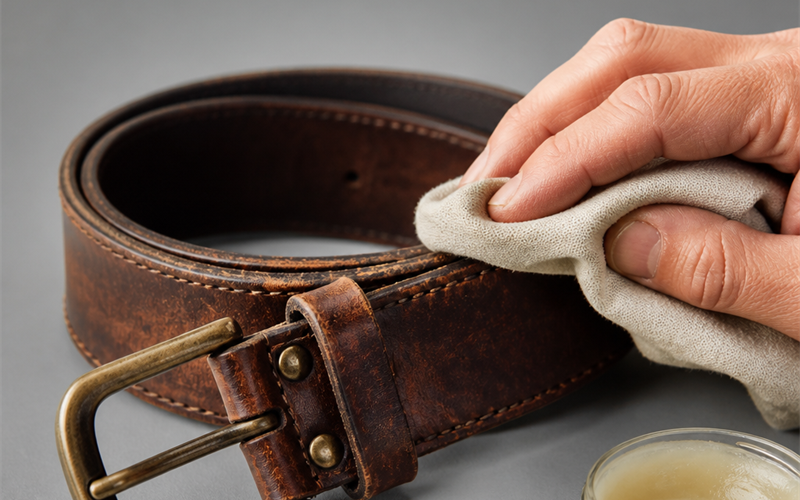
Sparingly, evenly, and let it rest. Apply a small amount of quality leather conditioner (a pea-sized blob for the whole belt) to a soft cloth, then rub it into the leather with small circles, working the length of the strap. Let it sit for 20–30 minutes so the leather absorbs the oils. Buff off any excess with a clean dry cloth.

Choose the conditioner carefully. Avoid mineral oil, vaseline, or shoe polish — they over-soften the leather or change the color. Stick to neutral leather balms (Bick 4, Saphir Renovateur, or similar). A drink for a thirsty belt is the goal, not a soak. Over-conditioning makes the leather floppy and dark, and it's hard to reverse. Recondition only every 6 months for everyday wear.
Restoration step-by-step
| Step | Action | Frequency |
|---|---|---|
| 1. Inspect | Check leather integrity, hardware, stitching | Once |
| 2. Clean | Damp cloth pass, optional sparing saddle soap | Once |
| 3. Dry | Let air-dry at room temp, away from heat | 30 min |
| 4. Condition | Pea-sized balm, buff with circles, let absorb | Every 6 months |
| 5. Polish buckle | Brass or steel-specific cleaner | As needed |
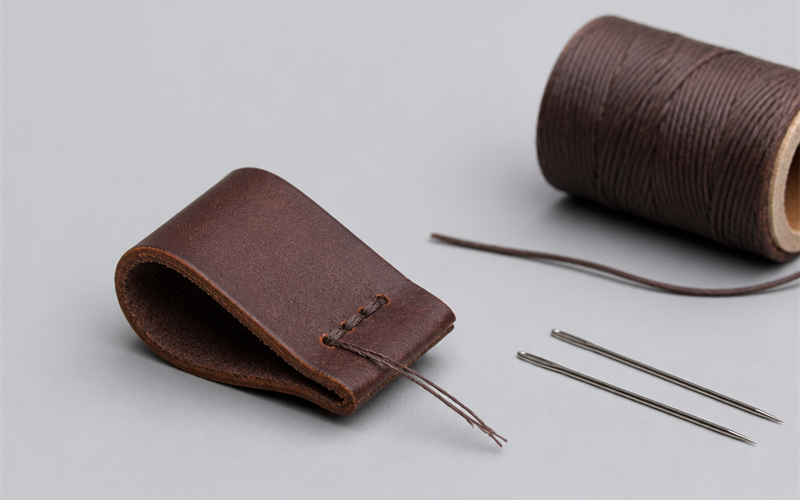
| 6. Repair | Re-stitch keeper, replace screws, fix holes | If needed |
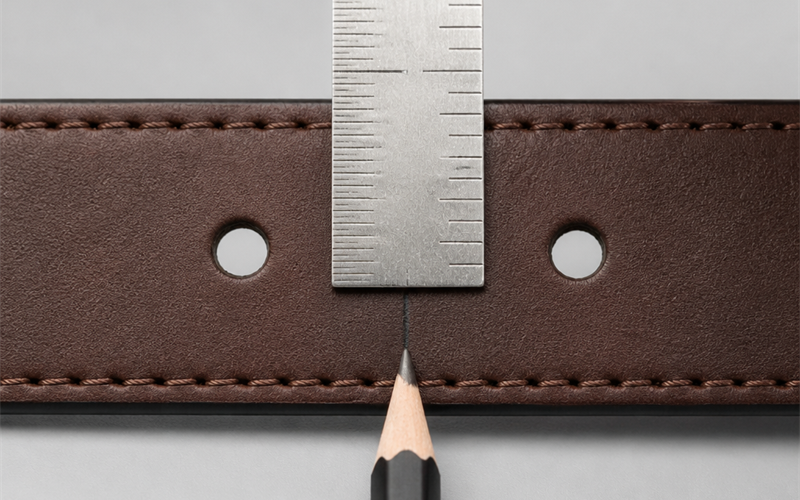
| 7. Resize | Add a hole only if the belt doesn't fit | Once |
How do you polish the buckle (brass vs steel)?
Different metals need different cleaners. Solid brass buckles tarnish to a darker, often greenish patina; polish with a brass-specific cleaner (Brasso or similar) and a soft cloth — but consider keeping some of the tarnish for character. Stainless steel buckles don't really tarnish; clean with a microfiber cloth and a mild metal polish if there's surface dullness. Plated buckles (which lower-end belts use) should only be wiped with a damp cloth — polishing will strip the plating.
Test the metal first. A magnet sticks to stainless steel and to plated zinc; it doesn't stick to solid brass. If it's stainless, polish is safe. If it's brass, polish lightly and preserve some of the warm patina — that's what makes the buckle look its age. We use solid brass and stainless steel on our own belts because both age gracefully and are restorable.
BELTLEY 3-Material Rule
The 3-Material Rule = full-grain leather + stainless or solid brass buckle + sealed (painted or burnished) edges. A belt that hits all three is exactly the kind that can be restored decades later. If your inherited belt clears the rule, you have a restoration candidate. If it fails the rule (bonded leather, plated buckle, raw edges), it's a keepsake to display, not a wearer to revive.
What repairs are worth making?
The non-cosmetic ones. (1) Re-stitch loose keepers with a saddle stitch — see how to re-stitch a loose belt loop. (2) Replace Chicago screws if they're worn or lost — see how to swap a belt buckle. (3) Punch a new hole if you wear the belt at a different waist size — see how to add a hole without a punch tool. Cosmetic repairs (re-dyeing, edge resealing) are optional and risk erasing patina.

Prioritize wearability, not appearance. The goal of restoring an inherited belt is to wear it again — not to put it back on a store rack. Resize it to fit you, fix any structural failures, and condition the leather. That's enough. Resist the urge to "make it look new"; you'll regret it the moment you finish.
When should you take it to a professional?
For exotic leathers, structural cracks, or any repair you're nervous about. A crocodile or alligator strap is too valuable to home-restore — see our exotic leather belts for what's involved in caring for them. Any belt with a cracked-through strap, a broken buckle bar, or torn stitching across the buckle attachment is also pro territory. A good leather goods restorer charges $40–$150 for a full restoration and can do work you can't.

The pro vs. DIY line is about reversibility. If a repair is reversible (cleaning, conditioning, adding a hole), DIY is fine. If a repair would be permanent and you have any doubt (re-dyeing, re-stitching the buckle fold, replacing the strap entirely), take it to someone who's done it 500 times. Heirlooms aren't the place to practice.
The Bottom Line
Restoring an inherited belt isn't about making it look new — it's about making it wearable while keeping its character intact. Clean gently, condition sparingly, polish hardware with the right metal-specific cleaner, repair only what's structurally necessary, and resize so you can actually wear it. The patina is the value; protect it. At BELTLEY, we build full-grain leather belts with solid brass or stainless hardware and hand-finished edges specifically so they can be passed down and restored decades from now — backed by our 10-year warranty. Want to start a belt that'll one day be someone else's heirloom? Browse our full-grain leather belts or men's collection.
Frequently Asked Questions
Q: How can I tell if an inherited belt is worth restoring?
Look for full-grain or vegetable-tanned leather that still bends without cracking, an intact buckle (solid brass or steel rather than flaking plate), and unbroken stitching. If the leather is cracked through or the construction has failed, it's a keepsake rather than a wearer.
Q: Should I try to remove the patina from an old leather belt?
No. The patina — the deepened color, soft sheen, and small scratches — is what makes an heirloom belt valuable. Aggressive cleaning or polishing strips that character and leaves the belt looking generic. Restore gently and conservatively.
Q: What's the best conditioner for vintage leather?
Neutral leather balms like Bick 4 or Saphir Renovateur are safe choices for vintage leather. Avoid mineral oil, vaseline, and shoe polish — they over-soften the leather and can darken or stain the color irreversibly.
Q: How often should I condition a restored belt?
Every six months for everyday wear is usually enough. Over-conditioning makes the leather floppy and saturated, which is hard to reverse. A small amount, twice a year, keeps the leather supple without drowning it.