How to Fix Scratches and Scuffs on Full-Grain Leather Belts
Quick answer: Most scratches and scuffs on full-grain leather can be fixed with simple buffing and conditioning. (1) Light surface scratches: buff with a clean soft cloth — finger-warmth often blends the scratch into the surrounding leather within minutes. (2) Medium scuffs: apply a thin coat of mink oil or leather conditioner; massage gently with a cloth; the oils blend the mark into the surrounding patina. (3) Deep scratches that break the finish: may need leather filler or professional touch-up. Most "scratches" people worry about are just surface marks that disappear with finger-buffing — try the simplest method first.
Last updated: May 2026 • By BELTLEY Editorial
TL;DR:
- Light scratches: rub gently with fingertip or soft cloth — often blend out in seconds.
- Medium scuffs: light conditioner application + cloth buffing.
- Deep scratches (cut through finish): leather filler or professional repair.
- Pull-up leathers self-heal scratches the most; smooth dress leathers the least.
- Most scratches become part of patina — character, not damage.
A new full-grain leather belt feels precious; a scratch on day three feels catastrophic. The honest reality is that most scratches and scuffs are easily fixable, and many disappear entirely with nothing more than finger-warmth and a soft cloth. Real full-grain leather is forgiving in ways most owners don't initially realize — the same fiber density and oil content that make the leather durable also make it self-healing for most surface damage. Below is the scratch-by-scratch repair guide. For broader care, see our leather care page.
Why do leather belts get scratched in the first place?
Daily contact with hard surfaces — buckle hardware on metal belt loops, keys in pockets, jacket zippers, edge contact with desks and chairs. Most of these scratches are surface-level — they affect only the top finish layer of the leather, not the underlying fiber structure. The leather itself isn't damaged; the visible scratch is essentially a temporary disturbance of the surface oils and patina.

This is why most leather scratches "heal" or fade. The surface oils naturally migrate over hours and days, blending the disturbed area back into the surrounding patina. A scratch that looks alarming on day one often becomes invisible by week two with no intervention at all. See pull-up leather belts explained for how oil-stuffed leathers self-heal most dramatically.
How do you fix a light scratch on leather?
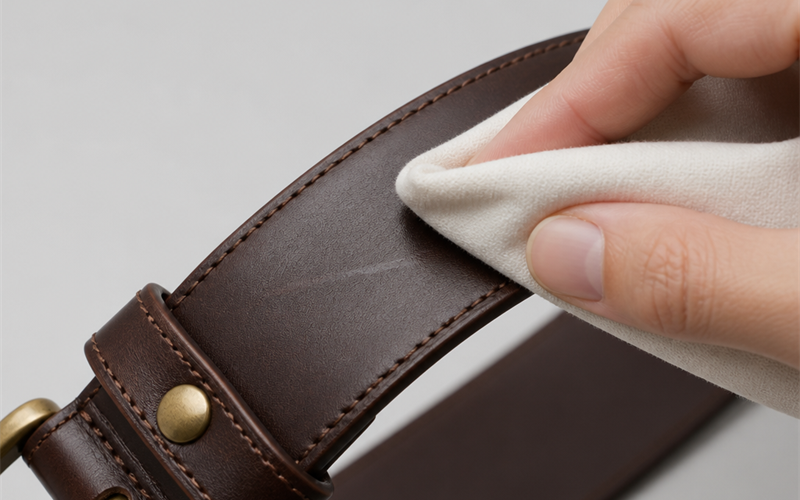
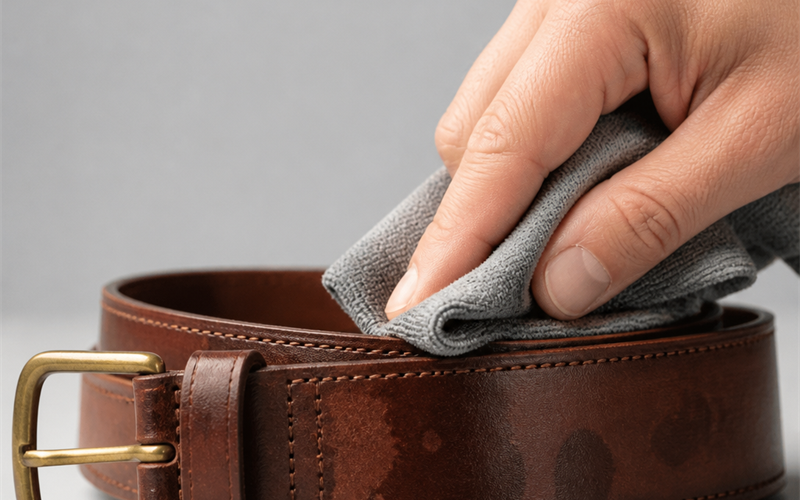
Buff with your fingertip or a clean soft cloth. (1) Rub the scratched area gently with a clean fingertip — the warmth and friction encourage the surface oils to flow back into the disturbed zone. (2) If finger-buffing alone doesn't fully blend the scratch, use a soft cotton or microfiber cloth to continue the buffing. (3) Most light scratches blend within 1-5 minutes of gentle buffing.

The technique works because full-grain leather has oils throughout its fiber structure. Light scratches displace a small amount of surface oil from the scratched line; buffing redistributes oil from the surrounding area back into the line, restoring visual continuity. Pull-up leathers (heavily oil-stuffed) self-heal scratches almost completely; smoother dress leathers blend scratches more visibly but rarely keep them as permanent marks.
Key stat: Approximately 70-85% of leather scratches on full-grain belts blend completely within 1-5 minutes of fingertip or cloth buffing. The remaining 15-30% need conditioner application; only a small fraction (under 5%) need filler or professional repair.
How do you fix a medium scuff that won't buff out?
Add a small amount of leather conditioner. (1) Apply a tiny dab of mink oil, neatsfoot oil, or beeswax-based conditioner to the scuff area only — not the whole belt. (2) Massage gently with a clean cloth or fingertip, working the conditioner into the scuffed area in small circular motions. (3) Let absorb for 10-30 minutes. (4) Buff with a clean dry cloth to blend the area into the surrounding leather.
The conditioner provides the extra surface oil needed to fully blend the scuff. For pull-up leathers, this method usually returns the scuff to invisibility; for smoother dress leathers, the scuff may fade to a barely-visible faint line rather than disappearing entirely. See neatsfoot oil vs mink oil vs beeswax for the conditioner choice.
Scratch-by-scratch fix method
| Type | Visible characteristic | Fix method | Time |
|---|---|---|---|
| Surface buff mark | Slight color disturbance, no depth | Fingertip buffing | 30 sec - 2 min |
| Light scratch | Visible line, surface only | Fingertip or soft cloth buffing | 1-5 min |
| Medium scuff | Visible scratch with mild discoloration | Mink oil + buffing | 10-30 min + 30 min absorb |
| Deep scratch | Breaks the finish, leather lighter underneath | Leather filler or pro repair | 30-60 min + 24 hr cure |
| Cut or gouge | Removes leather material | Professional restoration | Pro service |
How do you fix a deep scratch that's cut through the finish?
Leather filler or professional repair. Deep scratches that cut through the finish layer and expose the lighter, fibrous leather underneath need more than buffing and conditioning. Two approaches. (1) Leather filler — small tubes of leather-colored filler product designed to fill scratches; apply per product instructions, let cure for 24 hours, then condition lightly to blend. (2) Professional touch-up — for valuable belts or scratches in highly visible areas, a leather restoration professional can color-match and repair scratches more invisibly than DIY products.

Deep scratches are rare on full-grain leather belts — they typically require sharp metal edge contact or sustained pressure damage. Most "deep" scratches owners worry about are actually medium scuffs that buff out with conditioner. Try the gentler methods first before escalating to filler.
Will scratches fade on their own?
Most do, gradually. Even without intervention, full-grain leather scratches typically fade within 2-4 weeks of normal wear. The natural oil migration of daily use redistributes surface oils over time, blending scratched areas back into the surrounding patina. Pull-up and oil-stuffed leathers fade scratches fastest; finished dress leathers fade them more slowly but still noticeably.

This is part of what makes full-grain leather a long-term material. A scratch that horrifies you in week one becomes invisible by week three. Worry less, wear more — full-grain leather is more resilient than first ownership suggests. See why is full-grain leather so expensive for the broader durability framing.
When is a scratch character vs damage?
Most scratches are character once you've owned the belt for a year or more. A 10-year-old full-grain belt has dozens of micro-scratches, small scuffs, and surface marks — all of which blend into the overall patina. None of these qualify as "damage" in any meaningful sense; they're the visual record of real use. New owners often want their belts pristine; experienced owners value the lived-in character of a real working leather belt.

The honest test for character vs damage. (1) Does it affect function? Scratches almost never affect a belt's function — purely cosmetic concerns. (2) Does it bother you visually after 30 days? Most surface scratches stop registering once the leather has worn in around them. (3) Is it a deep cut or structural damage? That's damage; everything else is character. See how to restore an inherited belt for the long-term aesthetic appreciation of marked leather.
The Bottom Line
Most scratches and scuffs on full-grain leather belts are fixable with simple buffing and conditioning. Light scratches blend with fingertip warmth or a soft cloth within minutes; medium scuffs respond to a small dab of mink oil and gentle buffing; only deep finish-breaking scratches need leather filler or professional repair. Pull-up and oil-stuffed leathers self-heal scratches most dramatically; smooth dress leathers retain scratches more visibly but rarely keep them as permanent marks. Most "damage" worth worrying about turns out to be character after 30 days of continued wear. BELTLEY's full-grain leather belts are built to age gracefully and forgive minor surface marks — backed by a 10-year warranty. Ready for a belt that lives well? Start there.
Frequently Asked Questions
Q: How do you fix a scratch on a leather belt?
Try fingertip buffing first — most light scratches blend within 1-5 minutes of warm gentle rubbing. If buffing alone doesn't work, apply a small dab of mink oil or leather conditioner to the scratch area, massage gently, let absorb 10-30 minutes, then buff with a clean cloth. Only deep finish-breaking scratches need filler or professional repair.
Q: Will leather scratches fade with time?
Yes — most full-grain leather scratches fade significantly within 2-4 weeks of normal wear as natural oil migration redistributes surface oils. Pull-up leathers fade scratches fastest; smoother dress leathers fade them more slowly. Many scratches you notice in week one stop registering by week three.
Q: Can you use coconut oil or olive oil to fix leather scratches?
Avoid household oils — they go rancid over time and never absorb cleanly into leather. Stick to products designed for leather: mink oil, neatsfoot oil, beeswax-based conditioners, or commercial leather conditioners. The minor cost difference is worth avoiding rancid oil damage long-term.
Q: What's the difference between a scratch and a scuff?
Mostly intensity — a "scratch" is typically a thinner line with visible disturbance to the surface; a "scuff" is a broader area of surface damage often with mild discoloration. Both are usually surface-level on full-grain leather and respond to the same buffing-and-conditioning approach.
Q: Is it worth getting professional leather repair?
For deep scratches on valuable belts, yes — professional restoration can color-match and repair more invisibly than DIY products. For light to medium surface marks, professional repair is overkill; the gentle home methods work as well or better. Restoration cost typically runs $30-$80 per repair, so consider the belt's value before booking the service.
%20Light%20surface%20scratches:%20buff%20with%20a%20clean%20soft%20cloth%20%E2%80%94%20finger-warmth%20often%20ble...)