Why Is Full-Grain Leather So Expensive? The Real Cost Breakdown
Quick answer: Full-grain leather is expensive because every step is more involved than for cheaper leather grades. Premium hides cost 2–4x what commodity hides cost. Vegetable tanning takes 4–8 weeks instead of 1–2 days. Yield loss is significant — only the cleanest portions of a hide qualify for Grade A. And finishing (currying, edge work, conditioning) is largely manual. The end result is a per-square-foot cost roughly 3–6x what commodity chrome-tanned leather costs — before any markup for brand or design.
Last updated: May 2026 • By BELTLEY Editorial
TL;DR:
- Premium hides cost 2–4x commodity hides; tannery selection matters.
- Slow vegetable tanning takes 4–8 weeks (vs 1–2 days for chrome).
- Yield loss is real — significant portions of each hide don't qualify for premium use.
- Manual finishing (edge work, currying, conditioning) is labor-intensive.
- Total: ~3–6x the per-square-foot cost of commodity leather — before brand markup.
The "why is full-grain leather so expensive" question lands a lot. The intuition that "leather is leather" misses how dramatically the cost stack changes between commodity-grade chrome-tanned material and heritage-grade full-grain vegetable-tanned leather. Below is the honest cost breakdown, the math that makes premium leather genuinely more expensive than budget leather, and the long-term value picture that justifies the price. For the broader value math, see are full-grain leather belts worth the investment.
Cost #1: Hide selection is non-trivial
Premium hides cost 2–4x commodity hides. Not all cowhides are equal — premium tanneries (Hermann Oak, Wickett & Craig, Horween, Italian Tuscan veg-tan) buy from carefully selected ranches and grade hides on cosmetic condition before tanning even starts. Grade A hides (minimal natural marks, uniform thickness, clean surfaces) are reserved for premium leather goods and command a real price premium at the hide-buying stage.

The buying-up-front cost matters. A tannery making heritage leather has to invest in higher-quality raw material before it knows how much will yield Grade A finished leather. A tannery making commodity chrome-tanned leather can use almost any hide and ship to almost any buyer. The raw material premium is the first step in the price stack. We dig into hide grading in are there grades of full-grain leather.
Cost #2: Slow tanning takes weeks, not hours
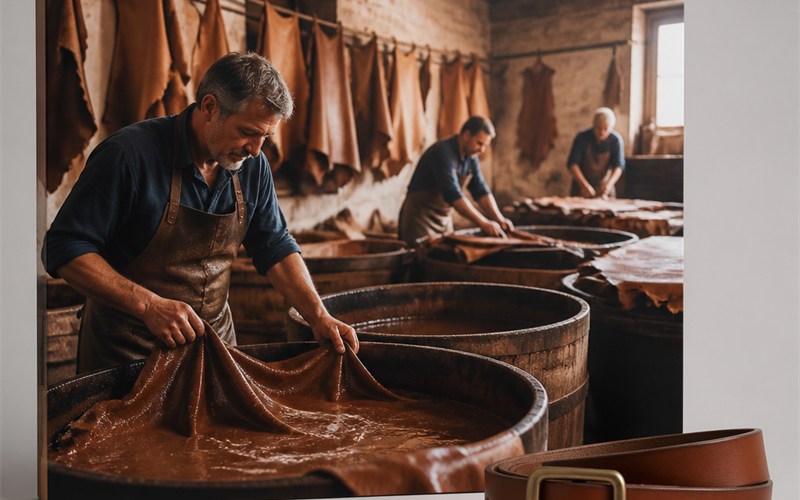
Vegetable tanning takes 4–8+ weeks; chrome tanning takes 1–2 days. The two main tanning processes are dramatically different in time and labor. Vegetable tanning — the heritage process used for premium belt leather — slowly converts hides to leather using natural plant tannins (oak bark, chestnut, mimosa, tara) in a series of pits or drums, sometimes over 4–8 weeks for a thorough cycle. Chrome tanning uses chromium salts in rotating drums and produces usable leather in 24–48 hours.
The time cost is structural. Vegetable tanning is one of the oldest leather-making methods on earth, and the slow process is what produces the firm structure, natural feel, and patina-friendly character of heritage leather. It also means the tannery has to carry the hide for weeks before getting paid — pit space, water, labor, and capital all locked into a long cycle. Faster tanning is cheaper; slower tanning is better, and the time cost flows directly through to the retail price.
Key stat: A single hide of heritage vegetable-tanned leather spends an average of 30–60 days in tannery processes from raw hide to finished leather. A comparable hide of commodity chrome-tanned leather spends an average of 2–5 days. That 10–20x time multiplier is one of the largest structural cost differences in the entire leather industry.
Cost #3: Yield loss is significant
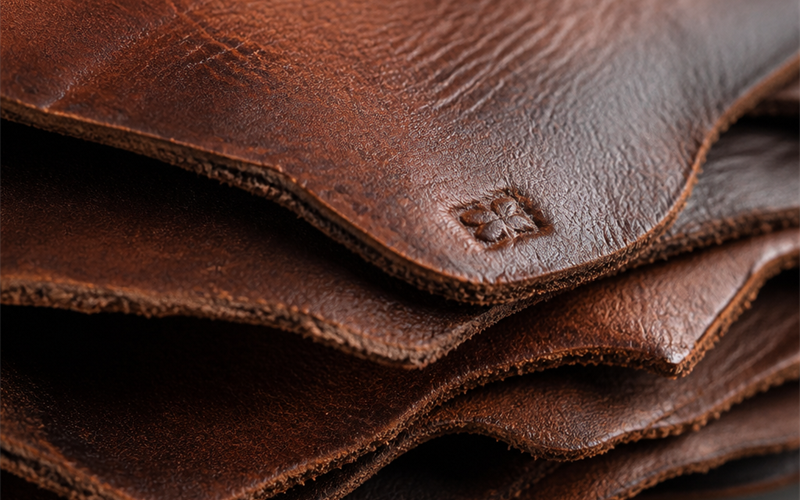
Only the cleanest portions of each hide qualify for premium use. A cowhide isn't a uniform rectangle of usable leather — it has thinner belly sections, scarred shoulder patches, edge waste, and variable thickness. Heritage tanneries grade and cut the hide so that only the cleanest, most uniform sections become premium full-grain products; the rest becomes lower-grade leather, suede splits, or industrial leather.

The yield drives the cost. A single side of premium veg-tanned leather may yield perhaps 40–60% of its raw area as Grade A material; the rest is downgraded to B or C grade, used in less-visible parts of products, or sold to other markets. Commodity tanneries don't grade as strictly — almost the entire hide becomes "leather" in some grade. Strict grading is more expensive per square foot of usable A-grade material.
Cost #4: Manual finishing is labor-intensive
Edge burnishing, currying, hand-finishing, and conditioning are largely manual steps. Premium full-grain leather isn't just tanned — it's finished. English Bridle leather is curried (stuffed with tallow and wax) over multiple days. Burnished belt edges are rubbed smooth with friction, wax, and water by hand. Hand-stamped marks, hand-painted edges, hand-applied conditioning — all of these are labor steps that commodity products skip.

Labor compounds the upfront cost. A premium tannery employs craftspeople for the finishing steps that machines can't replicate. A commodity tannery uses spray finishing, machine edge coating, and stamped uniform patterns that can be produced at a fraction of the labor cost. Heritage methods cost real money to do — and they show up in the final product as quality (and price). Our handmade collection highlights belts where this manual finishing is part of the value proposition.
The per-square-foot cost stack
| Cost component | Commodity leather | Premium full-grain | Cost ratio |
|---|---|---|---|
| Raw hide selection | $1.50–$3.00/sqft | $4.00–$10.00/sqft | 2–4x |
| Tanning (process + time) | $1.00/sqft | $2.50–$4.00/sqft | 2.5–4x |
| Yield loss factor | 1.0 (low loss) | 1.5–2.5 (high A-grade loss) | 1.5–2.5x |
| Finishing (manual labor) | $0.50/sqft | $2.00–$5.00/sqft | 4–10x |
| Subtotal cost / sqft | $3–$5/sqft | $12–$30/sqft | 3–6x |
These are illustrative ranges; actual costs vary by tannery, region, and specific leather. The structural point: premium full-grain costs roughly 3–6x what commodity chrome-tanned leather costs per square foot, before any markup.
Cost #5: Smaller production scale
Heritage tanneries operate at smaller scale than commodity tanneries. Hermann Oak processes thousands of hides per week, not the hundreds of thousands per week a commodity Asian tannery might handle. Smaller scale means less ability to spread fixed costs across volume, higher per-unit overhead, and less buying leverage on raw hides. The combination of premium raw material and smaller production scale means heritage leather inherently costs more per square foot than commodity volume leather.
The trade-off is quality control. Smaller scale enables the strict grading, the slow tanning, and the manual finishing that define heritage leather. Larger scale enables price competition but compromises on the elements that make premium leather what it is. We see this same dynamic in food, wine, and other heritage goods — slow and small almost always costs more, and the question is whether the resulting quality justifies the difference.
BELTLEY 3-Material Rule
The 3-Material Rule = full-grain leather + stainless or solid brass buckle + sealed (painted or burnished) edges. All three legs of the rule contribute to the price. Full-grain leather is 3–6x commodity leather. Solid stainless or solid brass hardware is 4–10x plated zinc hardware. Burnished or hand-sealed edges add real labor cost. A belt that clears all three legs of the rule costs meaningfully more to make than a belt that fails any of them — and that cost difference is structural, not arbitrary brand markup.
What about brand markup on top?
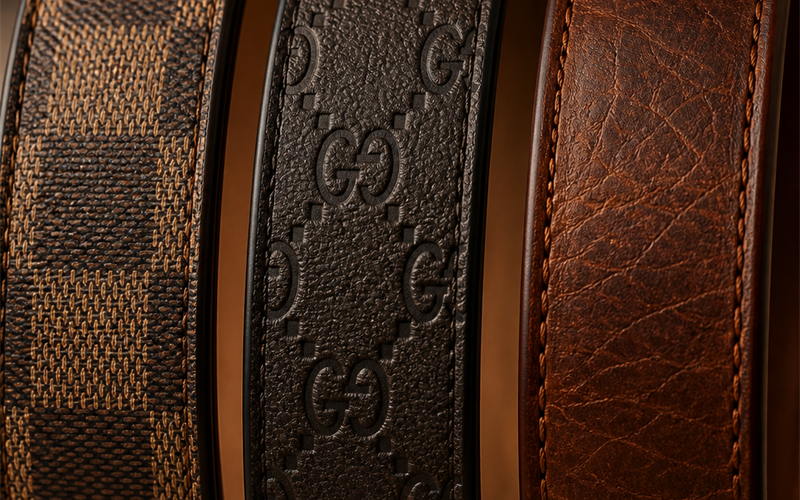
That's where designer pricing diverges from the material cost. The material cost of a heritage full-grain leather belt — leather, hardware, labor, edge work, packaging — runs in the $30–$80 range for the maker. A fair retail price (with reasonable margin) lands at $80–$200 DTC. A designer belt charging $400–$700 for the same materials is adding $200–$500 of brand markup, retail markup, and marketing cost on top of the actual material cost. We unpack the markup in why are designer belts so expensive and why luxury houses don't use full-grain leather.

The price-to-material ratio tells the story. A $400 designer belt with $30 of material in it has a 13x materials-to-price ratio. A $120 DTC full-grain belt with $40 of material has a 3x ratio. Both are valid business models, but the former is buying brand; the latter is buying material. Understanding the difference helps you decide where to allocate your spend.
So is full-grain leather worth the cost?
For daily-wear belts, almost always yes. The cost math over time strongly favors quality. A quality full-grain belt at $120 that lasts 10–15 years costs roughly $8–$12 per year of wear. A cheap bonded leather belt at $25 that lasts 18 months costs $17 per year of wear — more per year, despite being cheaper upfront. Over a decade, you'll spend more on cheap belts (and own none that look good) than on one quality belt that just gets better.

We make the broader value case in are full-grain leather belts worth the investment. The honest answer: if you'll wear a belt for years, premium full-grain wins on cost per year. If you treat belts as fashion (replaced seasonally), the math is less clear — but in that case, neither option is great. For the buy-once-wear-forever buyer, premium leather is the cheap choice in disguise.
The Bottom Line
Full-grain leather is expensive because it genuinely costs more to produce — at every step. Premium hide selection costs 2–4x commodity hides. Slow vegetable tanning takes 30–60 days vs 2–5 days for chrome tanning. Yield loss is significant, since only the cleanest portions of each hide qualify for premium use. Manual finishing (burnishing, currying, edge work) is labor-intensive. Smaller production scale means less cost spread. The total per-square-foot cost is 3–6x what commodity leather costs — before brand markup. For daily-wear belts, the price translates to roughly $8–$15 per year of wear over a decade, beating cheap belts on actual cost-per-year. At BELTLEY, we keep our full-grain leather belts priced at the fair DTC tier — paying for the leather, hardware, and labor without the designer brand markup — backed by a 10-year warranty. Ready for a belt where the price reflects the leather, not the logo? Browse our men's collection.
Frequently Asked Questions
Q: Why is full-grain leather more expensive than other leather?
Because every step costs more: premium hide selection (2–4x commodity), slow vegetable tanning (30–60 days vs 2–5 days for chrome), significant yield loss from strict grading, and manual finishing (burnishing, currying, conditioning). Total per-square-foot cost runs 3–6x commodity leather.
Q: How much does premium full-grain leather actually cost per square foot?
Heritage full-grain veg-tanned leather typically runs $12–$30 per square foot in raw material cost, depending on tannery and grade. Commodity chrome-tanned leather runs $3–$5 per square foot. The 3–6x ratio reflects real input differences, not arbitrary pricing.
Q: How long does vegetable tanning actually take?
A thorough vegetable tanning cycle takes 4–8 weeks, with some heritage processes (curried bridle, certain Italian veg-tans) extending beyond that. Chrome tanning, by comparison, takes 1–2 days. The time difference is the largest structural cost driver between premium and commodity leather.
Q: Is a $200 leather belt actually worth it over a $30 one?
For daily-wear belts, almost always yes. A $200 full-grain belt that lasts 15 years costs ~$13 per year. A $30 bonded leather belt that lasts 18 months costs $20 per year — more annually despite being cheaper upfront. Quality wins on cost-per-year for any long-term wearer.
Q: Why are designer belts even more expensive than DTC full-grain belts?
Because designer pricing includes brand markup, retail markup, and marketing cost on top of the material cost. A designer belt with the same leather and hardware as a $120 DTC belt may retail for $400–$700 — the extra is brand premium, not material upgrade.