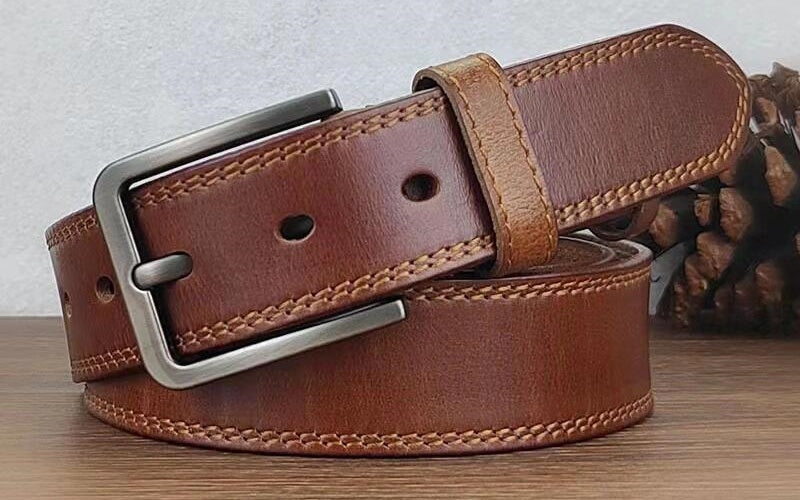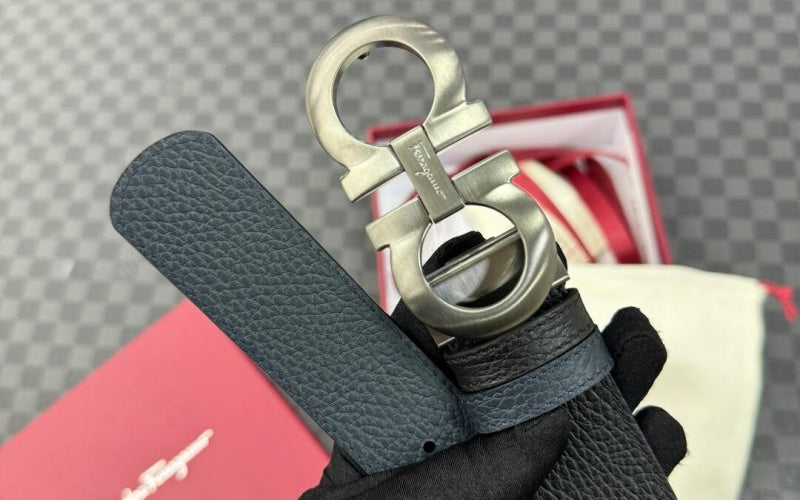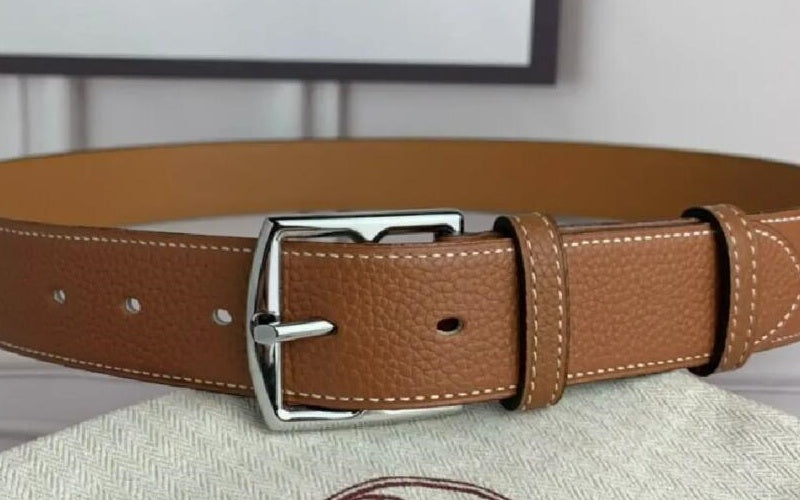
Are Full-Grain Leather Belts Worth the Investment? Let’s Cut Through the Hype
Main takeaway and quick answer for busy guys
- Full-grain leather belts last 10-20+ years with basic care — genuine leather belts crack and peel within 1-3 years
- A $120 full-grain belt worn daily costs roughly $0.04 per day over its lifespan, making it cheaper than replacing $20 belts every year
- Full-grain leather develops a rich patina over time, actually looking better with age instead of worse
- The $80-$150 price range is the quality sweet spot — you get full-grain durability without paying for a designer logo
A $20 belt seems like a bargain until you're buying your fourth one in three years. The buckle tarnishes, the leather cracks, the edges fray — and you're back at the store. Meanwhile, the guy who spent $100 on a full-grain leather belt five years ago is still wearing the same one, and it looks better now than the day he bought it. So are full-grain leather belts actually worth the higher price tag? The math says yes. Here's the full breakdown.

Worth It for You? The 20-Second Check
The investment math changes with how you'll use it:
| Your situation | The verdict |
|---|---|
| You wear a belt most days | Yes — a $120 full-grain belt works out to roughly $0.04 per day over its lifespan |
| You keep replacing $20 belts | You're already paying more per year than full-grain costs — the cheap belt is the expensive one |
| You want the sweet spot | $80–$150 buys full-grain durability without designer markup — BELTLEY's start at $58 |
| You love things that age well | Easy yes — full-grain is the only grade that develops patina instead of peeling |
If that math works for you, the full-grain collection is the shortcut. The detailed case:
What Makes Full-Grain Leather Different from Other Leather?
Full-grain leather is the outermost layer of an animal hide — the part that faced the elements during the animal's life. Unlike "genuine leather" or top-grain leather, it hasn't been sanded, buffed, or coated to hide imperfections. Every natural mark, wrinkle, and pore remains intact.
This matters for one critical reason: the surface grain is the strongest part of the hide. According to leather science research, the top layer of cowhide contains the densest collagen fiber structure, which gives it superior tensile strength and resistance to stretching. When manufacturers sand away this layer (as they do with corrected-grain or genuine leather), they remove the very fibers that make leather durable.
Here's a quick comparison of the leather grades you'll encounter:
| Leather Grade | What It Is | Typical Belt Lifespan | Develops Patina? |
|---|---|---|---|
| Full-Grain | Unaltered top layer of the hide | 10-20+ years | Yes — rich, deep |
| Top-Grain | Sanded/buffed top layer | 5-10 years | Minimal |
| Genuine Leather | Lower hide layers, bonded or coated | 1-3 years | No — cracks/peels |
| Bonded Leather | Scraps glued together with polyurethane | 6-12 months | No — disintegrates |
For a more detailed comparison, our guide on full-grain leather belt vs. genuine leather breaks down the differences side by side.

How Long Do Full-Grain Leather Belts Actually Last?
A well-made full-grain leather belt lasts 10 to 20 years or longer with basic care. Some full-grain belts outlast their owners entirely — leather workers and vintage collectors regularly encounter 30- and 40-year-old full-grain pieces still in usable condition.
The longevity comes down to fiber density. Full-grain leather retains its complete collagen matrix, meaning the fibers interlock tightly and resist separation under stress. This is why a full-grain belt doesn't crack, peel, or delaminate the way cheaper grades do. It bends, flexes, and stretches slightly to conform to your body — then holds that shape for years.
Compare that to genuine leather, which typically starts showing cracks along the fold points within 12-18 months. The synthetic coatings used to make genuine leather look presentable dry out and flake away, exposing the weak inner fibers underneath.
At BELTLEY, we build all our belts from full-grain hides specifically because we back them with a 10-year warranty. We couldn't make that promise with lower-grade leather — the material wouldn't survive.
For a broader look at what drives belt longevity, read the truth about leather belt durability.

The Cost-Per-Wear Math: Full-Grain vs. Cheap Belts
This is where the "investment" argument gets concrete. Let's run the numbers on three real-world scenarios:
| Scenario | Belt Price | Lifespan | Total Wears | Cost Per Wear |
|---|---|---|---|---|
| Budget belt (bonded/genuine) | $20 | 1 year | ~250 | $0.08 |
| Mid-range belt (top-grain) | $60 | 4 years | ~1,000 | $0.06 |
| Full-grain belt | $120 | 10+ years | ~3,000+ | $0.04 |
Over a 10-year period, the budget belt buyer spends $200 (ten $20 belts). The full-grain buyer spends $120 once — and the belt is still going strong. That's a $80 savings before you factor in the time spent shopping for replacements.
Research from leather goods pricing analysts puts the quality sweet spot at $80-$150 for a full-grain leather belt. Below $80, manufacturers typically cut corners on hardware or leather thickness. Above $150-$200 (for non-exotic leather), you're often paying for brand name rather than material quality.
Curious about fair pricing across the market? Our breakdown of how much a leather belt should cost covers every price tier.

Does Full-Grain Leather Really Look Better with Age?
Yes. Full-grain leather develops what leather workers call a patina — a gradual deepening and warming of color that comes from the oils in your skin, sun exposure, and regular wear. The effect is similar to how a well-maintained wooden floor develops character over decades.
This happens because full-grain leather is porous and absorbent. The natural grain surface allows body oils and environmental elements to slowly penetrate and darken the surface fibers, creating a unique, lived-in look that's impossible to replicate artificially. A three-year-old full-grain belt has a warmth and depth that a brand-new belt from any manufacturer can't match.
Genuine leather, by contrast, cannot develop a patina. The synthetic coating that gives it a uniform appearance also seals the surface, preventing any natural aging. Instead of mellowing, it peels. Instead of softening, it cracks. The aging process works against genuine leather and in favor of full-grain.
This is one of the reasons handcrafted full-grain pieces hold resale value better than mass-produced alternatives. The patina itself becomes a selling point on the secondary market.

How to Tell If a Belt Is Actually Full-Grain
Manufacturers don't always label their leather accurately. "Premium leather" and "real leather" sound impressive but mean nothing specific. Here's how to verify you're getting actual full-grain:
Look for these signs:
- Visible natural grain: You should see tiny pores, subtle wrinkles, and minor surface variations. If the surface looks perfectly uniform and plastic-smooth, it's been corrected or coated.
- Natural imperfections: Scars, insect bites, and growth marks aren't flaws — they're proof the grain hasn't been sanded away. According to leather identification experts, these marks indicate the hide's full surface is intact.
- Weight and thickness: A full-grain belt has noticeable heft. If it feels flimsy or paper-thin, the hide has been split to a lower grade.
- Flex test: Bend the belt gently. Full-grain leather flexes smoothly and returns to shape without creasing. Lower grades crinkle or crack at the fold.
- Edge check: Look at the belt's cut edges. Full-grain shows a consistent fiber structure all the way through. Bonded leather reveals layers of glued-together scraps.
Red-flag labels to avoid:
- "Genuine leather" (legally the lowest grade of real leather)
- "Bonded leather" (scraps glued with polyurethane)
- "Leatherette" or "PU leather" (not leather at all)
For the complete identification guide, see how to tell if a belt is full-grain leather.

What About the Buckle and Hardware?
A belt is only as strong as its weakest component, and that's often the buckle. A full-grain leather strap paired with a zinc-alloy buckle will fail at the hardware long before the leather wears out.
What to look for:
- stainless steel: Marine-grade, corrosion-resistant, and essentially maintenance-free. This is what BELTLEY uses across our full-grain collection.
- Solid brass: Develops its own patina, extremely durable, and a classic choice for heritage-style belts. Our brass buckle collection features solid (not plated) brass hardware.
- Avoid: "Metal alloy" buckles, chrome-plated zinc, or anything that feels lightweight and hollow. These tarnish, chip, and break.
The buckle should also be removable or attached with screws rather than permanently riveted. This allows you to replace or upgrade the buckle independently of the strap — extending the belt's usable life even further.

How to Make a Full-Grain Belt Last Even Longer
Full-grain leather is low-maintenance, but a few simple habits extend its lifespan significantly:
- Rotate your belts. Wearing the same belt every day accelerates wear at the fold points. Two or three belts in rotation can each last 15-20 years.
- Condition every 6-12 months. A thin coat of leather conditioner keeps the fibers supple and prevents drying. Avoid silicone-based products — they seal the surface and block patina development.
- Store flat or hung. Rolling a belt tightly stresses the leather at the curve points. A belt hanger or flat drawer storage is ideal.
- Keep it dry. Full-grain leather handles moisture better than lower grades, but repeated soaking will weaken the fibers over time. If your belt gets wet, let it air-dry at room temperature — never use a heat source.
For detailed care instructions, BELTLEY's leather care guide covers conditioning, cleaning, and storage.
The Bottom Line
Full-grain leather belts are worth the investment by every measurable standard. They last 10-20+ years, cost less per wear than cheap alternatives, develop a patina that improves their appearance over time, and resist the cracking and peeling that plagues lower-grade leather. The $80-$150 range delivers the best value — full-grain durability and craftsmanship without the designer brand premium.
BELTLEY's full-grain leather belt collection is handcrafted from premium hides with stainless steel or solid brass buckles, backed by a 10-year warranty and free worldwide shipping. Browse the collection and see the difference real leather makes.
Frequently Asked Questions
Q: How much should I spend on a full-grain leather belt?
The quality sweet spot is $80-$150 for a full-grain cowhide belt. Below $80, manufacturers often compromise on leather thickness or hardware quality. Above $200 (for non-exotic leather), you're typically paying for brand name rather than better materials. DTC brands like BELTLEY offer full-grain quality in this range by cutting out retail middlemen.
Q: How can I tell if my belt is real full-grain leather?
Look for visible natural grain with pores and minor surface variations, noticeable weight and thickness, and a smooth flex without cracking. Avoid belts labeled "genuine leather" — this is actually a lower grade. For the complete test, see our guide on how to tell if a belt is full-grain leather.
Q: Is full-grain leather better than top-grain for belts?
Yes. Full-grain leather retains the complete hide surface, making it stronger, more durable, and capable of developing a patina. Top-grain leather has been sanded to remove imperfections, which weakens the fiber structure and reduces its lifespan from 10-20 years to roughly 5-10 years.
Q: Do full-grain leather belts stretch out?
Full-grain leather molds slightly to your body shape during the first few weeks of wear, but it doesn't stretch excessively or lose its structure. This "break-in" period is a feature — the belt conforms to your waist for a more comfortable fit while maintaining its original width and thickness.
Q: How often should I condition a full-grain leather belt?
Every 6-12 months for belts worn in regular rotation. If you wear the same belt daily, condition it every 4-6 months. Use a natural leather conditioner and avoid silicone-based products. See BELTLEY's leather care guide for step-by-step instructions.
Q: Why is full-grain leather more expensive than genuine leather?
Full-grain hides represent only the top layer of each animal skin, which limits supply. The raw material costs $10-$15 per square foot compared to $2-$4 for genuine leather. Full-grain also requires more skilled cutting to work around natural imperfections, and the tanning process takes longer to preserve the intact grain surface.