How to Store a Full-Grain Leather Belt Long-Term (Hangers vs Rolled)
Quick answer: For long-term storage, hang a full-grain leather belt vertically on a wide belt hanger or roll it loosely (1-2 inch radius) in a breathable area. Avoid tight folding (creates permanent creases), plastic bags (traps moisture and grows mold), direct sunlight (fades and dries the leather), and humid basements (mold risk). Ideal conditions: 40-60% relative humidity, room temperature, away from direct light. The BELTLEY 3-Material Rule (full-grain + stainless or solid brass + sealed edges) means the belt is built to last decades; proper storage ensures it actually gets there.
Last updated: May 2026 • By BELTLEY Editorial
TL;DR:
- Best storage methods: vertical hanging on a wide hanger OR loose rolling (1-2 inch radius).
- Worst storage methods: tight folding, plastic bags, humid basements, direct sunlight.
- Ideal conditions: 40-60% relative humidity, room temperature, indirect light, ventilation.
- Long-term storage (months/years): condition lightly before storing, check every 6 months.
- The BELTLEY 3-Material Rule belts last decades — only if stored correctly.
A full-grain leather belt is a 10-15+ year investment, but only if it's stored correctly when not being worn. The wrong storage method can damage a belt more than years of normal wear — tight folding creates permanent creases, plastic bags grow mold, humid environments warp the leather. The good news: correct storage is simple, and the difference between right and wrong storage is dramatic. Below is the honest guide. For broader care, see our leather care page.
Should you hang or roll a leather belt for storage?
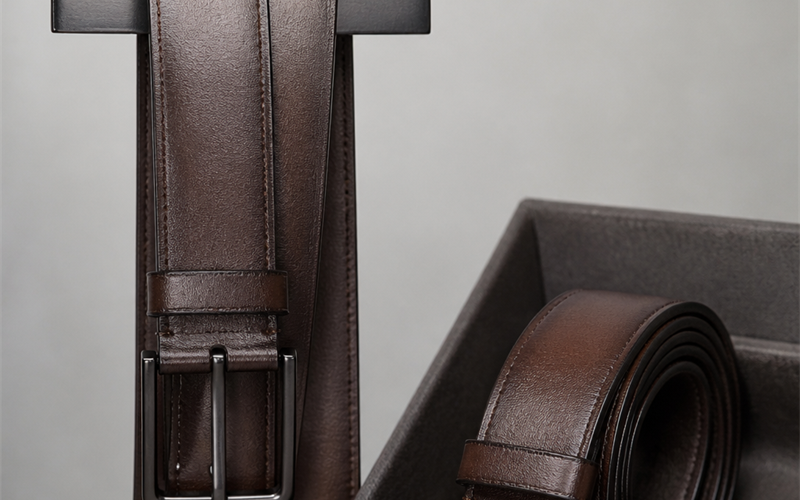
Both work — choose based on space and how often you wear the belt. Hanging is best for belts worn weekly or more often; the belt stays in its natural curve, easily accessible, and avoids any potential pressure points. Use a wide belt hanger (not a thin S-hook that creates pressure on one section of leather). Rolling is best for long-term storage or limited space; roll loosely with a 1-2 inch radius (about the size of a tennis ball or larger), never tightly. Both methods preserve the leather's structure if done correctly.

The biggest hanging mistake is using a thin S-hook or small-diameter peg that concentrates the belt's full weight on one small section of leather. Over months, this creates a stress mark or permanent indentation. Wide belt hangers (1+ inch contact width) distribute the weight and prevent this.
What humidity and temperature are ideal for leather storage?
40-60% relative humidity, room temperature, indirect light. Leather is hygroscopic — it absorbs and releases moisture from the surrounding air. Too humid (above 65% sustained) and the leather can grow mold or warp; too dry (below 30% sustained) and it dehydrates and becomes brittle. The 40-60% range is what most climate-controlled indoor environments naturally provide and what leather needs.

Temperature matters less than humidity. Most room temperatures (60-75°F / 16-24°C) are fine for leather; extreme heat or cold causes problems. Avoid storing leather near heating vents, radiators, or air conditioning vents — the direct airflow creates localized humidity and temperature extremes that affect the leather unevenly.
Key stat: Leather stored at consistent 40-60% humidity and room temperature can maintain structural integrity for 30+ years with minimal intervention. Leather stored in extreme conditions (humid basements above 70% RH or dry attics below 25% RH) often deteriorates significantly within 5-10 years even without being worn.
What should you NEVER do when storing a leather belt?
Six common but destructive storage mistakes. (1) Tight folding — creates permanent creases that show as light-colored stress marks. (2) Plastic bags or airtight containers — trap moisture against the leather; mold growth common within months. (3) Direct sunlight — fades color, dries the leather, and can cause permanent cracking. (4) Humid basements or garages — high humidity grows mold; temperature swings cause condensation. (5) Storing wet or recently-conditioned — moisture and conditioner need to fully absorb/dry before storage; otherwise mold or uneven darkening result. (6) Stacking heavy items on top — compresses the leather and creates pressure marks.
The general principle: leather needs to breathe, stay at moderate humidity, and avoid concentrated pressure or sharp folds. Storage that meets these requirements preserves the belt indefinitely; storage that violates them damages the belt within months.
Storage method comparison
| Method | Best for | Risk level | Notes |
|---|---|---|---|
| Wide belt hanger (vertical) | Daily/weekly wear, easy access | Very low | The default best choice |
| Loose roll (1-2 inch radius) | Long-term storage, limited space | Low | Avoid tight rolling |
| Drawer (laid flat or coiled) | Short-term, dust protection | Low | Avoid stacking other items |
| Belt valet (countertop) | Daily access | Very low | Convenient if space allows |
| Tight folding | — | High | Causes permanent creases |
| Plastic bag (sealed) | — | Very high | Traps moisture, grows mold |
| Hanging on thin S-hook | — | Medium | Pressure marks over time |
| Direct sunlight exposure | — | High | Fades and dries leather |
| Humid basement | — | High | Mold and warping risk |
| Inside hot car/attic | — | Very high | Temperature extremes |
How do you prepare a belt for long-term storage?
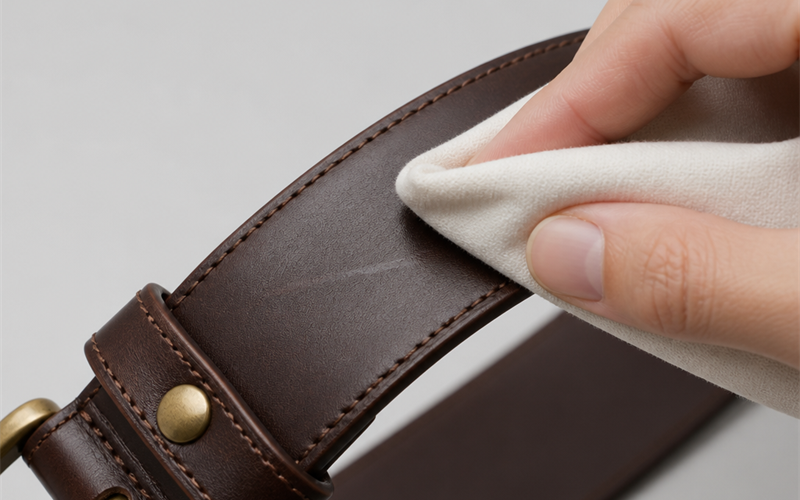
A four-step preparation. (1) Clean gently — damp cloth wipe to remove surface dirt; air-dry fully. (2) Light conditioning — single thin coat of mink oil or beeswax-based conditioner; let absorb for 24-48 hours; ensures the leather has lipid balance for the storage period. (3) Choose storage method — wide hanger or loose roll; appropriate dust protection (cotton garment bag or drawer). (4) Check periodically — every 6 months, inspect for moisture, mold, or color changes; adjust storage conditions if needed.

For belts going into storage for months or years (seasonal storage, vintage collections, etc.), the conditioning step matters more than for short-term storage. The conditioner protects the leather through the dormant period when it's not absorbing natural skin oils from regular wear. See neatsfoot oil vs mink oil vs beeswax for the conditioner choice.
What about storing belts in humid or dry climates?
Climate-control may be needed for extreme environments. In tropical or humid climates (Southeast Asia, southern US in summer, etc.), interior humidity often exceeds 70% RH without air conditioning — too humid for safe leather storage. Solutions: store in a dehumidifier-controlled space, use silica gel packets in the storage container (replace every 3-6 months), or pick a dry indoor closet with good ventilation. Avoid garages, basements, and unconditioned spaces.

In very dry climates (desert regions, heated indoor air in winter), interior humidity can drop below 25% RH — too dry, causing leather to dehydrate and become brittle. Solutions: store in a slightly more humid area of the house (away from heating vents), or use a small humidifier nearby. Light leather conditioning more frequently in dry climates helps maintain the leather's moisture balance.
When should you take stored belts out and rotate them?
Every 6 months minimum, even for "non-rotation" storage. Belts stored long-term benefit from a quick inspection and brief wear or handling every 6 months. The handling redistributes natural oils in the leather, the inspection catches any humidity or mold issues early, and brief wear keeps the leather supple. Belts stored continuously for years without any handling sometimes develop dry patches or color migration even in good conditions.

For seasonal belts (winter belts during summer, summer belts during winter), the 6-month rotation matches the natural use cycle. For sentimental or rarely-worn belts, the same 6-month check-in is wise even if not actually worn. See how to restore an inherited belt for advice on belts that have been stored for many years without rotation.
The Bottom Line
Long-term storage of a full-grain leather belt is simple if you avoid the common mistakes. Hang on a wide belt hanger (not a thin S-hook) for belts worn weekly; roll loosely (1-2 inch radius) for long-term storage. Maintain 40-60% relative humidity and room temperature; keep leather out of direct sunlight, plastic bags, humid basements, and heating vents. Prepare for long-term storage with a gentle clean and light conditioning. Check stored belts every 6 months for any moisture, mold, or color issues. Done right, the belt maintains its structure and beauty for decades. BELTLEY's full-grain leather belt collection is built specifically to reward long-term ownership — backed by a 10-year warranty. Ready for a belt worth storing carefully? Start there.
Frequently Asked Questions
Q: Is it better to hang or fold a leather belt?
Hang — folding tightly creates permanent creases. The two safe options are vertical hanging on a wide belt hanger (best for frequently worn belts) or loose rolling with a 1-2 inch radius (best for long-term storage). Both preserve the leather's natural curve without creating stress marks.
Q: What humidity is best for storing leather?
40-60% relative humidity at room temperature. Below 30% RH dries the leather and causes brittleness; above 65% RH risks mold growth. Most climate-controlled indoor environments naturally provide the right humidity range; humid basements and dry heated rooms in winter are the common problem environments.
Q: Can you store a leather belt in a plastic bag?
No — plastic traps moisture against the leather and causes mold growth within months. If you need dust protection, use a cotton garment bag or breathable cloth wrap. Air circulation is essential for leather storage.
Q: How often should you check stored leather belts?
Every 6 months at minimum. Inspect for moisture, mold, color changes, or any unusual conditions; handle briefly to redistribute the natural oils. Belts stored for years without any handling sometimes develop dry patches or color migration even in good environments.
Q: Should you condition a belt before long-term storage?
A single light coat of mink oil or beeswax-based conditioner before extended storage helps maintain the leather's lipid balance through the dormant period. Apply, let absorb fully for 24-48 hours, then store. Avoid heavy conditioning before storage — over-saturated leather can develop uneven darkening or stress over time.
%20in%20a%20breathable%20area.%20Avoid%20tight%20folding%20(creates%20permane...)