Status Signaling Through Belts: Old Money vs New Money
Quick answer: Old money signals through belts by deliberately understating — a worn-in, decades-old leather belt with a small, unbranded buckle that quietly indicates heritage and durability. New money signals by visibly investing — a new logo-forward designer belt that announces recent acquisition. The cultural read of these two signals has shifted decisively since 2020 in favor of the old-money approach, but both still exist and both still signal.
Last updated: May 2026 • By BELTLEY Editorial
TL;DR:
- Old money belts: heritage, worn-in, unbranded, small buckle, neutral colors — signals "this has been ours for a long time."
- New money belts: new, visibly branded, larger buckle, statement colors or exotic skins — signals "I just earned this."
- The cultural read since 2020 favors old money; logo belts have lost ground at the senior level across most established industries.
- The cleanest modern move: build the old-money belt collection from new — quality, unbranded, designed to last decades.
The old-money / new-money distinction has been a staple of social analysis for over a century, and accessories — particularly belts — are one of the cleanest places to read which side of the line someone sits on. Wikipedia's old money entry describes the cultural pattern: old wealth tends toward conservative spending, generational heirlooms, and deliberate understatement, while new wealth ("nouveau riche") historically flaunted through visible signaling. The same logic applies to belts. Senior families pass down belts that have been worn for a decade or longer; new wealth buys the same belt fresh from the boutique, often with a logo to make sure the spend registers. Our crocodile leather belts and dress belts collections sit on the old-money side of the line — quality, unbranded, designed to age into heritage rather than be replaced annually.
What's the actual visual difference between old money and new money belts?
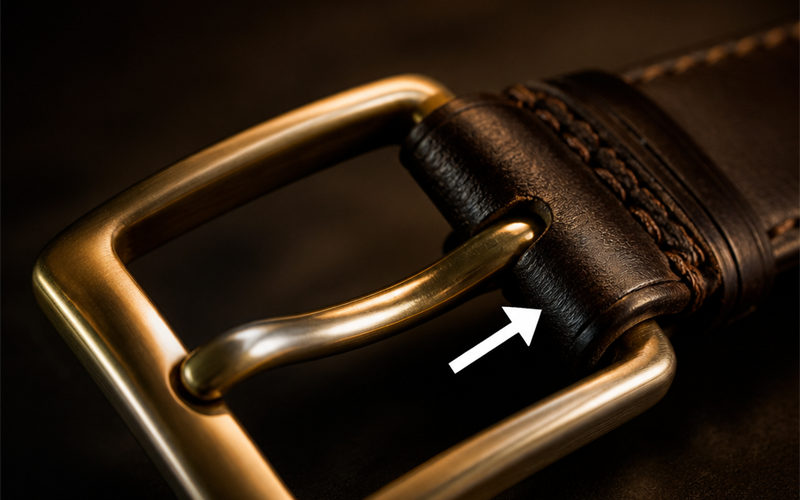
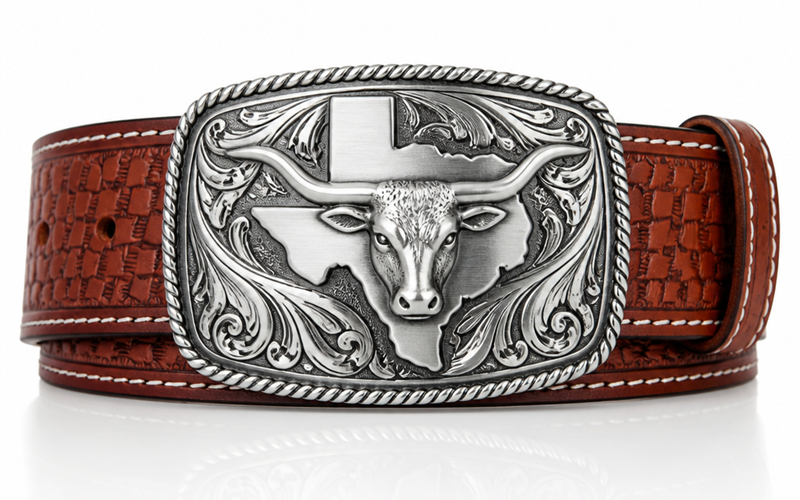
The old-money belt is unbranded, slim (1.18"–1.25"), in smooth or subtly textured leather (calfskin, full-grain, sometimes worn-in crocodile or alligator), with a small, polished metal buckle in silver or brass — usually showing patina, prong-hole stretch, and small surface marks from long wear. The new-money belt is visibly logo'd (Gucci, Hermès, LV, Ferragamo, Versace), often wider (1.5"+), in glossy or high-contrast finishes, with a larger buckle that catches the eye, and visibly newer.

The signal contrast is intentional. Old-money dressing communicates "this is established" by being established — a 15-year-old belt is more credible than a brand-new one because durability and longevity are the underlying values. New-money dressing communicates "this is current" by being current — the freshness is the signal. Both signal status, just at different cultural registers. We covered the broader quiet luxury vs. logo wear trade-off in adjacent contexts.
Why does old money dress so quietly?
Old money dresses quietly because the wealth is established enough that announcing it would be redundant — and within their own circles, announcing wealth signals insecurity rather than confidence. The psychological framework runs through Veblen's original analysis in conspicuous consumption: conspicuous spending signals new acquisition, while invidious comparison through quiet quality signals established standing. Old money has the latter; new money is still pursuing it.

The cultural code is also defensive. In tight-knit old-money circles (Mainline Philadelphia, Greenwich, the North Shore, the New England prep belt), visible luxury reads as outsider behavior. The understated dress code is partly an in-group marker — "you have to know to recognize quality without the logo." Belts that read as old-money correct require taste, not just money.
Key stat: A Boston Brahmin or Greenwich-family belt is often worn for 15 to 25+ years before replacement; a new-money equivalent is often replaced every 2 to 3 years as new collections launch. The lifespan ratio (roughly 8x) is one of the cleanest behavioral markers separating the two cultural patterns.
Has new money dress lost its status signal in 2026?
Largely yes, in most established professional and social contexts. The cultural shift since 2020 — driven by COVID-era reset of luxury-consumption patterns, the Succession television series' cultural moment, several high-profile court cases, and a broader fatigue with logo wear — has shifted the signal value of visible designer accessories. Where new-money dressing once read as "I just made it" (often read positively in growth-oriented contexts like 1990s and 2000s finance), it now often reads as "still figuring it out."
This is documented across the quiet luxury cultural phenomenon. Brands like Loro Piana, Brunello Cucinelli, and parts of Hermès (the non-logo'd leather goods) have surged precisely because they signal old-money values without requiring actual old money. The aesthetic is now accessible; the underlying values are what's prized.
Old money vs new money belts — visual decode
| Element | Old money belt | New money belt |
|---|---|---|
| Branding | None visible | Prominent logo |
| Width | 1.18"–1.25" | Often 1.5"+ |
| Buckle size | Small, slim | Large, statement |
| Buckle finish | Patinated, brushed, slightly worn | New, polished, often gold-plated |
| Leather finish | Matte, smooth, subtle | Glossy, high-contrast |
| Color | Neutrals (black, espresso, oxblood) | Bright or seasonal |
| Age visible | Yes, intentionally | No, intentionally |
| Replacement cycle | 15–25+ years | 2–3 years |
| What it signals | Heritage, durability | Recent acquisition, current status |
For more on the underlying material quality logic, see Wikipedia's belt reference and our piece on full-grain leather vs genuine leather.
Can you build an old-money belt collection from new?
Yes — and most people who dress in the old-money register today are building the collection from new rather than inheriting it. The strategy is straightforward: buy unbranded quality leather belts (smooth calfskin, full-grain, occasional crocodile or alligator) at the right widths (1.18"–1.25"), with slim buckles in classical finishes, and wear them for years. Within 5–10 years, the belts develop the patina that reads old-money authentic.

The trap to avoid: buying new-money-looking belts and trying to age them artificially. The visual cues (logo, oversized buckle, glossy finish) signal new-money regardless of how old the belt actually is. The cleaner move is starting with belts that are designed to read old-money correct from day one. That's the positioning of our dress belts and crocodile leather belts collections — quality, unbranded, designed to age into heritage.
What about the "stealth wealth" subset of new money?
A growing segment of new wealth — particularly tech-founder wealth, hedge-fund wealth, and high-end professional wealth — has adopted old-money signaling from the start. This is sometimes called "stealth wealth" and sits between the two traditional categories: financially new, culturally aligned with old-money quiet signaling.

The stealth-wealth belt is functionally identical to the old-money belt: unbranded, slim, quality leather, small buckle. The cultural read is similar at a glance, though tight-knit traditional old-money circles can usually tell the difference at close range (different brand histories, different family references, slightly different leather makers). For most professional and social contexts, however, the stealth-wealth belt and the old-money belt are indistinguishable. We covered the adjacent professional logic in our hedge fund analyst belt guide and tech founder belt guide.
Does the buckle metal signal anything specifically?
Yes — the buckle metal carries its own old-money / new-money signal. Brushed or patinated silver, brushed nickel, or solid brass with visible age read old money. Highly polished chrome, gold plating, or two-tone hardware read new money. The patina specifically — small surface marks, subtle darkening at the prong contact — is the strongest single old-money authenticator on a belt.

This is why polished gold buckles can sometimes read new-money even when the belt itself is quality — the finish signals "I want this to look new" rather than "I expect this to age." Solid brass with a patina, or brushed silver with a few years of wear, reads old-money correct without explanation. See our piece on should your belt buckle match your jewelry for the broader metal logic.
The Bottom Line
The old-money / new-money belt distinction is one of the cleanest places to read social signaling — and the cultural read has shifted decisively since 2020 in favor of the quiet, heritage-oriented old-money approach. Visible logos, oversized buckles, glossy finishes, and frequent replacement all signal new-money values that have lost ground at the senior level across most established industries. Unbranded quality leather, slim buckles, conservative finishes, and decades-long ownership signal old-money values that have gained ground. At BELTLEY, we build the kind of belt that ages into heritage from day one — unbranded, quality leather, slim buckle, designed to last a generation. Browse our dress belts, crocodile leather belts, full-grain leather belts, and black leather belts collections.
Frequently Asked Questions
Q: Is the old-money belt style elitist?
It can read as elitist in some contexts because it requires cultural knowledge to recognize — but the underlying values (durability, quality, restraint) are now widely shared across stealth-wealth and quiet-luxury adopters who aren't from old-money backgrounds. The aesthetic is no longer gatekept the way it was 50 years ago.
Q: Can a new-money belt ever be the right choice?
Yes — in industries and social contexts where visible luxury still reads positively (luxury sales, certain entertainment pockets, hospitality at premium venues), or as part of an intentional personal brand. The signal cost varies by context.
Q: How do I get a belt to develop patina faster?
Wear it regularly with normal hand contact and exposure to natural skin oils. Avoid trying to age it artificially with chemicals or distressing — the result usually reads false. Quality full-grain leather develops genuine patina within 2–3 years of regular wear.
Q: Is an old crocodile belt always old money?
Not always. A 30-year-old quality crocodile belt with visible patina and a small unbranded buckle reads old-money correct. A new, glossy crocodile belt with a large logo'd buckle reads new-money. The age and the styling matter as much as the material.
Q: What about people who genuinely have no money — can they still dress old-money?
Yes — the aesthetic is widely accessible at quality leather and stealth-wealth price tiers. A $200–$400 unbranded full-grain leather belt with a slim buckle reads in the right register from day one. The signal is about taste, not just spend.
Q: Does the rule differ for women?
The structure is similar — quality, unbranded, slim, neutral colors signal old-money for women too. The widths adjust (1"–1.18"), and the buckles often include subtle jeweled detail at higher tiers. See our women's belts collection.