Singapore-Tanned vs French-Tanned Crocodile Leather: An Insider's Guide
TL;DR:
- Singapore (Heng Long, LVMH-owned since 2011) dominates glazed, high-shine crocodile and supplies LV, Dior and Fendi.
- France (France Croco/Kering, Tanneries Roux, Perrin) dominates matte and semi-matte finishes with hand agate-stone glazing — the Hermès aesthetic.
- The chemistry difference is real (chrome-forward vs chrome/vegetable hybrids), but the finish school matters more to the eye than the country on the certificate.
- French tanneries quote 6 to 12 month lead times. Singapore turns inventory faster.
- Most "Made in Italy" or "Made in France" belts use skins from one of these two ecosystems regardless of where the belt is sewn.
Which Tanning School Matches Your Taste?
The insider question, made practical:
| Your situation | Go with |
|---|---|
| You love high-shine glazed croc | Singapore school (Heng Long lineage) — the LV/Dior gloss aesthetic. |
| You prefer matte, hand-rubbed depth | French school — agate-stone glazing, the Hermès look. |
| Buying a finished belt, not a hide | Judge the finish in front of you, not the certificate — finish school matters more to the eye than geography. |
| Comparing prices across origins | French tannery provenance adds cost and lead time, not durability — pay for it only if the aesthetic is yours. |
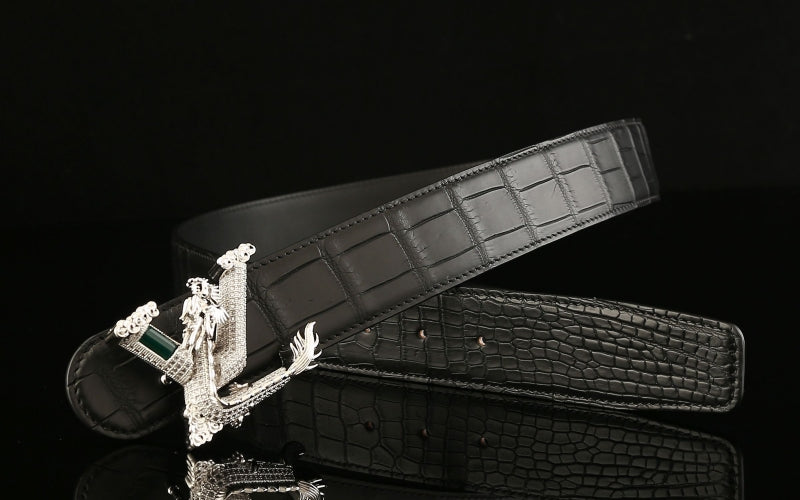
Glazed and matte finishes side by side: BELTLEY's crocodile collection, $118–$289.
Quick Facts
| Stat | Detail |
|---|---|
| Heng Long acquisition by LVMH | 2011 (majority stake) |
| France Croco owner | Kering (acquired 2013) |
| Typical French tannery lead time | 6–12 months per skin lot |
| Dominant Singapore finish | High-gloss glazed |
| Dominant French finish | Matte / semi-matte, agate hand-glazed |
| Chrome content (typical) | Singapore higher, France often hybrid |
When I first walked a tannery floor in Singapore and then, six months later, one outside Périgueux in southwest France, the difference hit before anyone said a word. Singapore smells like fresh chrome and humid heat; the skins on the racks gleam like wet enamel. The French floor is cooler, slower, smells faintly of vegetable tannins and beeswax, and the skins have a soft, almost powdery surface waiting to be coaxed into shine by hand. Same animal. Two completely different philosophies.
That contrast is what this guide unpacks — without the marketing varnish.

What does "French tanned crocodile" actually mean?
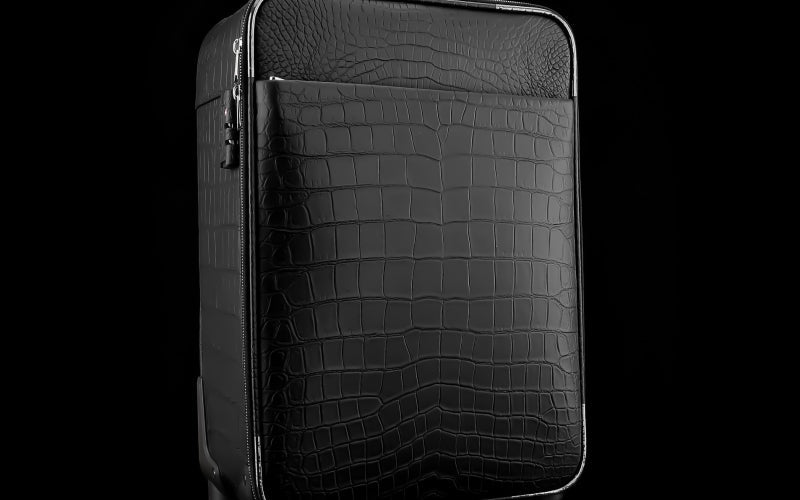
French tanned crocodile refers to skins processed at one of a small group of French tanneries — most notably France Croco (Kering), Tanneries Roux, and Perrin — using French finishing techniques that favor matte or semi-matte surfaces, hand agate-stone glazing, and longer drum cycles than Asian counterparts. It is a finishing school as much as a geography.
The French tradition grew up serving Paris houses, especially Hermès, which is largely vertically integrated through its own tannery network (HCP, Tanneries du Puy, Louviere). Even outside Hermès, French finishing is what most people picture when they think of "Birkin-grade" crocodile: deep color, low-key sheen, scales that look hydrated rather than lacquered. Compare that against the glazed vs matte vs semi-matte crocodile finishing decision and you'll see why French houses lean this way — it photographs as "quiet luxury," not flash.

Why is Singapore the other capital of crocodile tanning?
Singapore became the world's other crocodile tanning capital because Heng Long — founded in 1947 and acquired by LVMH in 2011 — built the dominant supply chain for high-gloss glazed Porosus and Niloticus skins, feeding Louis Vuitton, Dior, Fendi, and most Asian luxury houses. Scale plus consistency, not just heritage.
Heng Long's edge is operational: enormous drum capacity, climate control suited to tropical hides, and a finishing line tuned for bright, mirror-grade glaze. Asian luxury buyers — and the Asian retail customer in particular — historically prefer that crisp, jewel-like shine, so the supply followed the demand. According to industry reporting from Business of Fashion, LVMH's 2011 acquisition was specifically about locking up exotic supply rather than chasing a stylistic statement.
If you want to understand which species is actually being tanned at either location, our Porosus vs Niloticus crocodile guide covers that fork in detail.

How does the tanning chemistry actually differ?
Singapore tanneries lean heavily on chrome tanning for speed, brightness, and color saturation. French tanneries more often use chrome/vegetable hybrid systems with longer drum cycles, slower drying, and more hand-finishing — which produces a softer hand and a less reflective surface, but takes far longer. Both are technically "chrome-tanned"; the recipe differs.
A few specifics worth knowing:
- Drum time. Singapore cycles can complete primary tannage in days. French houses often run secondary retannage and fatliquoring over weeks.
- Glazing. Singapore typically uses mechanical glazing wheels for high gloss. France favors agate stone hand-glazing — a craftsman literally rubbing each scale with a polished stone — which produces that soft, irregular luster.
- Finish chemistry. French finishes tend to be thinner, more transparent, letting natural scale character show. Singapore finishes can be slightly more built-up to lock in mirror shine.
- Color depth. French tanneries are known for deeper, more saturated browns and "patina-able" blacks. Singapore is famous for clean, even, vivid colors — true reds, brilliant blues — that read crisp under store lighting.
Neither is "better." For a primer on how chrome and vegetable tannage chemistry actually work, Wikipedia's tanning of leather article is a solid technical starting point, and the Leather Working Group audits both ecosystems against the same environmental standards.
Key Takeaways (so far)
- Singapore = bright, glazed, fast, consistent. Built for shine and scale.
- France = matte/semi-matte, hand-glazed, slow. Built for understatement and patina.
- Chemistry difference is real but narrower than marketing implies. Both are chrome-based; the finishing line decides the look.
- Provenance matters more for resale story than for daily wear.

Which tannery style works for which look?
Choose Singapore-finished crocodile if you want a glossy, statement belt with crisp color and mirror shine — the "you can see it across the room" look. Choose French-finished crocodile if you want a matte, understated piece that develops a soft patina and reads as old money rather than new luxury. Both age beautifully when cared for.
In practical terms:
| You want… | Reach for |
|---|---|
| High-gloss black tuxedo belt | Singapore-style glazed |
| Matte cognac everyday dress belt | French-style semi-matte |
| Vivid blue or red statement | Singapore-style glazed |
| Hermès-adjacent quiet brown | French-style matte, agate-glazed |
| Patina that deepens for years | French-style hybrid tannage |
If your taste runs to the matte school, our exotic leather belt collection carries pieces finished in that tradition; if you want the glazed look, the alligator belt collection is where to look.

Why are French tannery lead times so long?
French crocodile tannery lead times typically run six to twelve months per skin lot because the hybrid tannage cycles are longer, agate hand-glazing is manual, capacity is intentionally limited, and Hermès consumes the majority of premium French output — leaving smaller houses competing for the remainder. Slowness is partially a feature, partially a bottleneck.
This is also why genuinely French-tanned crocodile carries a price premium even before any belt is built. When a small workshop has to wait nine months for a skin lot, capital is tied up, and that cost rolls forward. It's one of the structural reasons we wrote why crocodile belts cost $500 vs $5,000 — the tannery bill is a much larger share of that gap than most buyers realize.
Singapore's faster cycle isn't a quality compromise; it's a different operating model. Heng Long can deliver consistent quality at scale because the process is engineered for throughput. French houses can deliver hand character because the process refuses to scale.

Does provenance actually matter to the buyer?
For most buyers, the tannery's country of origin matters less than three things: the species (Porosus vs Niloticus vs Alligator), the cut placement on the skin, and the finish school. A well-finished Singapore Porosus center cut will outperform a mediocre French Niloticus side cut every time. Provenance is a tiebreaker, not a decider.
Where provenance does matter:
- Resale and collectibility. A Hermès-style French-tanned Porosus carries narrative value at auction.
- Matching a specific aesthetic. If you're chasing the Hermès matte look, you need French finishing — period.
- Personal values. Some buyers care about supporting independent French houses over conglomerate-owned Asian supply. That's a legitimate preference.
For everyone else, the more useful questions are about center cut vs side cut placement and whether the leather is real exotic or embossed cowhide pretending to be crocodile. Those decisions move the needle more than country of origin.

The honest industry take
A lot of luxury marketing leans hard on "French-tanned" as shorthand for premium. It is premium — but the distinction is often overplayed for storytelling. Plenty of houses tan in Singapore and finish in Italy. Plenty of "Made in France" belts use skins that started life in an Australian or Papua New Guinean farm, were tanned in Singapore, and only saw France for the cutting and stitching. The certificate of origin tells one slice of the truth.
What we tell BELTLEY customers: judge the finish quality, the scale alignment, the cut placement, and the hardware in your hand. Those are honest signals. Country of tannage is a story; the leather itself is the evidence. You can read more about how we think about sourcing on our About BELTLEY page.
The Bottom Line
The Singapore vs France divide is a real fork in the crocodile world — Heng Long built the global supply chain for glazed, vivid, scaled-to-luxury skins, while France Croco, Roux, and Perrin kept the slow, matte, hand-glazed tradition alive for Paris houses. The chemistry differs, the finish style differs, and the lead times differ dramatically. But the gap between a great Singapore skin and a great French skin is smaller than marketing wants you to believe — and far smaller than the gap between a great skin (from either) and a mediocre one.

Frequently Asked Questions
Q: Is French-tanned crocodile better than Singapore-tanned? A: Neither is universally "better." French tanneries excel at matte, hand-glazed finishes with longer patina potential; Singapore (Heng Long, LVMH-owned) excels at bright, glazed, color-saturated skins at consistent quality. Pick by the look you want, not the flag.
Q: Who owns Heng Long Tannery? A: LVMH took a majority stake in Heng Long in 2011 to secure exotic skin supply for Louis Vuitton, Dior, Fendi, and other group brands. It remains the dominant Singapore crocodile tannery.
Q: Does Hermès use French-tanned crocodile? A: Hermès is largely vertically integrated through its own tannery group (HCP, Tanneries du Puy, Louviere) and primarily uses French-tanned skins finished in the matte, agate-stone-glazed tradition that defines the Birkin aesthetic.
Q: Why does French-tanned crocodile cost more? A: Longer drum cycles, hand-glazing labor, intentionally limited capacity, and Hermès absorbing the majority of premium French output all push prices up. Lead times of 6–12 months also tie up capital that gets passed through.
Q: Can I tell Singapore-tanned from French-tanned by looking? A: Often, yes — at the finish level. High-gloss, mirror-bright glazed crocodile is overwhelmingly Singapore-style; soft matte or semi-matte with subtle, irregular luster from hand agate-glazing is French-style. The skins themselves can come from the same farms.
Q: Are BELTLEY belts French-tanned or Singapore-tanned? A: Both, depending on the model and finish. We choose the tannery school that matches the belt's design intent, hold finished belts in stock, and handcraft and ship within 2-3 days — no 6-12 month tannery wait passed to you.
%20dominates%C2%A0glazed,%20high-shine%C2%A0crocodile%20and%20supplies%20LV,%20Dior%20and%20Fendi.%0AFrance%20(France%20Croco/Kering,%20Tanneries%20Roux,%20Perrin)%20dominates%C2%A0matte...)