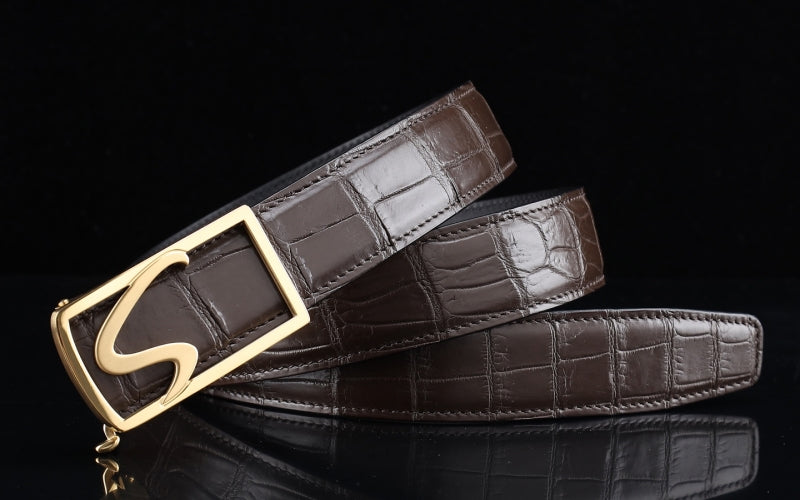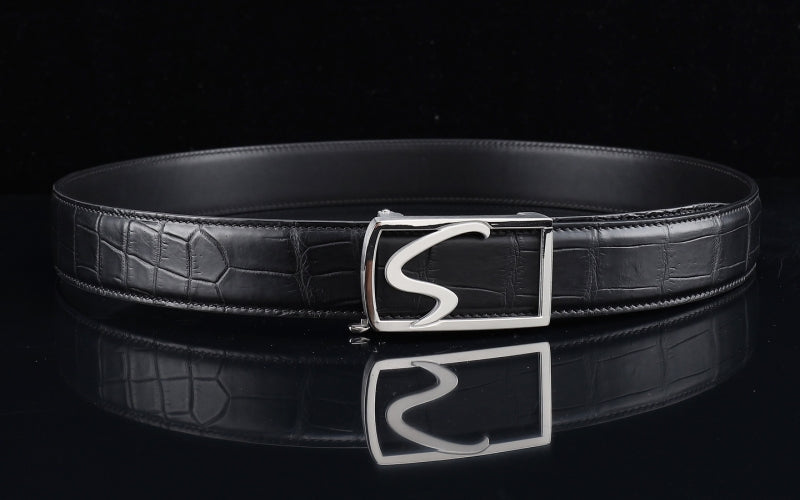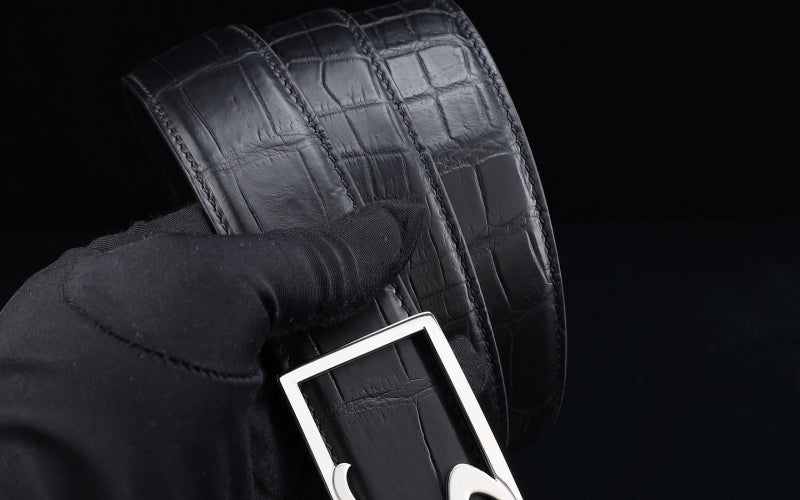
What Is "Mississippiense" on an Alligator Belt? (Decoded)
TL;DR:
- "Mississippiense" is a species name, not a finish. It refers to Alligator mississippiensis — the American alligator native to the southeastern United States.
- Hermès and other luxury houses print "Alligator Mississippiense" on tags as a provenance flex, signaling traceable American-farmed hides.
- Buyers conflate the word with Hermès's signature matte and semi-matte finishes, but those are tannery decisions applied to the hide.
- American alligator skin has larger, rounder belly tiles than Nile or Porosus crocodile, which is why finishes look so different on each species.
Quick Facts
| Question | Answer |
|---|---|
| What does "Mississippiense" mean? | The species Alligator mississippiensis (American alligator) |
| Is it a finish? | No — it's a Latin species marker on the hangtag |
| Common finishes applied | Matte natural, semi-matte, glazed (shiny), brushed |
| Where the hides come from | Louisiana, Florida, Texas farms (CITES-regulated) |
| Most famous user of the term | Hermès (printed on belt and bag tags) |
| BELTLEY price range for American alligator belts | from $178 (DTC, no Brand Tax) |
A Note From the Bench
I had a customer email me last spring — he'd just bought a vintage Hermès belt at auction and the tag read "Alligator Mississippiense." He thought "Mississippiense" was a special leather treatment, like patent or pull-up. It isn't. It's just biology dressed up in italics. I spent twenty minutes on the phone walking him through it, and that conversation is the reason this guide exists. Most luxury tags are written for collectors, not first-time buyers, and a little translation goes a long way.

What does "Mississippiense" actually mean on a belt tag?
"Mississippiense" is the second half of the scientific name Alligator mississippiensis — the American alligator. When a tag reads "Alligator Mississippiense," it's identifying the species of the hide, not a finishing technique, dye job, or texture. It's a provenance label, the same way "Crocodylus porosus" identifies a saltwater crocodile.
Luxury houses adopted the Latin convention because two visually similar hides — American alligator and Nile crocodile — come from completely different animals with different farms, treaties, and price points. Printing the species in Latin removes ambiguity for collectors, customs officers, and CITES inspectors. You can read more about the species itself on the American alligator Wikipedia entry.
Why do so many buyers think Mississippiense is a finish?
Because Hermès — the brand most associated with the word — almost always finishes its American alligator belts in a soft matte or semi-matte sheen. Buyers see "Mississippiense" and "matte alligator" together so often that the two ideas fuse in their minds. The species and the finish are independent decisions, but the marketing pairing is sticky.

Hermès leans on matte and semi-matte for its signature understated look. The leather looks suede-soft, the tile pattern is visible but not glossy, and it photographs beautifully. Other tanneries take the same Mississippiense hide and high-gloss glaze it until it mirrors a piano top. Same species, different mood. We break this down further in our glazed vs. matte vs. semi-matte crocodile belt guide.
What finishes are typically applied to Mississippiense hides?
Four finishes dominate American alligator belt production: matte natural (no top-coat shine), semi-matte (a low-luster wax pull), glazed (heat-and-pressure agate-stone polish), and brushed (a velvety nap). Each one is a tannery process applied after tanning — not a property of the hide itself.
Here's how they break down at the workbench:
| Finish | Look | Best For |
|---|---|---|
| Matte natural | Soft, suede-like, zero shine | Quiet luxury, daily wear |
| Semi-matte | Low warm sheen, pebbled depth | Hermès-style dress belts |
| Glazed | High mirror gloss, formal | Tuxedo and evening belts |
| Brushed | Velvety nap, almost nubuck-like | Fashion-forward casual |
We use semi-matte and matte natural finishes most often at BELTLEY because they age the most gracefully. Glazed alligator looks stunning in the box but shows micro-scratches within a year of daily belt-loop friction.
How is American alligator (Mississippiense) different from Nile or Porosus crocodile?
American alligator has larger, rounder, more uniform belly tiles, no integumentary sense organ pits in the scales, and a softer hand. Nile crocodile (Crocodylus niloticus) and saltwater crocodile (Crocodylus porosus) both show small dot-like pits on each scale and tend to have squarer, tighter tile geometry. Once you see the pit difference under a loupe, you can never unsee it.

A few practical takeaways for shoppers:
- Tile shape: Mississippiense = soft rectangles and ovals. Porosus = small, even squares. Niloticus = irregular, larger squares.
- Scale pits: Crocodile species have a tiny dot on each scale. Alligator does not.
- Hand feel: American alligator is slightly more pliable; Porosus is denser and considered the apex of luxury exotics.
- Origin: American alligator comes almost exclusively from US farms, regulated by Louisiana's Department of Wildlife and Fisheries program.
For a deeper side-by-side, see our American alligator vs. Nile crocodile belt comparison and the Porosus vs. Niloticus crocodile breakdown.
Why does Hermès put the species name so prominently on its tags?
It's a provenance flex. By spelling out Alligator mississippiensis, Hermès tells the buyer: this hide is traceable, CITES-permitted, farmed under known welfare standards, and not a substitute species. The Latin name doubles as a luxury authentication cue — knockoffs rarely bother with accurate taxonomy.
The international trade in alligator and crocodile hides is governed by CITES (the Convention on International Trade in Endangered Species), and the IUCN Crocodile Specialist Group tracks species sustainability worldwide. American alligator was downlisted from endangered status in 1987 thanks to farming programs, and today every legal hide carries a numbered tag traceable from farm to finished product. Printing "Mississippiense" is shorthand for "we did our paperwork." We covered the supply chain in where luxury brands source crocodile leather.
What does BELTLEY do with American alligator hides?
We source farm-raised Louisiana American alligator and finish most of our belts in matte natural or semi-matte — the same finish family Hermès uses, at a fraction of the price. Our DTC model means a comparable Mississippiense belt at BELTLEY runs from $178 instead of $3,000+. Same species, same tannery quality, no Brand Tax.

Every belt is handcrafted in small batches, kept in stock, and ships within 2–3 days. The 10-year warranty covers materials and construction. Browse the full alligator belt collection or the broader exotic leather belt range. If you want to understand our pricing philosophy, our why crocodile belts cost $500 vs. $5,000 explainer lays it out, and our About Us page covers the 1999 founding and 2025 DTC pivot.
Key Takeaways
- Mississippiense = the American alligator species, not a finish or texture.
- Hermès uses the term as a provenance signal, which is why buyers associate it with matte luxury belts.
- The actual finish (matte, semi-matte, glazed, brushed) is decided at the tannery, independent of species.
- American alligator differs from Nile and Porosus crocodile in tile shape, scale pits, and hand feel.
- You can buy real Mississippiense belts at BELTLEY from $178 — same hide standards, no luxury markup.
The Bottom Line
If you're staring at a hangtag that reads "Alligator Mississippiense" and wondering whether you bought a special finish — you didn't. You bought an American alligator belt, and the Latin is just the species. The actual look and feel come from the tannery's finishing choice, which is a separate decision your brand made on your behalf. Knowing the difference protects you from paying a finish premium for what is, taxonomically, just biology. Explore our alligator belt collection to see how Mississippiense looks in matte, semi-matte, and glazed — handcrafted, in stock, ready to ship.
Frequently Asked Questions
Q: Is "Mississippiense" the same as "American alligator"? Yes. Alligator mississippiensis is the scientific name; "Mississippiense" is the species half of that name. American alligator is the common English name for the same animal.
Q: Is Mississippiense alligator more valuable than Porosus crocodile? Generally no. Saltwater crocodile (Crocodylus porosus) is considered the most prestigious exotic leather and typically commands higher prices than American alligator at the luxury tier.
Q: Why does my Hermès belt say "Alligator Mississippiense" instead of "American alligator"? Hermès uses Latin species names across its exotic leather tags as a tradition of precision and provenance. It also helps with international CITES documentation.
Q: Can I tell what finish my Mississippiense belt has? Yes. Matte has no shine, semi-matte has a soft glow, glazed reflects light like a mirror, and brushed has a velvety nap. Tilt the belt under a lamp — the answer is immediate.
Q: Are BELTLEY's Mississippiense belts CITES-compliant? Yes. Every American alligator hide we use is sourced from licensed US farms with full legal documentation and traceable provenance.