Hand-Glazed Crocodile Belts: The Agate Stone Finish Explained
TL;DR:
- Hand-glazing is the traditional luxury method of finishing crocodile leather using a polished agate stone, an egg white binder, and hours of repeated hand pressure per hide.
- The friction compresses the scale surface and creates a deep, enduring mirror shine that machine glazing and chemical lacquers cannot replicate.
- Hermès, Louis Vuitton and the top houses still hand-glaze; you can spot it by the subtle directional sheen left by the artisan's strokes.
- BELTLEY uses agate-stone hand-glazing on its premium glazed crocodile belts — without the four-figure brand markup.
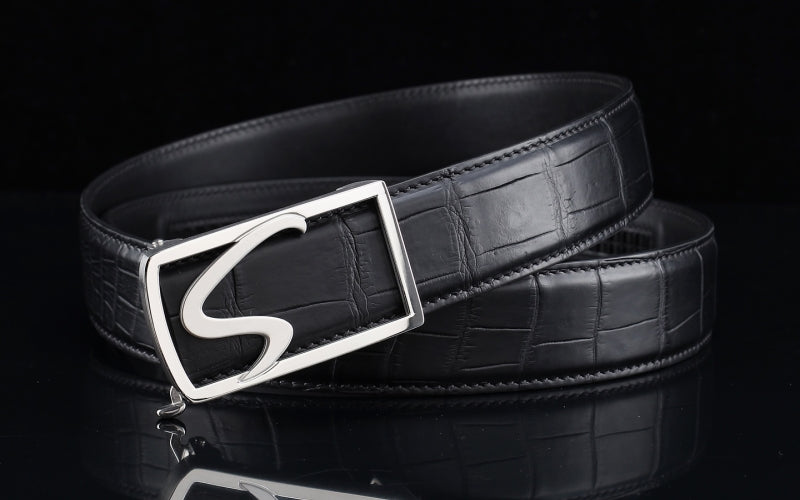
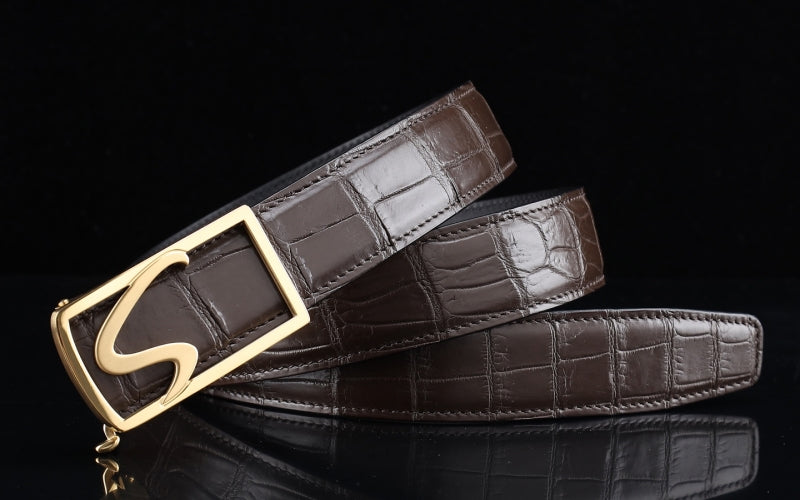
A truly hand-glazed crocodile belt looks alive under light. Tilt it, and the shine ripples across the scales like water on stone. That isn't a coating — it's the leather itself, polished by hand until its own surface becomes a mirror. Below, an honest look at how the work is actually done in the workshop, why it still matters, and how to tell the real thing from the machine version.
Quick Facts: Hand-Glazed Crocodile at a Glance
| Question | Answer |
|---|---|
| Tool used | Polished agate (chalcedony) hand stone |
| Binder | Beaten egg white (albumen) — sometimes diluted casein |
| Time per hide | 4–8 hours of active glazing, often across multiple passes |
| Visible signature | Subtle directional sheen following the artisan's stroke |
| Houses still using it | Hermès, Louis Vuitton, top Parisian and Italian ateliers |
| BELTLEY use | Premium glazed crocodile belts |
What Is Hand-Glazing on a Crocodile Belt?
Hand-glazing is a finishing technique where an artisan rubs a polished agate stone, lubricated with egg white, repeatedly across each scale of a tanned crocodile hide. The friction and pressure compress and burnish the leather's surface, producing a deep, naturally reflective shine without any topical lacquer or plastic coating.

The process belongs to the final stages of vegetable and chrome tanning workflows — long after the hide has been dyed and dried. It's the last gesture before cutting, and arguably the one that turns a tanned skin into a luxury surface. Done well, the shine becomes part of the leather. Done with a spray gun, it sits on top.
How Does the Glazing Process Actually Work?
The artisan beats fresh egg white into a thin foam, brushes a light film onto the hide, and then works a polished agate stone in firm, repeated strokes across each scale. The albumen acts as a sacrificial binder; the stone compresses the surface fibers; the repeated friction generates the polish. It can take 4–8 hours per hide.
In our atelier, the rhythm goes like this. The hide is laid flat on a stone-topped bench so it doesn't yield. The glazer holds the agate like a small iron — handle in the palm, polished face down — and works in short, overlapping strokes that follow the grain of the scales, never against them. The first pass is heavy and slow; you can feel the leather warm under the stone. The second and third passes get lighter, faster, more rhythmic. The shine doesn't appear all at once. It rises, scale by scale, as the surface fibers lay down and reflect light coherently for the first time.
Egg white matters because it's a protein that polymerizes under heat and pressure but stays microscopically thin — it fills the tiniest valleys without ever becoming a film you can see or feel. That's the trick. You're not glossing the leather. You're polishing it.
Why Does Hand-Glazing Produce a Better Shine Than Lacquer?
Hand-glazing creates shine by physically compressing the leather's own surface, so the reflection comes from the hide itself. Chemical lacquers and spray gloss create shine by sitting on top of the leather as a clear plastic-like film. Hand-glazed shine is deeper, more dimensional, and ages with patina; sprayed gloss is uniform, flat, and eventually cracks or hazes.

There are three practical reasons leather purists insist on the agate method:
- Depth. A polished surface refracts light from within the grain. A lacquered surface bounces light off a uniform top coat. The eye reads the first as luxurious and the second as plastic.
- Longevity. Lacquer cracks at flex points — exactly where a belt bends most. Hand-glazed leather flexes with the hide because there's nothing brittle on the surface.
- Patina. A glazed crocodile belt continues to develop character with wear, picking up small marks and a softer luster. Lacquered pieces don't patina; they just degrade.
This is also why the price gap between $500 and $5,000 crocodile belts is mostly hidden labor — and a large share of that labor is glazing time. Industry trade press, including Business of Fashion, has tracked this artisan-hour cost for years as a defining margin in exotic leather goods.
What's the Difference Between Machine Glazing and Hand-Glazing?
Machine glazing uses a mechanized arm with a fixed stone or roller that passes over the hide at uniform speed and pressure. It's faster — minutes instead of hours — but it cannot follow the contour of individual crocodile scales. The result is shine that looks consistent in photographs but flat and waxy in person, with no directional character.

Machines are excellent at flat surfaces. Crocodile, by nature, is not flat. Each scale is a slightly raised, slightly curved island, and the boundaries between scales are recessed. A hand glazer instinctively varies pressure and angle around each scale; a machine cannot. So machine-glazed crocodile tends to over-polish the high points and under-polish the valleys, giving a uniform but lifeless finish.
For a fuller comparison of the surface options, see our piece on glazed vs matte vs semi-matte crocodile belts.
Which Luxury Houses Still Hand-Glaze?
Hermès remains the most committed practitioner of agate-stone hand-glazing on Porosus crocodile, and the technique is still used on top-tier Louis Vuitton, Goyard exotic, and a handful of small Parisian and Florentine ateliers. Most other "luxury" exotic pieces on the market today use machine glazing or chemical finishes, regardless of price.
This is partly a question of supply. Trained glazers are rare, and a single skilled artisan finishes only a small number of hides per week. The Leather Working Group, which audits tanneries globally, notes that traditional finishing skills remain concentrated in a small number of European workshops.
The species choice matters too. Hand-glazing rewards tight, dense scale structure, which is why Porosus rather than Niloticus crocodile is the preferred substrate for the deepest mirror finishes — and why the tannery's geography (Singapore vs French houses) often determines whether a hide is hand-finished at all.
How Can You Tell Hand-Glazed from Machine-Glazed in Person?
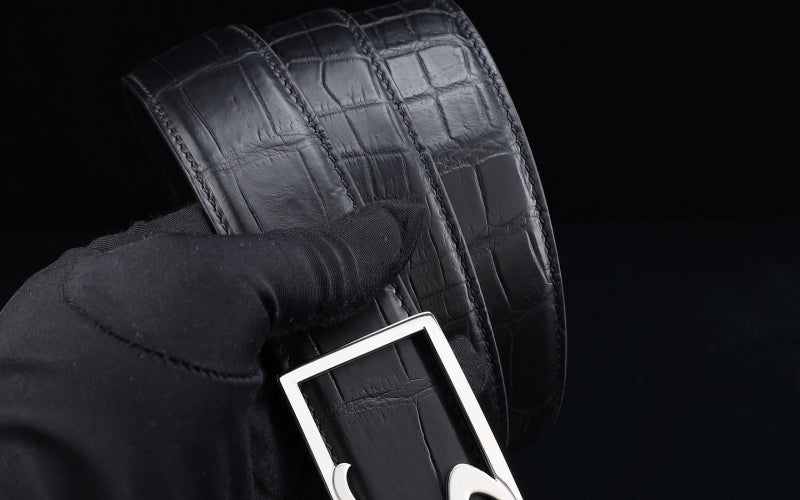
Hold the belt under a single light source and tilt it slowly. Hand-glazed crocodile shows a subtle directional sheen — small bands of brighter and softer reflection that follow the artisan's stroke pattern across the scales. Machine-glazed leather reflects light uniformly across the entire surface with no directional variation. Hand-glazed scales also feel slightly smoother in one direction than the other.

A second, harder test: flex the belt sharply. Lacquered or heavily coated finishes will show micro-cracking at the bend, often a faint white line. A true hand-glazed surface flexes without any visible change. And a third: look at the recessed lines between scales. On a hand-finished hide, those valleys are darker and slightly less polished than the scale tops, because the stone naturally rode the high points. On a machine or sprayed finish, valleys and peaks shine identically.
If the piece is being sold as crocodile but you suspect a printed cowhide imposter, the glazing test usually settles it — embossed cowhide cannot take a true agate polish.
Key Takeaways
- Hand-glazing is mechanical, not chemical. Stone, pressure, time. No topcoat.
- Egg white is the binder, not the shine. The shine is the leather itself, compressed.
- Machine glazing looks uniform; hand-glazing looks alive. That directional sheen is the signature.
- Most "glazed" exotic on the market is sprayed. True hand-glazing is rare even at luxury price points.
- BELTLEY hand-glazes its premium crocodile belts in-atelier, with the full process visible in our About Us story.
The Bottom Line
A hand-glazed crocodile belt isn't a product so much as a record of hours — every reflective scale represents minutes of an artisan working a stone across leather. That's why the shine is deeper, why it lasts longer, and why the heritage houses have refused to mechanize the step even when every other part of luggage and accessory production has been industrialized. At BELTLEY, we keep the agate on the bench because there is no faster way to do it well, and we'd rather take the time than fake the finish — which is also why our hand-glazed pieces are stocked in small batches at fair DTC prices, not four-figure brand-tax markups. Browse the full exotic leather belt collection to see what an agate-finished hide actually looks like in the light.
Frequently Asked Questions
Q: What does "hand glazed" mean on a crocodile belt?
It means the belt's mirror shine was produced by an artisan rubbing a polished agate stone, lubricated with egg white, repeatedly across each scale by hand — compressing the leather's own surface rather than coating it with lacquer or spray gloss.
Q: Is hand-glazed crocodile leather waterproof?
No exotic leather is truly waterproof, and hand-glazed crocodile is no exception. The polish gives the surface a degree of water resistance against light splashes, but prolonged moisture can dull the shine. Wipe dry promptly and condition occasionally.
Q: Why is hand-glazed crocodile so expensive?
The expense is almost entirely labor. A skilled glazer spends 4–8 hours per hide on the agate alone, on top of months of tanning. Combined with the rarity of trained artisans and high-grade Porosus skins, the per-belt cost is structural — not a brand markup.
Q: Will the shine on a hand-glazed belt fade over time?
It softens rather than fades. Because the shine is compressed into the leather itself, it doesn't peel or crack like lacquer. With normal wear, a hand-glazed belt develops a slightly mellower luster and richer patina — generally considered an improvement, not a defect.
Q: Can hand-glazed crocodile be re-polished?
Yes. A skilled craftsman can revive the surface by re-glazing with agate, often without needing to re-dye. BELTLEY's 10-year warranty includes craftsmanship support, and worn pieces can be returned for assessment and refinishing where appropriate.
{