Brushed vs Polished Crocodile Belt: Which Finish Fits You?
TL;DR:
- A brushed crocodile belt is tumbled and lightly buffed to create a soft, velvety, matte surface — modern, casual, and tactile.
- A polished crocodile belt is hand-glazed with agate stone (or machine-compressed) for a glassy, formal shine.
- Brushed shows scratches more readily; polished hides everyday wear better and reads more dressy.
- Pricing sits in the same tier — your choice should be driven by lifestyle, not budget.
Walk into any serious leather atelier and the first thing the master cutter will ask is not "what color?" — it's "what finish?" Because on a hide as expressive as crocodile, the finish is the personality. A brushed crocodile belt whispers; a polished one announces. This guide breaks down both finishes the way we explain them on the bench at BELTLEY® — so by the end, you'll know which belt belongs on your buckle this season. For broader context on shine levels, our glazed vs matte vs semi-matte crocodile guide is a useful companion read.
Brushed or Polished: Decide by Lifestyle
Same hide, same price tier — your week decides:
| Your situation | Go with |
|---|---|
| Suit-and-boardroom calendar | Polished (glazed) — the glassy shine is formal-code native and hides daily micro-wear. |
| Smart-casual, tactile taste | Brushed matte — velvety, modern, and the connoisseur's daytime pick. |
| Hard daily wear, low maintenance | Polished — the glaze is armor; brushed surfaces show scratches sooner. |
| Building a two-croc rotation | One of each: polished black for formal, brushed cognac for everything else. |
Both finishes, $118–$289: BELTLEY's crocodile collection.
What is a brushed crocodile belt finish?
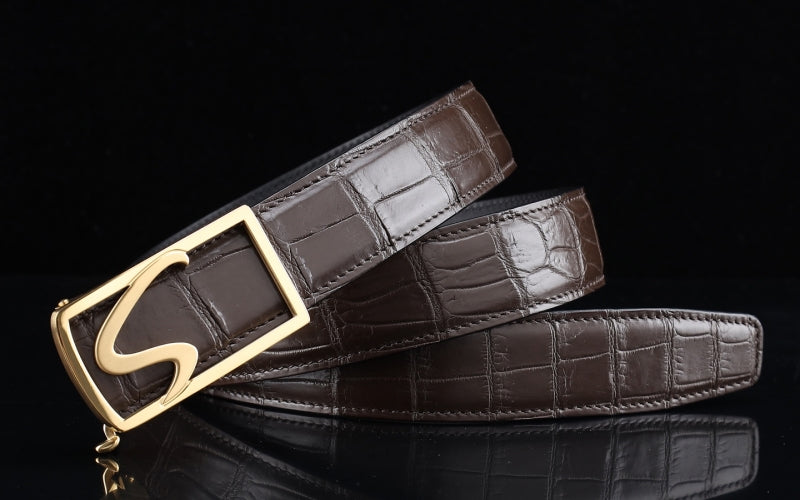
A brushed crocodile belt is a hide that has been gently tumbled and surface-buffed to break the natural gloss of the scales, producing a soft, matte, almost velvety hand-feel. It is sometimes called a "naturel" or "tumbled" finish, and it is distinct from a matte glaze — no lacquer is applied; the texture is purely mechanical.

The process is closer to a long, slow drum massage than to sanding. Hides rotate in a wooden drum for hours, often with natural waxes, until the keratin surface of each scale loses its mirror sheen and takes on a fine, suede-like nap. Done well, it preserves every scale boundary and pore — you still see the crocodile, you just feel it differently. Master tanners describe finishing as the stage where "the hide finally tells you who it is" — a view echoed in Wikipedia's overview of leather tanning.
What is a polished crocodile belt finish?
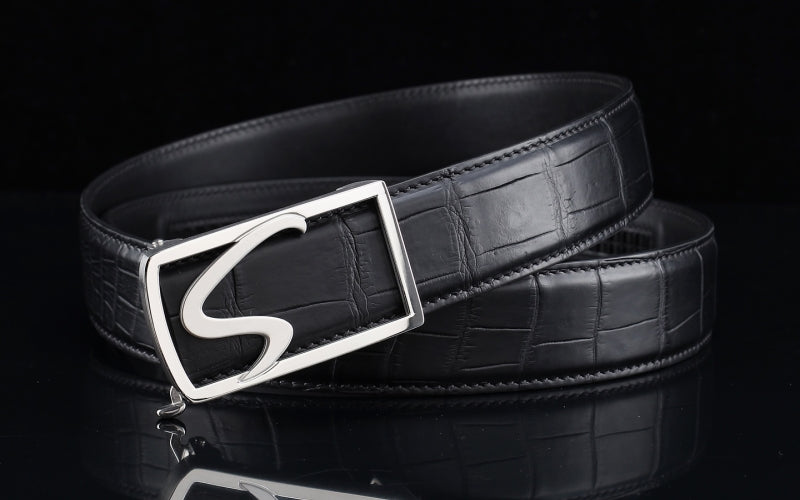
A polished crocodile belt has a high-gloss surface created either by hand-glazing with an agate stone or by machine compression under a heated roller. The result is a glassy, reflective scale surface that reads formal, dressy, and traditionally luxurious — the finish most people picture when they hear "crocodile belt."
True hand-glazing is the gold standard: a single artisan presses a polished agate against the hide hundreds of times per square inch until the surface vitrifies into a deep mirror. Machine glazing is faster and more uniform but loses some of the depth and "wet-look" character. We break down the technique in detail in our hand-glazed agate stone crocodile belt guide. Industry reporting from outlets like Business of Fashion consistently flags hand-glazing as one of the rarest skills in modern leather goods.
The craft moment: choosing finish on the cutting table
I still remember the first time I watched our head cutter lay out two strap blanks side by side — same Porosus belly, same width, same dye lot. One brushed, one glazed. He held them up to the window and said, "This one is for the man who wears the watch. This one is for the man who wears the suit." That sentence has guided every finish decision we've made since. The hide does the talking; we just translate.

How do brushed and polished crocodile belts compare?
Brushed crocodile belts feel softer, look more modern, and pair best with casual or fashion-forward wardrobes — but they show scratches sooner. Polished crocodile belts are dressier, more durable in appearance because the gloss masks micro-abrasions, and remain the standard for formal and business wear. Both sit in the same price tier when crafted from equal-grade hides.
| Attribute | Brushed Crocodile | Polished Crocodile |
|---|---|---|
| Surface | Matte, velvety, tactile | Glossy, reflective, smooth |
| Visual character | Modern, understated, fashion | Classic, formal, luxurious |
| Scratch visibility | Higher — micro-marks read as patina | Lower — gloss diffuses minor wear |
| Formality | Smart-casual to elevated casual | Business, formal, evening |
| Care difficulty | Slightly higher (no lacquer barrier) | Slightly easier (sealed surface) |
| Price tier | Same as polished, hide-grade dependent | Same as brushed, hide-grade dependent |
| Best with | Denim, chinos, suede loafers, knitwear | Suiting, dress shoes, leather oxfords |
For a deeper read on hide grading that drives pricing, see why crocodile belts cost $500 vs $5,000.
Which finish is more durable?
Polished crocodile belts appear more durable day-to-day because the glazed surface hides minor scratches and resists light moisture. Brushed crocodile belts are equally durable structurally, but every scuff is more visible because there is no reflective layer to disguise it. With proper care, both finishes last decades.

Structural durability comes from the hide and the tannery — not the finish. Hides processed by tanneries audited under Leather Working Group protocols deliver consistent fiber strength regardless of final surface treatment. The species also matters more than the polish: our breakdown of Porosus vs Niloticus crocodile explains why scale density influences long-term wear far more than gloss level.
When should you wear a brushed crocodile belt?
Reach for a brushed crocodile belt when the outfit is texture-driven rather than shine-driven: raw or selvedge denim, flannel trousers, suede chukkas, knit polos, unstructured blazers, or anything in earth tones. The matte surface adds depth without competing with other materials, making it the modern stylist's quiet flex.

Brushed finishes also age beautifully. Because there is no lacquer, the natural oils of the hide come forward over time, deepening color and softening the hand. If you are someone who appreciates how a good pair of denim or unlined loafers develops, a brushed crocodile belt will reward you in the same way.
When should you wear a polished crocodile belt?
Choose a polished crocodile belt for tailored suits, formal events, business meetings, evening wear, or any outfit where leather shoes carry shine. The glossy surface mirrors the polish on dress oxfords and creates the classical "shine-to-shine" pairing that defines traditional menswear.
A polished belt is also the more forgiving choice if it will be your only crocodile piece — it covers more occasions, from boardroom to black-tie-adjacent. If you are deciding between exotic and embossed cowhide for a dressy use case, our comparison of embossed cowhide vs real crocodile belts explains why genuine glazed crocodile reads differently across a room.
How do you care for each finish?
Care for a brushed crocodile belt by dusting with a soft horsehair brush and conditioning sparingly with a neutral exotic-leather cream — never wax. Care for a polished crocodile belt by wiping with a dry microfiber and re-glazing occasionally with a dedicated exotic polish. Keep both away from heat, water, and direct sun.

The biggest mistake we see is over-conditioning. Crocodile is naturally rich in oils; a heavy hand turns brushed hides splotchy and dulls polished ones. Less is more — twice a year is plenty for most climates.
Key Takeaways
- Brushed = modern, matte, tactile. Best for casual and texture-led outfits.
- Polished = classic, glossy, formal. Best for tailoring and dress shoes.
- Same price tier when hide quality is matched — pick by lifestyle, not cost.
- Brushed shows scratches; polished hides them. Both age well with proper care.
- Hide species and grade matter more than finish for long-term durability.
The Bottom Line
A brushed crocodile belt and a polished crocodile belt are not better or worse — they are two answers to two different questions about how you live. Brushed flatters the man who builds outfits around texture, denim, and quiet confidence. Polished flatters the man who lives in tailoring and wants his accessories to reflect that discipline. At BELTLEY®, we hand-finish both styles in small batches from the same exotic hides, hold every belt in stock for 2-3 day handcraft and ship, and back each one with our 10-year warranty — a standard rooted in the atelier we founded in 1999 and brought direct-to-consumer in 2025, with no Brand Tax in between. Read more about that journey on our About Us page, or browse the full crocodile belt collection and the wider exotic leather belt range to find the finish that fits the life you actually live.
Frequently Asked Questions
Q: Is a brushed crocodile belt real crocodile?
Yes — brushed simply describes the finishing process. A brushed crocodile belt is genuine crocodile hide that has been tumbled and buffed to remove surface gloss; the scales, pores, and grain pattern remain fully intact and visible.
Q: Does a brushed crocodile belt scratch easily?
It does not scratch more easily than a polished belt, but scratches are more visible because there is no reflective surface to mask them. Many owners consider this an advantage — the marks become a personal patina over time.
Q: Can a polished crocodile belt be re-polished if it dulls?
Yes. Light dulling can be restored at home with a dedicated exotic-leather polish and a soft cloth. For deeper restoration, a master leather artisan can re-glaze the surface using traditional agate-stone technique.
Q: Are brushed crocodile belts more expensive than polished?
No. Pricing is driven by hide species, size, scale uniformity, and origin — not by finish. A brushed and a polished belt cut from the same hide grade sit in the same price tier.
Q: Which finish is more popular right now?
Polished remains the classic bestseller, but brushed crocodile has gained significant ground in 2025-2026 as menswear shifts toward quieter, texture-led luxury. Both finishes are core to the BELTLEY® collection.