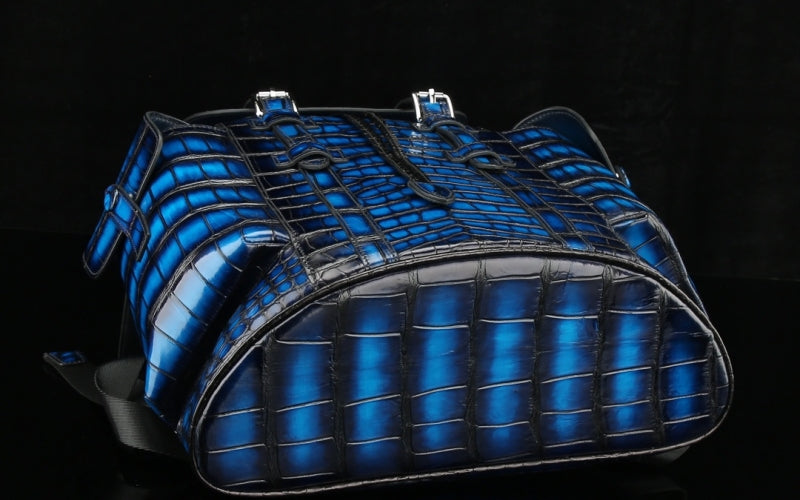
Where Do Luxury Brands Source Their Crocodile Leather?
TL;DR:
- Hermès operates its own crocodile farms in Australia (Lemington, Janamba) and Botswana, plus tanneries in France through HCP and Tannerie d'Annonay.
- LVMH controls Singapore's Heng Long tannery (acquired 2011), feeding Louis Vuitton, Dior, Celine, and Fendi.
- Kering owns France Croco in Normandy and holds a stake in HCP Group, supplying Saint Laurent, Bottega Veneta, and Gucci.

Quick Facts
| Stat | Number |
|---|---|
| Year LVMH acquired Heng Long tannery | 2011 |
| Hermès-owned crocodile farms (publicly documented) | 6+ across Australia & Botswana |
| Average saltwater crocs per Birkin bag | 3-4 |
| CITES Appendix used for farmed crocodiles | Appendix II |
| Wholesale price per square foot, top-grade Porosus | $80-$140 |
| Years BELTLEY has worked with Asian exotic tanneries | 25+ (since 1999) |
A friend who collects vintage Hermès once asked me, point blank: "Where does the leather actually come from?" He'd just paid five figures for a Kelly and realized he had no idea whether the crocodile was farmed in Australia, tanned in France, or stitched in a Paris atelier. The honest answer surprised him — and it's the same answer most luxury houses won't volunteer in their boutiques.
The luxury crocodile leather supply chain is smaller than people think, more vertically integrated than ever, and increasingly transparent if you know where to look. This is the map.

Why do luxury brands own their own crocodile farms?
Luxury brands buy farms to lock down supply, control quality from hatchling to handbag, and protect against price spikes. A single Birkin requires 3-4 perfect Porosus skins, and a flaw the size of a fingernail downgrades the entire hide. Owning the farm means owning the scarcity.
Vertical integration in exotic leather isn't new, but it accelerated after 2010 when Chinese demand pushed wholesale crocodile prices to record highs. Hermès responded by quietly buying or building farms across northern Australia — including Lemington Station in the Northern Territory and the Janamba Croc Farm — and later partnering on operations in Botswana. Industry estimates put Hermès's annual saltwater crocodile output in the tens of thousands of skins.
The economic logic is brutal but simple. If you sell a $50,000 bag, a $400 hide is a rounding error — but losing a single hide because your supplier prioritized a competitor's order is a delivery failure that costs a sale. Owning the upstream removes that risk.
Related reading: why crocodile belts cost $500 vs. $5,000.

Which luxury group owns which tannery?
Hermès owns HCP Group's tanneries and Tannerie d'Annonay in France. LVMH owns Heng Long International in Singapore (acquired 2011), supplying Louis Vuitton, Dior, Celine, and Fendi. Kering owns France Croco in Normandy and took a minority stake in HCP-related assets through its Materials Innovation Lab.
Here's the simplified ownership map most consumers never see:
| Luxury Group | Tannery / Farm Asset | Year | Supplies |
|---|---|---|---|
| Hermès | Lemington & Janamba farms (Australia), Botswana farm interests | Multiple | Birkin, Kelly, Constance |
| Hermès | Tannerie d'Annonay, HCP-affiliated French tanneries | 2008-2015 | All Hermès exotic SKUs |
| LVMH | Heng Long International (Singapore) | Acquired 2011 | Louis Vuitton, Dior, Fendi, Celine |
| Kering | France Croco (Normandy) | Acquired 2018 | Saint Laurent, Bottega Veneta, Gucci |
| Kering | HCP Group stake | 2024 | Group-wide exotic capacity |
| Richemont | Independent tannery contracts | Ongoing | Cartier exotic straps, Chloé |
Heng Long is particularly interesting — before LVMH bought it, Heng Long was the world's largest crocodilian tannery, and its client list still reads like a luxury convention. Business of Fashion has covered the consolidation in depth: by 2020, the four largest luxury groups controlled an estimated 60-70% of premium crocodile and alligator tanning capacity worldwide.
For the difference between the two main species these tanneries process, see Porosus vs. Niloticus crocodile belts.

What is "single-origin" crocodile leather?
Single-origin means the hide is traceable from a specific farm to a specific tannery to the finished product, with CITES documentation linking each step. It's the leather equivalent of estate-bottled wine — a transparency claim, not automatically a quality claim, but increasingly demanded by collectors.
The framework that makes single-origin possible is CITES Appendix II, which requires every farmed crocodile skin to carry a unique tag from hatchling tank to finished product. The IUCN Crocodile Specialist Group audits these programs and publishes population data showing that regulated farming has actually helped wild crocodile populations recover since the 1970s.
A single-origin claim typically means three things:
- Farm-identified: the hide came from a specific, named ranch — not pooled wild-caught skins.
- Tannery-identified: a single facility tanned and finished it, so color and temper are consistent.
- CITES-tracked: the export and re-export permits match the tag.
Most mass-market "crocodile" products fail all three tests. Many are actually embossed cowhide — a difference we cover in embossed cowhide vs. real crocodile belt.
Key Takeaways
- The world's premium crocodile supply runs through roughly a dozen tanneries, most owned by Hermès, LVMH, or Kering.
- Vertical integration explains why luxury exotic prices keep rising — the houses set both supply and demand.
- CITES Appendix II tagging means every legal crocodile hide is traceable. Ask for the tag number.
- Independent tanneries in Singapore, Italy, and France supply both luxury maisons and DTC brands.

Where do independent and DTC brands source their crocodile?
Independent and DTC brands source from the same regulated Asian and African tanneries that supply mid-luxury houses — primarily Singapore, Vietnam, Thailand, and South Africa. These tanneries process legally sourced hides under identical environmental standards as the LVMH and Kering-owned facilities, just without the conglomerate ownership premium.
This is the part of the industry that gets the least airtime, because it doesn't fit the luxury-marketing narrative. Singapore alone hosts multiple major exotic tanneries beyond Heng Long. Italian houses like Caravel and Lédonne tan exotic hides for dozens of brands you'd recognize and dozens you wouldn't. In Paraguay, Frigorifico Concepción processes most of the world's caiman — a smaller crocodilian we explain in caiman vs. crocodile vs. alligator belt.
At BELTLEY, we've worked with two Asian tanneries since 1999 — both CITES-permitted, both auditable, both supplying houses you've heard of. We don't name them publicly because exclusivity contracts go both ways, but the hides on our cutting tables come from the same crates that ship to Milan and Paris. The difference is what happens after: instead of routing through three layers of brand markup, we cut, hand-stitch, and ship in 2-3 days, direct.
It's the reason a BELTLEY crocodile belt costs $118-$289 instead of $1,800-$4,500. Same hide, different math. More on that supply economics in how many crocodiles to make one belt.

What should you ask before buying any crocodile product?
Ask four questions: (1) What species — Porosus, Niloticus, or alligator? (2) What's the CITES tag number? (3) Where was it tanned? (4) Is it farm-raised or wild? Any reputable seller answers all four in writing. Vague answers mean either embossed cowhide or undocumented sourcing.
The CITES tag is the single most important detail. Every legally exported crocodilian hide has one — a small metal or plastic tag with a unique alphanumeric code traceable through the country-of-origin's wildlife authority. If a seller can't produce it, walk away.
Other quality signals to verify:
- Scale pattern symmetry down the spine (true bellies have mirrored scales).
- Pore visibility under raking light (real crocodile shows hair follicle pores; embossed leather doesn't).
- Hand-stitched edges vs. machine stitching (8-10 stitches per inch is the artisan standard).
- Lining quality — genuine kid leather or fine cotton, never bonded synthetic.
For BELTLEY's full transparency on sourcing and craft, see our About Us page or browse our complete exotic leather collection.

The Bottom Line
The luxury crocodile world looks vast from the outside — a constellation of maisons, ateliers, and heritage stories — but the upstream is small and consolidated. A handful of farms in Australia and Africa, a dozen tanneries in Singapore, Italy, and France, and four conglomerates writing most of the checks. Once you understand the map, the math behind a $5,000 belt versus a $300 one becomes a lot less mysterious. At BELTLEY, we've spent twenty-five years inside that map, sourcing from the same regulated tanneries the big houses use, then handcrafting belts that ship in 2-3 days with a 10-year warranty. Same legacy, none of the Brand Tax. Browse the crocodile belt collection to see what transparent sourcing looks like in the finished product.

Frequently Asked Questions
Q: Does Hermès really own crocodile farms? Yes. Hermès owns or has controlling interests in multiple farms in Australia's Northern Territory (including Lemington Station and the Janamba Croc Farm) and operations in Botswana. The acquisitions are publicly documented and reported regularly in trade press.
Q: Where does Louis Vuitton crocodile leather come from? Most LV crocodile is processed at Heng Long International in Singapore, which LVMH acquired in 2011. Heng Long sources farmed Porosus and Niloticus skins from Asia, Australia, and Africa under CITES Appendix II permits.
Q: Is farmed crocodile leather ethical? Regulated farming under CITES Appendix II has been credited by the IUCN Crocodile Specialist Group with helping wild populations recover since the 1970s, because farms create economic incentive to protect wild habitat. Standards vary by country — Australian and U.S. operations are considered the most rigorous.
Q: Can you buy luxury-quality crocodile leather without paying luxury prices? Yes. DTC brands like BELTLEY source from the same CITES-permitted tanneries that supply mid-luxury maisons, then cut, hand-stitch, and ship direct. The result is comparable hide quality at roughly one-fifth the retail price, because there's no boutique markup or wholesale layer.
Q: How can I verify a crocodile product is real and legally sourced? Ask for the CITES tag number, the species (Porosus, Niloticus, or American alligator), and the country of tannage. Inspect for symmetric belly scales and visible hair-follicle pores under raking light. Any seller who can't or won't provide this paperwork is selling either embossed cowhide or undocumented exotic.
%20and%20Botswana,%20plus%20tanneries%20in%20France%20through%20HCP%20and%20Tannerie%20d'Annonay.%0ALVMH%20controls%20Singapore's%20Heng%20Long%20...)