How Long Does a Quality Calfskin Belt Actually Last? (10–20+ Years)
TL;DR:
- A quality full-grain calfskin belt lasts 10–20+ years with normal wear and basic care.
- A bonded or split leather belt lasts 6–24 months before cracking or stretching out.
- Lifespan depends on: leather quality, construction, hardware, and care.
- The buckle outlasts the strap in most cases — quality stainless or solid brass hardware lasts 30+ years.
- The strap is the limiting factor — calfskin's main aging modes are surface scuffs, edge wear, and eventual fiber breakdown at the most-used hole.
How long should a calfskin belt actually last? The marketing answer is "a lifetime" — which is true for some belts and a lie for others. The honest answer depends on what's inside the belt, how it's built, and how you treat it. A premium full-grain calfskin belt can outlast the wardrobe you bought it to match. A cheap "leather" belt from a department store often fails before the next season.
This guide gives you the real lifespan math: what makes a quality calfskin belt last decades, what kills cheaper belts early, and how to tell which side of the line you're on. By the end, you'll know whether to invest in one belt for 20 years or keep buying cheap ones every year.
How long does a quality full-grain calfskin belt actually last?
A quality full-grain calfskin belt lasts 10–20+ years with normal daily wear and minimal care. Many last longer — heirloom-quality calfskin belts from premium makers have documented 30–40 year lifespans when cared for properly. The two failure points over those decades are usually edge wear (the strap edges fraying over many years) and the leather at the most-used hole eventually softening or tearing.

Lifespan by leather grade:
| Leather Type | Realistic Lifespan |
|---|---|
| Full-grain calfskin, quality construction | 15–25+ years |
| Full-grain calfskin, average construction | 10–15 years |
| Top-grain calfskin | 6–10 years |
| Genuine leather (split) | 1–3 years |
| Bonded leather | 6–18 months |
| PU/PVC "leather" | 6 months–2 years |
The gap between full-grain calfskin and bonded leather isn't small. It's two decades vs one year. That's why "buy quality once" actually saves money — the math is brutal in favor of full-grain after the first 3–4 years.
What actually makes a calfskin belt last 20 years?
Four factors determine whether a calfskin belt lasts two decades or two seasons: full-grain leather quality, construction technique, hardware durability, and owner care habits. Skip any one of these and lifespan drops sharply. Get all four right and the belt becomes the longest-lived item in your wardrobe.

What matters most:
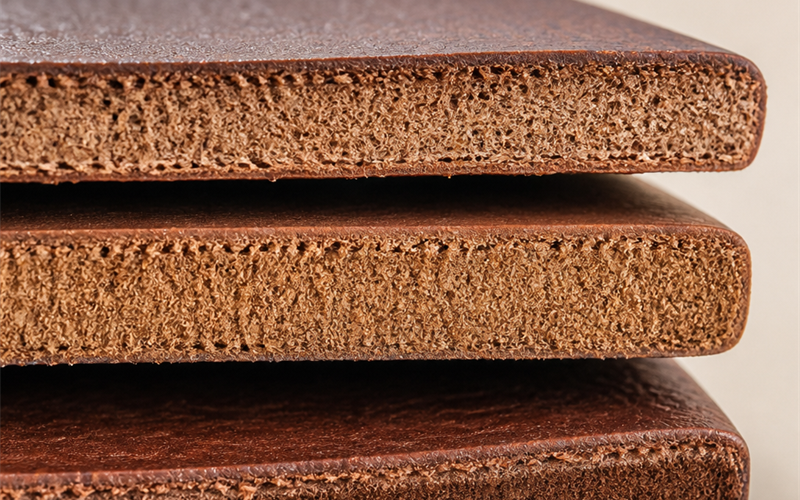
- Full-grain hide — the natural grain layer is the strongest part of any leather. Cut it off (to make top-grain) and the leather weakens. Skip it (split or bonded) and the belt is structurally compromised from day one.
- Single piece of leather, not laminated — many cheap "leather" belts are two thin layers of split leather glued together. The glue fails before the leather does.
- Stitched, not just glued — quality belts have edge stitching that holds construction together long after any glue would fail.
- Solid metal hardware — stainless steel or solid brass buckles last 30+ years. Plated zinc alloy buckles develop sharp burrs and corrosion within 2–3 years.
- Owner care — periodic conditioning every 6–12 months, avoiding heavy soaking, proper storage.
Britannica's leather entry covers the leather-grade hierarchy in detail — and the lifespan differences scale almost exactly with grade. We covered hardware quality in our 4 quality markers of a calfskin belt post.
What actually kills calfskin belts early?
The common killers of calfskin belts are: water damage from heat-drying, over-conditioning with the wrong oils, storage abuse (folding sharply, jamming into a drawer), wearing belts too tight (chronic stress on a few holes), and physical damage (sharp edges, fire damage, accidental cuts). None of these are "normal wear" — they're avoidable accidents that account for most premature belt deaths.
The early-death checklist:
- Heat-drying a wet belt with a hair dryer or radiator → cracking within months
- Mink oil overuse → leather over-saturates, becomes weak and stretched
- Folding instead of coiling for storage → permanent crease lines
- Wearing one hole exclusively → that hole and surrounding leather wear out fast
- Coconut oil (yes, really) → gunks up leather, attracts dust, accelerates decay
- Cheap hardware → buckle fails before strap, often unrepairable
Carl Friedrik's leather education covers the care side in detail. The takeaway: leather doesn't die of old age, it dies of mistreatment. We covered the right care routine in our calfskin care 101 post.
Does the buckle or the strap fail first?
The strap almost always fails first on a quality calfskin belt. A stainless or solid brass buckle is structurally simple and built to last essentially forever — 30+ years isn't unusual. The strap, on the other hand, accumulates wear: edge fraying, surface scuffing, color loss at the most-used hole, and eventually fiber breakdown after a decade or two of daily flexing.

The failure sequence over 15–20 years:
- Years 1–5: Minor scuffs, slight color deepening, beautiful patina
- Years 5–10: Edge wear becomes visible, surface shows daily-life marks
- Years 10–15: Most-used hole shows leather thinning, color at the buckle end fades
- Years 15–20+: One or two holes near the everyday position may show stress cracks
- Year 20+: Eventually, the strap may need replacement — the buckle is still fine
This is why some makers offer buckle-only or strap-only replacement programs. With cheap belts, the whole product fails at once. With quality calfskin belts, the buckle outlives the strap by decades.
How does care actually affect lifespan?
Basic care can extend a calfskin belt's lifespan by 5–10 years compared to no care at all. The minimum maintenance — periodic conditioning, proper storage, avoiding heat-drying when wet — costs about 30 minutes per year. The return is measurable: a belt that would have failed at year 8 lasts comfortably to year 15+.

The 30-minutes-per-year routine:
- Conditioning — twice yearly with a small amount of quality calfskin-appropriate conditioner. 10 minutes total.
- Storage — hang loosely or coil gently when not worn. Don't stack heavy items on top. 1 minute per use.
- Rotation — own at least two belts and alternate them. Lets each rest and dry between wears. Zero ongoing time.
- Cleaning — wipe with a dry cloth weekly if you wear daily. 30 seconds.
- Avoiding heat — never dry a wet belt with a hair dryer or near a radiator. 0 minutes (just don't).
That's it. No leather conditioning subscription, no annual spa treatment, no buying mink oil. Quality calfskin needs less care than most owners assume.
Is it worth buying one expensive calfskin belt vs many cheap ones?
For most people, one quality calfskin belt is significantly cheaper than the equivalent cheap belts over 10–15 years. The math: a $200 quality calfskin belt at 15-year lifespan = $13 per year. A $30 cheap belt at 1-year lifespan = $30 per year — plus the time of repeatedly shopping for replacements. The break-even point comes around year 4. Everything after is pure savings.

The full math:
| Year | Cheap Belt Spend | Calfskin Belt Spend |
|---|---|---|
| 1 | $30 | $200 |
| 5 | $150 | $200 |
| 10 | $300 | $200 |
| 15 | $450 | $200 |
| 20 | $600 | $200 (still going) |
Add in the embodied carbon, the wasted time, and the slightly-better-than-the-last-one disappointment of repeatedly replacing cheap belts, and the case for quality calfskin gets stronger. We made this argument from a different angle in our Hermès vs designer calfskin brand-tax post — quality wins over luxury markup, and quality also wins over fast-fashion turnover.
The Bottom Line
A quality calfskin belt lasts 10–20+ years with basic care. A cheap belt lasts 6–24 months and the math doesn't work in its favor past year 3. The four things that determine which side you're on: full-grain hide, solid construction, quality hardware, and reasonable care habits. None of these are luxury features — they're build standards that most price tiers under $100 simply can't support.
At BELTLEY, every calfskin belt is full-grain hide, properly stitched, paired with stainless or solid brass hardware, and backed by a 10-year warranty. The warranty isn't a marketing flourish — it's a confidence statement. The actual belt is designed to outlast the warranty by another decade. DTC pricing means you get heirloom-quality build without paying Brand Tax for the privilege.
Build a belt that outlasts a wardrobe in our calfskin belt collection.
Frequently Asked Questions
Q: How can you tell if a leather belt will last?
The leather grade is the biggest predictor. Full-grain calfskin belts last 10–20+ years. Genuine leather and bonded leather belts last 6–24 months. Look for "full-grain" specifically — anything vaguer is a downgrade. We cover this in our how to spot real calfskin vs fake post.
Q: Can a leather belt last a lifetime?
A quality full-grain calfskin belt can last 20–30 years with regular wear and basic care — and longer for an occasional-wear belt. "A lifetime" is realistic for adults buying their first quality belt in their 40s or 50s.
Q: What's the most common reason belts fail?
For quality belts: leather fatigue at the most-used hole after 15+ years. For cheap belts: hidden bonded construction failing within months, hardware corroding within a year, or layered leather delaminating after the glue fails.
Q: Does conditioning really extend a belt's life?
Yes — proper conditioning every 6–12 months keeps the leather's natural oils balanced and prevents drying-out cracks. The benefit is measurable: 5–10 extra years on a quality belt's lifespan.
Q: Is the 10-year warranty actually meaningful?
Only if the maker stands behind it. BELTLEY's 10-year warranty covers construction and materials defects. The realistic lifespan with care extends well past warranty — the warranty is the floor, not the ceiling.