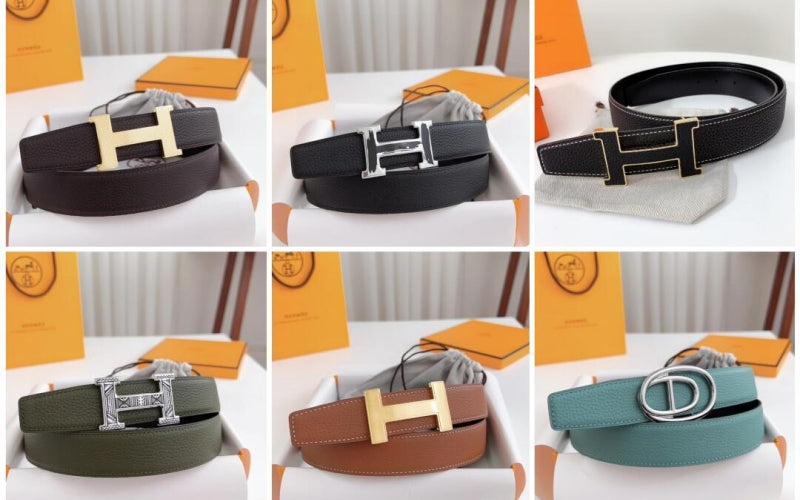
Hermès Box Calf vs Designer Calfskin Belts: Is the Brand Tax Real?
TL;DR:
- Hermès box calf belts retail from roughly $1,080 (Constance reversible) to $5,260+ (Etrivière 32), with limited editions exceeding $10,000.
- The leather itself is genuinely excellent — Hermès works with elite French tanneries like Annonay.
- But industry markup math is brutal: traditional luxury houses use 8x–12x markups on production cost, while DTC brands use 2x–3x.
- That means up to 70% of a designer belt's price is brand tax — marketing, retail overhead, logo premium — not materials or craftsmanship.
- Hermès still has the best resale value in the category. So if you want quiet investment-grade luxury, it can be defensible. If you just want world-class calfskin, you're overpaying by 5–7x.
Let's get the awkward part out of the way: yes, BELTLEY makes belts. So when we say "the brand tax is real," you should assume some self-interest in that statement. Fair. Now let's also do the math — using public Hermès prices, industry-standard markup data, and the actual leather involved — and you can decide for yourself whether $1,080 for a calfskin belt makes sense for your wardrobe. Spoiler: sometimes yes. Often no.
Where Should YOU Exit the Markup Curve?
The brand-tax math, applied to your wallet:
| Your situation | Go with |
|---|---|
| Resale value and status liquidity matter | Hermès — uniquely, its belts retain real value; the premium partially refunds itself. |
| You want elite leather, not the orange box | Independent or DTC full-grain calf — the same tannery tier exists at $100–$300. |
| Mid-tier designer ($500–$800) tempts you | That's the worst seat: full brand tax, weak resale. Go up to Hermès or down to DTC. |
| You'd rather upgrade the hide than the logo | Genuine crocodile at $118–$289 — a material Hermès charges $2,500+ for. |
Both exits from the curve: BELTLEY calfskin and crocodile.
The Honest Answer Up Front
Yes, the brand tax is real — and it's enormous. But it's also more defensible at Hermès than at most other luxury houses, because the resale market actually pays you back some of it. The question isn't "is there a brand tax?" (there is, demonstrably). The question is "is the brand tax worth paying for you specifically?"

For some buyers, yes. For most buyers, no. We'll walk through the math, the leather, and the use cases — and you can land where you land.
What Does Hermès Actually Charge for a Box Calf Belt?
Real public prices, current as of 2026:
- Hermès Constance reversible belt (32mm, box calf): ~$1,080
- Hermès Etrivière 32 belt (calfskin): ~$5,260
- Hermès H Reversible belt (popular Western model, calfskin): ~$900–$1,200
- Hermès limited editions / exotic leathers / precious metal hardware: $5,000–$10,000+
For context, Gucci calfskin belts run $400–$1,200 (canvas) to $3,500+ (exotic). Bottega Veneta runs $600–$2,200. Louis Vuitton calfskin belts cluster around $700–$1,500.
A few BELTLEY pieces that cover the broader designer-belt economics: why designer belts are so expensive (12 reasons), what the most costly belt brand actually is, and how much a leather belt should actually cost.
What Is Hermès Box Calf?
Hermès Box Calf is highly polished, aniline-dyed smooth calfskin — among the most refined calfskin leathers in the world. It's typically sourced from elite French tanneries (Annonay is widely reported as a primary supplier), then hand-finished and inspected to Hermès's quality standard. It's genuinely beautiful leather. That part isn't marketing.
For background on what box calf is in general, see our box calf vs grain calf guide. For the broader French-vs-Italian tannery context, see Italian vs French calfskin tannery differences. Hermès Box Calf sits at the very top of the French refined-calfskin tradition.
But — and this is the key point — that same Annonay leather is available to other brands. The tannery isn't exclusive to Hermès. What's exclusive to Hermès is the orange box, the H buckle, and the resale market.
Is the Leather Actually Better?
The leather itself is at the absolute top tier — but it's not categorically better than other top-tier full-grain calfskin from the same tannery families. Hermès sets a very high bar for inspection and rejection rates, but the base hides are accessible to any luxury brand willing to pay for them. You're paying for selectivity, not exclusivity.

A few honest notes:
- Hermès does reject more hides than most brands. That's real quality control.
- Hermès uses hand-finishing techniques (saddle stitching, edge painting) that mass-produced designer belts skip.
- But the leather itself is the same general material a serious DTC brand can source from the same supply chain.
For more on what makes premium calfskin actually premium, see our piece on why full-grain calfskin is the gold standard.
What Are You Really Paying For at $1,080?
A typical breakdown of where a $1,080 luxury calfskin belt's price goes, based on industry-standard luxury markup analysis:
- Raw materials (leather, buckle, thread): ~$40–$80
- Labor (cutting, stitching, edge finishing): ~$50–$100
- Brand & marketing (campaigns, ambassadors, store presence): ~$300–$400
- Retail overhead (flagship stores, boutique staff): ~$200–$300
- Wholesale markup + distributor margin: ~$100–$150
- Logo / heritage premium (the "Hermès" itself): ~$200–$300
Industry analysts have consistently put up to 70% of a designer belt's retail price in the brand-tax category — marketing, retail overhead, and logo premium — rather than in materials or craftsmanship. That's not a hot take; it's how the luxury industry openly structures its margins.
For the broader question of whether expensive belts are worth it, see our piece on is it worth buying an expensive belt.
The Markup Math
Industry standard luxury house markup is 8x to 12x production cost. Craft-focused DTC brands operate at 2x to 3x production cost.
What that means in practice:
- A belt with $40 in production cost becomes:
- $80–$120 retail at a DTC brand (BELTLEY territory).
- $320–$480 retail at a mid-luxury designer.
- $800–$1,200+ retail at top-tier luxury.
Same belt. Same leather. Same factory in some cases. The price difference is brand, retail overhead, and the luxury industry's traditional margin structure. According to standard luxury industry pricing models, that breakdown holds across most categories — not just belts.
Where the Brand Tax Stops Being Worth It
The brand tax stops being worth it when you're paying primarily for the logo and not for craftsmanship, leather quality, or resale value. Most "designer calfskin" belts (Gucci, Burberry, Coach in this category) fall into this bucket — premium prices for solid but unremarkable leather goods, with most of the price going to brand marketing.

A few red flags that you're paying mostly for the logo:
- The buckle is the brand's most prominent feature.
- The product page emphasizes "iconic" or "heritage" more than the leather spec.
- The brand can't tell you which tannery the leather came from.
- The construction is glued (not stitched), and the edges are painted plastic, not burnished leather.
- The belt is in a department store anywhere with mass distribution.
For more on which designer belts are actually worth their price, see our piece on what designer belt should I buy.
When Hermès Actually Is Worth It
Hermès earns its price tag in three specific cases: (1) you want resale value, (2) you're buying as a long-term investment piece, or (3) you genuinely value the hand-finishing details others skip. For everyone else — even for most luxury buyers — the price is hard to justify on craftsmanship alone.
Hermès accessories retain 70–80% of retail for popular models on the secondary market. Louis Vuitton and Gucci sit at 40–60%. Most other designer belts depreciate dramatically. So if you genuinely sell the belt in 5 years, an Hermès Constance reversible costing $1,080 might recoup $750+. Net cost over 5 years: maybe $50/year. That's defensible math.
But — and it's a real but — that only works if you actually sell it. If the belt sits in your closet for a decade, the "investment" calculus disappears. Hermès also earns points for genuine hand-finishing: saddle-stitched seams, hand-burnished edges, real artisan work that mass-luxury skips. If you can see and appreciate those details, they're real value.
What "Designer Calfskin" Means Beyond Hermès
The other big names in luxury calfskin belts — Louis Vuitton, Gucci, Bottega Veneta, Prada — each have their own version of the markup. Most use premium calfskin (often from the same Italian and French tannery supply chain), and most charge $400–$2,000 for a belt that costs $50–$150 to produce.
The leather is generally good. The construction is generally good. The brand premium is generally enormous. None of these brands offer the same resale story as Hermès, so the "investment" argument is much weaker.
For a deeper analysis of designer vs. luxury belt brands, see our piece on designer belt brands vs luxury brands — which gets into the difference between marketing-driven luxury and craft-driven luxury.
How DTC Brands Disrupt This Model
Direct-to-consumer brands skip the wholesale layer, the boutique retail layer, and the heavy advertising layer. Same supply chain at the top — same full-grain calfskin, often the same factories — without 8x–12x markups.

That's the entire DTC pitch in one sentence: same leather, fair price, no logo on the buckle. You're not paying for Tom Cruise to wear the watch on a billboard. You're paying for the leather, the labor, and a reasonable margin.
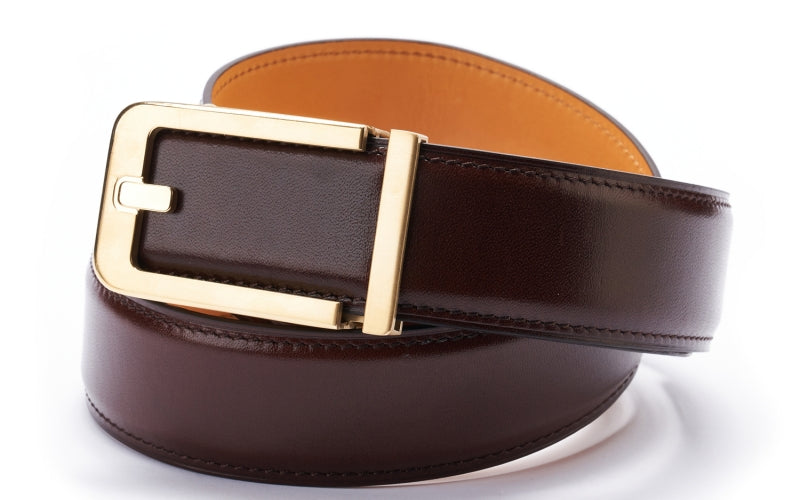
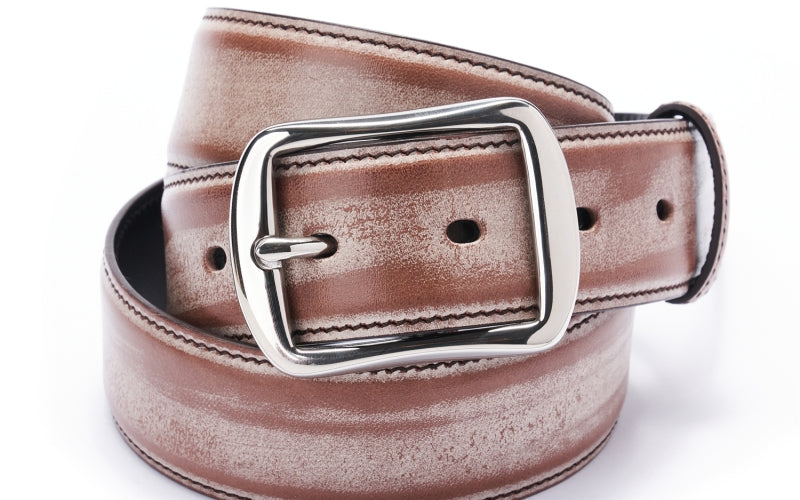
Our full-grain leather belts collection and our Classic Calfskin Dress Belt are built on this model — $58–$300 for genuine full-grain calfskin and exotic leather belts that would retail at $400–$1,500 under a designer label.
Hermès vs Designer Calfskin vs DTC: Side-by-Side
| Feature | Hermès Box Calf | Other Designer Calfskin | DTC Premium Calfskin |
|---|---|---|---|
| Price range | $900–$5,260+ | $400–$2,000 | $80–$300 |
| Leather quality (top tier) | Excellent | Very good | Very good |
| Tannery source | Annonay + elite French | Mixed luxury suppliers | Same luxury suppliers, less branding |
| Construction | Hand-finished, saddle stitched | Mostly machine, often glued | Varies — best DTC matches luxury |
| Brand tax % of price | ~50–60% | ~70%+ | ~10–20% |
| Resale value | 70–80% retail | 40–60% retail | Minimal (DTC isn't built for resale) |
| Logo prominence | Subtle (H buckle) | Often prominent | Usually none |
| Best for | Investment / heritage buyer | Brand-status buyer | Quality-first / smart-money buyer |
What to Buy Instead
If you want the leather, the craftsmanship, and the lifetime durability without the 8x markup, look for DTC brands that publish their materials, name their factories, and back products with real warranties. The savings can be 60–80% for comparable quality. Same Annonay/Tuscan-tier hides go into well-built DTC belts; they just don't come with an orange box.

What to look for in a non-designer calfskin belt:
- Full-grain calfskin clearly specified (not "genuine" or "top-grain").
- Stainless steel buckle (stainless steel is the gold standard).
- Real stitching (not glued).
- Real warranty (BELTLEY offers 10 years on materials and construction).
- Tannery transparency (named, ideally LWG-certified).
For more on what to buy with that mindset, see our piece on who makes the best leather belt.
The Bottom Line
The brand tax is real, measurable, and openly built into how luxury houses structure their pricing. Hermès earns more of its tax than most peers, both through genuinely elite craftsmanship and through a resale market that pays you back some of what you spent. Other designer calfskin belts charge similar premiums without the same resale story — and there, the math gets harder to defend. At BELTLEY we built our entire pricing philosophy around skipping that 8x–12x markup: same supply chain at the top, same full-grain calfskin, fair DTC margins, no logo on the buckle. If you want the orange box and the resale story, Hermès is a legitimate choice — but go in clear-eyed about what you're paying for. If you want world-class leather without the heritage premium, the math is overwhelmingly on the DTC side.
Frequently Asked Questions
Q: Is an Hermès belt really worth $1,080?
It depends what you're optimizing for. For leather quality alone, no — you can get equivalent calfskin from DTC brands for 1/5 the price. For resale value, brand prestige, and hand-finishing details, Hermès is more defensible than most luxury peers. The honest answer: worth it for a specific buyer, not for everyone.
Q: Is the leather in a Hermès belt really better than other calfskin?
It's at the very top tier — but not categorically different from other top-tier full-grain calfskin from elite French tanneries. Hermès rejects more hides than average and applies hand-finishing most brands skip. Whether those upgrades justify the price gap is a value judgment.
Q: What is "brand tax" exactly?
The portion of a product's price that goes to marketing, retail overhead, and logo premium rather than materials, labor, and reasonable margin. Industry analysis consistently puts the brand-tax component of luxury accessory pricing at 50–70% of retail price.
Q: Do designer calfskin belts hold their value?
Hermès does (70–80% resale value for popular models). Louis Vuitton and Gucci retain 40–60%. Most other designer belts depreciate dramatically. If resale is part of your purchase logic, Hermès is the outlier; the rest are not investments.
Q: How can I tell if a non-designer brand uses comparable leather?
Look for full-grain specification (not "genuine"), tannery transparency, real stitching (not glued construction), and a meaningful warranty. The best DTC brands publish more leather detail than most luxury houses do. See our piece on how to tell if a belt is full-grain leather.
%20to%20$5,260+%20(Etrivi%C3%A8re%2032),%20with%20limited%20editions%20exceeding%20$10,000.%0AThe%20leather%20itself%20is%20genuinely%20excellent%20%E2%80%94%20Herm...)