Designer Belt Brands vs Luxury Belt Brands: What's the Real Difference?
TL;DR:Quick answer
- Designer belts prioritize visible branding, trend cycles, and logo recognition (Gucci, Louis Vuitton, Versace). You're largely paying for the name.
- Luxury belts prioritize materials, craftsmanship, and longevity (Hermès, Bottega Veneta, Brunello Cucinelli). You're paying for what's in the belt.
- A third category — artisan DTC brands — delivers luxury-grade materials without the brand tax, typically at $58–$299 vs. $400–$2,500.

People use "designer" and "luxury" interchangeably. They're not the same thing — especially with belts. A $450 Gucci belt with a giant interlocking-G buckle and a $900 Hermès belt with an unmarked Togo leather strap exist in completely different categories, even though both sit in the "expensive belt" aisle.
Understanding the difference between designer belt brands and luxury belt brands saves you money and gets you a better product. Here's what actually separates them — and where a smarter option fits in.

Which Camp Are You Buying From?
Three categories, three very different purchases:
| Your priority | Buy from |
|---|---|
| Logo recognition | Designer (Gucci, LV, Versace) — just know the name is most of what you're paying for |
| Materials and craftsmanship | Luxury (Hermès, Bottega, Cucinelli) — the substance is real, and so is the price |
| Luxury-grade materials, no Brand Tax | Artisan DTC — $58–$299 for what the houses charge $400–$2,500 for |
| Resale value | Hermès, full stop — nothing else retains value comparably |
The third camp is BELTLEY's home turf — see the collection. The full category breakdown:
What Is a Designer Belt Brand?
A designer belt brand is a fashion house that sells belts primarily as branded accessories — the logo, monogram, or signature buckle IS the product. The belt strap is secondary to the hardware. You're buying name recognition and trend participation, not necessarily superior leather or construction.
Think Gucci's double-G, Louis Vuitton's LV monogram, Versace's Medusa head. These buckles are designed to be seen. The brands invest heavily in runway shows, celebrity endorsements, and seasonal campaigns. According to McKinsey's State of Fashion report, luxury fashion houses spend 12–18% of revenue on marketing — more than double the industry average — and that cost is baked into every product, including belts.

Designer belt brands typically include:
- Gucci — $400–$3,500+ | Iconic GG buckle, trend-driven, wide style range
- Louis Vuitton — $600–$1,800 | LV monogram canvas and leather, status-forward
- Versace — $500–$2,200 | Medusa head buckle, bold maximalism
- Balenciaga — $500–$1,500 | Oversized hardware, streetwear crossover
- Off-White — $300–$800 | Industrial aesthetic, younger demographic
The leather on many designer belts is often coated canvas or corrected-grain leather — not full-grain. Louis Vuitton's signature monogram belts, for example, use coated canvas rather than solid leather. That's not a defect — it's a design choice. But it means you're paying $600+ for a material that won't develop the patina or longevity of full-grain hide.

What Is a Luxury Belt Brand?
A luxury belt brand is a maker that sells belts based on material quality, artisan craftsmanship, and construction longevity — branding is minimal or absent, and the product's value comes from what you can feel, not what you can see. These are "stealth wealth" accessories.
The hallmark of a true luxury belt is the leather itself. Hermès uses Togo calfskin — a naturally grained, scratch-resistant leather that each artisan hand-selects. Bottega Veneta dyes its hides in 12-ton wooden vats for 48 hours to achieve permanent color saturation. These aren't marketing claims — they're verifiable production methods that directly affect how the belt ages.
Luxury belt brands typically include:
- Hermès — $800–$2,500 | Togo/Epsom calfskin, saddle-stitched, 18+ hours per belt
- Bottega Veneta — $600–$2,200 | Intrecciato weave, vegetable-tanned leather
- Brunello Cucinelli — $500–$1,500 | Italian suede and calfskin, minimal branding
- Tod's — $350–$900 | Clean Italian leather, understated hardware
- Salvatore Ferragamo — $400–$1,200 | Gancini buckle, reversible engineering
Each Hermès belt takes over 18 hours of hand labor using the same sellier saddle stitch developed in the 1800s for horse tack. That's not a brand story — it's an engineering decision. Saddle stitching uses two needles passing through the same hole in opposite directions, so if one thread breaks, the rest holds. Machine stitching unravels.
Designer vs. Luxury Belts: Side-by-Side Comparison
Here's where the two categories diverge on the details that actually matter to the belt on your waist:
| Factor | Designer Belts | Luxury Belts |
|---|---|---|
| Primary selling point | Logo / brand recognition | Material quality / craftsmanship |
| Typical leather | Corrected-grain, coated canvas, split leather | Full-grain, vegetable-tanned, exotic skins |
| Buckle focus | Oversized, branded, trend-driven | Understated, precision-engineered |
| Edge finishing | Machine-painted, single coat | Hand-painted, 3–5 coats sanded between layers |
| Stitching | Machine lock-stitch | Hand saddle-stitch (top-tier brands) |
| Price range | $300–$3,500 | $350–$2,500 |
| Trend sensitivity | High — styles rotate seasonally | Low — designs stay consistent for years |
| Resale value | 20–30% of retail | 60–80% of retail (Hermès: 100%+) |
| Marketing spend | 12–18% of revenue | 5–8% of revenue |
| Target buyer | Wants to be seen wearing the brand | Wants to own the best version of the product |

Are Designer Belts Worth the Price?
For brand recognition and trend participation, yes. For material quality and longevity per dollar spent, usually no. A $450 designer belt often uses corrected-grain or split leather with a zinc-alloy buckle — materials that cost the manufacturer $15–$30. The remaining $400+ covers branding, marketing, retail margins, and licensing.
That's not necessarily a bad deal if you know what you're buying. A Gucci GG belt communicates something socially. But if you're buying it expecting full-grain leather durability, you'll be disappointed when the surface coating cracks in 2–3 years.
The Business of Fashion has reported that leather goods — belts, wallets, and small accessories — carry the highest profit margins in fashion, often exceeding 85% for designer brands. That margin covers the global advertising machine, not the raw materials.

Do Luxury Belts Hold Their Value Better Than Designer Belts?
Yes, significantly. Classic luxury belts from heritage brands retain 60–80% of their retail value on the resale market, while trend-driven designer belts typically retain only 20–30%. Hermès belts are the extreme outlier — popular models like the Constance and the H buckle frequently resell at or above retail price on authenticated platforms.
This resale premium exists because luxury brands control supply. Hermès famously limits production and maintains waitlists. Designer brands, by contrast, flood the market with seasonal drops — once a trend passes, so does the belt's perceived value.
For a buyer focused on cost-per-wear, a $900 belt that holds 80% of its value after five years effectively cost $180 to own. A $450 designer belt that retains 25% effectively cost $337. The "expensive" option was actually cheaper.

What About Artisan and DTC Belt Brands?
A third category exists between fast-fashion belts and luxury houses: artisan DTC (direct-to-consumer) brands that use luxury-grade materials — full-grain leather, solid brass or stainless steel hardware, hand-finishing — at a fraction of the price by eliminating retail middlemen. These brands skip the department store markup, the celebrity endorsement budget, and the Brand Tax.
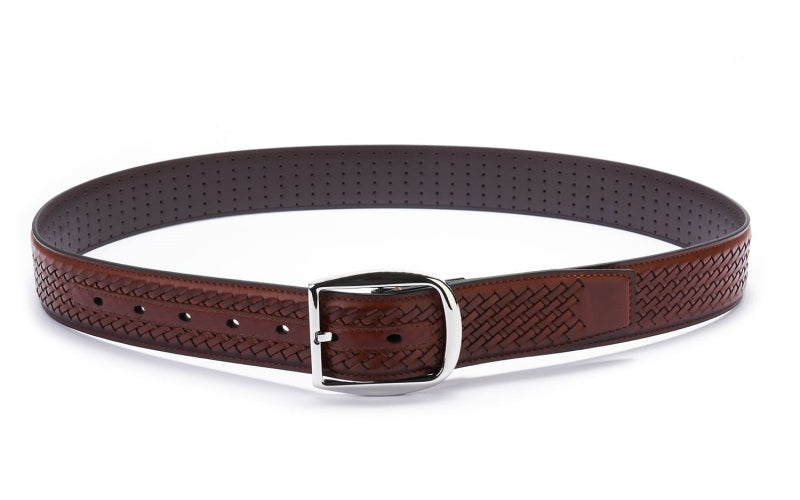
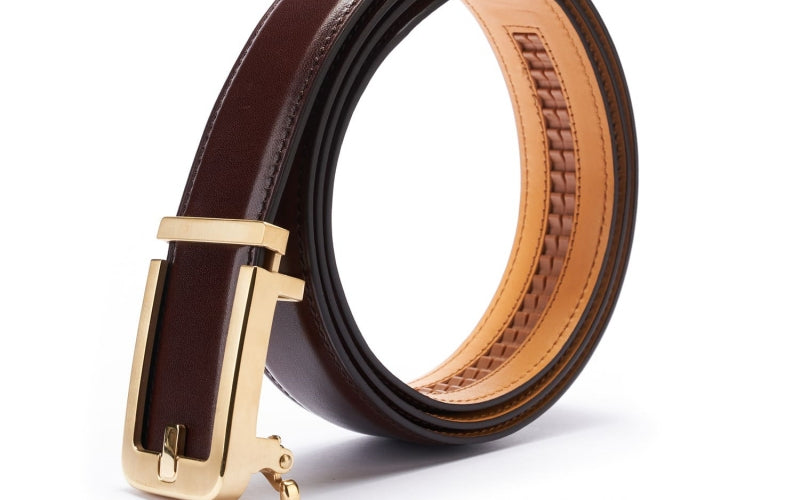
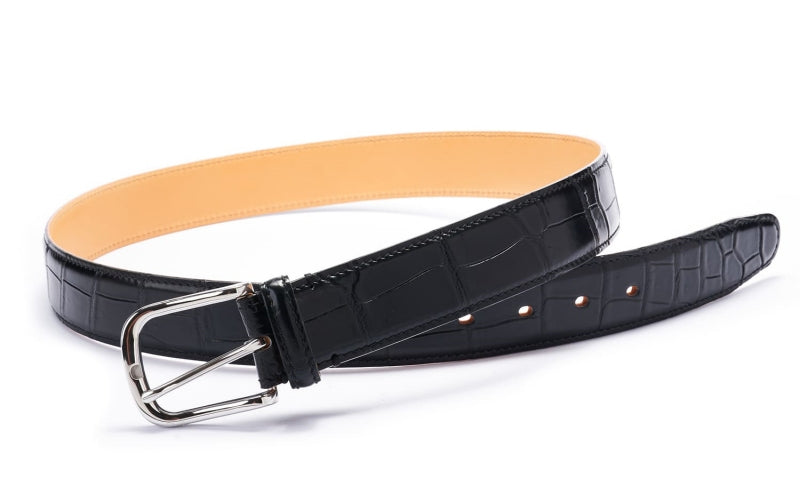
This is the space BELTLEY occupies. Every belt in our handmade collection uses full-grain leather at a minimum — many use exotic hides like crocodile and alligator that rival what Hermès charges $2,000+ for. Our buckles are stainless steel (the same grade used in surgical instruments and dive watches), not zinc alloy with chrome plating.
The price? $58–$299. Not $800–$2,500.
We can do this because we've been working directly with tanneries and artisan workshops since 1999 — no franchise fees, no department store margins, no runway show budgets. The savings go back into the belt, not the brand.
| Category | Price Range | Leather Quality | Brand Visibility | Cost-Per-Year (5-yr lifespan) |
|---|---|---|---|---|
| Fast fashion | $15–$50 | Bonded / PU | None | $15–$50 (replace yearly) |
| Designer | $300–$3,500 | Corrected-grain / Canvas | High (logo buckle) | $60–$700 |
| Luxury | $350–$2,500 | Full-grain / Exotic | Low (minimal) | $70–$500 |
| Artisan DTC | $58–$299 | Full-grain / Exotic | Minimal | $12–$60 |

How to Choose Between a Designer and Luxury Belt
The right choice depends entirely on what you want the belt to do:
Buy a designer belt if:
- You want a specific logo or recognizable buckle
- The belt is a fashion statement, not a daily workhorse
- You're drawn to a particular seasonal design
- Social signaling matters more than material longevity
Buy a luxury belt if:
- You want the best leather and construction available
- You prefer understated, logo-free accessories
- Long-term cost-per-wear is your primary metric
- Resale value matters to you
Buy an artisan DTC belt if:
- You want luxury-grade materials without the luxury markup
- You care about leather quality and hardware specs over brand names
- You want a belt backed by a 10-year warranty — not a 1-year one
- You'd rather spend $150 on a belt that performs like an $800 one
For a deeper look at specific brands, our guide to the top 10 luxury belt brands in the world breaks down each house's strengths and weaknesses.

The Bottom Line
"Designer" means you're paying for the name on the outside. "Luxury" means you're paying for what's on the inside. Both have a place in your wardrobe — but confusing one for the other is how people end up spending $600 on a coated canvas belt that cracks in two years.
The smartest buyers in 2026 are asking a different question entirely: why pay for either label when artisan DTC brands deliver the same full-grain leather, the same hand-finishing, and better hardware for a fraction of the price? BELTLEY was built on exactly that question. Browse the collection — every belt ships free worldwide with a 10-year warranty and a 30-day return guarantee. Zero risk, zero Brand Tax.
Frequently Asked Questions
Q: What is the difference between a designer belt and a luxury belt?
A designer belt is primarily a branded fashion accessory — the logo or signature buckle is the main selling point. A luxury belt prioritizes material quality, artisan craftsmanship, and construction longevity over visible branding. Designer belts sell recognition; luxury belts sell the product itself.
Q: Are Gucci belts considered designer or luxury?
Gucci is a designer belt brand. While the house uses quality materials on some lines, the primary value proposition of a Gucci belt is the recognizable GG buckle and brand association — not best-in-class leather or construction. Their iconic belts use a mix of leather grades including coated canvas.
Q: Which belt brands hold their resale value best?
Hermès belts hold their value best — popular models like the Constance and H buckle frequently resell at 100%+ of retail price. Bottega Veneta and Brunello Cucinelli belts also retain strong value. Designer brands like Gucci and Louis Vuitton typically retain only 20–30% once a style falls out of trend.
Q: Is it worth buying an expensive designer belt?
It depends on your goal. If you want brand recognition and trend participation, a designer belt delivers that. If you want the best material quality for your money, you'll get more value from a luxury brand or an artisan DTC brand that uses full-grain leather and solid hardware at a lower price point.
Q: What is the Brand Tax on designer belts?
Brand Tax is the markup beyond actual material and production costs that pays for marketing, celebrity endorsements, retail margins, and brand cachet. On designer belts, this can exceed 85% of the retail price. A belt that costs $25–$40 to produce may retail for $400–$600, with the difference funding the brand's global advertising machine.
Q: What should I look for in a high-quality belt regardless of brand?
Full-grain leather (not "genuine" or corrected-grain), solid brass or stainless steel buckle hardware (not zinc alloy), hand-painted and sanded edges (not single-coat machine paint), and tight, even stitching. These construction markers indicate quality regardless of whether the belt costs $100 or $1,000.
.%20You're%20largely%20paying%20for%20the%20name.%0A%0ALuxury%20belts%C2%A0prioritize...)