Does Belt Length Include Buckle? (It’s Not as Simple as You Think)
TL;DR:Quick answer
- No — standard belt length does NOT include the buckle. It's measured from the fold at the buckle bar to the center hole of the strap.
- Your belt size should be 2 inches larger than your pants size (e.g., 34" waist = 36" belt).
- Never measure a belt end-to-end — that number is meaningless for sizing.
You've found a belt you like. You check the size. It says "36 inches." But 36 inches of what, exactly? Does that include the buckle? The tip? The entire thing from one end to the other?
This is one of the most common sizing questions in the leather goods world, and the answer trips people up because not every brand measures the same way. Here's how to get it right — and never order the wrong size belt again.

Does Belt Length Include the Buckle or Not?
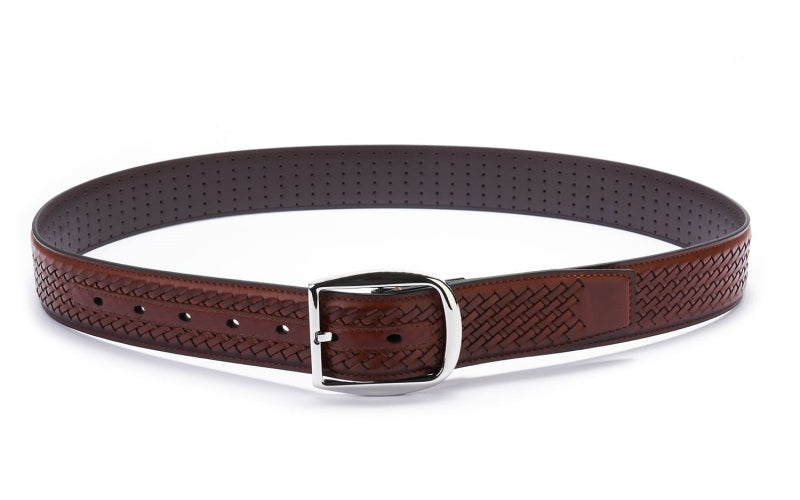
No. In standard belt sizing, belt length does not include the buckle. The measurement runs from the inside fold where the leather wraps around the buckle bar to the center hole of the strap. A belt labeled "36" means that distance is 36 inches — the buckle hardware itself is excluded from that number.
This is the method used by the majority of quality leather goods manufacturers, including BELTLEY. The reason is straightforward: buckles vary wildly in size. A simple box-and-prong buckle might add 1.5 inches. A large plaque buckle could add 3–4 inches. If brands included the buckle in the stated length, a "36-inch belt" with a plaque buckle and a "36-inch belt" with a prong buckle would fit completely different waist sizes. That defeats the purpose of standardized sizing.
The National Institute of Standards and Technology doesn't regulate belt sizing specifically, but the fashion industry has settled on this convention because it produces consistent, repeatable measurements regardless of hardware.

How to Measure Your Belt Size Correctly
Measure from the inside edge of the buckle bar (where the leather folds) to the hole you use most often. That distance in inches is your belt size. If you're between sizes, round up — a slightly longer belt looks better than one that barely reaches the first hole.
Here are two reliable methods:
Method 1: Measure an Existing Belt
- Lay your best-fitting belt flat on a table
- Place the tape measure at the fold where the leather wraps the buckle bar — not the end of the buckle hardware
- Extend it to the hole you actually use (usually the center hole)
- That number is your belt size
Method 2: Use Your Pants Size
If you don't have a well-fitting belt to measure, take your pants waist size and add 2 inches. A 34" waist = 36" belt. A 38" waist = 40" belt.
This "+2 rule" exists because belt measurement accounts for the overlap — the leather that wraps around the buckle and extends past the prong. According to Esquire's style guide, this method has been the standard recommendation from men's tailors for decades.
| Pants/Waist Size | Belt Size You Need |
|---|---|
| 30" | 32" |
| 32" | 34" |
| 34" | 36" |
| 36" | 38" |
| 38" | 40" |
| 40" | 42" |

Why You Should Never Measure a Belt End-to-End
Measuring a belt from the buckle tip to the strap tip gives you a number that's 8–12 inches longer than your actual belt size. That number includes the buckle hardware, the fold-over leather, the strap past the center hole, and the tapered tip — none of which factor into sizing.
A "36-inch belt" measured end-to-end might be 44–46 inches in total physical length. Ordering based on that number would leave you with a belt that wraps nearly twice around your waist.
This is the single most common mistake in belt sizing, and it's responsible for most "this belt is way too big" returns. At BELTLEY, our size guide includes visual diagrams specifically to prevent this confusion.
What About Ratchet Belts — Does Length Work Differently?
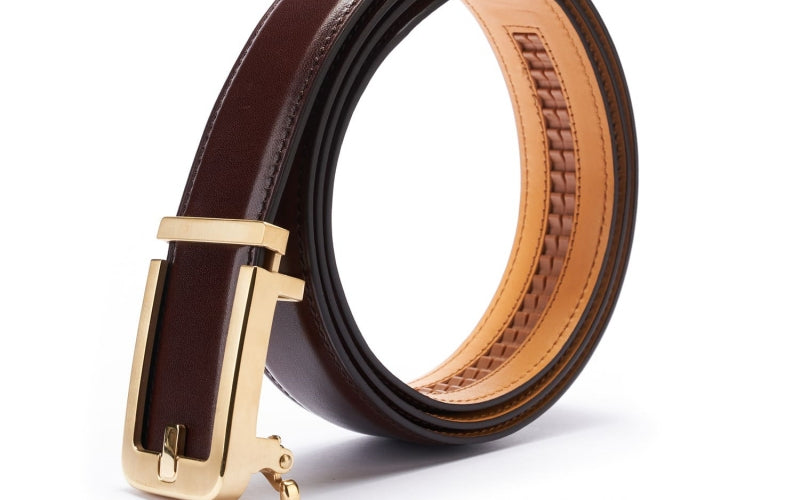
Ratchet belts don't use holes at all, so the "center hole" measurement doesn't apply. Instead, ratchet belts use a track system on the backside of the strap, allowing micro-adjustments in quarter-inch increments. The stated length of a ratchet belt typically refers to the total strap length that can be trimmed to fit.
With a ratchet buckle belt, you buy one size range (e.g., "fits waists 28–44") and cut the strap to your exact length. No more guessing which hole to use. The International Organization for Standardization hasn't published a specific standard for ratchet belt sizing, but most manufacturers follow the trim-to-fit convention.

How Far Should a Belt Extend Past the Buckle?
A properly sized belt should have the prong sitting in the center hole, with the tail extending 4–6 inches past the buckle. This tail should reach just past the first belt loop on your trousers — far enough to tuck cleanly, short enough that it doesn't flap or bunch.
If your belt tail hangs past the second loop, the belt is too long. If you're cinching it on the last hole with barely any tail left, it's too short. Both look sloppy and put unnecessary stress on the leather and hardware.
BELTLEY's belts come with 5 or 7 holes spaced 1 inch apart. On a 7-hole belt, the center hole is the 4th hole — giving you 3 holes of adjustment room in either direction as your fit changes throughout the day or over time.

Does Belt Size Differ Between Men and Women?
The measurement method is identical for men's and women's belts — buckle fold to center hole. The only difference is the size range typically offered. Men's belts generally span 30"–48", while women's belts range from 24"–44". The "+2 inches over waist size" rule applies to both.
For a detailed breakdown of how men's and women's belts compare beyond just sizing, see our guide on whether male and female belts are actually different.

The Bottom Line
Belt length does not include the buckle. It's measured from the leather fold at the buckle bar to the center hole — and that's the only number that matters for getting the right fit. Use the +2 rule (waist size plus 2 inches), never measure end-to-end, and aim for the prong to sit in the center hole with 4–6 inches of tail past the buckle.
BELTLEY has been handcrafting belts since 1999, and we've seen every sizing mistake in the book. That's why every belt we ship comes with a detailed size guide, free worldwide shipping, and a 30-day return policy — because getting the perfect fit shouldn't feel like a gamble. Ready to find yours? Browse the full collection.
Frequently Asked Questions
Q: Does belt length include the buckle?
No. Standard belt sizing measures from the fold at the buckle bar to the center hole of the strap. The buckle hardware itself is not included in the stated length.
Q: What size belt should I buy for a 34-inch waist?
Buy a 36-inch belt. The standard rule is to add 2 inches to your pants waist size. This accounts for the overlap where the leather wraps around the buckle.
Q: Why is my belt so much longer than the size says?
You're probably measuring end-to-end. A belt labeled "36 inches" will be roughly 44–46 inches in total physical length. The 36" refers only to the buckle fold to center hole distance.
Q: How do I know which hole to use on my belt?
Use the center hole. On a 5-hole belt, that's the 3rd hole. On a 7-hole belt, it's the 4th. This gives you adjustment room in both directions and ensures the tail extends a clean 4–6 inches past the buckle.
Q: Is belt sizing the same for men and women?
Yes — the measurement method is identical. Buckle fold to center hole. The only difference is the typical size range stocked: men's belts run 30"–48", women's belts run 24"–44".