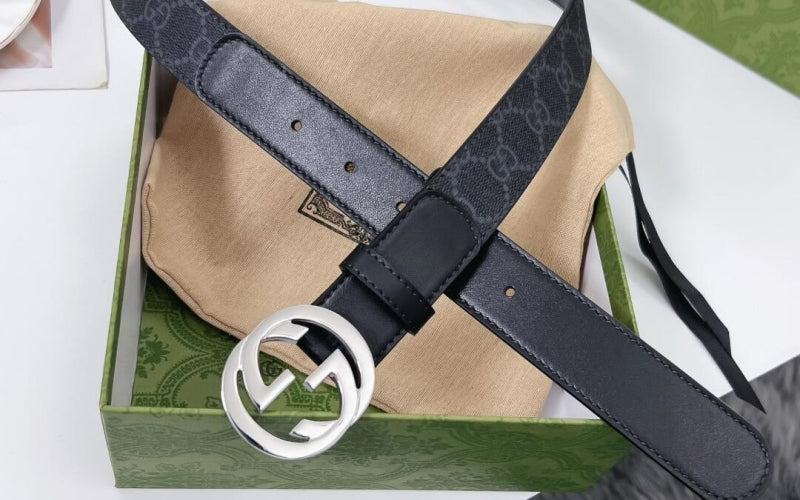
Is There a Difference Between Male and Female Belts? (Yes, No, and It’s Complicated)
TL;DR:Quick answer
- Men's and women's belts differ in width (1.25"–1.5" vs. 0.75"–2"+), buckle direction (men thread left, women thread right), and leather thickness (3–4 mm vs. 1–2 mm).
- These distinctions are rooted in historical clothing conventions, not engineering requirements.
- The modern trend is moving toward unisex belts — quality leather, clean hardware, and a width between 1"–1.38" works for everyone.
Short answer: yes, there are measurable differences between men's belts and women's belts. Width, buckle orientation, leather thickness, and decorative styling all vary. But here's the part most articles leave out — those differences exist because of fashion history, not because men's and women's waists require fundamentally different engineering.
A well-made leather belt is a well-made leather belt. The question isn't really whether male and female belts are different. It's whether those differences actually matter to you.
Let's break it down.

Which Belt Should You Actually Buy?
The gender label matters less than your use case:
| Your situation | Go with |
|---|---|
| Buying for everyday jeans (anyone) | A 1.25"–1.38" full-grain strap — squarely in the unisex sweet spot. From $58. |
| Woman who finds women's belts flimsy | Shop the men's section without apology — thicker leather, same loops. |
| Man needing a dress belt | 1.25" smooth leather, small buckle — the men's formal standard. |
| Sharing one belt in a household | 1.25" width, neutral buckle, sized to the larger waist + middle hole. |
Both racks are here: men's and women's — and yes, you may cross-shop.
What Is the Standard Width for Men's vs. Women's Belts?
The most visible difference between male and female belts is width. Men's belts typically measure 1.25 inches (32 mm) to 1.5 inches (38 mm) wide, designed to fit standard trouser belt loops. Women's belts range dramatically — from ultra-thin 0.5-inch styles to wide 3-inch waist-cinchers — because they serve a broader range of fashion purposes.
This width difference exists because men's trousers have been standardized since the early 20th century, with belt loops cut to a predictable size. Women's fashion, by contrast, uses belts across dresses, skirts, high-waisted pants, and over jackets — each application demanding a different width.
Here's a quick reference:
| Feature | Men's Belts | Women's Belts |
|---|---|---|
| Standard width | 1.25"–1.5" (32–38 mm) | 0.5"–3"+ (13–76 mm) |
| Most versatile width | 1.38" (35 mm) | 1"–1.25" (25–32 mm) |
| Belt loop compatibility | Standard trouser loops | Varies by garment |
If you want one belt that works with virtually anything, the sweet spot is 1.38 inches (35 mm). It threads through men's dress pants and sits comfortably on women's high-waisted jeans. At BELTLEY, several of our most popular styles — including the Unisex Reversible Belt — use this exact width for that reason.

Do Men's and Women's Belts Buckle in Different Directions?
Yes. Men's belts are designed to thread from right to left, so the buckle prong points left. Women's belts thread from left to right, with the prong pointing right. This convention mirrors the button placement on shirts — men's buttons on the right, women's on the left — a tradition dating back to 19th-century tailoring customs.
That said, this is purely convention. There's no functional advantage to threading a belt in either direction. Most people don't even notice which way their belt is threaded, and no fashion authority will call you out for buckling "the wrong way."
If you're wearing a belt with a symmetrical buckle — a simple box-and-prong style or a clean plaque — the direction is essentially invisible.

Is Men's Belt Leather Thicker Than Women's?
Generally, yes. Men's belts are typically made from leather that is 3–4 mm thick, while women's belts often use leather that is 1–2 mm thick. This difference affects rigidity, durability, and how the belt drapes around the waist.
Thicker leather holds its shape better and resists stretching — important when a belt's primary job is keeping trousers in place. Thinner leather is more pliable, which works for decorative styles meant to wrap, tie, or knot around the waist.
But thickness is really about construction quality, not gender. A full-grain leather belt at 3.5 mm thick will outlast a thin bonded leather belt by a decade regardless of who's wearing it. The International Council of Tanners recognizes full-grain as the highest grade of leather because it retains the hide's entire grain structure — making it naturally stronger without artificial reinforcement.
At BELTLEY, every belt — whether labeled for men or women — uses full-grain leather at a minimum 3 mm thickness. We've never understood why women's belts should be flimsier. A belt should last, period.

How Do Belt Sizes Differ Between Men and Women?
Men's belts typically range from 30 to 48 inches in total length, while women's belts run from 24 to 44 inches. Belt sizing generally follows waist measurement plus 2 inches — so a 32-inch waist needs a 34-inch belt.
The overlap is significant. A woman with a 30-inch waist and a man with a 30-inch waist need the same belt length. The difference is simply that manufacturers stock different size ranges based on average body measurements by gender.
For detailed help finding your size, BELTLEY's Size Guide walks you through measuring your waist accurately — no guesswork, no returns.
| Gender | Typical Belt Size Range | Sizing Method |
|---|---|---|
| Men | 30"–48" | Waist measurement + 2" |
| Women | 24"–44" | Waist measurement + 2" |

Why Do Women's Belts Have More Decorative Buckles?
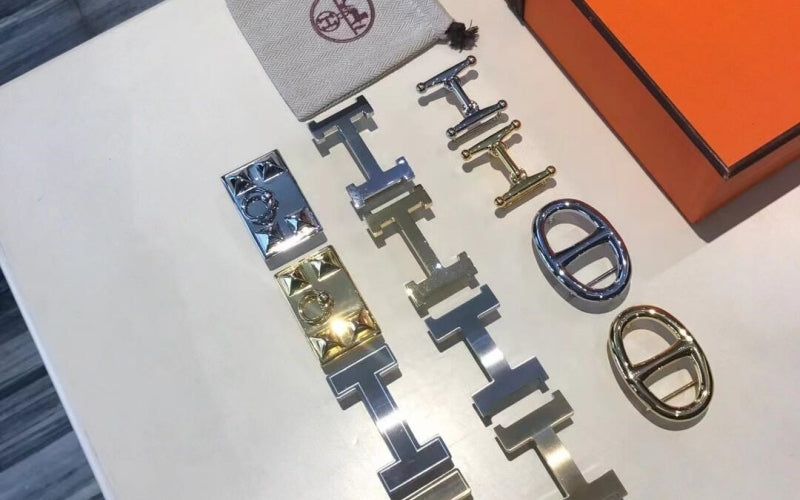
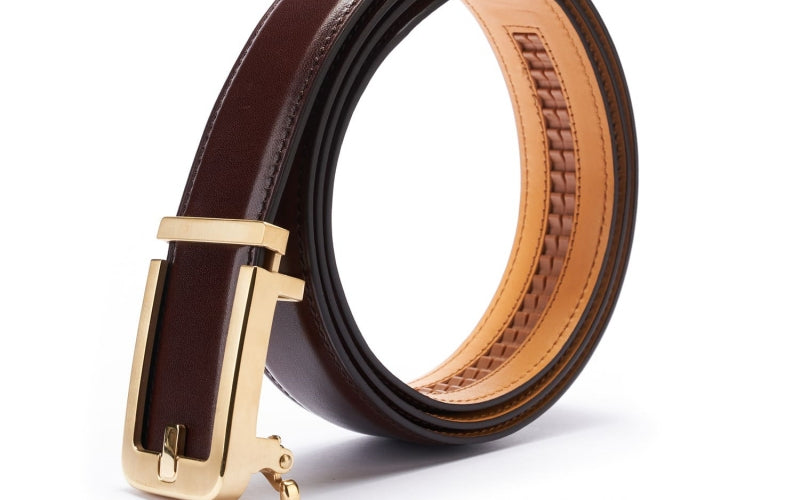
Women's belt buckles tend to be more ornate — featuring logos, rhinestones, sculptural shapes, and mixed metals — because women's belts historically functioned as jewelry and fashion accessories rather than utilitarian trouser-holders. Men's buckles lean toward simple frame, box-prong, or plaque styles in understated finishes like brushed nickel or antique brass.
This divide traces back to the early 1900s. Before women widely adopted pants, belts were worn over dresses and coats as decorative waist definition. The buckle was the statement. Men's belts, meanwhile, were hidden under jackets and vests — nobody saw the buckle, so it stayed simple.
That hierarchy is fading fast. Today's trend toward minimalist hardware cuts across gender lines. A clean stainless steel buckle on a full-grain strap reads as polished on anyone. And bold, sculptural buckles — like BELTLEY's dragon buckle or rhinestone designs — are increasingly worn by men who want their belt to make a statement.

Can Women Wear Men's Belts (and Vice Versa)?
Absolutely. There is no structural reason a woman cannot wear a men's belt or a man cannot wear a women's belt — the only consideration is correct sizing and personal style preference. A woman wearing a 1.5-inch full-grain leather belt with high-waisted jeans is one of the most popular casual looks in 2026 — and it's technically a "men's" width.
The fashion industry itself is acknowledging this shift. Luxury houses like Bottega Veneta and The Row have moved toward gender-neutral accessories. Celebrities from Zendaya to Timothée Chalamet regularly cross traditional gendered accessory lines on red carpets.
The practical tips for cross-gender belt shopping:
- Check the length range — men's belts may be too long if you have a smaller waist; simply ensure the tail doesn't extend past the first belt loop
- Consider the width — a 1"–1.38" belt is universally flattering
- Ignore buckle direction — unless you're extremely particular, nobody notices
- Focus on quality — full-grain leather with solid hardware works regardless of the "for men" or "for women" label on the packaging
Are Unisex Belts Actually Good Quality?
Many mass-market "unisex" belts sacrifice quality for broad appeal — thin leather, cheap hardware, vague sizing. A genuinely good unisex belt uses full-grain leather, solid metal hardware, and a versatile width between 1 inch and 1.38 inches. It should feel substantial in your hands, not floppy.
BELTLEY designs with this philosophy. Our Unisex Espresso 35MM Belt uses the same full-grain leather and stainless steel hardware as every piece in our catalog — because labeling a belt "unisex" doesn't mean cutting corners. It means getting the proportions right so the belt works on more body types.
The trend data backs this up. According to McKinsey's State of Fashion report, gender-fluid fashion is one of the fastest-growing segments in the accessories market, with consumers increasingly prioritizing material quality and craftsmanship over gendered marketing.

The Bottom Line
The differences between men's and women's belts are real — width, buckle direction, leather thickness, and decorative styling all vary by tradition. But those traditions were shaped by 20th-century clothing conventions, not by any fundamental requirement of belt engineering.
The smartest move? Stop shopping by gender label and start shopping by specs. Pick the width that fits your wardrobe, the leather quality that matches your standards, and the buckle style that speaks to you. At BELTLEY, we've been handcrafting belts since 1999, and the best compliment we get is when someone says, "I don't care who this was designed for — it just fits."
If you're ready to find your belt — not a "men's belt" or a "women's belt," just your belt — browse the full collection. Every piece ships free worldwide with a 10-year warranty, and the 30-day return policy means zero risk.

Frequently Asked Questions
Q: Is there a real difference between male and female belts?
Yes. Men's belts are typically 1.25"–1.5" wide with thicker leather (3–4 mm) and simple buckles. Women's belts vary widely in width (0.5"–3"+), use thinner leather, and feature more decorative hardware. The buckle direction also traditionally differs — men thread left, women thread right.
Q: Can a woman wear a man's belt?
Absolutely. The only adjustment needed is sizing — measure your waist and add 2 inches. A 1.38"-wide men's belt is one of the most versatile widths for women, especially with jeans and high-waisted trousers.
Q: Why do men's and women's belts buckle in opposite directions?
This follows the same convention as button placement on shirts, which dates back to 19th-century tailoring. Men's buttons (and belt buckles) sit on the right; women's on the left. There's no functional reason — purely tradition.
Q: What width belt is truly unisex?
A belt between 1 inch and 1.38 inches (25–35 mm) works across genders and most outfit types. It's narrow enough for dress pants and wide enough for jeans.
Q: Are women's belts lower quality than men's?
Not inherently — but many mass-market women's belts use thinner, lower-grade leather because they're marketed as fashion accessories rather than durable goods. Look for full-grain leather and solid metal hardware regardless of gender labeling.
Q: What is the most versatile belt for anyone?
A full-grain leather belt in black or brown, 1.38 inches wide, with a clean stainless steel or brass buckle. This combination works with suits, jeans, dresses, and casual wear for any gender.

,%C2%A0buckle%20direction%C2%A0(men%20thread%20left,%20women%20thread%20right),%20and%C2%A0leather%20thickness%C2%A0(3%E2%80%934%20mm%20vs.%201%E2%80%932%20mm).%0AThese%20...)