Calfskin vs Bridle Leather Belt: Dress Refinement vs Workhorse Toughness
TL;DR:
- Calfskin = young, fine, refined. The dress-belt and luxury-accessory leather. Thin and elegant.
- Bridle leather = adult cowhide, slow-vegetable-tanned (often for 12+ months in oak bark), stuffed with tallow and oils. Thick, dense, heroically durable.
- Calfskin wins on refinement and dress aesthetics. Bridle wins on raw toughness, heritage character, and "wear it for life" longevity.
- They're not competing leathers — they're built for different jobs. Calfskin under a suit; bridle with chinos, blazers, and outdoorsy heritage outfits.
- Both can be top-tier. The right answer depends on whether you're buying for a tailored life or a heritage-craft life.
If you've ever picked up a belt and felt like it weighed a pound, you've probably handled bridle leather. If you've picked up one that felt like a sheet of polished velvet, that was calfskin. They couldn't be more different — and yet both sit firmly in the top tier of belt leather, just in completely separate categories. Let's break down what each one actually is, when each one wins, and which one belongs in your closet.
]
Refinement or Toughness: Name Your Mission
Not competitors — different tools:
| Your situation | Go with |
|---|---|
| Dress belt for tailoring | Calfskin — thin, fine, elegant; the suit-trouser native. $100–$148. |
| One belt to outlive you | Bridle — oak-bark tanned, tallow-stuffed, heroically durable. |
| Both needs, one budget | Calfskin first — the dress slot has no substitute; rugged casual has many. |
| Heritage looks, faster gratification | Oiled full-grain pull-up — bridle character without bridle's break-in patience. |
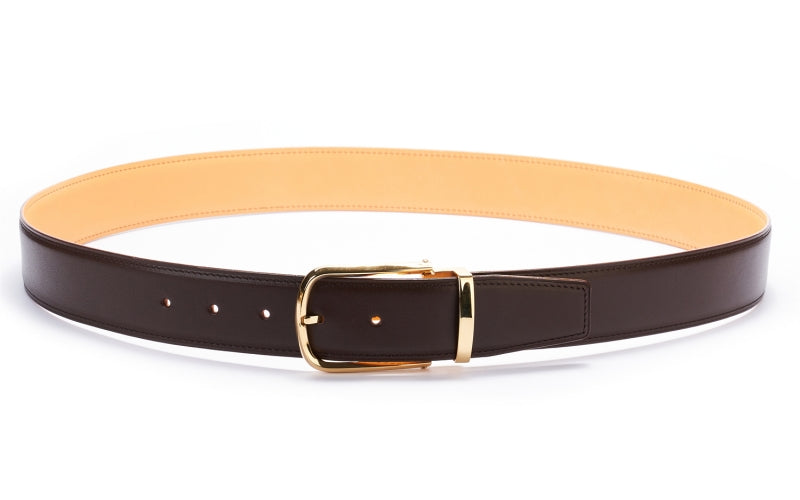
The dress slot, solved: BELTLEY's calfskin belts.
The Quick Answer
Buy calfskin for dress wear, business formal, and refined daily luxury. Buy bridle leather for heritage-craft heavy-duty wear, weekend belts that should last forever, and outfits where the belt is a feature, not a finish. They're complementary, not competing — most serious leather buyers eventually own one of each.

If your wardrobe leans tailored, calfskin is your primary belt. If your wardrobe leans Americana, British country, or heritage workwear, bridle is your primary belt.
What Is Bridle Leather?
Bridle leather is heavy-weight, vegetable-tanned cowhide (typically 3–4 mm thick), originally made for horse bridles and harnesses. It's tanned slowly — often over 12 months in oak bark liquor — then "stuffed" with hot tallow, fish oils, and waxes to create exceptionally tough, durable, water-resistant leather. It's the leather of saddleries, heritage British leather goods, and belts designed to outlive their owners.
The English bridle tradition is the gold standard. According to Carmine Jack Leather's profile of J&FJ Baker oak bark tanning, the famous Devon tannery still uses a 14-month process with only oak bark and water — no chemicals, no acids. The hides soak in concentrated oak bark liquor for over a year. Other respected bridle tanneries include J&E Sedgwick and Thomas Ware in the UK, Wickett & Craig in the US, and Hermann Oak for similar heavy veg-tan leathers.
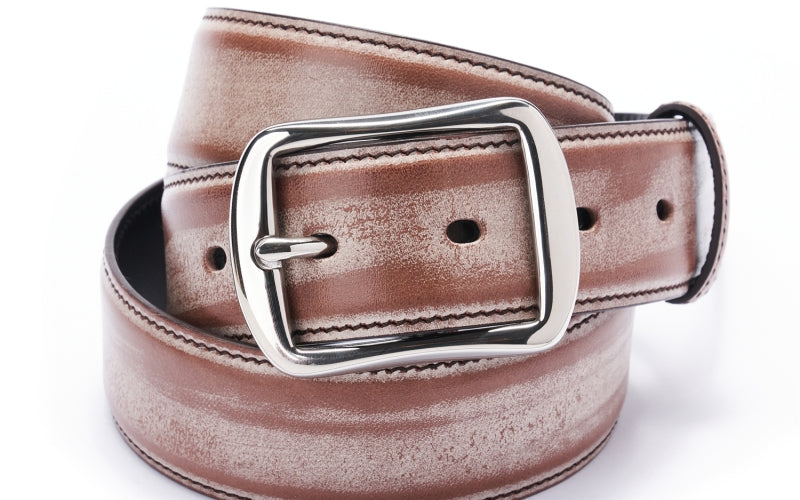
After tanning, the leather is hand-stained on both sides, then coated with a tallow/fish-oil mixture called "dubbin" that protects the leather and gives bridle its signature white streaks before break-in.
What Is Calfskin?
Calfskin is fine, smooth leather from young cattle (under six months old). It's thinner (0.6–1.2 mm), denser per millimeter, and far more refined than adult cowhide. It's the leather of dress shoes, dress belts, fine wallets, luxury bags, and basically anything where elegance matters more than ruggedness.
For the full background, see our complete guide to calfskin leather. The short version: young hide + tight fiber density + premium tannery = the gold standard of refined leather. Calfskin is what luxury houses reach for when they want a hide that feels expensive the second you touch it. Bridle is what they reach for when they want a belt that survives generations.
How Are They Made Differently?
This is where the two leathers really diverge in character.

Bridle leather is the slow road incarnate:
- Adult cowhide, full-grain.
- Vegetable tanning for 6–14 months in oak bark or similar tannin pits.
- "Stuffing" — hot tallow, fish oils, and waxes pressed into the leather to add water resistance and durability.
- Hand-staining on both grain side and flesh side.
- Burnished or waxed edges.
- Built specifically to handle stress, weather, and decades of use.
Calfskin is the precision road:
- Young calf hide, full-grain.
- Tanning varies — chrome (1–3 days) for soft fashion calf, vegetable (weeks) for refined dress calf, or hybrid methods.
- Surface finishing emphasizes refinement: glazing, aniline dyeing, polishing.
- Built for dressy, daily wear in controlled conditions.
According to Encyclopaedia Britannica's overview of leather production, these two traditions trace back to entirely different industries — bridle leather grew from saddlery and military equipment, while calfskin grew from luxury bookbinding, dress shoemaking, and aristocratic accessories. They've never been competitors because they've never been chasing the same customer. For the deeper tanning-method discussion, see our piece on vegetable-tanned vs chrome-tanned calfskin belts.
Which Is More Refined?
Calfskin wins on refinement without question. Its smooth, fine-grained surface and polished finish are what "refined leather" actually means in industry terms. Bridle leather is beautiful in its own way, but it's a different aesthetic — rugged, heritage, characterful, sometimes even rustic.
Think of it as the difference between a tuxedo and a Barbour jacket. Both can be exceptional. They're just not playing the same game. A polished calfskin belt under a tailored suit is invisible-in-the-best-way. A bridle leather belt under the same suit would look bizarre — too thick, too rustic, too obviously "outdoorsy" for the occasion.
For more on the refined dress angle specifically, see our piece on why full-grain calfskin is the gold standard.
Which Is Tougher?
Bridle leather wins on raw toughness by a wide margin. It's 3–4× thicker than calfskin, stuffed with protective oils, and built originally for horse tack — meaning it handles years of stress, weather, and friction that would devastate dress leather. A bridle belt is functionally indestructible under normal human use.
Some specifics:
- Thickness: Bridle 3–4 mm vs. calfskin 0.6–1.2 mm.
- Water resistance: Bridle handles light rain well due to tallow content; calfskin needs to stay dry.
- Tensile strength absolute: Bridle wins easily on total strength.
- Tensile strength per mm: Closer — calfskin is denser per millimeter, but bridle just has more of it.
- Lifespan under heavy use: Bridle 25–50+ years. Calfskin 10–20 years.
The leather that's literally engineered for horse harnesses handles a human waistline without breaking a sweat.
How Do They Age?
Both age dramatically — but in completely different visual styles.

Bridle leather develops a deep, rich patina over years. The dubbin coating wears off in the first few months to reveal the underlying veg-tan leather, which then darkens and softens with handling. By year five, a bridle belt looks like it has stories. By year fifteen, it looks like an heirloom. The waxes also slowly migrate to the surface, creating a soft sheen.
Calfskin patinas more subtly. Smooth calfskin gains a refined sheen and slight color deepening. Vegetable-tanned calfskin can develop more visible patina (similar to bridle but on a smaller, smoother scale). Either way, calfskin's aging is "refined" rather than "rugged."
If you love visible patina and character, bridle is the leather. If you love understated aging that maintains a polished aesthetic, calfskin is the leather.
What Are They Best For?
Calfskin is best for:
- Dress belts under suits and tailored outfits.
- Business formal and business casual.
- Wallets, watch straps, dress shoes (mostly upper construction).
- Luxury handbags where refinement matters.
- Daily wear in office or controlled environments.
Bridle leather is best for:
- Heritage-style belts with chinos, denim, or rugged outfits.
- Outdoor and country wear (British country style, Americana).
- Belts you want to wear for 30+ years.
- Workshop, weekend, and casual-but-quality outfits.
- Saddlery, dog leashes, traditional leather goods.
For the dress/casual axis generally, our dress belt vs casual belt guide breaks down the formality decisions.
Price Reality Check
Quality calfskin belts run $80–$300 (DTC) to $500–$2,000+ (designer). Quality bridle leather belts run $80–$300 (DTC) to $300–$800 (heritage British makers). Both have entry-level versions and exotic-finish versions; the right price depends on the tannery, construction, and brand.

A few honest notes:
- Cheap "bridle leather" exists. If it's under $50, it's probably not real oak bark tanned hide.
- Cheap calfskin exists too. Under $80 usually means top-grain or below.
- A genuine J&FJ Baker oak-bark-tanned bridle butt is among the most expensive raw leathers in the world; belts using it tend to start at $250+.
For more on belt pricing reality, see our pieces on how much a leather belt should cost and why are designer belts so expensive.
Calfskin vs Bridle Leather: Side-by-Side
| Feature | Calfskin Belt | Bridle Leather Belt |
|---|---|---|
| Source | Young calf (<6 months) | Adult cattle |
| Thickness | 0.6–1.2 mm | 3–4 mm |
| Tanning | Chrome / veg / hybrid | Pure vegetable, often oak bark |
| Process time | Days (chrome) to weeks (veg) | 6–14 months |
| Finish | Smooth, refined, polished | Rugged, waxed, dubbin-coated |
| Aesthetic | Dressy, elegant | Heritage, workhorse |
| Water resistance | Lower | Higher (tallow-stuffed) |
| Patina | Subtle, refined | Dramatic, deep |
| Lifespan with care | 10–20 years | 25–50+ years |
| Best with | Suits, dress shoes, formal | Chinos, denim, country style |
| Famous tanneries | Annonay, Haas, Badalassi | J&FJ Baker, Sedgwick, Thomas Ware |
| Right buyer | Refined / dress-focused | Heritage / lifetime-buyer |
Which Should You Buy?
Buy calfskin first if your week is mostly tailored or business-focused. Buy bridle if your week is mostly heritage-casual or you specifically want a "buy it once, wear it for life" belt. Buy both eventually if you have a varied wardrobe. Neither is a wrong answer; they just answer different questions.

Quick decision logic:
- Need a dress belt for suits / formal events → calfskin.
- Want a forever-belt for jeans, chinos, and casual wear → bridle.
- Buying for a heritage / Americana / country aesthetic → bridle.
- Buying for an investment-grade dress belt → calfskin (or for a true investment leather, see our calfskin vs crocodile guide).
If you're starting a serious belt rotation, the smart sequence is: calfskin dress belt first, then bridle workhorse belt, then exotic (crocodile) as a third tier later. Our Classic Calfskin Dress Belt handles the dress side; our full-grain leather belts collection includes heavier heritage-style options on the bridle end of the spectrum.
The Bottom Line
Calfskin and bridle leather aren't competing for "best belt leather." They're occupying entirely different corners of the leather world — one refined, one rugged, both genuinely top-tier within their categories. Calfskin is the leather of dress shoes, tailored outfits, and quiet luxury. Bridle is the leather of horse harnesses, English country style, and belts that will outlive trends, fashion cycles, and probably the buckle on them.
At BELTLEY we work with both because the same customer often wants both: a refined calfskin belt for the boardroom and a heritage-style heavy leather belt for the weekends. Pick the one that matches the life you actually live, condition it on the right schedule (our leather care guide covers both), and either leather will quietly outlast every fast-fashion belt you'd otherwise replace along the way.
Frequently Asked Questions
Q: Is bridle leather better than calfskin?
Neither is "better" — they're built for different uses. Bridle wins on toughness and heritage aesthetic; calfskin wins on refinement and dress wear. Compare them by use case, not by ranking.
Q: Can I wear a bridle leather belt with a suit?
Generally no — bridle is too thick and rugged-looking for tailored formalwear. It can work with a sport coat and chinos in a country-style or relaxed business setting, but it'll look wrong with a sharp suit. Calfskin is the right call for suits.
Q: What makes English bridle leather special?
The combination of slow vegetable tanning (often oak bark, often 12+ months), full-grain heavy adult cowhide, hand-staining on both sides, and the dubbin/tallow stuffing that gives bridle its signature feel and water resistance. Tanneries like J&FJ Baker still use processes that have changed little in centuries.
Q: How thick should a bridle leather belt be?
Most heritage-quality bridle belts run 3–4 mm (about 8–10 oz). That thickness is what gives bridle its workhorse durability and signature heavy feel. Anything thinner is usually not real bridle leather.
Q: How do I care for a bridle leather belt vs a calfskin belt?
Bridle needs less frequent conditioning (every 6–12 months) because the tallow stuffing slowly works to the surface naturally. Calfskin needs more attentive conditioning (every 3–6 months) because the thinner surface dries out faster. Both follow similar routines — see our leather care guide.
,%20s...)