Leather Belt Linings Explained: Pigskin, Suede, or Self-Lined
Quick answer: A belt lining is the second layer of material on the back (skin-side) of the belt. Pigskin lining is the most common premium option — thin, smooth, comfortable against fabric, and breathable. Suede lining is softer but less durable and snags more under shirts. Self-lined (full-grain bonded to full-grain) is the strongest — two layers of full-grain leather glued and stitched together, used for heavy-duty and reinforced belts. The cheap shortcut is unlined or synthetic-lined — both fail faster.
Last updated: May 2026 • By BELTLEY Editorial
TL;DR:
- Pigskin lining: thin, smooth, breathable, the most common premium dress-belt lining.
- Suede lining: softer feel, less durable, snags on shirts, slightly more casual.
- Self-lined (full-grain over full-grain): heaviest, strongest, used for double-layer and heavy-duty belts.
- Avoid: unlined dress belts (back-side flakes against shirts), synthetic-lined belts (sweat damage, no breathability).
The lining on a belt is one of the construction details most buyers never think about — until the lining cracks, snags through a shirt, or causes the belt to stretch in a single year. The lining does three jobs: it gives the belt structural rigidity (stops single-layer leather from stretching under load), it provides a smooth surface against the wearer's shirt or skin (the raw flesh-side of leather is rough and fibrous), and it adds breathability and moisture management. Skip the lining or use the wrong material and all three jobs fail. Wikipedia's belt reference covers the basics; the lining choice is where premium construction separates from budget. Our full-grain leather belts and dress belts collections use premium linings exclusively.
What is a belt lining and why does it matter?
A belt lining is the second layer of material bonded (and usually stitched) to the back of the primary leather strap. Without a lining, the belt is one piece of leather with the rough flesh-side exposed against the wearer's shirt or skin. The lining provides a smooth contact surface, adds dimensional stability that prevents stretching, and contributes to the belt's overall lifespan. A properly lined belt lasts 2–3x longer than the same belt unlined.

The lining material determines the belt's feel, breathability, and durability characteristics. Thin smooth lining (pigskin) feels best against dress shirts and breathes well in humid conditions. Soft thick lining (suede) feels good against skin but snags on woven fabric. Self-lining (full-grain over full-grain) creates the heaviest, strongest belt and is used where structural reinforcement matters more than thinness. We covered the underlying full-grain vs. genuine leather distinction in our material guide.
BELTLEY 3-Material Rule
The 3-Material Rule = full-grain leather + stainless or solid brass buckle + sealed (painted or burnished) edges. For lined belts specifically, the rule extends to the lining itself: only full-grain pigskin, full-grain calfskin, or self-lined full-grain qualifies for the durability tier. Bonded or "genuine leather" linings fail at the bond line within 2 years of normal wear, cause the primary leather to stretch, and crack along the flex points. The lining is structural; if it fails, the whole belt fails.
What's the difference between pigskin lining and suede lining?
Pigskin lining is the thin, smooth flesh-side of pigskin leather, bonded to the back of the primary belt leather. It's typically 0.5–0.8mm thick, smooth in texture, highly breathable (pigskin has natural micro-perforations from the hair follicle pattern), and durable under repeated flex. Pigskin lining is the standard premium choice for dress belts and most quality full-grain belts.

Suede lining is the napped (fuzzy) surface of split leather, typically lamb, calf, or goat suede. It's 1–2mm thick, soft and fuzzy in texture, less breathable than pigskin (the nap traps air but also traps moisture), and less durable under repeated wear. Suede lining feels good against bare skin (and is sometimes preferred for belts worn under untucked shirts) but snags and pulls threads in tucked dress shirts. For more on suede generally, see Wikipedia's suede entry.
Key stat: A premium pigskin-lined full-grain leather belt typically lasts 10+ years of daily wear before the lining shows wear. A suede-lined equivalent typically shows visible nap wear at the flex point (around the buckle) within 3–5 years. An unlined dress belt typically shows back-side flaking within 18 months.
What is a self-lined belt?
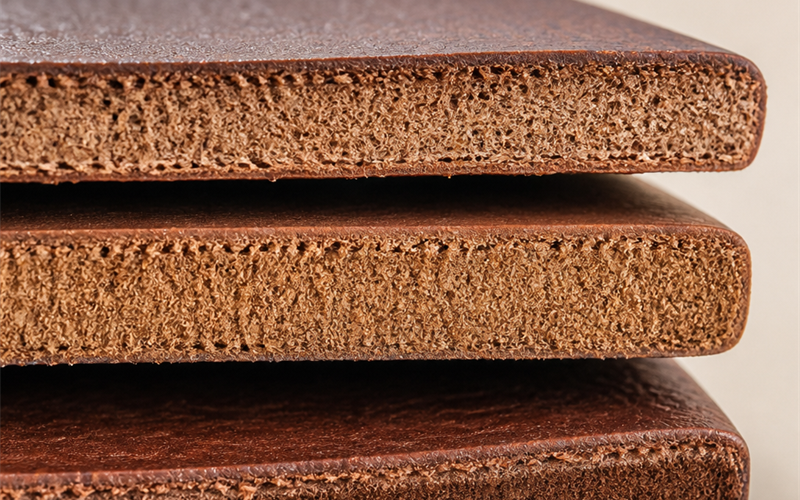
A self-lined belt is constructed of two layers of full-grain leather glued and stitched together — the primary leather on the front (the visible side) and a second piece of full-grain leather on the back (the lining side). Both layers are full-grain, both are typically the same thickness (2–3mm each), and together they create a 4–6mm thick belt that's significantly more rigid than a single-layer belt with traditional lining.
Self-lined belts are the heaviest and most structurally rigid belts in the category. They're used for:
- Heavy-duty belts — work, EDC, concealed carry, where the belt needs to support load
- Reinforced dress belts — high-end formal belts where the wearer wants the belt to feel substantial
- Reinforced CCW belts — where holster and firearm load require a stable platform (see our off-duty police belt guide for the load context)
The trade-off: self-lined belts are heavier and stiffer than pigskin-lined belts, which can feel less refined under tailored suits. They're the right choice for casual, heavy-duty, and CCW contexts; less ideal for slim dress contexts where flexibility and refinement matter more. Browse our full-grain leather belts collection for both single-layer-with-lining and self-lined options.
Belt lining comparison
| Lining type | Thickness | Feel | Best for | Drawbacks |
|---|---|---|---|---|
| Pigskin (full-grain) | 0.5–0.8mm | Smooth, breathable | Dress belts, daily wear | Slightly higher cost |
| Calfskin (full-grain) | 0.6–1mm | Smooth, slightly thicker | Premium dress belts | Higher cost than pigskin |
| Suede | 1–2mm | Soft, fuzzy | Casual belts, untucked-shirt wear | Snags on tucked shirts, less durable |
| Self-lined (full-grain over full-grain) | 4–6mm total | Rigid, heavy | Heavy-duty, CCW, reinforced | Less flexible, heavier |
| Bonded leather lining | 1mm | Smooth at first | Avoid | Fails within 24 months |
| Synthetic lining (PU, fabric) | 0.5mm | Plastic feel | Avoid | No breathability, sweat damage |
| Unlined (raw flesh-side) | N/A | Rough, fibrous | Avoid for dress | Flakes against shirts, no rigidity |
For tanning context relevant to lining materials, see Wikipedia's leather tanning reference.
Is unlined ever acceptable?
Rarely. Unlined belts have one legitimate use: bridle leather belts in traditional English saddlery style, where the natural rough back-side is part of the heritage construction. These are typically heavy bridle hides finished on both sides at the tannery, so the "back" isn't actually raw flesh-side — it's finished bridle. For everything else, unlined means raw flesh-side exposed, which flakes against shirts, doesn't breathe, and stretches without dimensional stability.

If a belt is marketed as "single-layer full-grain" without mention of lining or back-finish, ask the maker. Quality single-layer belts have either finished back-side (bridle treatment) or a thin lining bonded to the back. Truly raw flesh-side belts are budget construction regardless of the front-side leather grade. See how to tell if a belt is full-grain leather.
Does the lining affect how the belt ages?
Yes — significantly. A properly lined belt doesn't stretch under normal wear because the lining provides dimensional stability at the bond. An unlined or poorly lined belt stretches by 1–2 inches over a few years of daily wear, eventually requiring resizing or replacement. The buckle holes also stretch faster on unlined belts because the prong load isn't distributed across a stable two-layer assembly.

Lining material also affects how the belt feels in humid environments. Pigskin's natural micro-perforation pattern (the result of pig hide's distinctive follicle structure) provides better moisture management than suede or synthetic linings. In hot, humid daily wear, a pigskin-lined belt feels noticeably cooler than a synthetic-lined or suede-lined equivalent. We covered the climate-specific durability frame in are alligator leather belts waterproof.
How do you check the lining quality before buying?
Three checks: inspect the back-side visually (should be smooth and consistent, not patchwork or fibrous), flex the belt to see if the lining stays bonded (no separation, bubbling, or wrinkling), and check the stitching at the lining edges (saddle stitch or quality machine stitch indicates the maker invested in proper construction). Cheap lined belts often show glue lines at the edges, inconsistent lining thickness, or visible adhesive bleed-through.

The quality benchmark: a premium lined belt's lining is essentially indistinguishable from the primary leather in terms of finish quality — both sides look like deliberate craftsmanship rather than a quality side with a cheaper backing. For our construction approach, browse our men's dress belts and full-grain leather belts collections.
The Bottom Line
The lining is one of the most consequential and least-discussed parts of belt construction. Pigskin lining is the standard premium choice for dress belts — thin, smooth, breathable, durable. Suede lining is softer but less durable; better for casual contexts. Self-lined (full-grain over full-grain) is the strongest construction — heavy, rigid, the right choice for heavy-duty and CCW belts. Avoid unlined dress belts, bonded-leather-lined belts, and synthetic-lined belts — all fail faster than properly lined alternatives. At BELTLEY, every belt is properly lined with full-grain pigskin, calfskin, or self-lined with a second layer of full-grain — no shortcuts, no synthetic backings. The 3-Material Rule applies all the way to the lining. Browse our full-grain leather belts, dress belts, and men's belts collections.
Frequently Asked Questions
Q: Does the lining color need to match the front?
For dress belts, yes — tonal matching looks intentional. The lining is occasionally visible at the belt tail and through the buckle slots. Matching the lining to the primary leather color reads as deliberate construction. Contrast linings (black belt with red lining, etc.) read as fashion-statement, not heritage.
Q: Can the lining be repaired if it cracks?
In limited cases. A small crack at the buckle flex point can be re-glued and re-stitched by a leather worker. Significant lining failure typically requires replacing the entire belt. The lining is bonded, so repair is invasive.
Q: Does suede lining shed or transfer color?
Cheap suede linings can shed nap fibers onto shirts, especially in the first weeks of wear. Quality suede linings (lamb or calf, properly finished) don't shed. The shedding is a tell that the suede is low-grade.
Q: Should I oil the lining?
No. Conditioner on the front of the belt occasionally is fine; conditioner on the lining can cause swelling and bond failure between the lining and the primary leather. Treat the front; leave the lining alone.
Q: What's the right lining for a wedding or formal belt?
Pigskin lining in a tonal match to the primary leather. Pigskin is smooth, refined, breathable, and reads premium under dress shirts. Suede lining reads slightly more casual. Self-lined construction is overkill for slim dress contexts. See our wedding guest belt rules guide.
Q: How heavy should a quality lined belt feel?
A 1.25" full-grain belt with pigskin lining typically weighs 80–120 grams. A self-lined equivalent weighs 160–220 grams. Anything significantly lighter for the same dimensions suggests synthetic or hollow construction. Weight is a useful (though not definitive) quality signal.


%20of%20the%20belt.%20Pigskin%20lining%20is%20the%20most%20common%20premium%20option%20%E2%80%94%20thin,%20smooth,%20comfortable%20against%20fabric,%20and%20br...)