
Italian Leather Belt vs Spanish Leather Belt: A Real Comparison
TL;DR:
- Italian belts lean on vegetable tanning, slow finishing, and a soft-aging aesthetic.
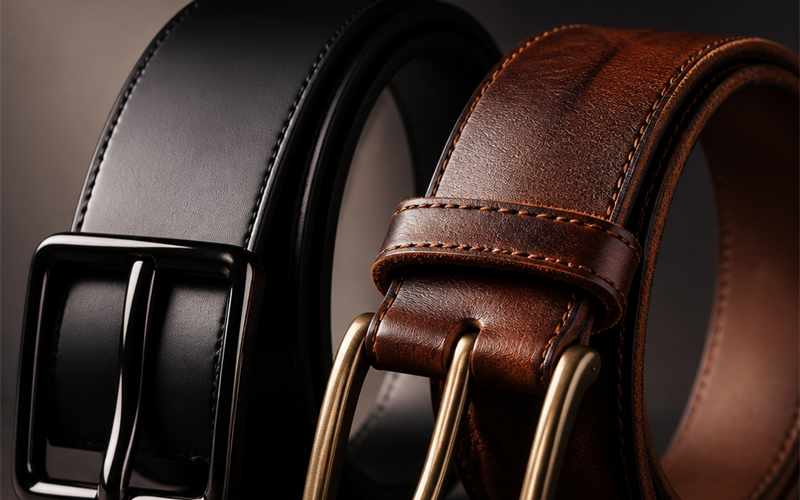
- Spanish belts (especially from Ubrique) lean on chrome tanning, sharper finishing, and a sleeker look.
- Both are excellent. Both are European. Both will outlast a department-store belt by a decade.
- The right answer depends on whether you want patina (Italy) or polish (Spain).
If you've narrowed your belt search down to "made in Europe," congratulations — you've already filtered out 90% of the disappointing options.
Now you have a new problem. Italy and Spain are both serious leather countries with serious belt-making traditions, and they don't make belts the same way. The differences are smaller than Italian-vs-American, but they're real, and they affect how the belt looks on day one and how it ages over five years.
This post breaks down the comparison honestly. For wider context on Italian craftsmanship specifically, our why Italian leather belts cost more guide is a solid companion read.
Patina or Polish: Italy vs Spain Settled
Both European, both excellent — one suits you more:
| Your situation | Go with |
|---|---|
| Want leather that ages visibly | Italian veg-tan — the patina path. |
| Want sleek and consistent | Spanish (Ubrique-style) chrome-tan — the polish path. |
| Dress belts specifically | Spain's sharper finishing edges it; Italy counters with box-calf exceptions. |
| Either way, avoiding the Europe premium | The grade matters more than the flag — full-grain DTC from $58 matches both on material. |
Grade-first shopping: BELTLEY's full-grain collection.
What's the Core Difference Between Italian and Spanish Leather Belts?
The core difference between Italian and Spanish leather belts is the tanning tradition and finishing philosophy. Italian belts — especially Tuscan ones — favor vegetable tanning that softens and patinas over years. Spanish belts, especially from the leather capital of Ubrique, favor chrome-tanned hides with crisper, more polished surfaces designed to stay looking new.

The shorthand:
- Italian = soft, warm, ages into something better.
- Spanish = sharp, refined, stays looking the way you bought it.
Neither approach is wrong. They're answers to different aesthetic questions. Wikipedia's tanning entry explains the chemistry behind the two tanning approaches if you want the deep version, and our own vegetable-tanned vs chrome-tanned leather belt comparison translates those chemistry differences into what you'd actually feel on a finished belt.
Where Are Spanish Leather Belts Actually Made?
Most quality Spanish leather belts come from Ubrique, a small town in Andalusia with a 400-year leather goods tradition. Ubrique is the production base for many luxury European brands — Loewe, Hermès, Louis Vuitton all have or have had production lines there — and the town's workforce is dominated by leather craftspeople trained from a young age.
A few quick facts about Ubrique:
- Population: under 17,000
- Estimated leather workers: 5,000+ (roughly 1 in 3 working-age residents)
- Main output: handbags, small leather goods, belts, wallets
- Trade body: Movex — the regional leather goods trade fair
Italian leather production is more spread out. Tuscany dominates vegetable-tanned hides — coordinated by the Tuscan Vegetable-Tanned Leather Consortium — while the Veneto, Marche, and Piedmont regions handle other specialties (chrome-tanned dress leather, exotic leather, hardware). For a deeper look at this tannery landscape, our piece on 18 Italian tanneries and the real leather belt industry walks through the major players.
So an "Italian belt" can come from many places. A "Spanish belt" usually comes from one specific town — Ubrique, as documented in its Wikipedia entry.
How Does Italian Vegetable Tanning Compare to Spanish Chrome Tanning?
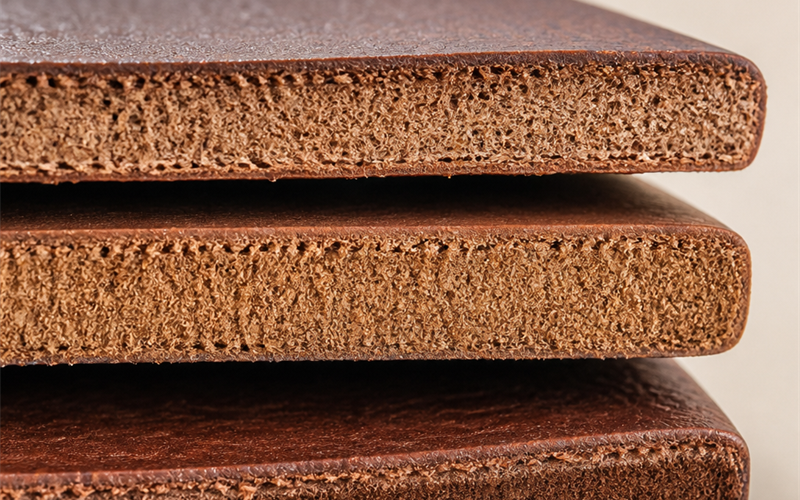
Italian vegetable tanning uses plant-based tannins from chestnut, quebracho, and mimosa over 30–60 days to slowly transform raw hide into leather. Spanish chrome tanning uses chromium salts over 1–3 days to produce a softer, more colorfast leather that's easier to work with at industrial scale. The Italian process is slower and more expensive; the Spanish process is faster and produces more consistent results.

Comparison table:
| Trait | Italian Veg Tan | Spanish Chrome Tan |
|---|---|---|
| Process time | 30–60 days | 1–3 days |
| Cost | Higher | Lower |
| Initial feel | Stiff, dense | Soft, supple |
| After 1 year | Softer, darker | Same as day one |
| Patina | Strong, characterful | Minimal |
| Color range | Earth tones | Wide spectrum |
| Eco notes | Plant-based | Chrome use under scrutiny |
Note that this is the typical pattern — not a strict rule. Spain has excellent vegetable-tanned producers too (in Catalonia and Galicia), and Italy has major chrome-tanned dress leather production. The defaults differ, but both countries do both.
The Britannica leather entry covers both tanning families in more depth if you want to keep reading. For the BELTLEY-side breakdown, see our posts What Is Vegetable Tanning and Why It Matters for Belts and What Is Chrome Tanning and Why Is It Controversial? — both go into what these processes mean for the belt you actually wear.
Which Country's Belts Look More "Luxury"?
Both countries produce belts that read as luxury, but they signal it differently. Italian belts signal luxury through softness, warmth, edge work, and patina potential. Spanish belts signal luxury through precision, gloss, color consistency, and hardware fit. A buyer who wants "old money quiet luxury" usually leans Italian. A buyer who wants "sharp, new-money refined" usually leans Spanish.
You can spot the country-of-origin aesthetic in seconds:
- Italian dress belt: Slight warm undertone, hand-finished edge, often visible vegetable tan glow.
- Spanish dress belt: Cleaner edge geometry, brighter top finish, sometimes a chrome-tan smell-free crispness.
The same logic applies to casual belts. An Italian casual belt is usually pull-up or bridle leather with patina built into the design. A Spanish casual belt is usually a refined, color-rich smooth leather.
You can see the Italian-style soft-finish approach on our Italian Brutti pull-up brown belt.
Is One More Durable Than the Other?
Neither is meaningfully more durable when both are made with proper quality control — both Italian vegetable-tanned and Spanish chrome-tanned belts last 10+ years with normal wear and basic care. The difference is in how they wear: Italian belts develop character through use, while Spanish belts maintain a more uniform appearance over time.

Real-world failure modes:
| Failure Type | Italian Belts | Spanish Belts |
|---|---|---|
| Edge wear | Possible after 5–10 years | Possible after 5–10 years |
| Cracking | Rare if conditioned | Rare with normal use |
| Color fade | Patina deepens (good) | Some UV fade possible |
| Hardware failure | Brass holds up well | Often plated, can wear |
| Stitching loss | Linen lasts decades | Polyester common, shorter life |
The biggest durability difference is at the entry level. A $60 Italian belt and a $60 Spanish belt are both budget-tier — both will last 3–5 years and both will show shortcuts. Quality scales with price in roughly the same way in both countries.
For more on what actually drives belt longevity, our 4 quality markers in calfskin belts post covers stitching, edge, buckle, and suppleness as the four core indicators — and What Is the Most Durable Leather Belt? ranks the leather types by long-term wear.
How Do Prices Compare Across Italian and Spanish Belts?
Italian belts tend to cost 10–25% more than equivalent Spanish belts at the wholesale level, mostly because of the longer tanning process and the higher labor content in traditional Tuscan finishing. At retail, the difference can disappear or even invert — Spanish belts produced for luxury houses often carry the highest markups.
Typical price bands by tier:
| Tier | Italian Belt | Spanish Belt |
|---|---|---|
| Entry | $60–$100 | $50–$90 |
| Mid | $120–$240 | $100–$220 |
| Premium | $260–$500 | $240–$450 |
| Luxury / branded | $500+ | $500+ |
The country of origin is a smaller pricing factor than the workshop reputation, the leather grade, and the brand markup. A DTC Italian belt with full-grain vegetable-tanned leather and solid brass hardware can be priced under a Spanish luxury-house belt with chrome-tanned top-grain and zinc-alloy hardware. We've shaped BELTLEY's full-grain leather belts collection specifically around removing the retail markup distortion.
Which Belt Style Suits Each Country's Strengths?
Italian belts shine in vintage, casual, heritage, and warm-toned formal styles. Spanish belts shine in sleek modern dress, plaque-buckle formal, and minimalist designs where color uniformity matters. The classification isn't absolute — both countries make every style — but the strengths are real.

Style-to-country pairings:
- Vintage brown belt: Italy.
- Crisp black plaque belt: Spain.
- Soft tan casual belt: Italy.
- Polished oxblood dress belt: Spain.
- Distressed pull-up: Italy.
- Two-tone formal belt: Spain.
- Hand-saddle-stitched belt: Italy.
- Machine-finished luxury house belt: Spain.
If you want to lean into the Italian strengths, our handmade belts collection is the place to start. For sleek dress styles where Spain typically excels, our dress belts collection includes Italian-made versions that hit the same notes.
Are There Quality Markers Unique to Each Country?
Yes — each country has signature quality tells. Italian belts often feature the filetto (a fine creased line along the edge), hand-burnished or hand-painted edges, and solid brass hardware. Spanish belts often feature crisp painted edges with multiple coats, plaque buckles with precision-machined posts, and a uniform leather finish that signals chrome-tan refinement.
Italian quality tells:
- Filetto edge line — see our filetto detail explainer for the full breakdown
- Hand-applied wax polish (matte glow, no shellac shine)
- 7–8 SPI saddle or precision lockstitch with waxed linen — our stitching standards guide covers this
- Solid brass or stainless hardware — our solid brass buckles post goes deep here
Spanish quality tells:
- Edge paint applied in 4–8 coats with razor-clean color line
- Plaque buckle posts that thread smoothly without play
- Color saturation that stays uniform across the entire belt face
- Lining (often a contrasting calf or pigskin) that shows finishing care
Both sets of markers signal serious workshop standards. Neither country has a monopoly on excellence — they just emphasize different things.
Italian vs Spanish: Which Should You Actually Buy?
You should buy an Italian belt if you want a piece that ages into something more characterful than the day you bought it, and a Spanish belt if you want a piece that stays sharp and consistent for years. There's no objectively better answer — only the better fit for your aesthetic.

Quick decision matrix:
| If you want... | Pick |
|---|---|
| A belt that patinas with you | Italian |
| A belt that looks new for 5+ years | Spanish |
| Warm-toned brown leather | Italian |
| Crisp, color-saturated leather | Spanish |
| Vintage / heritage vibe | Italian |
| Modern luxury vibe | Spanish |
| Solid brass buckle culture | Italian |
| Plaque buckle culture | Spanish |
| Maximum patina potential | Italian |
| Maximum color consistency | Spanish |
For most casual and heritage wear, Italian wins. For most modern formal wear, Spanish wins. For exotic leather belts specifically — crocodile, alligator, elephant — both countries have strong producers, and the differences shrink. Our exotic leather belts collection leans into the workshop-quality approach regardless of country.
The Bottom Line
Italian and Spanish leather belts are both at the top of the global belt-making world. They take different routes there. Italian belts win on patina, warmth, and slow craftsmanship. Spanish belts win on precision, gloss, and modern finishing.
At BELTLEY, we lean into the Italian tradition because it matches the kind of belt we believe in — one that gets better with time, not one that fades. If that's your vibe, start with our handmade belts collection or the full-grain leather belts for the broader Italian-style range.
Frequently Asked Questions
Q: Is "Made in Italy" always better than "Made in Spain" for belts?
No. Both labels can cover anything from luxury workshop to outsourced volume production. The workshop reputation, leather grade, and hardware quality matter far more than the country printed on the tag.
Q: Why does Ubrique produce so many luxury house belts?
Ubrique has 400 years of accumulated leather expertise and an unusually concentrated skilled workforce. Luxury houses can run their production lines there with consistent quality and reasonable labor costs compared to producing in France or Italy directly.
Q: Are Spanish belts chrome-tanned because they're cheaper?
Partly, but also because chrome tanning produces the soft, color-consistent leather Spanish workshops are known for. It's an aesthetic choice as much as a cost choice. Vegetable-tanned Spanish belts exist too — they're just less common than chrome-tanned ones.
Q: Do Italian belts smell different from Spanish belts?
Yes, often. Vegetable-tanned Italian leather has a distinctive earthy, tannin-rich smell that fades over months. Chrome-tanned Spanish leather has a more neutral, almost odorless feel from day one. The smell isn't a quality marker — just a tanning marker.
Q: Can I tell the country of origin by looking at a belt?
Sometimes, with practice. Italian belts often show visible filetto lines, warm undertones, and hand-finished edges. Spanish belts often show crisper edge paint and more uniform color. But many belts are intentionally cross-style, so the visible cues aren't always definitive.
Q: Which country has better hardware?
It's a wash at the premium level — both Italian and Spanish foundries produce excellent solid brass and stainless steel buckles. At entry-level, Italian belts more often default to solid brass while Spanish belts more often use plated alloy. Always check the back of the buckle for material confirmation.
%20lean%20on%20chrome%20tanning,%20sharper%20finishing,%20and%20a%20sleeker%20look.%0AB...)