Latigo Leather Belts: What They Are and Why They Last Forever
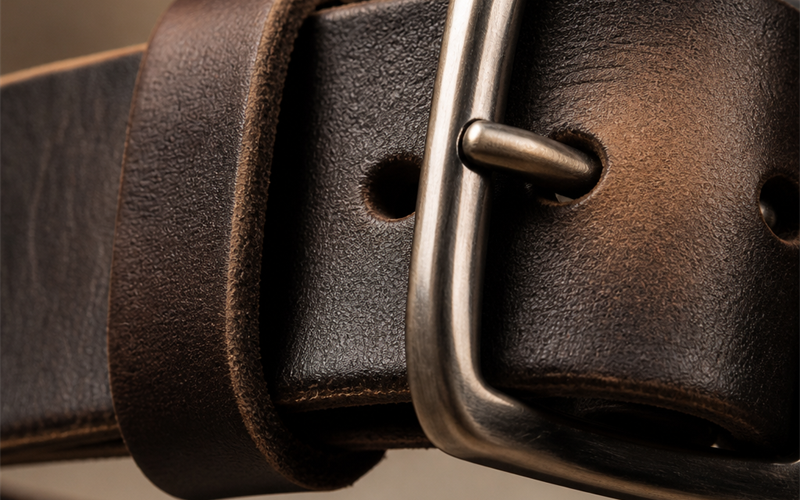
Quick answer: Latigo leather is a combination-tanned (vegetable + chrome) full-grain leather that's been hot-stuffed with oils and tallow to produce an extraordinarily tough, water-resistant, and flexible material. It originated in saddlery — used for the cinch straps that survive years of sweat, rain, and constant tension — and translates into belts that are essentially indestructible. Latigo belts are firmer than Chromexcel, more weather-resistant than English Bridle, and develop a deep, rich patina over decades.
Last updated: May 2026 • By BELTLEY Editorial
TL;DR:
- Latigo = combination-tanned (veg + chrome) + heavy oil/tallow stuffing.
- Built for the cinch straps of saddles — the hardest-working piece of horse tack.
- Almost waterproof; flex-tolerant; develops deep oily patina over decades.
- Firmer than Chromexcel; more weather-resistant than English Bridle; the most durable of the heritage trio.
Latigo doesn't have the name recognition of Chromexcel or English Bridle, but among leather enthusiasts it's the cult heritage tannage for a reason: it's effectively built to outlast every other leather in the same category. The leather was developed in saddlery for the single hardest-working strap on a working horse — the cinch — and it brings that punishing durability into belts that can survive decades of daily wear without complaint. Below is what latigo actually is, why it ages so well, and when it's the right belt choice. For the broader equestrian-leather context, see saddle vs harness vs bridle leather.
What is latigo leather?
Latigo is a combination-tanned, full-grain leather, traditionally made by first vegetable-tanning a hide and then re-tanning it with chrome — combining the natural feel and structure of veg-tan with the softness and flexibility of chrome. After tanning, the leather is hot-stuffed with heavy doses of oils, greases, and tallow that penetrate the fibers and lock moisture out. The result is a firm, water-resistant, exceptionally tough leather.

The name comes from the cinch. In traditional Western saddlery, the latigo is the strap that loops through the cinch buckle and pulls the saddle tight against the horse — a strap that takes the rider's weight indirectly, gets soaked with sweat, drenched in rain, and worked dozens of times a day for years. The leather had to be made tougher than anything else on the saddle, and the recipe (combination tanning + heavy oiling) evolved specifically to survive that punishment. That recipe is now used for belts, dog collars, holsters, and other heavy-duty leather goods.
How is latigo different from regular oil-tanned leather?
Latigo is a specific combination-tanned recipe; "oil-tanned" is a broader category. Most oil-tanned leather sold today is chrome-tanned leather that's been topped with oils for a soft, supple feel — easier and cheaper to produce, but less durable than true latigo. Real latigo includes the vegetable-tanning step first (which gives the leather structure and depth) before the chrome re-tan and the heavy oil stuffing.
The construction is the difference. Pure chrome-tanned "oil leather" is soft, uniform, and decent for moderate-duty goods. Latigo is firmer, more structured, and built for sustained tension and weather. American tanneries like Hermann Oak, Wickett & Craig, and several specialty houses produce latigo to the traditional combination-tanned spec. We touch on the U.S. heritage tannery landscape in Wickett & Craig vs Hermann Oak vs Horween: US tannery showdown.
Key stat: Real latigo leather is combination-tanned in two stages — first vegetable-tanned (often 3+ weeks), then chrome re-tanned, then hot-stuffed with oils. The total tannery time can exceed 30 days from raw hide to finished hide, compared to 1–2 days for a standard chrome-tanned hide.
How durable is a latigo belt?
Effectively indestructible under normal wear. A quality latigo belt can survive decades of daily use, repeated soaking and drying, heavy buckles, sun exposure, and rough wear that would crack or compromise lesser leathers. The combination of veg-tan structure, chrome flexibility, and deep oil stuffing makes latigo simultaneously firm and forgiving — it holds shape but doesn't crack under flex.

The reason is the layered protection. The vegetable-tanning step gives the leather structural strength; the chrome step adds flexibility (so it bends rather than breaks); and the oil stuffing seals out moisture from the inside out. Each component compensates for the others' weaknesses. A pure veg-tan can crack if soaked and dried repeatedly; pure chrome lacks structure; a top oil coat washes off. Latigo's three-step recipe addresses all three failure modes.
How does latigo compare to Chromexcel and English Bridle?
The three are siblings, not twins. Chromexcel is combination-tanned and hot-stuffed (like latigo) but uses different oils and finishes for a softer, more dramatic-pull-up feel. English Bridle is fully vegetable-tanned and curried with tallow/wax for a refined, matte, dress-leaning finish. Latigo sits between the two — firmer than Chromexcel, more weather-resistant than English Bridle, and built more explicitly for the toughest equestrian applications.
The aesthetic also splits. Chromexcel is theatrical and casual; English Bridle is quiet and refined; latigo is rugged and workmanlike. All three age beautifully, but in different directions. We compare Chromexcel and Bridle head-to-head in Horween Chromexcel vs English Bridle for belts.
Latigo vs Chromexcel vs English Bridle
| Factor | Latigo | Chromexcel | English Bridle |
|---|---|---|---|
| Tanning | Combination (veg + chrome) | Combination (chrome + veg) | Vegetable only |
| Finishing | Heavy oil/tallow stuffing | Hot-stuffed oils/greases/waxes | Curried + hand-waxed |
| Temper | Firm, rugged | Soft, supple | Firm, refined |
| Weather resistance | Excellent | Very good | Good |
| Patina speed | Moderate to fast | Fast (theatrical) | Slow (subtle) |
| Best for | Rugged / work belts | Casual / heritage / boots | Dress / formal heritage |
| Sheen | Oily, low-medium | Glossy, dramatic | Matte to semi-matte |
| Cult level | Niche heritage | Mainstream cult | Dress-enthusiast cult |
How does a latigo belt age?
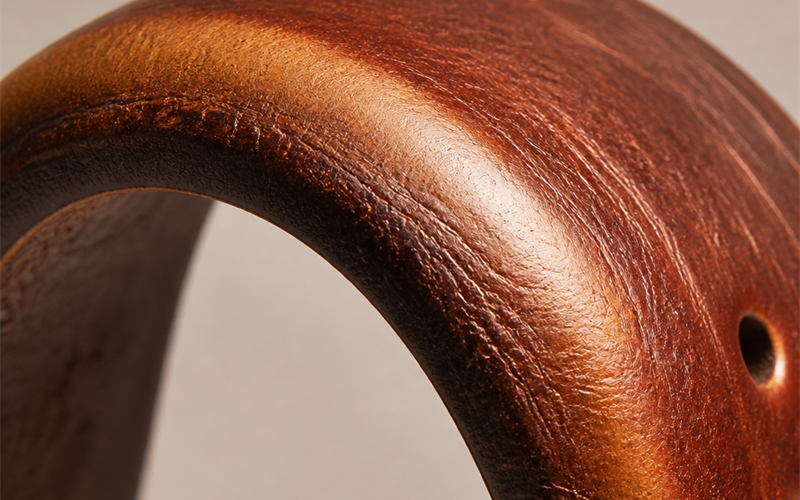
Beautifully, slowly, and with character. A new latigo belt is firm and slightly oily, with a uniform color (often natural russet, dark brown, or black). Over the first year of regular wear, the leather softens slightly at flex points, deepens in color, and develops a subtle pull-up effect where the surface lightens at sharp bends. Over 5–10 years, the belt takes on a rich, varied patina that includes oil-darkened high-friction zones, lighter flex creases, and a deep overall color shift.

The aging is honest — visible without being theatrical. Unlike Chromexcel, latigo doesn't develop dramatic pull-up within weeks. Unlike English Bridle, it doesn't stay uniformly quiet. It evolves at a moderate pace into a leather that genuinely looks lived-in within a few years and looks heroic after a decade. Our handmade collection includes pieces in this aesthetic tradition.
What about water and weather?
Latigo handles it better than almost any other leather. The deep oil stuffing acts as an internal moisture barrier — water beads on the surface and doesn't soak deep into the fibers. A latigo belt that gets caught in rain or sweat can be wiped down, allowed to air-dry, and worn the next day with no lasting damage. Repeated soaking and drying — which destroys most leathers — is what latigo was designed for.
That said, no leather is fully waterproof. Submerging a latigo belt or soaking it for hours will still affect the leather over time. The realistic claim is "highly water-resistant for daily life conditions," which makes it the ideal choice for outdoor wear, work belts, and anyone who doesn't want to baby their leather. Our leather care page covers the simple care routine.
What about the look — is latigo dressy?
Mostly no, in the strictest sense. Latigo's oily sheen and rugged character read casual to business-casual by default. It's not the right pick for a strict dress belt under a sharp suit — English Bridle is better there. It is great for business-casual, smart-casual, weekend wear, and any outfit where you want a quality belt that doesn't read overly formal.

For a man whose life is mostly chinos, dark jeans, casual sport coats, and quality boots, latigo is arguably the perfect everyday belt — durable, characterful, and ages into something genuinely heirloom. We dig into the casual/dress split in the one belt wardrobe test.
BELTLEY 3-Material Rule
The 3-Material Rule = full-grain leather + stainless or solid brass buckle + sealed (painted or burnished) edges. Latigo is one of the leathers that effortlessly clears the first leg of the rule — it's combination-tanned full-grain, not bonded or split. Pair it with solid stainless or solid brass hardware and proper edge work and you have a belt that satisfies the rule for 20+ years. The rule doesn't favor any particular tannage — it's about material quality, which latigo delivers.
How do you care for a latigo belt?
Almost nothing. The leather is already oil-stuffed, so it doesn't need frequent conditioning. Wipe with a damp cloth to clean, let the belt air-dry if it gets wet, and apply a small amount of neutral conditioner once a year if the leather feels noticeably dry. Over-conditioning a latigo belt makes the surface gummy — the leather already has all the oil it needs from the factory.
For deep cleaning, use a soft brush or a damp cloth. Avoid saddle soap (it'll strip the protective oils), aggressive solvents, and any oil-heavy conditioner. Treat the belt like a great pair of work boots — keep it dry when you can, let it dry naturally when you can't, and trust the leather to do its job.
How do you spot a real latigo belt?
Three checks. (1) Source transparency — reputable brands name latigo specifically (not "oil-tanned leather" generically). (2) Density and weight — real latigo is heavy in the hand; cheap "oil-tanned" imitations feel lighter and softer. (3) Surface — real latigo has a slightly waxy/oily sheen and shows a subtle pull-up when bent; coated imitations look uniform and don't pull up.

A belt sold as "oil-tanned" without specifying latigo is usually the cheaper category — a chrome-tanned hide with topical oils. The marketing language matters: "latigo" is a specific tannage with a defined process, and brands using real latigo say so. Our men's collection includes pieces in heritage tannages where the material origin is named.
The Bottom Line
Latigo is the cult heritage leather for the person who wants a single belt that survives anything. Combination-tanned, oil-stuffed, weather-resistant, and built originally for the hardest-working strap on a working saddle — translated into a belt, it's essentially indestructible under normal wear. It's not the dressy choice (English Bridle is for that) and not the theatrical-casual choice (Chromexcel is for that), but for the working/everyday casual zone, latigo is arguably the most durable belt leather in the world. It develops a slow, characterful patina over years and demands almost no care. At BELTLEY, we use heritage tannages — including latigo-style oil-stuffed full-grain — paired with solid hardware, hand-finished edges, and a 10-year warranty. Ready for a belt designed to outlast everything else? Browse our full-grain leather belts or casual belts.
Frequently Asked Questions
Q: What is latigo leather?
Latigo is a combination-tanned (vegetable + chrome) full-grain leather that's been hot-stuffed with heavy oils, greases, and tallow. It originated in saddlery — used for the cinch straps that survive years of weather and tension — and translates into extraordinarily durable, water-resistant belts.
Q: Is latigo the same as oil-tanned leather?
No. "Oil-tanned" is a broad term often used for chrome-tanned leather that's been topped with oils — easier and cheaper to produce. Real latigo includes the vegetable-tanning step first and uses much heavier internal oil stuffing, producing a firmer and more durable leather.
Q: How long does a latigo belt last?
A quality latigo belt can last 20+ years of daily wear. The combination of vegetable-tanned structure, chrome flexibility, and deep oil stuffing makes it simultaneously firm and weather-resistant — it doesn't crack, stretch out, or fail under normal conditions.
Q: Is latigo a good dress belt leather?
Not for strict dress wear — its rugged, oily character reads casual to business-casual. For dress belts, English Bridle leather is the better choice. Latigo is excellent for everyday casual, business-casual, and outdoor belts where durability matters more than refinement.
Q: How do you care for a latigo belt?
Minimal care. Wipe clean with a damp cloth, let air-dry if wet, and apply a small amount of neutral conditioner only when the leather feels noticeably dry — typically once a year at most. The leather is already oil-stuffed, so frequent conditioning is unnecessary and can make the surface gummy.
%20full-grain%20leather%20that's%20been%20hot-stuffed%20with%20oils%20and%20tallow%20to%20produce%20an%20extraordinarily%20tough,%20water-resistant,%20and%20...)