Horween Chromexcel vs English Bridle for Belts: The Two Cult Tannages
Quick answer: Horween Chromexcel is a combination-tanned (chrome + vegetable) leather hot-stuffed with oils and waxes, producing a soft, supple, oil-rich leather with a dramatic pull-up effect — when bent, the surface lightens at the bend. English Bridle is a fully vegetable-tanned, slow, dense leather hot-stuffed with tallow and waxes from the inside out, producing a firm, smooth, low-glare finish historically used for horse tack. Chromexcel is casual and dramatic; English Bridle is dressy and stoic.
Last updated: May 2026 • By BELTLEY Editorial
TL;DR:
- Chromexcel = combination-tanned + oil-stuffed; soft, supple, pull-up effect; casual heritage feel.
- English Bridle = veg-tanned + tallow-stuffed; firm, dense, low-glare; dressy heritage feel.
- Both are heritage tannages with cult followings; both age beautifully but visibly differently.
- Chromexcel for casual / rugged belts; English Bridle for dress / formal heritage belts.
Horween Chromexcel and English Bridle are the two most-named tannages in heritage menswear, and both have cult followings for good reasons. They share a common ancestor (hot-stuffed, oil-rich, traditional leather work) and a completely different output — Chromexcel is soft, supple, and theatrical; English Bridle is firm, refined, and quiet. For a serious belt buyer, knowing the difference decides whether you end up with a casual heritage strap that pulls up dramatically or a dignified dress belt that ages into a low-glare classic. Below is the long-form comparison and the right choice for each wardrobe. For the broader American-tannery context, see American vs Italian full-grain leather belts.
Chromexcel or Bridle: The Cult Choice
Two beloved tannages, one waist:
| Your situation | Go with |
|---|---|
| Soft, oil-rich, dramatic pull-up | Chromexcel — the leather that lightens at every bend and tells on itself beautifully. |
| Firm, smooth, formal-capable | English Bridle — dense structure with a wax-polished face. |
| Hardest daily wear | Bridle — Chromexcel's softness is charm, not armor. |
| Want the character on a budget | Oiled pull-up full-grain delivers the Chromexcel effect from $58. |
Pull-up and firm builds both: BELTLEY's collection.
What is Horween Chromexcel?
Horween Chromexcel is a proprietary combination-tanned leather made by the Horween Leather Company of Chicago, founded in 1905 and still operating in its original location. The process combines chrome tanning (for softness and speed) with vegetable tanning (for body and natural feel), then hot-stuffs the leather with a proprietary blend of oils, greases, and waxes that penetrates the hide. The result is a soft, supple, oil-rich leather famous for its pull-up effect — when bent or flexed, the oils displace and the surface lightens at the bend, then settles back as you flatten it.

The 89-step process is the legend. Chromexcel is made by the same 89-step recipe Horween has used for over a century, including a multi-day hot-stuffing cycle. The leather is rich and characterful from day one — it doesn't need to be "broken in" the way a stiff veg-tan does. It's heavy with oils, which gives it the distinctive sheen and the pull-up drama. Chromexcel is used in boots (Alden, Red Wing, Viberg), wallets, watch straps, and casual leather goods because of that soft, lived-in feel.
What is English Bridle leather?
English Bridle is a traditional vegetable-tanned leather, originally developed in England for horse bridles and harness — heavy, dense, low-glare leather that holds up to extreme tension and weather. It's slow-tanned with vegetable tannins (often oak), then stuffed with tallow and waxes from the inside out during a finishing process called "currying," which works the fats deep into the leather fibers. The result is a firm, smooth, surprisingly water-resistant leather with a low matte sheen.
The bridle name is functional, not marketing. Real English Bridle leather still has to meet the demands of horse tack — strap leather that can be cinched, soaked, and dried repeatedly without cracking. American tanneries like Wickett & Craig and Hermann Oak produce English Bridle to the same heritage spec, though it originates in U.K. traditions. The leather is dense (often 4–5mm thick for belts), holds a clean fold, and ages into a deep, restrained patina rather than a dramatic pull-up effect.
Key stat: English Bridle leather goes through both a slow vegetable-tanning cycle (often 4+ weeks) and a separate currying process — hand- or machine-stuffing of tallow and waxes that takes additional time. The total tannery time can exceed 45 days from raw hide to finished hide.
How do they differ in feel and look?
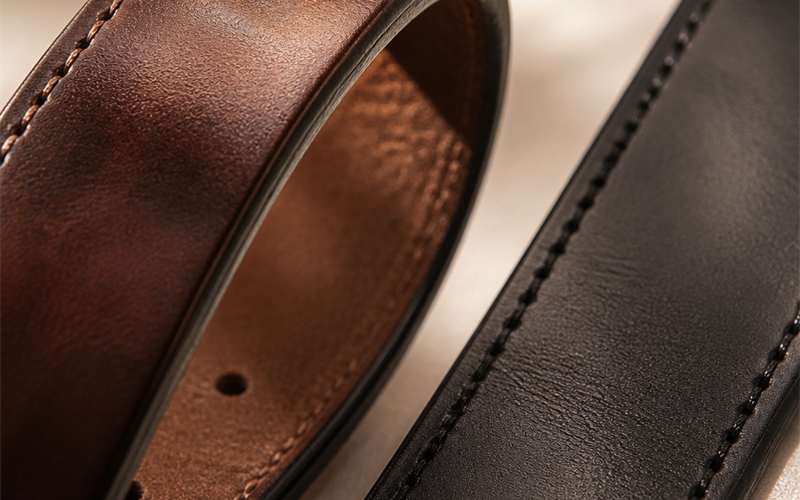
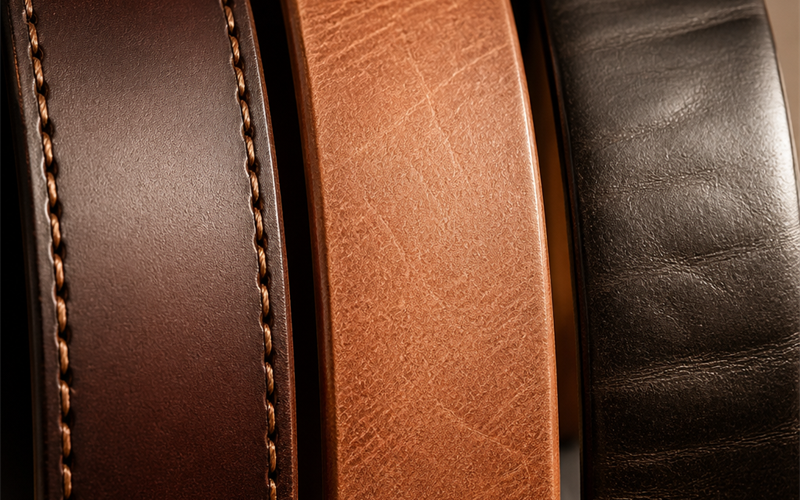
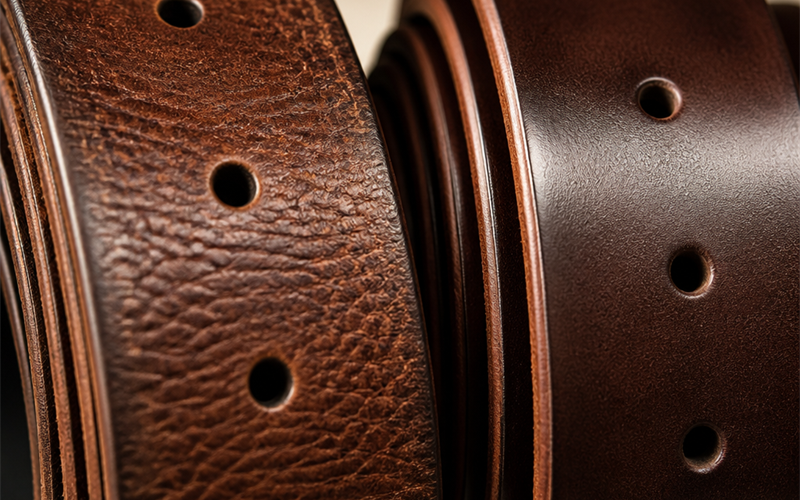
The difference is immediately obvious in the hand. Chromexcel feels soft, supple, and warm — almost waxy — with a visible oil-rich sheen and a slight greasiness. Bend it sharply and the bend lightens (the pull-up effect); flatten it and the color returns. English Bridle feels firm, smooth, and dry-to-the-touch (despite being stuffed with tallow), with a matte to semi-matte finish. Bend it and the leather creases cleanly without lightening — no pull-up effect because the fats sit deeper in the hide.

The visual personality is opposite. Chromexcel looks dramatic — it photographs well, shows daily wear visibly, and develops character fast (sometimes within weeks). English Bridle looks dignified — it photographs as quiet and confident, shows wear slowly, and develops a low gloss patina that takes years. Chromexcel reads American heritage workwear; English Bridle reads English-school formal-craft heritage.
Which is more durable?
Both are extremely durable, but in different ways. Chromexcel is more flex-tolerant — the oil-soaked fibers absorb constant bending and stretching without cracking, which is why it's the standard for boot uppers. It's also more forgiving of moisture, since the oils displace water. English Bridle is more tension-tolerant — it holds shape under load, doesn't stretch out at high-stress points, and resists abrasion exceptionally well, which is why it survives in horse tack.
For a belt specifically, both work for decades. Chromexcel will visibly age — scratches show, the pull-up effect deepens over time, and the leather softens further. English Bridle will age subtly — surface stays smooth, color deepens gradually, the belt looks five years old when it's actually fifteen. Both can be restored and reconditioned, the techniques just differ slightly.
Chromexcel vs English Bridle at a glance
| Factor | Horween Chromexcel | English Bridle |
|---|---|---|
| Tannage | Combination (chrome + veg) | Pure vegetable (oak typical) |
| Tannery (US) | Horween (Chicago) | Wickett & Craig, Hermann Oak |
| Finishing | Hot-stuffed oils/greases/waxes | Curried with tallow + waxes (inside out) |
| Feel | Soft, supple, oily, warm | Firm, smooth, dry-to-touch |
| Sheen | Glossy, oil-rich | Matte to low semi-gloss |
| Pull-up effect | Yes, dramatic | No |
| Patina speed | Fast (weeks) | Slow (months to years) |
| Flex tolerance | Excellent (used in boots) | Very good |
| Tension tolerance | Good | Excellent (used in tack) |
| Belt category | Casual, rugged, heritage | Dress, formal, heritage-craft |
| Common thickness (belts) | 3.5–4.5mm | 4.0–5.0mm |
| Care | Conditioner sparingly | Tallow/wax-based conditioner |
Which one is dressier?
English Bridle, clearly. Its low-glare finish and firm structure read formal — it sits flat under a suit, the buckle doesn't sink into oil-soft leather, and the matte surface doesn't compete with polished dress shoes. Chromexcel's oil-rich sheen and softness read casual by default; it's the leather of boots and chinos, not of strict business attire.

The look is the dress code signal. If you're choosing one for a dress belt rotation, English Bridle is the unambiguous answer. For casual or business-casual where you wear chinos and boots, Chromexcel comes into its own. Our dress belts collection leans toward firmer, dressier finishes; our casual belts collection includes options for the softer aesthetic.
Which one ages more interestingly?
It depends on what "interesting" means. Chromexcel ages fast and visibly — within weeks you see darkening at flex points, scratches that work into the surface, and the pull-up effect deepening into permanent variation. English Bridle ages slowly and subtly — the surface stays smooth, the color deepens uniformly, and the belt looks like it's been quietly improving in a drawer.
Two different aesthetic philosophies. Chromexcel rewards visible character — the belt's history is on its surface within months. English Bridle rewards patient ownership — the belt looks largely the same on day 30, day 365, and day 730, but increasingly refined as years pass. Neither is "better" — they're built around opposite ideas of what a great leather belt should show. Our patina-rich pieces lean toward the visible-character aesthetic; our dress belt range leans toward the quiet aesthetic.
Which one is for casual vs formal?
A clean split. Chromexcel lives in the casual zone — paired with denim, chinos, work boots, sneakers, chukkas, casual sport coats, and weekend outfits. The soft hand and dramatic pull-up are visual cues that read relaxed. English Bridle lives in the dress and business zone — paired with suits, polished oxfords, dress trousers, blazers, and refined business-casual. The firm structure and matte finish read formal and intentional.

The width also matters. Chromexcel belts are typically made at 1.5" (38mm) for the casual market, while English Bridle belts are often made at 1.25"–1.38" (32–35mm) for dress use. The width reinforces the dress code, and the leather completes it. We unpack belt width philosophy in the ultimate guide to standard belt width in MM.
What about price?
Both are premium leathers; prices are comparable. A quality Chromexcel belt typically runs $80–$200; a quality English Bridle belt runs in the same range, sometimes slightly higher because of the longer tannery process. Designer markup is the bigger price variable than the leather — a designer Chromexcel belt and a designer English Bridle belt can both run $300–$500 with most of the price being brand tax. DTC pricing reflects the actual leather cost more honestly.
These leathers reward fair pricing. Chromexcel and English Bridle both have cult followings precisely because the materials are extraordinary; buying at DTC pricing means you're paying for the leather, not the brand. Our full-grain leather belts include heritage tannages at fair pricing without the designer premium.
How do you care for each?
Different products, similar philosophy. Chromexcel is already oil-rich, so it needs less frequent conditioning — a small amount of neutral leather conditioner once or twice a year is enough. Over-conditioning Chromexcel makes it gummy. English Bridle is wax-stuffed, so it benefits from a tallow- or wax-based conditioner (a hand-applied wax dressing) once or twice a year — this replenishes the curing fats and keeps the leather from drying out.

Both benefit from minimal intervention. Aggressive conditioning destroys the character of either leather. Wipe with a damp cloth to clean, condition modestly when the leather feels dry, and let the belt do its own work. Our leather care page covers the general approach.
The Bottom Line
Horween Chromexcel and English Bridle are both legendary leathers — they just point in different directions. Chromexcel is the soft, oil-rich, dramatic-patina leather built for casual heritage belts and boots. English Bridle is the firm, matte, quiet-patina leather built for dress belts and refined craft pieces. Neither is universally better; the right answer is the one that matches your wardrobe and your aesthetic. For a casual or business-casual life, Chromexcel sings. For dress and formal use, English Bridle is the unambiguous choice. Own both if your wardrobe spans both worlds. At BELTLEY, we source heritage tannages for the styles where each one belongs — paired with solid hardware, hand-finished edges, and a 10-year warranty. Ready to start with one of the great heritage leathers? Browse our full-grain leather belts or dress belts.
Frequently Asked Questions
Q: What's the difference between Chromexcel and English Bridle?
Chromexcel is combination-tanned (chrome + vegetable) and hot-stuffed with oils — soft, supple, with a dramatic pull-up effect. English Bridle is fully vegetable-tanned and curried with tallow and waxes — firm, smooth, low-glare. Chromexcel is casual; English Bridle is dressy.
Q: Which patinas faster, Chromexcel or English Bridle?
Chromexcel. It develops visible character within weeks — darkening at flex points, pull-up deepening into permanent variation, scratches integrating into the surface. English Bridle patinas much more slowly and subtly over months to years.
Q: Is Chromexcel real leather?
Yes — it's premium combination-tanned leather from the Horween Leather Company in Chicago. The chrome step adds softness and reduces tanning time; the vegetable step adds body and natural feel; the hot-stuffing adds the oil-rich character. It's one of the most respected heritage leathers in the world.
Q: Which is better for a dress belt?
English Bridle. Its firm structure and matte finish sit flat under a suit and pair correctly with polished dress shoes. Chromexcel's soft oil-rich sheen reads too casual for strict dress wear — better with chinos and boots.
Q: How do you care for a Chromexcel or English Bridle belt?
Both benefit from minimal care. Wipe clean with a damp cloth; condition modestly only when the leather feels dry — neutral conditioner for Chromexcel (once or twice a year), tallow- or wax-based dressing for English Bridle (similar frequency). Over-conditioning damages both.
%20leather%20hot-stuffed%20with%20oils%20and%20waxes,%20producing%20a%20soft,%20supple,%20oil-rich%20leather%20with%20a%20dramatic%20pull-up%20effect%20%E2%80%94%20w...)