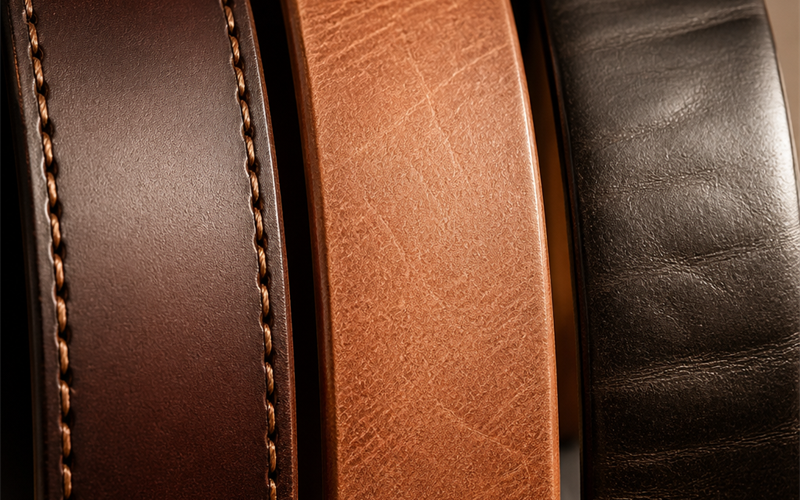
Wickett & Craig vs Hermann Oak vs Horween: The US Tannery Showdown
Quick answer: Three of America's oldest and most respected leather tanneries each have a distinct identity. Wickett & Craig (Pennsylvania, 1867) is the classic English Bridle and harness specialist — firm, dressy, refined heritage leather. Hermann Oak (St. Louis, 1881) is the dense saddlery and skirting specialist — built for tack, holsters, and rugged heritage belts. Horween (Chicago, 1905) is the specialty-tannage house — famous for Chromexcel, Shell Cordovan, and unique combination-tanned leathers. All three are world-class; the right one depends on what you want your belt to be.
Last updated: May 2026 • By BELTLEY Editorial
TL;DR:
- Wickett & Craig = English Bridle, refined dress leather, dignified patina.
- Hermann Oak = dense saddlery and harness leather, rugged heritage feel.
- Horween = specialty tannages (Chromexcel, Shell Cordovan), bold character.
- All three are full-grain, vegetable-tanned (or combination), and built for decades of wear.
The American heritage leather conversation effectively starts with these three tanneries. They're the houses behind nearly every "made in USA" leather goods brand worth knowing — and yet most buyers can't tell them apart. The differences are real and matter: each has a distinct leather style, a heritage market they were built for, and a sweet spot in your wardrobe. Below is the long-form comparison and the right pick for each belt purpose. For the broader American-vs-Italian framing, see American vs Italian full-grain leather belts.
Three Tanneries, One Buying Decision
The showdown, resolved by your use:
| Your situation | Go with |
|---|---|
| Refined dress-leaning heritage belt | Wickett & Craig English Bridle — the dressiest of the three traditions. |
| Rugged, holster-grade, dense | Hermann Oak — saddlery DNA, built for structural duty. |
| Character, pull-up, conversation piece | Horween Chromexcel — the cult tannage with the lighter-when-bent magic. |
| Tannery-grade quality, DTC budget | The spec these names guarantee — full-grain veg-tan, solid hardware — exists from $58 without the name premium. |
The spec without the surcharge: BELTLEY's full-grain belts.
Who is Wickett & Craig?
Wickett & Craig is one of the oldest vegetable tanneries in America, founded in 1867 in Toronto and relocated to Curwensville, Pennsylvania in 1990, where it still operates. The tannery specializes in English Bridle, harness, and pure vegetable-tanned leather, using oak bark and traditional slow-tanning methods. Wickett & Craig is the tannery most often named when refined heritage menswear brands say "American veg-tan."

The English Bridle specialty is the headline. Wickett & Craig's English Bridle is the U.S. standard for the tannage — firm, smooth, low-glare, hand-stuffed with tallow and waxes during currying. It's used in dress belts, bridles, holsters, and high-end leather goods that need a refined, dignified leather. The tannery's other major output is harness leather, used in saddlery and heavier work goods. We compare English Bridle's signature look in detail in Horween Chromexcel vs English Bridle for belts.
Who is Hermann Oak?
Hermann Oak Leather Company was founded in 1881 in St. Louis, Missouri, and is one of the last full-line vegetable tanneries in the United States — still operating from the same city after 145 years. The tannery specializes in dense, firm vegetable-tanned leather for saddlery, harness, holsters, skirting, and rugged heritage goods. Hermann Oak is the workhorse of the American leather world, supplying saddleries and Western leather brands across the country.
The saddlery roots are unmistakable. Hermann Oak leather is built to take hard tension, repeated wet/dry cycles, and decades of friction — the kind of demands that horse tack imposes. For belts, this translates into dense (often 4.5–5mm) leather with an extremely firm temper, restrained color, and a slow patina that develops into a deep, work-worn character over years. It's the leather of double layer belts, heavy-duty work belts, and rugged heritage pieces. Less dramatic than Horween's specialty tannages; more refined than commodity leather.
Who is Horween?
The Horween Leather Company was founded in 1905 in Chicago by Isidore Horween, a Ukrainian immigrant, and is still owned and operated by the same family — now in its fifth generation. Horween is one of America's most famous tanneries, primarily because of two specialty tannages: Chromexcel (combination-tanned, hot-stuffed, oil-rich, dramatic pull-up) and Shell Cordovan (made from horse rumps using a months-long process, producing the world's most expensive and prized leather for shoes).

The specialty identity is the brand. Horween isn't trying to be the heritage saddlery tannage — that's Wickett & Craig and Hermann Oak's territory. Horween is the house of characterful, theatrical leathers: Chromexcel for boots and casual goods, Shell Cordovan for high-end shoes, Dublin (a wax-stuffed pull-up English-style tannage) for refined casual leather. Horween also makes the famous orange leather that wraps every NFL football and the leather used in NBA basketballs. For belts, Chromexcel and Dublin are the relevant Horween leathers.
Key stat: All three of these tanneries have been operating for over 100 years — Wickett & Craig since 1867 (159 years), Hermann Oak since 1881 (145 years), and Horween since 1905 (121 years). Their continuity is itself a rare credential in the modern leather industry.
How do the three compare on leather style?
The personalities split cleanly. Wickett & Craig = refined dress and bridle leather. Hermann Oak = dense saddlery and rugged heritage. Horween = bold, characterful, often theatrical specialty leathers. If you imagine three menswear stereotypes — the dress shoe enthusiast, the rancher, the heritage-boots aficionado — they correspond roughly to the three tanneries.
Belt thickness also differs. Wickett & Craig belts often run 3.5–4mm for English Bridle dress straps; Hermann Oak belts often run 4–5mm for heavy work or double-layer belts; Horween Chromexcel belts often run 3.5–4mm with the soft hand of a saddle leather. The thickness isn't strictly tannery-determined — it's chosen by the leather goods maker — but each tannery's output lends itself to certain thicknesses.
Wickett & Craig vs Hermann Oak vs Horween: at a glance
| Factor | Wickett & Craig | Hermann Oak | Horween |
|---|---|---|---|
| Founded | 1867 (Pennsylvania) | 1881 (St. Louis) | 1905 (Chicago) |
| Signature tannage | English Bridle | Saddlery / Harness | Chromexcel, Shell Cordovan |
| Tanning method | Vegetable (oak) | Vegetable (oak) | Combination (chrome + veg) |
| Finishing | Curried, tallow-stuffed | Standard veg-tan | Hot-stuffed oil/grease/wax |
| Temper | Firm, refined | Very firm, dense | Soft, supple, oil-rich |
| Sheen | Matte, low-glare | Restrained, natural | Glossy, pull-up dramatic |
| Patina speed | Slow, subtle | Slow, deep | Fast, theatrical |
| Best for | Dress belts, formal | Heritage / work belts | Casual heritage, boots |
| Designer associations | Heritage leather brands | Saddleries, holsters | Alden, Red Wing, Viberg |
| Belt thickness (typical) | 3.5–4mm | 4–5mm | 3.5–4mm |
Which one is best for a dress belt?
Wickett & Craig — by a wide margin. Their English Bridle is the U.S. dress-belt standard: firm, smooth, low-glare, refined. It sits flat under a suit, holds a clean fold, and pairs correctly with polished dress shoes. Hermann Oak is too rugged for strict dress wear (its density reads work-belt); Horween Chromexcel is too soft and glossy (the pull-up sheen reads casual).

The look matches the dress code. A dress belt's job is to be quiet and correct — Wickett & Craig delivers that without compromise. Our dress belts collection leans toward this aesthetic: matte to semi-matte finishes, firm structure, restrained color. If you only own one premium dress belt, Wickett & Craig English Bridle is the right American tannage to look for.
Which one is best for a casual / heritage belt?
Horween Chromexcel — for theatrical character — or Hermann Oak — for rugged heritage. Chromexcel is the casual-belt leather of choice for menswear enthusiasts who want visible patina, dramatic pull-up, and immediate character. Hermann Oak harness or skirting leather is the choice for rancher-aesthetic belts and double-layer work belts that hold heavy buckles and age into work-worn classics.
Choose based on the personality. Chromexcel says "I want my belt to look characterful in three months." Hermann Oak says "I want my belt to look like it has been doing real work for years." Both are great. Our casual belts collection includes options that fit either philosophy, and our double layer belts lean toward the Hermann Oak structural standard.
Which one is best for a statement / rare belt?
Horween Shell Cordovan — if you can find it, and if you can afford it. Shell Cordovan is made from the dense fibrous "shell" of horse rumps, a months-long process producing leather of remarkable density, durability, and depth. It's most often used for high-end dress shoes (Alden's bestseller), but Shell Cordovan belts exist — they're rare, expensive ($300–$500+ at fair pricing), and considered one of the great leathers in the world.

Specialty Horween tannages also include Dublin (wax-stuffed pull-up, more refined than Chromexcel), Essex (smooth, vegetable-tanned), and various proprietary leathers. These are the kinds of leathers serious enthusiasts seek out — small-run, characterful, often associated with specific bootmakers or leather goods houses. Our unique belts collection includes rare-leather options when the artisan supply allows.
BELTLEY 3-Material Rule
The 3-Material Rule = full-grain leather + stainless or solid brass buckle + sealed (painted or burnished) edges. All three of these tanneries produce full-grain leather that clears the first leg of the rule by a wide margin. Pair their leather with solid hardware and proper edge finishing and you have a belt that satisfies the rule for decades. The choice between the three is purely about style and use — none is "lower quality" than the others; they're each the best in their lane.
What does each cost?
All three sit in similar premium tiers. A belt made from any of the three at fair DTC pricing typically runs $100–$250, depending on construction, hardware, and edge finishing. Designer brands using the same leathers can sell belts at $300–$600 with most of the markup being brand tax — see why are designer belts so expensive. Shell Cordovan is the genuine outlier — even at fair pricing, a Shell Cordovan belt is $300+.
The leather cost is real but not the dominant variable. A square foot of premium full-grain veg-tan or specialty tannage leather costs noticeably more than commodity chrome-tanned leather, but it doesn't account for 3x or 5x markups on retail belts. DTC pricing on heritage leather belts is the fair-value zone — you're paying for the leather, the construction, and a reasonable margin.
Which one is best overall?
Wrong question — they're each best at different jobs. If you want a refined dress belt: Wickett & Craig English Bridle. If you want a rugged heritage work belt: Hermann Oak harness/skirting. If you want a dramatic casual heritage belt: Horween Chromexcel. If you want a once-in-a-lifetime statement belt: Horween Shell Cordovan.

The honest two-belt rotation is a Wickett & Craig dress belt + a Horween Chromexcel casual belt. The honest one-belt-for-life choice is harder — Hermann Oak's middle ground works if your daily wear is casual-to-business-casual. We unpack the one-belt question in the one belt wardrobe test.
The Bottom Line
Wickett & Craig, Hermann Oak, and Horween aren't really competitors — they're three corners of the American heritage leather world. Wickett & Craig sets the standard for refined English Bridle and dress leather. Hermann Oak sets the standard for dense saddlery and rugged heritage. Horween sets the standard for specialty character leathers — Chromexcel for casual, Shell Cordovan for the rare and reverent. All three are world-class, all three are full-grain at their best, and all three produce leather built for decades of wear. The right one for your belt depends on which corner of the wardrobe you're filling. At BELTLEY, we work with heritage tannages where the style demands it — paired with solid hardware, hand-finished edges, and a 10-year warranty. Ready to start with a belt built from American heritage leather? Browse our full-grain leather belts or men's collection.
Frequently Asked Questions
Q: Which American tannery makes the best dress belt leather?
Wickett & Craig — their English Bridle is the U.S. standard for refined dress leather. Firm, smooth, low-glare, and built to sit cleanly under a suit. Hermann Oak is too rugged and Horween Chromexcel too casual for strict dress use.
Q: What's special about Horween Chromexcel?
It's a proprietary combination-tanned leather (chrome + vegetable) that's hot-stuffed with oils, greases, and waxes through an 89-step process. The result is a soft, supple, oil-rich leather with a dramatic pull-up effect — when bent, the surface lightens at the bend. It's the cult casual leather of American heritage menswear.
Q: Is Shell Cordovan worth the price?
For enthusiasts and people who genuinely love rare leather, yes. Shell Cordovan is made from horse rump shells through a months-long process — extraordinarily dense, deep, and durable, and it ages into something unlike any other leather. The price is justified by the process; it's not designer markup.
Q: Are Hermann Oak belts only for Western or work styles?
Mostly, but not exclusively. Hermann Oak's dense saddlery and harness leather is the right choice for rugged, work-leaning, or Western heritage belts — but it also makes excellent refined heritage casual belts at slightly thinner cuts. It's not the dress-belt choice, but it's versatile across casual styles.
Q: How can I tell which tannery a belt's leather comes from?
Good brands name the tannery on the product page — Wickett & Craig, Hermann Oak, Horween, or "Italian veg-tan." If the brand doesn't name the leather source, it's usually a commodity chrome-tanned leather without a heritage tannery story.

%20is%20the%20classic%20English%20Bridle%20and%20harness%20speci...)