Is Full-Grain Leather Waterproof? And What to Do If It Gets Wet
Quick answer: No — full-grain leather is water-resistant, not waterproof. The dense top-grain fiber structure and natural oils repel light water exposure for short periods, but soaking, prolonged rain, or full immersion will saturate the leather. If your belt gets wet: blot (don't rub), air-dry slowly at room temperature away from heat, and condition lightly after it's fully dry. The mistakes that ruin wet leather are heat (radiators, hair dryers, sunlight) and rushing the drying process.
Last updated: May 2026 • By BELTLEY Editorial
TL;DR:
- Full-grain leather = water-resistant, not waterproof.
- Light rain or splash: usually no damage if you let it dry slowly.
- Soaked or saturated: still recoverable if you dry at room temperature, not with heat.
- Heat is the killer — never use a hair dryer, radiator, or direct sun to speed drying.
The "waterproof leather" question comes up a lot, and the honest answer disappoints some buyers: no leather is truly waterproof. Full-grain leather handles water far better than corrected-grain or genuine leather, and oil-stuffed tannages (Chromexcel, latigo, harness leather) handle it best of all — but they're still water-resistant, not waterproof. The good news: a wet full-grain belt is almost always recoverable if you dry it slowly. The bad news: most people make the same wet-leather mistakes that turn a temporary problem into permanent damage. Below is the honest answer and the safe recovery process. For broader care, see our leather care page.
Why isn't leather waterproof?
Because leather is, at the cellular level, a network of protein fibers — and water flows between fibers given enough time. The top-grain layer of a finished full-grain hide is dense and oil-treated enough to repel light water (a splash, a rain shower, a quick spill), but prolonged contact saturates the leather just as it would saturate any natural fiber. Even heavily oil-stuffed leathers (latigo, harness, Chromexcel) eventually take on water under sustained exposure.

The water resistance comes from finishing, not the hide itself. Leather is a hide treated to become durable, and the tanning and finishing steps (oiling, waxing, sealing) determine how water-resistant the final product is. A wax-finished English Bridle belt is more water-resistant than a bare crust leather belt; an oil-stuffed latigo belt is more water-resistant than a chrome-tanned dress belt. But none of these qualify as "waterproof" the way rubber or PVC does.
What happens when leather gets wet?
The fibers absorb water, the leather temporarily darkens, and the hide softens. If the leather dries naturally at room temperature, it returns to roughly its original state — sometimes with subtle water marks where the soaking was uneven. If the leather dries too fast (with heat or direct sun), the fibers shrink and harden as they dry, leading to cracking, stiffness, and permanent damage. Heat is what turns "wet leather" into "ruined leather."
The damage pattern is consistent. Wet leather + heat = cracking and stiffening at the dried zones, often visible within hours and irreversible. Wet leather + slow room-temp drying + light conditioning afterward = full recovery with minimal long-term effect. The process you choose in the first hour after the leather gets wet determines whether the belt survives.
Key stat: Heat-dried wet leather can lose 20–40% of its flexibility as the fibers shrink and harden during rapid drying. Room-temperature drying preserves the leather's structure almost entirely — the recovery is the difference between a salvaged belt and a ruined one.
What should you do if your leather belt gets wet?
A four-step recovery. (1) Blot, don't rub — press a clean dry cloth or paper towel against the wet leather to absorb surface water. Rubbing pushes water deeper into the fibers and can disturb the finish. (2) Air-dry at room temperature — lay the belt flat on a clean towel in a normal-temperature room, away from heat, sunlight, and forced air. (3) Reshape gently — if the leather has stretched or curled, gently smooth it flat as it dries. (4) Condition lightly after fully dry — once the belt is completely dry (usually 24–48 hours), apply a small amount of leather conditioner to replenish any oils the water displaced.

The fast version is "blot, wait, condition." Don't apply conditioner while the leather is still wet (you'll trap water in the fibers); don't use heat (you'll cause cracking); don't rush (you'll do damage that takes years to undo). Patience is the entire technique. Our leather care page covers conditioning in detail.
Wet-leather recovery do's and don'ts
| Do | Don't |
|---|---|
| Blot with dry cloth | Rub or scrub the surface |
| Air-dry at room temperature | Use hair dryer, radiator, or sunlight |
| Lay flat on a towel | Hang while wet (can stretch) |
| Reshape gently while drying | Force the leather flat with weight |
| Wait until fully dry to condition | Apply conditioner to wet leather |
| Condition lightly once dry | Over-condition (creates dark spots) |
| Accept minor water marks as character | Try to "fix" water marks aggressively |
What about water spots?
They're often more cosmetic than serious. Water spots are darker patches on the leather where water absorbed unevenly. On finished full-grain leather, light water spots often fade as the leather fully dries and the moisture redistributes. On crust leather or some lightly-finished veg-tans, water spots can be permanent — those leathers darken permanently anywhere water touches.

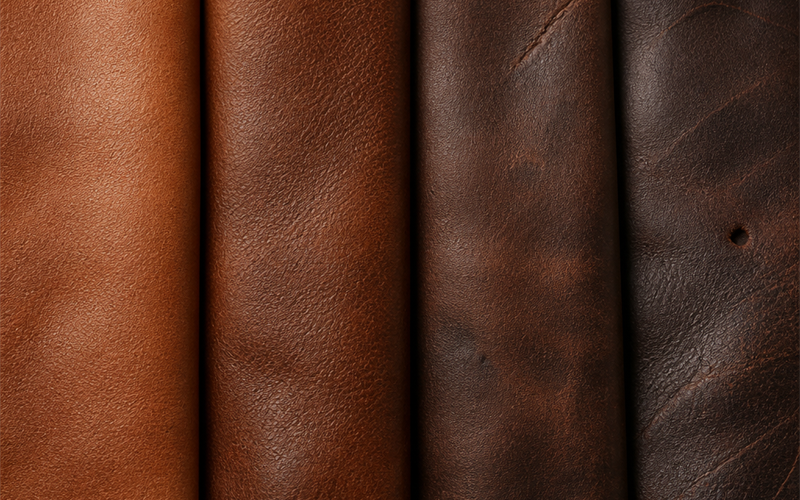
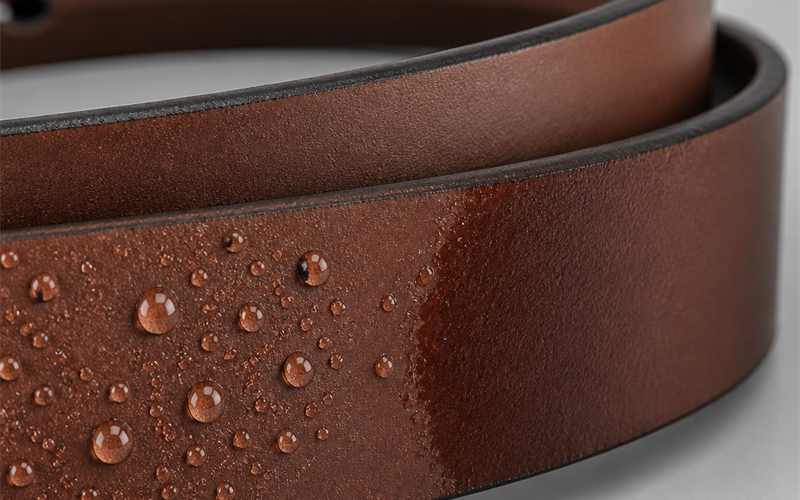
The water-spot risk depends on the tannage. Oil-stuffed leathers (Chromexcel, latigo, harness) are highly resistant — water beads up rather than absorbing. Wax-finished leathers (English Bridle) are also resistant — the wax surface acts as a barrier. Lightly finished veg-tans and crust leather are vulnerable — see crust leather vs finished full-grain. For maximum water resistance in a real-life-friendly belt, choose oil-stuffed or wax-finished tannages.
Which leathers are most water-resistant?
Three stand out. (1) Latigo — combination-tanned and heavily oil-stuffed; near the top of the water-resistance scale; see latigo leather belts explained. (2) Harness leather — vegetable-tanned and curried with heavy oils; built for equestrian weather exposure. (3) English Bridle — wax-finished surface acts as a moisture barrier. All three originated in equestrian use specifically because horses and weather are inseparable.
Less water-resistant choices include: crust leather (the most vulnerable — water spots are usually permanent), pure veg-tan without oil stuffing, and most chrome-tanned dress leathers (better than crust but not as protected as oil-stuffed). For outdoor or weather-prone use, choose oil-stuffed or wax-finished leather. We dig into the choices in saddle vs harness vs bridle leather.
Can you treat leather to make it more waterproof?
Somewhat. Specialty leather waterproofing sprays (silicone-based or wax-based) can be applied to add a temporary water-resistant layer. These products work for a few months, then need re-application. They don't make the leather waterproof, but they can take a moderately water-resistant belt closer to "shrug off rain" territory.

The trade-off is finish change. Some waterproofing treatments dull or change the leather's natural sheen, and they can interfere with patina development on pull-up leather. For a belt you wear in heavy weather regularly, treatment is a reasonable choice. For a dress belt or a treasured pull-up belt, leave the leather alone and rely on its natural water resistance.
What about leather that's been soaked for hours?
Still usually recoverable, but care matters more. A leather belt that fell in a pool or got drenched in a storm and stayed wet for hours can still be saved if you act quickly: blot heavily, lay flat at room temperature, accept that drying will take longer (sometimes 3–5 days), and condition more thoroughly once fully dry. The leather may have stretched slightly; gentle reshaping during drying helps.

The risk multiplies with time. A belt wet for 30 minutes is essentially fine with normal recovery. A belt soaked for 12+ hours is at higher risk of permanent stiffening, color change, and structural fiber damage — and may need professional restoration if it's a valuable piece. We cover the assessment side in how to tell if a belt can be restored or tossed.
The Bottom Line
Full-grain leather isn't waterproof — it's water-resistant, and the level of resistance depends on the tannage and finishing. Light rain, splashes, and brief wet conditions are usually no problem. Sustained soaking, full immersion, or hours of saturation can cause damage if you don't manage the drying correctly. The single most important rule: never use heat to dry wet leather. Blot, air-dry slowly at room temperature, and condition lightly after it's fully dry. Done right, even a thoroughly soaked belt usually survives. For maximum real-world water resistance, choose latigo, harness, or English Bridle leather — and accept that no leather is fully waterproof. At BELTLEY, we make our full-grain leather belts with weather-friendly tannages where the style supports it, backed by a 10-year warranty. Ready for a belt that handles real life? Browse our men's collection.
Frequently Asked Questions
Q: Is full-grain leather waterproof?
No — it's water-resistant, not waterproof. The dense top-grain fibers and natural oils repel light water exposure, but prolonged soaking will saturate the leather. Oil-stuffed and wax-finished tannages (latigo, harness, English Bridle) are the most water-resistant, but none are truly waterproof.
Q: What should I do if my leather belt gets wet?
Blot with a dry cloth, air-dry at room temperature (no heat or direct sun), and condition lightly once fully dry — usually 24–48 hours later. Never use a hair dryer, radiator, or direct sunlight to speed drying; heat causes the leather to shrink, harden, and crack.
Q: Will water spots come out of leather?
On finished full-grain leather, often yes — light water spots usually fade as the leather fully dries and the moisture redistributes. On crust leather or lightly finished veg-tan, water spots are often permanent. Oil-stuffed leathers (latigo, Chromexcel) tend to resist water spotting almost entirely.
Q: Can I waterproof a leather belt?
Somewhat. Silicone- or wax-based leather waterproofing sprays add a temporary water-resistant layer that lasts a few months. They don't make leather fully waterproof, and they can dull the surface or interfere with patina development. For weather-prone use, the spray is reasonable; for dress belts, leave the leather alone.
Q: What's the worst thing to do with wet leather?
Apply heat. A hair dryer, radiator, or direct sunlight dries the leather too fast, causing the fibers to shrink and harden — leading to cracking, stiffening, and permanent damage. Air-dry slowly at room temperature instead, even if it takes a few days.