How to Clean a Full-Grain Leather Belt Without Killing the Patina
Quick answer: To clean a full-grain leather belt without damaging the patina, wipe it down with a slightly damp clean cloth — just water or a drop of mild pH-neutral soap (saddle soap or castile soap) on the cloth, never directly on the leather. Wipe gently along the grain, never scrub. Pat dry with a clean cloth, then let air-dry at room temperature for 30-60 minutes. Light conditioning after fully dry is optional. Avoid: harsh detergents, alcohol, baby wipes, leather "cleaners" containing solvents — these strip the patina along with the dirt.
Last updated: May 2026 • By BELTLEY Editorial
TL;DR:
- Light cleaning: damp clean cloth, wipe gently, air-dry at room temperature.
- Deep cleaning: drop of mild pH-neutral soap on the cloth (never directly on the leather).
- Wipe along the grain, never scrub aggressively, never use hot water.
- Avoid: alcohol, harsh detergents, "cleaning wipes," solvent-based products.
- Patina lives in the surface fibers — gentle cleaning preserves it; aggressive cleaning strips it.
A full-grain leather belt develops patina over years of wear — darker tones where it flexes, lighter highlights where it catches light, subtle color depth that takes decades to build. Most leather "cleaning" guides online recommend products and methods that strip exactly that patina along with surface dirt. The honest answer is that real leather cleaning is gentler and simpler than most tutorials suggest. Below is the protocol that cleans dirt without sacrificing character. For broader care, see our leather care page.
What is patina, and why does it matter?
Patina is the surface character a leather belt develops with age. Over years of wear, the leather surface accumulates a complex layer of micro-scratches, oil absorption, color variation, and subtle polish — the visual result of real life on real material. A 10-year-old full-grain belt has darker tones at the flex points, lighter highlights at the buckle, and a depth of color the original leather never had. That's patina, and it's the entire reason full-grain leather is worth owning. See pull-up leather belts explained for the deeper aging mechanism.

Aggressive cleaning strips patina because the same scrubbing action that removes dirt also removes the oxidized surface oils, color migration, and natural finish that gave the belt its character. Once stripped, patina takes years to rebuild — and rarely rebuilds identically. Cleaning that preserves patina removes the dirt while leaving the surface character intact.
What's the safest way to clean a leather belt?
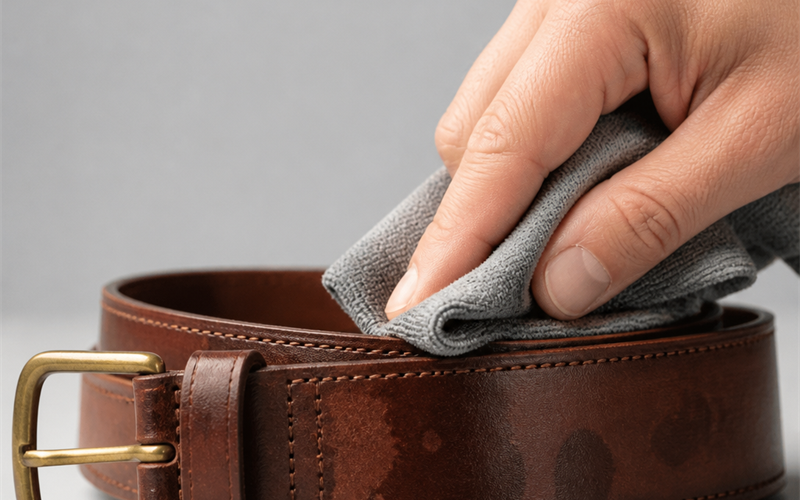
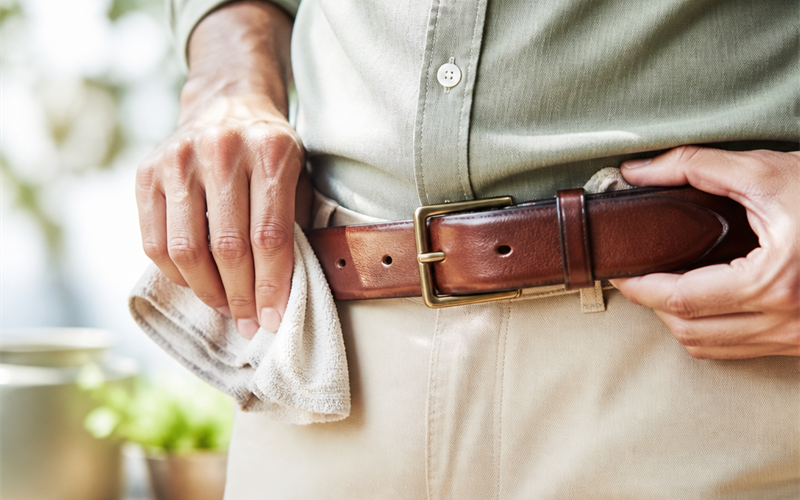
A four-step gentle process. (1) Wipe dry — use a clean dry cloth to remove surface dust and loose dirt. (2) Lightly damp wipe — dampen a clean cloth with plain water (just damp, not wet), wipe gently along the grain. (3) Pat dry — use a separate clean dry cloth to absorb surface moisture. (4) Air-dry — lay the belt flat at room temperature for 30-60 minutes before wearing again.

For most surface dirt, this four-step process is enough. The damp cloth lifts dust, oils, and surface contaminants without stripping the deeper patina layer. The key is "damp, not wet" — soaking the leather is the start of a different problem entirely. See is full-grain leather waterproof for water-damage recovery.
Key stat: A gently damp-cloth wipe removes roughly 70-90% of surface dirt on a leather belt while preserving the patina almost entirely. Aggressive scrubbing or chemical cleaners remove a similar amount of dirt but typically strip 20-40% of patina depth in the process — a tradeoff that takes years to undo.
What if light wiping doesn't get the dirt off?
Step up to mild soap, sparingly. For stubborn marks or deeper dirt: (1) put one drop of pH-neutral mild soap (saddle soap, castile soap, or pure Marseille soap) on a damp clean cloth — never put soap directly on the leather. (2) Wipe gently along the grain in the affected area only. (3) Wipe clean with a second damp cloth (no soap) to remove any residue. (4) Pat dry and air-dry as above.
The key is restraint — one drop of soap on the cloth, applied only to the dirty area, wiped off immediately. Heavy soap application strips oils and dries the leather. After any soap-based cleaning, the leather may feel slightly drier than usual; a light coat of conditioner 24-48 hours later restores moisture balance. See neatsfoot oil vs mink oil vs beeswax for the conditioner choice.
What to use vs what to avoid
| Use | Avoid |
|---|---|
| Clean dry cloth | Paper towels (can leave fibers, scratch) |
| Damp cloth with water | Baby wipes (often contain alcohol/preservatives) |
| pH-neutral mild soap (1 drop on cloth) | Dish soap, laundry detergent |
| Saddle soap or castile soap | Alcohol or hand sanitizer |
| Soft horsehair brush (for dust) | Stiff brush, scrub brush |
| Cotton or microfiber cloth | Rough rag, abrasive sponge |
| Room-temperature air-drying | Hair dryer, radiator, sunlight |
| Light conditioning after fully dry | Conditioning while still damp |
What should you never use on a leather belt?
Five common but destructive cleaners. (1) Alcohol or hand sanitizer — strips oils aggressively, dries the leather, can cause cracking. (2) Baby wipes — most contain alcohol, fragrances, or surfactants that strip patina. (3) Dish soap or laundry detergent — designed to remove oils; will strip the leather's natural lipids and the patina with them. (4) Solvent-based cleaners ("leather wipes" with chemicals, mineral spirits, etc.) — destroy finishes, strip patina. (5) Hot water — opens leather pores too aggressively, removes more than dirt.

Common-sense rule: if it would aggressively clean other surfaces (countertops, dishes, hands), it's too aggressive for leather. Leather cleaning should feel almost gentle to the point of seeming inadequate — that's the level of gentleness that preserves patina.
How often should you clean a leather belt?
Less often than you'd think. A light wipe-down every few months handles most belts in normal use. Heavy soap cleaning should be rare — maybe once a year, only when actually needed. Belts in work or outdoor use may need slightly more frequent cleaning, but even then, monthly is usually sufficient.

Over-cleaning is one of the most common patina-destroying mistakes. The instinct to "keep the belt clean" leads to weekly or daily wiping with cleaners that gradually strip the surface character. Less is more — leather belts benefit from being mostly left alone between rare gentle cleanings.
What about specific stains — ink, food, sweat?
Each gets a slightly different approach. (1) Ink stains — try a damp cloth first; if the ink doesn't lift, escalate carefully with one drop of mild soap. Ink that's set into the leather may be permanent; accept it rather than ruin the belt trying. (2) Food stains (oil, sauce) — blot immediately with a dry cloth, then clean as above. Don't rub. (3) Sweat marks or salt rings — these need specific water-spot treatment; see how to remove water stains, salt rings, and sweat marks.

For stubborn stains, accept that some marks become part of the belt's history. A belt that's been worn for 10 years has stories on its surface; not all of those stories need erasing. The belt looks better with its history visible than with the patina stripped away in pursuit of cleanliness.
The Bottom Line
Cleaning a full-grain leather belt without killing the patina is about restraint — gentle damp-cloth wipes for routine cleaning, one drop of mild pH-neutral soap on the cloth for stubborn dirt, and patience for full air-drying afterward. Avoid alcohol, baby wipes, dish soap, harsh detergents, solvent-based "leather cleaners," and hot water — all strip patina along with dirt. Clean infrequently (every few months at most for routine wipe-downs; rarely for soap-based deeper cleaning). The patina is the soul of a full-grain belt; preserve it by cleaning gently. BELTLEY's full-grain leather belts are designed to develop character over years of wear — backed by a 10-year warranty. Ready for a belt worth caring for properly? Start there.
Frequently Asked Questions
Q: Can I clean a leather belt with water?
Yes — a damp (not wet) clean cloth is the safest cleaning method for full-grain leather. Wipe gently along the grain, pat dry with a separate cloth, and air-dry at room temperature for 30-60 minutes. Avoid soaking the leather, hot water, and rubbing aggressively.
Q: What soap is safe for leather belts?
pH-neutral mild soaps — saddle soap, castile soap, or pure Marseille soap. One drop on a damp cloth, never directly on the leather. Avoid dish soap, laundry detergent, and antibacterial soaps; they strip leather's natural oils along with the dirt.
Q: Will cleaning my leather belt ruin the patina?
Gentle cleaning (damp cloth or one-drop-of-mild-soap method) preserves patina almost entirely; aggressive cleaning (alcohol, harsh detergents, solvent-based cleaners) strips it. The patina lives in the surface oil and color layer — gentle cleaning lifts dirt without disturbing it.
Q: How often should I clean my leather belt?
Less often than you think — a light damp-cloth wipe every few months handles routine maintenance. Heavy soap cleaning should be rare (once a year or less, only when actually needed). Over-cleaning gradually strips patina; under-cleaning rarely causes problems.
Q: Can I use baby wipes on a leather belt?
No — most baby wipes contain alcohol, fragrances, or surfactants that strip leather oils and damage patina. The "convenient cleaning wipe" approach is one of the most common patina-destroying mistakes. Use a plain damp cloth instead.