Can You Wash a Leather Belt? (What Actually Works)
Quick answer: No — never put a leather belt in the washing machine or submerge it in water. Machine washing and soaking saturate the leather, strip its oils, and cause it to stiffen, crack, warp, and discolor as it dries, often ruining the belt. To clean a leather belt safely, wipe it with a barely damp cloth and mild soap, then dry it slowly and condition it.
Last updated: June 2026 • By BELTLEY Editorial
TL;DR:
- Never machine-wash or soak a leather belt — it stiffens, cracks, and warps.
- Water strips the natural oils leather needs to stay supple.
- Clean it instead with a barely damp cloth + mild soap, then condition.
- The buckle, stitching, and edges also suffer in water; spot-clean, don't submerge.
It's a tempting shortcut: your leather belt is grimy or smells, so why not toss it in the wash with everything else? The answer is that water and leather are fundamentally at odds, and a wash cycle can turn a tired belt into a ruined one. This guide explains exactly what washing does to leather and the safe cleaning method that actually works. For the full routine, pair it with our leather care guide.

Can you put a leather belt in the washing machine?
No, never. A washing machine submerges the belt in water and agitates it, which saturates the leather, strips its essential oils, and causes severe stiffening, cracking, warping, and discoloration as it dries. The heat of a dryer afterward makes it worse. Machine washing is one of the fastest ways to destroy a leather belt.

The problem is fundamental to how leather works. Leather is a fiber structure kept supple by natural and added oils, and water flushes those oils out while swelling the fibers. When a soaked belt dries — especially fast, in a machine or dryer — the fibers seize up hard and brittle, and the shape distorts. The buckle can rust, the stitching can weaken, and dyed leather can bleed or blotch. There's no upside to it. The same logic applies to dishwashers and any full submersion. If your belt is dirty, the solution is targeted cleaning, not a wash cycle.
Why is water so bad for leather?
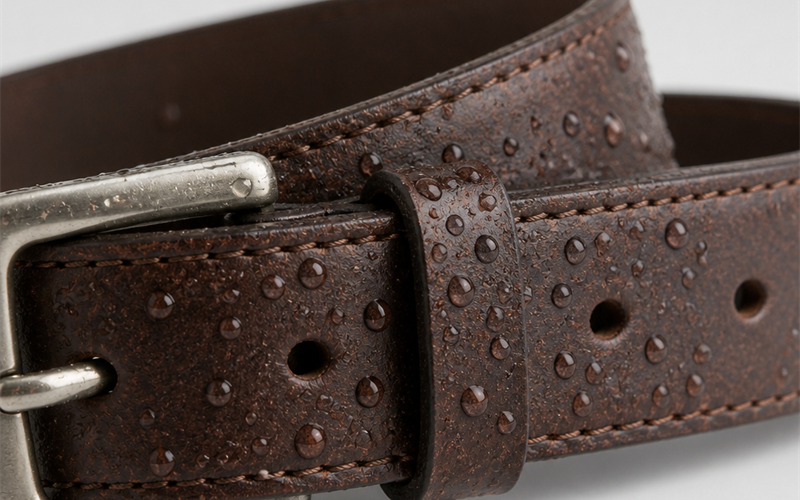
Because water strips the oils that keep leather flexible and swells its fibers, so as it dries the leather hardens, cracks, shrinks, and warps. Tanning makes leather water-resistant, not waterproof, so soaking overwhelms it. The damage is often permanent, particularly if the belt is dried with heat rather than slowly at room temperature.

Key stat: Tanning makes leather water-resistant, not waterproof — which is why a quick wipe is fine but full submersion in a wash cycle overwhelms the hide, flushing out oils and distorting the fiber structure as it dries.
Leather's relationship with water is all about degree. A damp wipe is harmless; a soak is destructive. The tanning process binds the hide's fibers and adds water resistance, but it never makes leather impervious — push enough water in and the structure suffers. Here's the contrast:
| Safe with leather | Harmful to leather |
|---|---|
| Barely damp cloth | Washing machine |
| Mild soap, wiped on | Full submersion/soak |
| Slow air-drying | Dryer or direct heat |
| Conditioning after | Leaving it wet (mold) |
If your belt does get soaked accidentally, the recovery method is slow air-drying and conditioning — covered in detail in our guide on drying a soaked leather belt. Prevention, though, is simply never washing it in the first place.
How do you clean a leather belt safely?
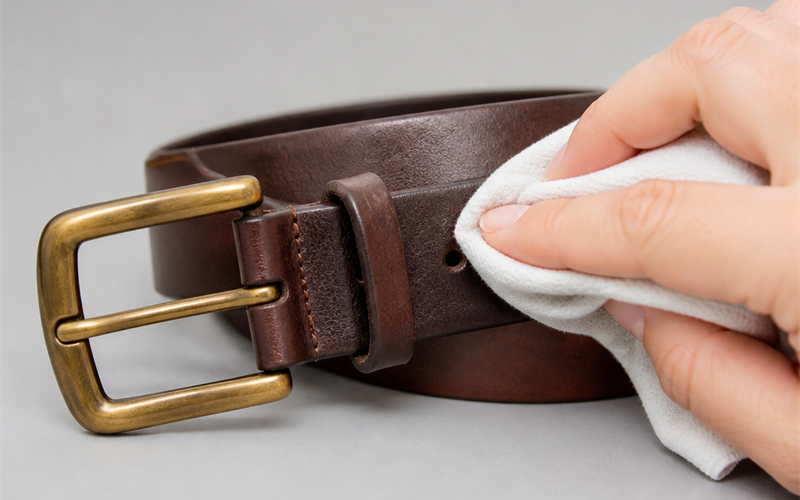
Wipe it down. Use a soft cloth lightly dampened with water and a small amount of mild soap to gently clean the surface, working in sections. Wipe off any residue with a barely damp clean cloth, let the belt air-dry slowly at room temperature, then condition it to restore oils. Spot-clean stains rather than washing the whole belt.

Safe cleaning is gentle and targeted. Damp, not wet, is the watchword — your cloth should be wrung out so it leaves no standing moisture. A mild soap lifts grime without harsh chemicals; saddle soap, made specifically to clean and condition leather, is ideal. Leather-care maker Pecard describes the same method — "dampen a soft cloth in the solution and gently wipe down the belt," remove soap residue, pat dry, then air-dry and condition — never submerge. Work in small sections, avoid soaking, and finish by conditioning once the belt is fully dry to replace any oils the cleaning removed. For specific problems — ink, oil, or mold — targeted methods work better than general washing, as covered in our guides on removing oil and grease stains and mold or mildew. This approach cleans effectively while keeping the leather healthy.
What if your leather belt smells or is very dirty?
Spot-clean and air it out rather than washing. For odor, wipe the belt with a barely damp cloth, let it air out in a ventilated spot, and condition it; for heavy grime, clean gently in sections with mild soap. If a belt is genuinely beyond gentle cleaning, a leather professional is safer than a washing machine.

Even a smelly or grubby belt is better served by patience than by water immersion. Odors often come from trapped sweat and bacteria, which airing out and a gentle wipe-down usually resolve — our piece on why a leather belt smells goes deeper. For stubborn dirt, repeated gentle cleaning beats one aggressive wash. And if a belt is truly filthy or damaged, a professional leather cleaner has the right tools and won't risk the warping and cracking a machine guarantees. A quality full-grain belt is worth that care; it's built to be cleaned and conditioned for decades, not laundered once and ruined. Find belts made to last in our full-grain leather belts collection.
The Bottom Line
Can you wash a leather belt? Not in any machine and not by soaking — water strips the oils leather depends on and leaves it stiff, cracked, warped, and discolored once it dries, with the buckle and stitching suffering too. The safe method is gentle and targeted: a barely damp cloth with mild soap, slow air-drying, and conditioning afterward, with specific stains handled by their own methods. Treat your belt like fine leather shoes, not laundry, and it stays supple for years. At BELTLEY, we build full-grain belts to be cleaned, conditioned, and worn for decades — never laundered. Keep yours healthy with our leather care guide and explore lasting options in our full-grain leather belts collection.
Frequently Asked Questions
Q: Can you put a leather belt in the washing machine?
No. A washing machine soaks and agitates the belt, stripping its oils and causing it to stiffen, crack, warp, and discolor as it dries — and a dryer makes it worse. It can also rust the buckle and weaken the stitching. Always spot-clean a leather belt instead of machine-washing it.
Q: What happens if a leather belt gets soaked?
Soaked leather loses its oils and swells, then hardens, cracks, and warps as it dries — especially with heat. If your belt does get soaked, blot it, air-dry it slowly at room temperature away from any heat source, and condition it once fully dry. Avoid soaking it in the first place.
Q: How do you clean a leather belt without ruining it?
Wipe it with a soft cloth lightly dampened with water and mild soap, working in small sections, then wipe off residue with a barely damp cloth. Let it air-dry slowly at room temperature and condition it afterward. Spot-clean stains with targeted methods rather than washing the whole belt.
Q: How do you get rid of the smell in a leather belt?
Wipe the belt with a barely damp cloth, let it air out in a ventilated spot, and condition it once dry. Odors usually come from trapped sweat and bacteria, which airing and gentle cleaning resolve. Avoid soaking or machine-washing, which damage the leather without reliably removing odor.