Leather Belt Got Soaked? How to Dry It Without Ruining It
Quick answer: If your leather belt got soaked, dry it slowly at room temperature — never with heat. Blot off excess water with a towel, lay the belt flat or hang it straight in a well-ventilated spot away from radiators, hairdryers, and direct sun, and let it air-dry fully over a day or two. Once dry, condition it to replace the oils the water stripped. Fast heat-drying is what cracks and warps wet leather.
Last updated: June 2026 • By BELTLEY Editorial
TL;DR:
- Blot, don't wring — remove surface water gently with a towel.
- Air-dry slowly at room temperature, flat or straight, with good airflow.
- Never use heat — radiators, hairdryers, and sun crack and warp wet leather.
- Condition once fully dry to replace stripped oils and prevent stiffness.
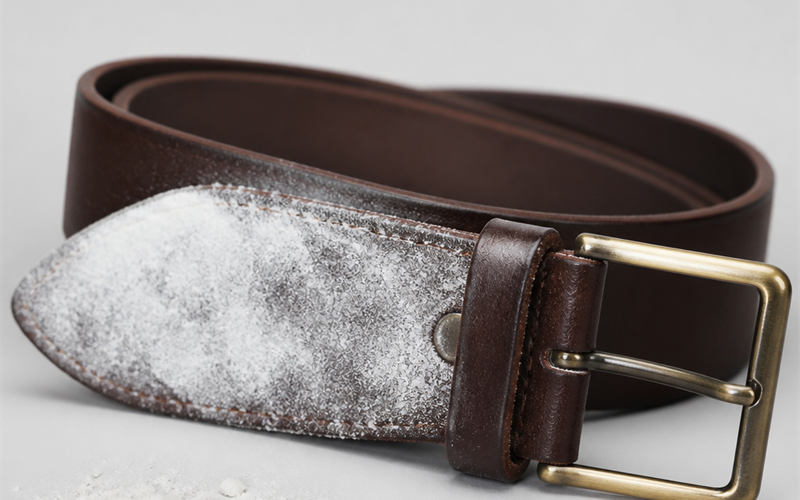
Caught in a downpour, dropped in a sink, or left out in the rain — soaked leather is a common scare, and how you dry it decides whether the belt survives intact or ends up stiff, cracked, and misshapen. The single biggest mistake is rushing it with heat. This guide walks through the safe drying method and the restoration step that brings the leather back. For ongoing protection, pair it with our leather care guide.

How do you dry a soaked leather belt?
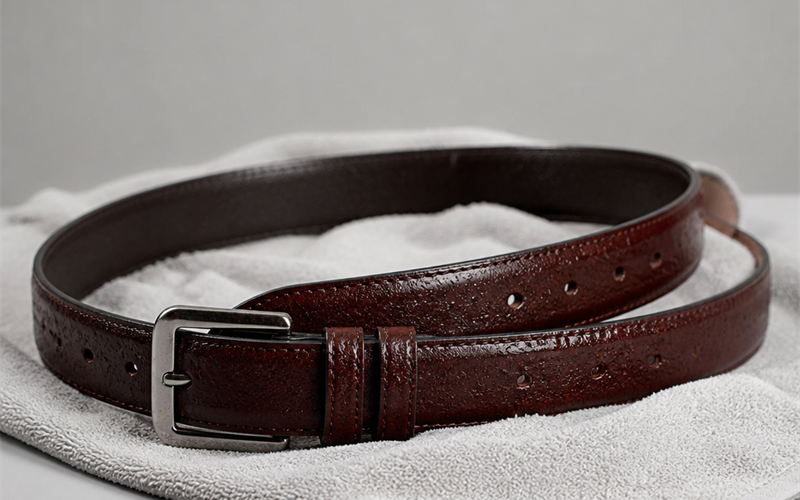
Dry it slowly and naturally. First blot off excess water with a clean towel — gently, without wringing or twisting. Then lay the belt flat or hang it straight in a ventilated room at normal temperature, away from any heat source or direct sun. Let it air-dry completely over a day or two, then condition it. Slow drying is the whole secret.

Patience protects the leather. Water swells and loosens the leather's fibers, and how those fibers re-set as they dry determines the final texture. Dry slowly and they relax back to normal; dry fast and they seize up hard and brittle. The general leather reference underscores that leather is a fiber structure that depends on its natural oils and moisture balance — a balance that rapid drying destroys. Leather-repair specialist Fibrenew gives the same instruction: let the item "air dry at room temperature, ideally in a well-ventilated space away from direct sunlight," then "apply a leather conditioner to restore moisture and prevent stiffness or cracking." So blot, position the belt to keep its shape, ensure airflow, and then simply wait. Don't speed it up. A belt that air-dries over a day or two at room temperature usually comes through fine; one blasted dry in an hour often doesn't.
Why should you never use heat to dry leather?
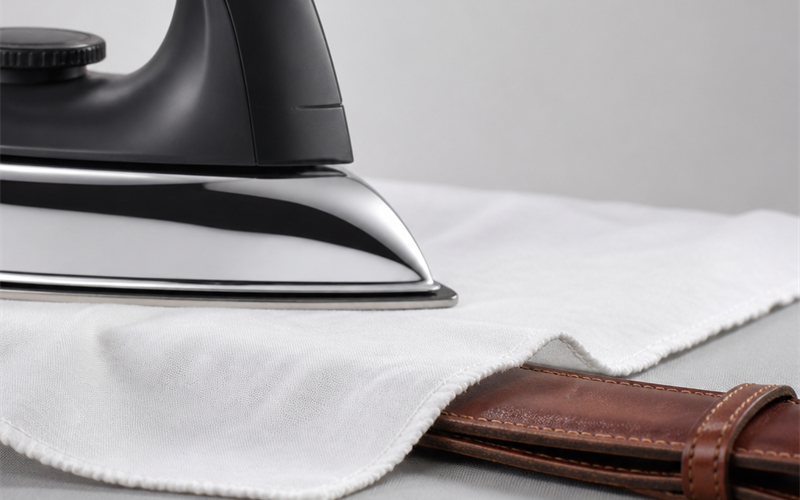
Because heat dries leather too fast and unevenly, driving out the natural oils along with the water and causing the fibers to shrink, harden, crack, and warp. A radiator, hairdryer, oven, or direct sun can permanently stiffen and distort a wet belt — turning a recoverable soaking into irreversible damage. Always dry at room temperature instead.

Key stat: Leather can begin to shrink and harden permanently when dried at temperatures it tolerates fine when dry — which is why even a warm radiator or hairdryer can ruin a soaked belt that would have air-dried perfectly at room temperature.
Heat is the number-one killer of wet leather. It evaporates surface water faster than the leather can release it evenly, so the outside shrinks and cracks while pulling the fibers out of shape. It also bakes out the conditioning oils, leaving the leather dry and brittle. Here's the safe-versus-risky breakdown:
| Safe drying | Damaging drying |
|---|---|
| Room-temperature air | Radiator / heater |
| Good ventilation | Hairdryer / heat gun |
| Flat or hung straight | Oven or microwave |
| Out of direct sun | Direct sunlight |
| Patience (1–2 days) | Rushing in an hour |
This caution against heat is the same principle behind preventing cracking in general — leather and high heat don't mix. Resist every temptation to speed things up.
Will water permanently damage a leather belt?
Not usually, if you dry it slowly and condition it afterward. A single soaking, handled correctly, rarely ruins a quality belt — though it may leave water spots or slight stiffness that conditioning resolves. Permanent damage (deep cracking, warping, hardening) comes from heat-drying or letting a soaked belt stay wet long enough to grow mold.

The water itself is rarely the villain; the response is. Dried properly and re-conditioned, most belts recover fully, with at worst some faint water marks that often fade. The real damage comes from two avoidable mistakes: blasting it with heat, or leaving it damp so long that mold sets in. Quality also matters here. A well-made belt built to the BELTLEY standard — full-grain leather, a stainless or solid brass buckle, and sealed (painted or burnished) edges — sheds water better and recovers more cleanly than a bonded belt that wicks moisture into its core and delaminates. A cheap belt may not survive a soaking; a quality full-grain one almost always does.
How do you restore a leather belt after it dries?
Once the belt is completely dry, condition it. Water strips the leather's natural oils as it evaporates, so apply a small amount of leather conditioner with a soft cloth, work it in, let it absorb, and buff. This replaces lost oils, restores suppleness, and prevents the stiffness and cracking that follow a soaking. Condition the whole belt for an even finish.

Conditioning is the essential recovery step, not optional. A soaked-then-dried belt is an oil-depleted belt, and without replenishment it can turn stiff and crack at the fold points. Make sure it's bone dry first — conditioning over residual damp traps moisture and invites mold. Use quality conditioner sparingly; over-oiling creates dark patches. If light water spots remain, conditioning often blends them, and they tend to fade further with normal wear and patina. For the maintenance rhythm that keeps leather resilient against future soakings, see our leather care guide and how to keep a leather belt in good condition.
The Bottom Line
A soaked leather belt is usually saveable — the outcome depends entirely on how you dry it. Blot off the excess, air-dry slowly at room temperature with good airflow, and never reach for a radiator, hairdryer, or sunny windowsill, because heat is what cracks and warps wet leather. Once it's fully dry, condition it to replace the oils the water stripped, and most belts come back looking nearly as good as before. Quality full-grain leather with sealed edges weathers a soaking far better than a bonded belt, which is one more reason to buy well once. Keep your belts resilient with our leather care guide and explore lasting options in our full-grain leather belts collection, backed by a 10-year warranty.
Frequently Asked Questions
Q: Can I use a hairdryer to dry a wet leather belt?
No. A hairdryer's heat dries leather too fast, driving out the natural oils and causing the fibers to shrink, harden, crack, and warp. Always air-dry a soaked belt slowly at room temperature, away from any heat source or direct sun, then condition it once it's fully dry.
Q: Will my leather belt be ruined if it got rained on?
Usually not, if you dry it correctly. Blot off the water, air-dry it slowly at room temperature, and condition it once dry — most belts recover with at most faint water spots that fade. Permanent damage comes from heat-drying or leaving the belt wet long enough to grow mold.
Q: How long does it take a leather belt to dry?
Allow a day or two for a soaked leather belt to air-dry fully at room temperature with good ventilation. Resist speeding it up with heat. The belt should feel completely dry, not cool or damp, before you condition it — conditioning over residual moisture can trap damp and invite mold.
Q: Should I condition a leather belt after it gets wet?
Yes. Water strips the leather's natural oils as it evaporates, so conditioning after the belt is fully dry is essential to restore suppleness and prevent stiffness and cracking. Apply a small amount of conditioner to the whole belt, let it absorb, and buff off the excess.