7 Actionable tips for Keeping a Leather Belt in Good Condition
TL;DR: Quick Answer and main takeaways
- Clean your belt lightly every 2–3 weeks of regular wear; do a deep clean 2–3 times per year.
- Condition every 3–6 months with a dedicated leather conditioner — never coconut oil, never petroleum jelly.
- Hang your belts vertically or lay them flat. Never coil them in a drawer — that's how cracks start.

A good leather belt shouldn't need replacing every couple of years. A well-cared-for full-grain leather belt can genuinely last 10, 20, even 30 years — we've seen it. The problem isn't the leather. It's the neglect.
Most people buy a quality belt, wear it every day, stuff it in a drawer at night, and then wonder why it's cracking at the fold after 18 months. Leather is a natural material. It has oils, it breathes, it responds to its environment. Treat it like dead plastic and it'll behave like it. Treat it like the living material it is and you'll be passing it on to someone else someday.
Here are seven things you can actually do — starting today — to get more life and better looks out of every leather belt you own.

How Often Should You Clean a Leather Belt?
For regular wear, wipe your belt down every 2–3 weeks with a slightly damp cloth. Do a thorough clean — using a proper leather cleaner — two to three times per year. Daily-wear belts pick up sweat, skin oils, and environmental grime faster than you'd expect, and those deposits break down the leather's surface over time.
Most people skip cleaning entirely and go straight to conditioning. That's a mistake. Conditioning over a dirty surface just seals the grime in. Think of it the same way you wouldn't moisturize your face without washing it first.
For routine wipe-downs, a lint-free cloth barely dampened with lukewarm water is enough. For deeper cleans, use a pH-neutral leather cleaner — products like Leather Honey Cleaner or Bickmore Saddle Soap work well. Apply in small circular motions, work it into the grain, then wipe away residue with a clean dry cloth. Let the belt air dry completely before you wear or condition it. The Leather Conservation Centre — the UK's leading authority on leather preservation — notes that pH-neutral products are critical, since alkaline or acidic cleaners disturb the tanning chemistry that holds the fiber structure stable.
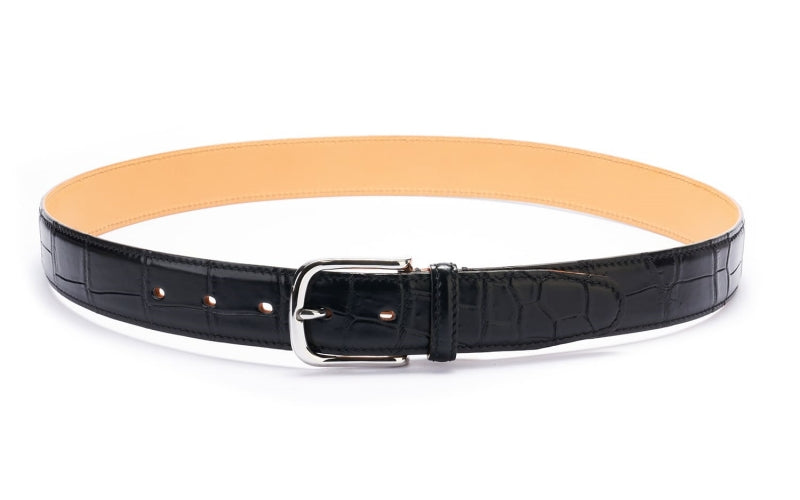
Exotic leathers — crocodile, alligator, python — need extra care here. Their scales and natural texture can trap dirt at the edges. Use a soft brush (a clean toothbrush works) to gently dislodge buildup between scales before wiping down with a damp cloth. Our full leather care guide covers exotic-specific cleaning in more detail.

How Do You Condition a Leather Belt the Right Way?
Apply a dedicated leather conditioner every 3–6 months — more often in dry or hot climates. Use a soft cloth, work a small amount into the leather in circular motions, let it absorb for 10–15 minutes, then buff off any excess. Never apply conditioner to wet leather; always condition after cleaning, once the belt is fully dry.
Conditioning replenishes the natural oils that keep leather supple. Leather loses these oils gradually through wear, heat exposure, and simple drying out. Once those oils are gone, the leather stiffens — and stiff leather cracks. According to research on the science of leather conditioning, collagen fiber degradation accelerates significantly when leather drops below optimal moisture levels.
A few products worth knowing:
- Leather Honey Conditioner — a thin, deeply penetrating formula that works well on smooth leathers
- Bickmore Bick 4 — good for darker leathers, won't significantly change the color
- Saphir Renovateur — the professional's choice for fine leathers; excellent for dress belts
What to avoid: coconut oil, olive oil, Vaseline, and "all-natural" DIY conditioners you find on lifestyle blogs. These either oxidize and turn rancid inside the leather fibers, clog the pores, or cause irreversible darkening. The science doesn't support them for high-quality leather goods.
If you're wondering whether your belt needs conditioning right now, do the scratch test: lightly drag a fingernail across a hidden spot. If you see a white scratch mark (called "dry rub"), the leather is dehydrated and needs conditioning immediately. Read more about this in our post on whether you should condition your leather belt.

What Happens If Your Leather Belt Gets Wet?
If your leather belt gets wet, pat it dry immediately with an absorbent cloth and let it air dry at room temperature — away from heat sources. Never use a hairdryer, radiator, or direct sunlight to speed up drying. Heat causes leather to shrink, warp, and crack. Once it's fully dry, apply conditioner to restore the oils moisture has drawn out.
Water itself isn't the enemy — how you dry it is. Leather that dries slowly and naturally at room temperature almost always recovers well. Leather that's force-dried with heat is a different story. The fibers contract unevenly, the surface coating can blister, and the structural integrity takes a hit you can't reverse.
If your belt gets soaked — not just damp, but thoroughly wet — stuff the loop loosely with a rolled cloth while it dries to help it hold its shape. Condition it twice once dry, 24 hours apart. The science is straightforward: as research into leather conditioning explains, rapid heat drying causes collagen fibers to contract unevenly, creating micro-fractures that worsen over time if left untreated.

The Right Way to Store Your Leather Belts
Storage is where most people quietly destroy their belts without knowing it. Coiling a belt tightly and stuffing it in a drawer creates constant pressure along the fold — that bend becomes a crease, the crease becomes a crack, and eventually the leather fails at exactly that point.
The best storage options, ranked:
- Hang vertically from the buckle — this is the gold standard. Use a belt rack or simple S-hooks inside a closet. The leather hangs naturally with no tension points.
- Lay flat in a drawer — acceptable for occasional-wear belts if the drawer isn't overcrowded.
- Roll loosely with the grain facing outward — the loop of leather faces out, not the buckle side. This is fine for travel.
What to avoid: folding in half, coiling tightly, stacking under heavy items, or storing in plastic bags (which trap moisture and promote mildew).
For deeper guidance, our post on the best way to store leather belts covers wardrobe organization in more detail.
Why Heat and Sunlight Are a Leather Belt's Worst Enemies
Direct sunlight and sustained heat both accelerate the breakdown of leather's natural oils — the same mechanism that causes leather car seats to crack after years of sun exposure. UV rays are particularly damaging: they degrade the collagen structure and fade dyes unevenly, leaving patchy discoloration that no conditioner can fix.
In practical terms:
- Don't store belts on a windowsill or shelf that gets afternoon sun
- Don't leave a leather belt in a hot car (dashboard, back seat in summer)
- Keep belts away from radiators, heat vents, and drying racks
- If you live in a very sunny climate, store your premium belts in a cloth bag or drawer
This matters especially for exotic leathers. Crocodile and alligator belts have a natural sheen that UV exposure can permanently dull. Research published in npj Heritage Science confirms that photo-oxidation directly attacks collagen protein and the tanning agents that give leather its structural stability. The oils and tannins that give these leathers their depth are particularly vulnerable to photo-oxidation.
Should You Rotate Your Leather Belts?
Yes — and most people don't. Wearing the same belt daily doesn't give the leather time to recover from flexing and moisture absorption. Rotating between two or three belts lets each one breathe, dry fully, and maintain its shape longer.
Think of it the same way leather shoe care works. A well-maintained pair of dress shoes lasts years longer with a rotation than without. The same logic applies to belts.
If you only own one belt and wear it every day, conditioning frequency matters more — move from every 6 months to every 3. And consider it a reason to invest in a second option. Our men's belt collection has a range of full-grain and exotic options worth rotating between.

Don't Forget the Buckle
The buckle takes real punishment — constant friction, sweat exposure, the occasional drop — and most people never think to care for it. Neglecting the hardware shortens the belt's life just as surely as neglecting the leather.
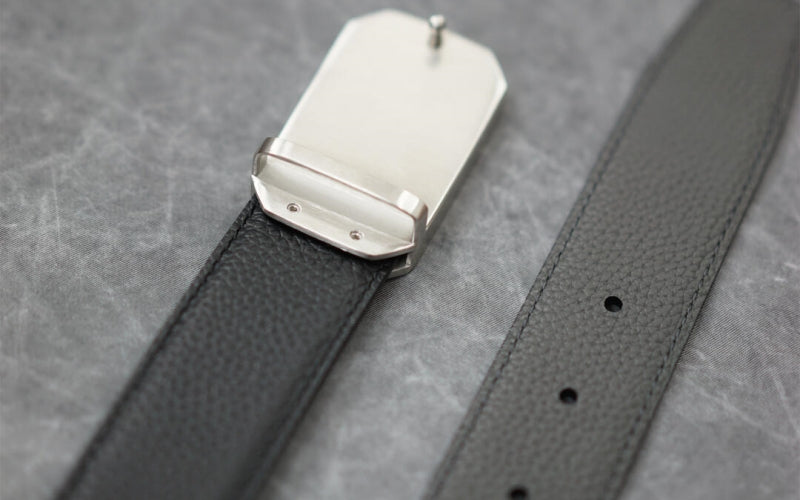
For metal buckles, a quick wipe with a dry microfiber cloth after every few wears removes sweat and oxidation before it builds up. For chrome and stainless steel buckles, a small amount of metal polish brings back the shine without scratching. For brass buckles, a slightly damp cloth followed by a dry buff is usually enough.
At BELTLEY, we use marine-grade stainless steel on our buckles specifically because it resists corrosion and tarnishing far better than standard hardware-grade steel — which matters if you're wearing a belt in coastal climates or humid conditions. But even the best buckle benefits from a quick wipe-down.
Where the buckle meets the leather is also a friction point worth watching. Over time, that area can thin or crack first. A small amount of conditioner applied carefully around the keeper loop every couple of months helps keep that zone supple.

The Bottom Line
Leather belt care isn't complicated — but it does require consistency. Clean before you condition. Condition every season. Hang your belts rather than coiling them. Keep them out of heat and direct sun. Those five habits alone will double the lifespan of any quality belt in your wardrobe.
The other side of this equation is starting with leather worth caring for. A belt made from full-grain or exotic leather responds to proper care dramatically differently than corrected-grain or bonded leather, which has a polymer surface that conditioning can't meaningfully penetrate. And if you ever want to know exactly what you can expect from a belt long-term, BELTLEY backs every belt with a 10-year warranty on materials and construction — which tells you something about the confidence we have in what goes into them.
For more on how to prevent your leather belt from cracking — one of the most common and preventable problems — that post is worth reading alongside this one.
Frequently Asked Questions
Q: How often should you condition a leather belt?
Condition every 3–6 months under normal use. If you wear the belt daily, live in a dry or hot climate, or notice the leather feels stiff, move to every 2–3 months. Always condition after a deep clean and after the belt dries from getting wet.
Q: Can I use water to clean my leather belt?
Yes — but use it sparingly. A slightly damp cloth (not wet) removes surface dirt effectively. The risk isn't water itself but over-saturation, which draws out the leather's natural oils. After any water contact, let the belt air dry completely before conditioning or wearing.
Q: What is the best leather conditioner for belts?
Leather Honey, Bickmore Bick 4, and Saphir Renovateur are consistently reliable. For exotic leathers (crocodile, python, elephant), look for conditioners specifically formulated for exotic or reptile skins — standard conditioners can sometimes affect the natural scale texture. Avoid any product containing silicone or petroleum distillates.
Q: How do you keep a leather belt from cracking?
The three main causes of cracking are: dehydration (skipping conditioning), improper storage (coiling or folding under pressure), and heat/sun exposure. Address all three — condition regularly, hang the belt, keep it out of direct sunlight — and cracking is largely preventable in quality leather.
Q: How long should a leather belt last?
A full-grain leather belt that's properly cared for should last 10–20 years, sometimes longer. Lower grades of leather (genuine leather, bonded leather) typically last 2–5 years regardless of care, because the structural integrity of the hide isn't there to begin with. The grade of leather matters as much as the care routine.
Q: Does leather belt color affect how you care for it?
Cleaning and conditioning are the same regardless of color. The main difference is that lighter colors (tan, natural) show water marks more easily — use a barely-damp cloth and work quickly. Dark dye belts (black, espresso) can occasionally transfer dye onto light fabrics when wet, so fully dry them before wearing.