How to Choose a Good Leather Belt: A Material-First Guide
TL;DR: Quick Answer and main takeaways
- Full-grain leather is the only grade worth buying — it's the densest layer of the hide and the only one that develops a patina and lasts 10–25 years
- Vegetable-tanned leather outlasts chrome-tanned leather because the tanning process preserves and tightens the fiber structure
- You can inspect leather quality before buying with four simple physical tests — no lab required
- Exotic leathers (crocodile, alligator, elephant) sit above full-grain cowhide for durability and visual distinctiveness, not just price
A belt gets used every single day. It flexes, bears buckle stress, absorbs sweat and friction, and is expected to look good for years. Most belts fail not because they were the wrong style but because they were made from the wrong leather. This guide focuses on the material decision — how to choose a good leather belt by understanding what you're actually buying before price or looks enter the picture.

Your Shortcut, Based on Where You're Starting
The material-first method below is thorough — but here's the fast path for your situation:
| Your situation | Do this |
|---|---|
| You just want the safe answer | Full-grain, vegetable-tanned, solid hardware — that combination is the whole game |
| You're standing in a store right now | Run the four physical tests below: bend it, smell it, check the edges, look for pores |
| You want a statement piece | Exotic leather — crocodile and alligator beat cowhide on durability, not just looks |
| The tag says "genuine leather" | Put it back. That label marks the lowest usable grade, not a quality promise |
Row one in shoppable form: the full-grain collection. Now the material-first method in full:
What Does "Good Leather" Actually Mean for a Belt?
Good leather for a belt means the outermost layer of the hide — full-grain — with its natural fiber structure intact. This layer is the densest and most tightly bonded part of the hide. It resists cracking, holds stitching securely under stress, develops a patina over time, and can last 10–25 years with basic maintenance. Any leather grade below this has been processed in ways that reduce fiber density and shorten usable lifespan.
The confusion in the market comes from labeling. "Genuine leather" sounds premium — it isn't. It's an industry-legal term for the lowest recoverable grade, made from compressed leather scraps bonded with adhesive. It typically peels and cracks within 6–18 months of daily use. "Top-grain" sounds like the top grade — it's second from the top. The surface has been sanded to remove natural imperfections, which removes the toughest fibers and reduces longevity to 5–10 years. Full-grain retains everything.
The full-grain vs. genuine leather comparison shows exactly how these grades differ structurally — worth reading before making any purchasing decision.

What Are the Leather Grades, From Best to Worst?
The leather industry uses a consistent grading hierarchy based on which layer of the hide is used and how much it's been processed:
| Grade | What It Is | Lifespan | Quality Signal |
|---|---|---|---|
| Full-grain | Outermost hide layer, untouched surface | 10–25+ years | Natural grain variation, developing patina |
| Top-grain | Outer layer sanded smooth; finish coat applied | 5–10 years | Uniform surface, limited patina |
| Split leather | Lower layers of the hide, separated from the grain | 2–5 years | Suede-like texture, no grain |
| Genuine leather | Compressed scrap layers bonded with adhesive | 6–18 months | Even artificial grain pattern (embossed) |
| Bonded leather | Leather fiber dust + polyurethane pressed together | 1–3 years | Plasticky, peels at stress points |
According to Hermann Oak Leather's grading standards — one of the oldest tanneries in the United States — the distinction between grades comes down to fiber density: how tightly packed the collagen fibers are in the hide layer being used. Full-grain retains maximum density. Every step down reduces it.
For a direct comparison of how full-grain performs against top-grain over time, the full-grain vs. top-grain leather guide covers the structural difference in plain terms.

Does Tanning Method Affect Belt Quality?
Yes — significantly. Vegetable-tanned leather uses natural plant tannins (from tree bark and roots) to bind with the hide's collagen fibers over 2–8 weeks. This slow process tightens the fiber structure, producing a dense, firm leather that resists stretching, develops a rich patina, and lasts 15–25+ years. Chrome-tanned leather uses chromium salts to achieve the same result in less than a day — faster, softer, but with looser fibers that stretch more and age less gracefully.
The chemistry is straightforward: vegetable tannins are large molecules (over 1,000 daltons) that form stable bonds with collagen throughout the hide's thickness. Chrome ions are much smaller and work faster, but the resulting cross-links between fibers are weaker. Research on leather tanning chemistry shows this structural difference translates directly to durability — vegetable-tanned belts hold their shape under daily stress; chrome-tanned belts gradually deform at stress points like buckle holes.
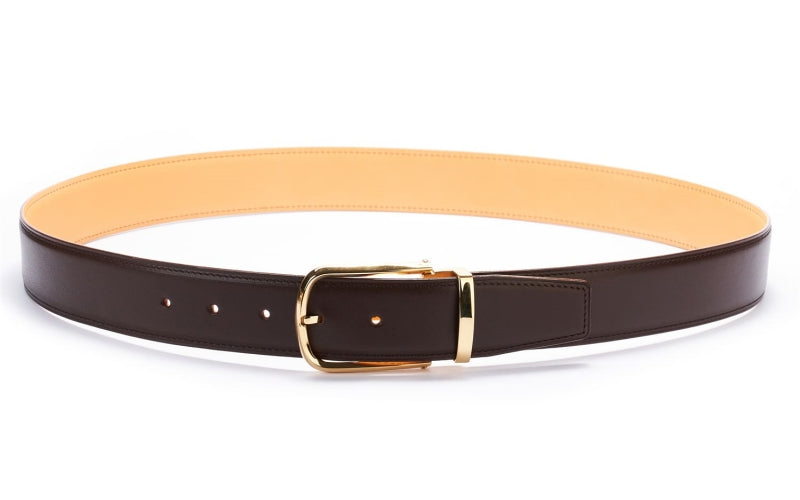
For a belt specifically, where flexing and buckle tension are daily realities, vegetable-tanned full-grain leather is the highest-performance combination. BELTLEY's full-grain collection uses this pairing — the full-grain leather belt range develops a personal patina unique to each wearer over years of use.

How to Inspect a Leather Belt Before Buying
You don't need laboratory equipment to evaluate leather quality. Four physical tests identify genuine full-grain leather and rule out lower grades:
1. The grain inspection Look closely at the surface under good light. Full-grain leather shows naturally irregular pores with varying depth and spacing — no two sections are identical. Embossed fake leather (bonded or split leather stamped to look like grain) shows a perfectly repeating pattern every 10–12 inches — the circumference of the embossing roller. [Insert external link to: leather grain pattern identification guide with magnification examples]
2. The edge test Run your finger along the belt's edge. Quality belts have burnished, smooth edges — either painted, hand-finished, or heat-sealed. Rough, frayed, or painted-over edges indicate cheap manufacturing. The edge of a belt is where construction shortcuts show up first.
3. The pinch test Pinch a small section of the leather firmly and release. Full-grain leather forms a slight starburst wrinkle pattern and returns to flat immediately. It also warms slightly in your hand from body heat. Bonded or split leather feels spongy or rubbery and doesn't recover as cleanly.
4. The thickness check A quality belt should measure 3.4–4.0mm (approximately 8.5–9.5 oz in leather weight terms) consistently across its length. Variations in thickness indicate inconsistent hide quality or a layered construction that will separate at stress points over time. If you can flex the belt easily with two fingers, it's likely below this threshold.

How Long Should a Good Leather Belt Last?
A full-grain leather belt, maintained with basic conditioning every 3–6 months, should last 10–25 years. Some well-made examples last a lifetime. Top-grain belts typically reach 5–10 years. Genuine leather belts rarely exceed 18 months of daily use before the surface begins peeling or the structure delaminating.
These aren't aspirational numbers — they reflect the structural difference between grades. Leather durability research from Torino Leather documents this lifespan gap consistently, and it's backed by the physical reality: full-grain fiber density means the leather resists abrasion and stress that lower grades can't. A belt that costs three times as much but lasts ten times as long is straightforwardly better math.
The most durable leather belt guide covers how construction factors — stitching density, buckle attachment method, edge finishing — interact with leather grade to determine real-world lifespan. BELTLEY backs every belt with a 10-year warranty on materials and construction because the leather grade and craftsmanship make that commitment straightforward to honor.
When Is Exotic Leather Worth Choosing?
Full-grain cowhide is the floor for a good leather belt. Exotic leather is a separate category — not just an upgrade in price, but a different material with different structural and visual properties.
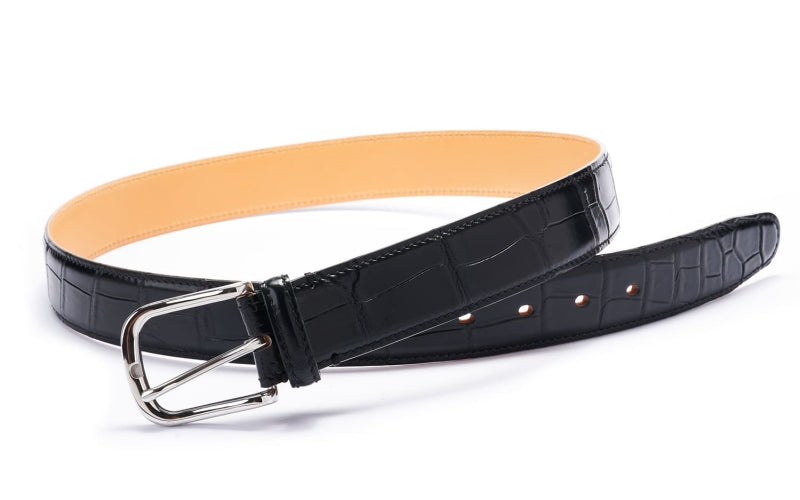
Crocodile and alligator leather have a scale structure where each scale is an individual skin unit fused into the hide matrix. This creates exceptional puncture and abrasion resistance — the scale structure distributes stress differently than a uniform cowhide surface. The alligator vs. crocodile belt comparison covers how these two hides differ in scale pattern, grain uniformity, and structural properties.
Elephant leather has an unusually dense collagen fiber network — denser than most cowhide — making it exceptionally resistant to tearing at stress points like buckle holes. The matte, deeply textured surface is unlike anything else in the leather hierarchy.
Python brings a graphic scale overlay that reads as fashion-forward rather than classic, with a lighter hand than crocodile or elephant.
According to exotic leather grading standards, Grade 1 exotic hides have no defects in the visible center cut — the most structurally consistent part of the skin. At BELTLEY, every exotic belt uses Grade 1 center-cut hides, handcrafted in small batches by artisans who specialize in these materials. The crocodile and alligator belt collection and the broader exotic leather belt range represent the upper end of what leather can do for a belt.

What Should the Hardware Tell You About Belt Quality?
A buckle made from stainless steel or solid brass tells you the manufacturer made a hardware decision that matches the leather — both will outlast the owner. A hollow zinc alloy buckle plated in chrome or gold will tarnish, corrode, or crack within 3–5 years, outlasted by whatever leather it was attached to.
This matters because a belt's weakest component determines its functional lifespan. Premium leather attached to a cheap buckle means replacing the whole belt when the buckle fails — or going through the effort of a buckle swap. Hardware quality is the part of belt construction that's easiest to shortcut during manufacturing and hardest for buyers to spot in product photography.
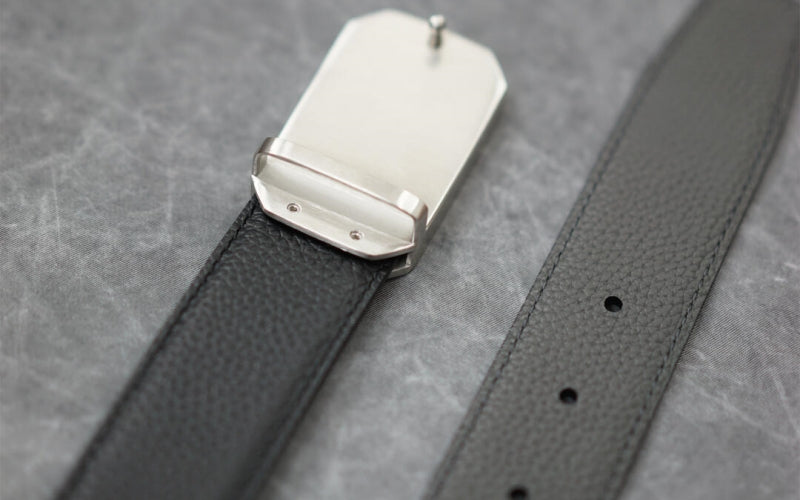
The physical test is simple: a quality metal buckle feels cold and heavy and doesn't flex under thumb pressure. Hollow die-cast buckles flex slightly and feel lighter than their size suggests. stainless steel — the grade used in surgical instruments and marine hardware — doesn't tarnish under daily contact with skin, sweat, or friction. BELTLEY uses stainless across all belt hardware, the same decision logic that produced the 10-year warranty. For belt care that extends both leather and hardware longevity, the leather care guide covers conditioning schedules and product recommendations.

The Bottom Line
Choosing a good leather belt starts and ends with leather grade. Full-grain is the only grade that delivers a 10+ year lifespan, develops character over time, and holds up to the daily mechanical stress a belt absorbs. Vegetable tanning amplifies those properties. Exotic leather takes them further, with structural properties and visual distinctiveness that no cowhide belt can replicate.
Everything else — width, buckle style, color, sizing — is a downstream decision from the material. Get the leather right and every other choice becomes easier. Get it wrong and no amount of good styling compensates for a belt that starts peeling six months in.
BELTLEY builds every belt from full-grain and exotic hides, small-batch handcrafted with stainless steel hardware and backed by a 10-year warranty. No Brand Tax — priced for the materials and craft, not a logo.
Start with the full-grain leather belt collection or go directly to exotic leathers — free worldwide shipping, 30-day returns.
Frequently Asked Questions
Q: What is the best type of leather for a belt?
Full-grain leather is the best grade for a belt. It uses the outermost, densest layer of the hide with the natural surface intact, giving it the tightest fiber structure, the longest lifespan (10–25+ years), and the ability to develop a patina over time. Vegetable-tanned full-grain is the highest-performance combination.
Q: How can I tell if a leather belt is good quality?
Inspect the grain pattern (should be irregular and natural, not perfectly repeating), run a finger along the edge (should be smooth and burnished, not frayed), pinch the leather (should wrinkle naturally and recover), and assess the weight and thickness (quality belts measure 3.4–4.0mm consistently). The buckle should feel cold, heavy, and solid — not hollow.
Q: What is the difference between full-grain and genuine leather?
Full-grain leather uses the top, densest layer of the hide with no surface processing — it lasts 10–25+ years. "Genuine leather" is an industry term for compressed scrap leather bonded with adhesive — it typically lasts 6–18 months before peeling. Despite the name, "genuine leather" is the lowest functional grade, not a mark of authenticity.
Q: Does tanning method matter when choosing a leather belt?
Yes. Vegetable-tanned leather — processed slowly with natural plant tannins over 2–8 weeks — has a tighter, denser fiber structure than chrome-tanned leather (processed in under a day with chromium salts). For a belt, vegetable-tanned leather resists stretching, holds its shape under buckle stress, and develops a deeper patina over time.
Q: How long should a quality leather belt last?
A full-grain leather belt maintained with conditioning every 3–6 months should last 10–25 years. Exotic leather belts (crocodile, alligator) can last even longer due to their dense scale structure. Genuine leather belts rarely exceed 18 months of daily use before structural failure. The lifespan gap reflects the fiber density difference between grades.