How to Remove Oil and Grease Stains From a Leather Belt
Quick answer: To remove an oil or grease stain from a leather belt, don't add liquid — absorb it. Blot up any excess, then cover the stain with a generous layer of cornstarch or baking soda and leave it on for several hours (overnight is better). The powder draws the oil out of the leather. Brush it off, repeat if needed, then condition. Avoid water and soap, which spread oil stains rather than lift them.
Last updated: June 2026 • By BELTLEY Editorial
TL;DR:
- Absorb, don't wash — oil and water don't mix, so soap spreads the stain.
- Cover the stain with cornstarch or baking soda; leave several hours or overnight.
- Brush off and repeat until the powder stops darkening; then condition.
- Set, large, or exotic-leather oil stains are best left to a professional.
A drop of cooking oil, a brush against a greasy surface, a hand cream smear — oil stains on leather are common and look alarming, because the grease soaks straight into the grain. The instinct to scrub with soapy water is exactly wrong; it spreads the oil. The right approach is absorption, and it's remarkably effective. This guide shows the cornstarch method, what to avoid, and how to restore the leather. For everyday upkeep, see our leather care guide.

How do you remove an oil stain from a leather belt?
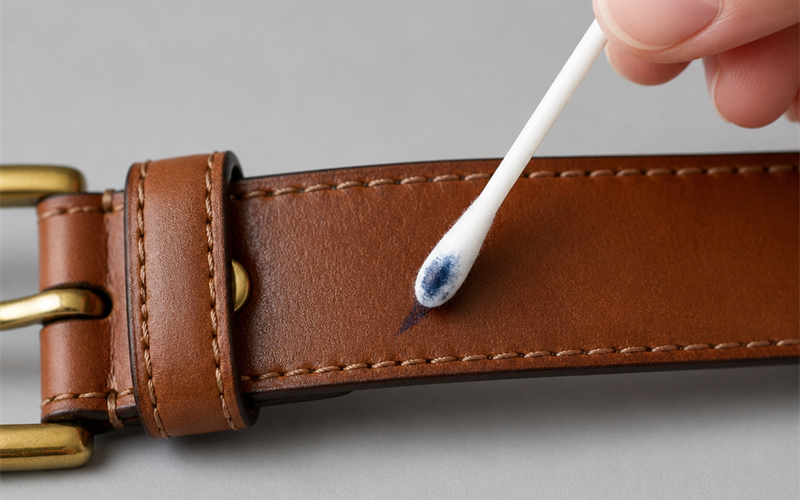
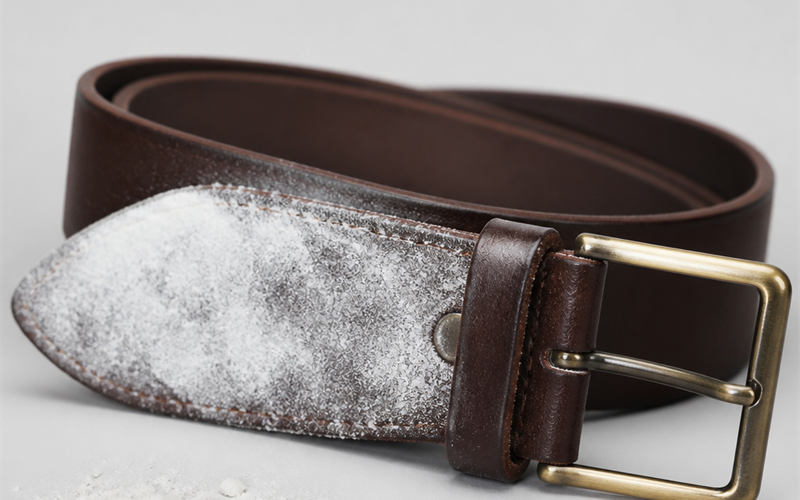
Absorb it, don't wash it. Blot any excess oil with a dry cloth, then cover the stain completely with a thick layer of cornstarch or baking soda. Leave it for several hours or overnight so the powder draws the oil out of the leather. Brush the powder away, repeat if the stain remains, and finish by conditioning the leather.

The science is simple: oil and water don't mix, so the absorbent-powder route works where washing fails. As the reference on stain removal notes, the method depends on the substance — and grease calls for absorption, not solvents-and-water. Cornstarch and baking soda are mildly absorbent and pull oil up out of the grain as they sit. Leather goods maker Carl Friedrik advises the same: "sprinkle a generous amount over the affected area... allow the powder to sit for several hours or even overnight." The longer they stay, the more they draw, which is why overnight beats a quick dusting. You'll often see the powder darken or clump as it soaks up grease — a good sign it's working. Multiple gentle rounds beat one aggressive attempt every time.
Why shouldn't you use soap and water on oil stains?
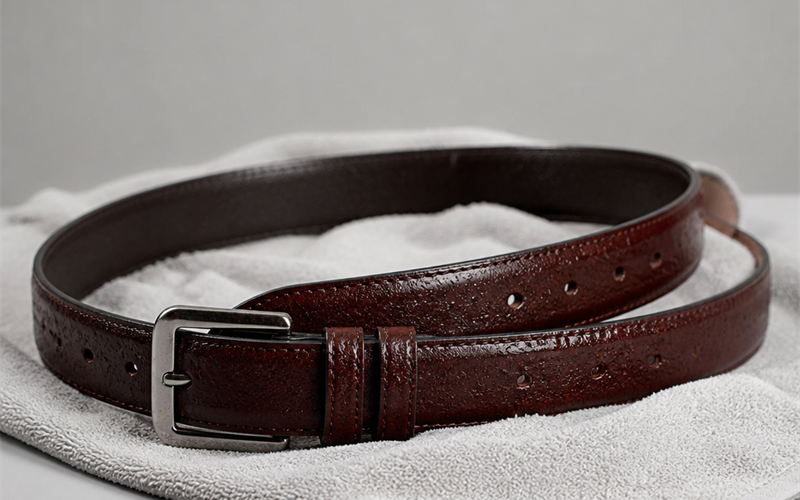
Because oil repels water, so soapy water can't lift an oil stain — it pushes the grease around and spreads it wider, often making the mark bigger and driving it deeper into the leather. Water can also leave its own stain and over-wet the hide. Absorption with a dry powder is the only approach that actually pulls oil out.

Key stat: Cornstarch and baking soda work by capillary absorption — drawing oil up out of the leather grain into the powder over hours — which is why leaving it overnight removes far more grease than a quick application brushed off too soon.
This is the most common mistake people make. Reaching for dish soap feels logical, but it's the worst move for grease on leather. Here's the contrast:
| Do (absorb) | Don't (spread) |
|---|---|
| Blot excess oil first | Scrub with soapy water |
| Cover with cornstarch/baking soda | Soak the leather |
| Leave several hours/overnight | Brush off after a minute |
| Brush off, repeat as needed | Use heat to "dry" it |
| Condition when done | Use harsh degreasers |
The same gentle, leather-respecting philosophy underpins all our care advice — see how to keep a leather belt in good condition. With oil specifically, restraint and patience win.
How many times should you repeat the cornstarch method?
Repeat until the powder stops darkening — usually one to three rounds for a typical stain. After each overnight sit, brush off the spent powder and check the leather. If a shadow of oil remains, apply fresh powder and wait again. Deep or old stains may never fully vanish, but several rounds lighten most significantly.

Persistence is the whole game. Each application pulls out a little more oil, so a stubborn stain simply needs more rounds. Fresh powder each time is important — spent powder that's already absorbed grease won't draw more. Between rounds, resist the urge to scrub or wet the area. Know when to stop, too: if two or three rounds make no further difference, the remaining stain has likely bonded with the leather's oils and won't lift at home. At that point, a faint mark may be something to live with, or a job for a professional, especially on a valuable belt. A quality full-grain belt often hides a faded residual stain well as it develops patina.
How do you restore the leather after removing grease?
Condition the belt once the powder is fully brushed away. The absorption process can leave the treated area looking dry or slightly dull, so apply a small amount of leather conditioner with a soft cloth, let it absorb, and buff. This re-balances the leather's oils, evens the appearance, and helps the spot blend with the rest of the belt.

Restoration matters because absorbing oil can also pull some of the leather's own conditioning oils, leaving the area thirsty. Conditioning the whole belt — not just the stain — keeps the finish uniform. Use a quality conditioner sparingly; the aim is to restore, not to over-oil and create a fresh dark patch. This is where belt quality pays off: the BELTLEY standard of full-grain leather, a stainless or solid brass buckle, and sealed edges means the hide takes conditioning evenly and recovers its look, while a bonded belt may stay blotchy. For the routine that keeps leather resilient against the next splash, our leather care guide and tips on preventing cracking have you covered.
The Bottom Line
The secret to oil and grease stains on leather is counterintuitive: absorb, don't wash. Blot the excess, bury the stain in cornstarch or baking soda overnight, brush off, and repeat until the powder stops darkening — then condition to restore the leather. Soap and water only spread oil, so skip them entirely. Set, large, or exotic-leather stains belong to a professional. A well-made full-grain belt takes this treatment in stride and often blends a faint residual mark into its patina, which is one more reason quality leather is worth owning. Keep your belts resilient with the routines in our leather care guide, and explore durable options in our full-grain leather belts collection.
Frequently Asked Questions
Q: Does cornstarch really remove oil from leather?
Yes. Cornstarch (and baking soda) absorbs oil out of the leather grain as it sits, especially overnight. Cover the stain thickly, leave it several hours, then brush it off and repeat as needed. It's the most effective home method because, unlike soap and water, it lifts grease rather than spreading it.
Q: Why can't I use soap and water on a grease stain?
Because oil repels water, so soapy water can't lift grease — it pushes the oil around, spreads the stain wider, and can drive it deeper while over-wetting the leather. Dry absorbent powders like cornstarch are the only approach that actually pulls oil out of the hide.
Q: Will an oil stain come out of leather completely?
Fresh oil stains often come out fully or nearly so with one to three rounds of cornstarch. Old or deep stains that have bonded with the leather's oils may leave a faint permanent shadow. A professional can improve set stains, and on quality full-grain leather a faint mark often blends into the patina.
Q: How do I treat a grease stain on an exotic or suede belt?
Exotic leathers like crocodile and ostrich, and suede, are best handled by a professional for oil stains, since DIY methods risk uneven results. For suede especially, avoid liquids; a specialist has the right tools. The cornstarch method is intended for finished, smooth leather belts.