How to Remove Ink Stains From a Leather Belt
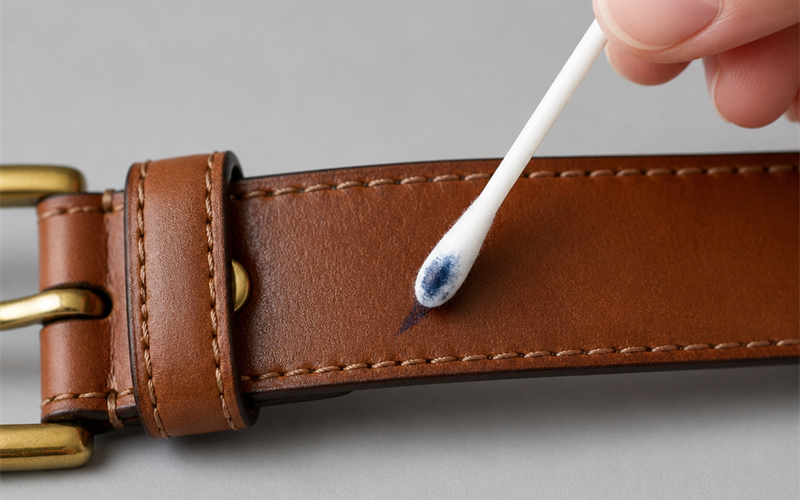
Quick answer: To remove ink from a leather belt, act fast and start gentle: blot (don't rub) fresh ink, then dab the stain with a cotton swab lightly moistened with isopropyl alcohol or a dedicated leather ink remover, lifting the ink as it transfers. Work from the outside in, use minimal product, and condition the leather afterward. For deep, set, or large stains on finished leather, a professional is the safest bet.
Last updated: June 2026 • By BELTLEY Editorial
TL;DR:
- Blot fresh ink immediately — never rub, which spreads it.
- Dab with isopropyl alcohol on a cotton swab or a leather ink remover; lift, don't scrub.
- Work outside-in, use minimal liquid, and stop once ink stops transferring.
- Condition afterward to restore oils alcohol strips; call a pro for deep/set stains.
A stray pen in your pocket or a careless signature can leave an ink mark right across your belt. Ink is one of the trickier stains because it can set into the grain, but caught early and treated correctly, most pen and marker marks come out. This guide covers the safe method, the products that work, the ones that wreck leather, and when to hand it to a professional. For broader upkeep, see our leather care guide.

How do you get ink off a leather belt?
Start gentle and act fast. Blot fresh ink with a clean cloth (never rub), then dab the stain with a cotton swab lightly dampened with isopropyl alcohol or a leather-specific ink remover. Lift the ink as it transfers to the swab, switching to a clean swab often. Work from the edge inward, use as little liquid as possible, and condition the leather when done.

Patience beats force with ink. The reference on stain removal frames it as removing "a mark or spot left by one substance on a... surface" — and with ink on leather, the goal is to lift it out, not grind it in. Rubbing spreads the stain and can abrade the finish, so dab and lift instead. Isopropyl alcohol dissolves many inks (especially ballpoint), transferring the pigment onto your swab. Change swabs the moment they pick up color so you're not re-depositing ink. Working outside-in keeps the stain from spreading wider. Most importantly, stop as soon as the ink stops transferring — over-working the spot risks the leather's color.
What removes ink without damaging the leather?
Isopropyl (rubbing) alcohol used sparingly on a swab is the most reliable home option for finished leather, along with purpose-made leather ink removers. Both lift ink while being controllable. Avoid acetone, nail polish remover, bleach, and aggressive scrubbing — these strip dye, dry the leather, and can cause permanent damage worse than the stain.

Key stat: Fresh ink is dramatically easier to remove than dried ink — treating a mark within the first few minutes, before it penetrates the grain, gives by far the highest success rate, so speed matters more than any single product.
Choosing the right product is half the battle. Here's what to use and what to avoid:
| Use (carefully) | Avoid |
|---|---|
| Isopropyl alcohol on a swab | Acetone / nail polish remover |
| Dedicated leather ink remover | Household bleach |
| Mild leather cleaner | Hairspray (drying, sticky) |
| Cotton swabs (change often) | Hard scrubbing / abrasives |
Alcohol is effective but drying, which is exactly why the conditioning step that follows is non-negotiable. Leather-care specialist Leather Honey gives the same warning, advising against "vinegar, nail polish remover and hairspray" because "they can excessively dry out the leather, damage the stitching and alter the coloring." Acetone-based products may pull the ink but will often take the leather's color and finish with it. Always test any product on a hidden area first — the strap behind the buckle is ideal. This same gentle-cleaner principle runs through all our care advice, including how to keep a leather belt in good condition.
When should you call a professional for ink?
Call a leather professional when the ink is deep-set, large, old, or on suede, unfinished, or exotic leather, or when home attempts aren't lifting it. Pros have specialized solvents and re-coloring skills that can rescue stains — and leathers — that DIY methods would only worsen. It's cheaper than ruining a good belt.

Some situations are beyond a cotton swab. Suede and unfinished leathers absorb ink instantly and react badly to alcohol, so they're professional territory from the start. The same goes for exotic leathers like crocodile or ostrich, where a wrong move is costly — these deserve expert handling, not experimentation. A set-in stain that's been there for weeks has penetrated the grain and may need a specialist's solvents or color restoration. The math is simple: a professional cleaning costs far less than replacing a quality belt. If your belt is a well-made full-grain or exotic piece, treat it as worth the expert's time, just as you would a fine pair of shoes.
How do you protect the leather after removing ink?
Condition the leather once the area is dry. Alcohol and cleaning strip natural oils, leaving the spot dry and dull, so apply a small amount of leather conditioner with a soft cloth, let it absorb, and buff. This restores suppleness and evens the finish. If the cleaned area looks lighter, a matching leather dye or cream can blend it back.

Recovery is as important as removal. Because alcohol dries leather, the treated spot needs its oils replaced or it can stiffen and crack over time. Condition the whole belt, not just the stain, so the finish stays even. If cleaning lifted some dye along with the ink, a color-matched leather cream restores it — a quality full-grain belt holds dye and conditioner well, which is part of why it survives such mishaps. The BELTLEY standard of full-grain leather, solid metal hardware, and sealed edges means the belt can take a careful cleaning and bounce back. For ongoing protection against the next spill, our leather care guide and notes on preventing cracking keep the leather resilient.
The Bottom Line
Ink on a leather belt isn't the disaster it looks like — most pen and marker marks lift if you act fast and stay gentle: blot fresh ink, dab with sparing isopropyl alcohol or a leather ink remover, work outside-in, and never scrub. Skip acetone and bleach, which do more harm than the stain. Condition afterward to replace stripped oils, and hand deep, set, or exotic-leather stains to a professional. A quality full-grain belt is built to survive a careful rescue, which is exactly why it's worth the effort. Keep your collection resilient with the routines in our leather care guide and explore lasting options in our full-grain leather belts collection.
Frequently Asked Questions
Q: Does rubbing alcohol remove ink from leather?
Yes, isopropyl (rubbing) alcohol is the most reliable home method for ink on finished leather. Apply it sparingly with a cotton swab and dab to lift the ink, changing swabs often. Because alcohol dries leather, condition the area afterward. Test a hidden spot first to check the finish.
Q: Can you get dried ink out of a leather belt?
Sometimes, but it's much harder than fresh ink, which is why speed matters. Dried ink has penetrated the grain and may only partly lift with alcohol. For set-in, deep, or large dried stains, a leather professional with specialized solvents and re-coloring skills gives the best result.
Q: What should you never use on ink stains on leather?
Avoid acetone, nail polish remover, household bleach, and hard scrubbing. These strip the dye and finish, dry out the leather, and can cause permanent damage worse than the original stain. Hairspray is also a poor choice — it can leave a sticky, drying residue.
Q: How do I remove ink from a suede or exotic leather belt?
Don't use alcohol on suede or exotic leathers — they absorb ink and react badly to solvents. These should go to a leather professional from the start. Attempting a DIY fix on suede, crocodile, ostrich, or unfinished leather usually makes the stain and the damage worse.
%20fresh%20ink,%20then%20dab%20the%20stain%20with%20a%20cotton%20swab%20lightly%20moistened%20with%20isopropyl%20alcohol%20or%20a%20dedicate...)