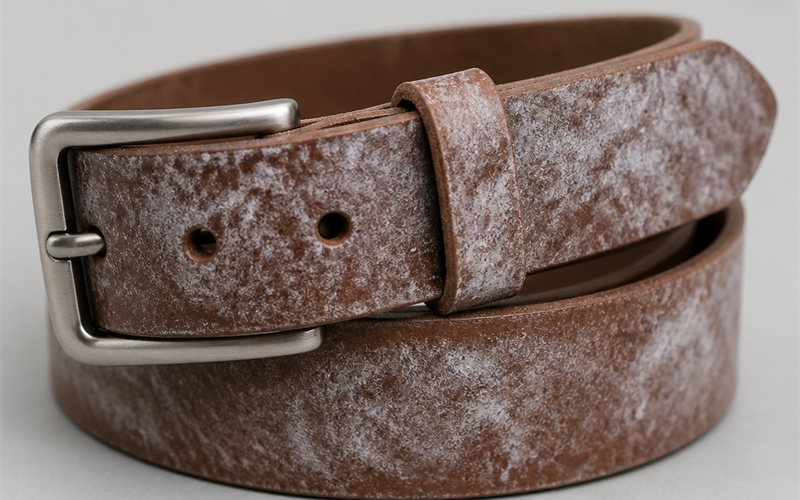
How to Remove Mold or Mildew From a Leather Belt
Quick answer: To remove mold or mildew from a leather belt, take it outside, brush off the surface growth with a dry cloth or soft brush, then wipe it down with a cloth dampened in a diluted vinegar solution (about 1 part white vinegar to 1 part water) or a mild soapy water. Dry it slowly away from heat, then condition the leather. Fixing the damp storage that caused it is essential, or it will return.
Last updated: June 2026 • By BELTLEY Editorial
TL;DR:
- Brush off surface mold outdoors first so spores don't spread indoors.
- Wipe with diluted white vinegar (1:1) or mild soapy water to kill and remove it.
- Dry slowly, away from heat, then condition to restore the leather.
- Mold means damp storage — fix the humidity or it comes straight back.
That fuzzy white or greenish bloom on a stored belt is mold or mildew, and it's both unsightly and damaging if ignored. The good news is leather mold is usually surface-level and very treatable if you act before it eats into the hide. This guide walks through safe removal, killing the spores, and — most importantly — stopping it from returning. For general upkeep, pair this with our leather care guide and how to keep a leather belt in good condition.
Mold Triage: Severity First
Match the growth to the response:
| Your situation | Go with |
|---|---|
| Light surface fuzz | Outside, dry-brush off, then 1:1 vinegar-water wipe, slow dry, condition. |
| Mold returns after cleaning | Fix the closet, not the belt — humidity and airflow are the actual patients. |
| Deep staining, musty after treatment | Spores reached the fibers — the belt's done; replace and store the next one right. |
| Exotic leather with mold | Same vinegar protocol, then reptile conditioner — never standard cream on scales. |
Prevention routine: BELTLEY's leather care guide — replacements from $58 if it's too late.
How do you remove mold from a leather belt?
Work outdoors to avoid spreading spores indoors. First brush or wipe off the surface mold with a dry cloth or soft brush. Then wipe the belt with a cloth dampened (not soaked) in a 1:1 white vinegar and water solution, or mild soapy water, to kill and lift remaining mold. Dry it slowly, then condition the leather.

The key is to be thorough but gentle. Mold is a fungus that grows where moisture lets it, and the visible fuzz is only the colony's surface. Mild acidity from white vinegar disrupts it without the harshness of bleach, which can ruin leather. Damp the cloth lightly — you want to wipe the leather, never saturate it. Go over the whole belt, including the back and edges where growth hides. After cleaning, let it air-dry fully before the conditioning step. Throughout, keep the work outside or in a well-ventilated space so you're not seeding spores onto other belts in your wardrobe.
Why does white vinegar work on leather mold?
White vinegar works because its mild acidity kills mold spores and inhibits regrowth, while being gentle enough not to strip or discolor most leather the way bleach or harsh chemicals would. Diluted 1:1 with water, it cleans effectively without over-wetting the hide, making it the go-to home remedy for leather mold.

Key stat: Mold needs sustained moisture to grow — in a stable, humid closet, a colony can establish on leather in as little as 24–48 hours, which is why a single damp storage episode can bloom into visible mildew within days.
Vinegar hits the sweet spot of effective but safe. Leather brand Von Baer recommends the same gentle routine — wiping the bloom with a vinegar solution, then drying "in a well-ventilated place," avoiding "direct exposure to sunlight and heat," and conditioning once dry. Bleach and strong cleaners can lighten leather, dry it out, or damage the finish, so they're the wrong tool here. The mild acid in vinegar disrupts the fungal growth and discourages it from returning, and the 1:1 dilution keeps you from soaking the leather. Test on a hidden spot first — like the section behind the buckle — to confirm the leather doesn't react. If you'd rather not use vinegar, a mild soap such as saddle soap, made for cleaning and conditioning leather, is a gentle alternative for lifting surface mold. Either way, the principle is the same: gentle cleaning, minimal moisture.
How do you stop mold from coming back on a belt?
Eliminate the damp that caused it. Store the belt in a dry, ventilated spot rather than a humid closet, basement, or sealed plastic bag, keep humidity moderate, and make sure the belt is fully dry before storing it. A desiccant pack nearby and occasional airing out prevents the moisture that mold needs to grow.

Removal is pointless if the cause remains. Mold and mildew are fungal growths that need persistent moisture, so the fix is environmental. Here's a quick prevention checklist:
| Do | Avoid |
|---|---|
| Store in a dry, airy place | Humid closets or basements |
| Hang or lay flat with airflow | Sealing in plastic bags |
| Ensure belt is fully dry first | Storing a damp/sweaty belt |
| Use a desiccant pack | Cramped, stuffy storage |
| Air the belt out occasionally | Forgetting it for months |
Proper storage is the real cure, which is why we cover it in depth in the best way to store leather belts. Get the environment right and mold simply can't establish.
Does mold permanently damage a leather belt?
It depends on how deep it went. Surface mold caught early usually wipes off with no lasting harm beyond possible light staining. But mold left to grow feeds on the leather's oils and finish, and over time can cause permanent staining, weakened fibers, and a musty smell that's hard to fully remove. Early action is everything.

Caught quickly, mold is cosmetic; left for months, it becomes structural. The fungus consumes the conditioning oils and can break down the grain, leaving the leather dry, stained, and brittle. This is also where belt quality shows: a well-made full-grain belt with sealed edges resists moisture intrusion and survives a mold episode far better than a flimsy bonded belt that wicks damp into its core. The BELTLEY standard — full-grain leather, a stainless or solid brass buckle, and sealed (painted or burnished) edges — is built to weather exactly these mishaps. A cheap belt may not be worth saving; a quality one almost always is. After cleaning and drying, restore lost oils as covered in how to keep leather belts from cracking.
How do you condition the belt after removing mold?
Once the belt is completely dry, apply a small amount of leather conditioner with a soft cloth to replace oils lost to the mold and the cleaning. Work it in gently, let it absorb, and buff off the excess. This restores suppleness, helps the surface resist future moisture, and brings back the leather's finish.

Conditioning is the recovery step. Mold and the cleaning process both strip natural oils, leaving the leather drier than before, so replenishing them prevents cracking and restores the look. Use a quality conditioner sparingly — over-conditioning can darken leather or attract grime. Make sure the belt is bone dry first; conditioning over residual damp can trap moisture and invite mold back. For ongoing protection, light periodic conditioning keeps the leather healthy, as detailed in our leather care guide. A conditioned, properly stored belt is a belt mold struggles to colonize.
The Bottom Line
Mold or mildew on a leather belt is usually a fixable, surface-level problem if you catch it early: brush it off outdoors, wipe with diluted white vinegar or mild soap, dry slowly away from heat, and condition the leather afterward. The non-negotiable second half is fixing the damp storage that caused it — dry, ventilated storage is the only permanent cure. Quality construction helps too; a full-grain belt with sealed edges shrugs off a mold scare that would ruin a bonded one. At BELTLEY, we build to that standard and back it with a 10-year warranty, so your belt is worth rescuing. Keep your collection healthy with our full-grain leather belts and the storage tips in our leather care guide.
Frequently Asked Questions
Q: What kills mold on leather without damaging it?
Diluted white vinegar (about 1 part vinegar to 1 part water) kills mold spores while being gentle on leather, unlike bleach or harsh chemicals that can discolor and dry it out. Mild soapy water or saddle soap also works. Always damp-wipe rather than soak, and test a hidden spot first.
Q: Why did my leather belt grow mold?
Leather mold grows from sustained moisture — typically humid storage, a sealed plastic bag, a damp basement or closet, or putting the belt away while it was still sweaty or wet. Mold needs that persistent damp to establish, so the cause is almost always the storage environment.
Q: Can you save a moldy leather belt?
Usually yes, if you act early. Surface mold wipes off with little lasting harm. A quality full-grain belt with sealed edges is well worth saving. Mold left for months can permanently stain and weaken the leather, and a cheap bonded belt that's been soaked through may not be salvageable.
Q: How do I stop mold from returning on my belts?
Store belts in a dry, ventilated place — never a humid closet, basement, or sealed plastic bag — and make sure each belt is fully dry before storing. A desiccant pack and occasional airing out help. Mold can't grow without sustained moisture, so controlling humidity is the permanent fix.