Can You Iron Creases Out of a Leather Belt?
Quick answer: You can iron a leather belt to remove creases, but only with great care: use the lowest heat, no steam, and always place a cloth or towel between the iron and the leather, pressing briefly. Direct, high, or steamy heat scorches, shines, and dries out leather permanently. For most creases and curling, safer methods — conditioning, flattening under weight, or gentle warmth — work better than an iron.
Last updated: June 2026 • By BELTLEY Editorial
TL;DR:
- Ironing leather is risky — direct or high heat scorches, shines, and dries it.
- If you must: lowest heat, no steam, a cloth barrier, brief presses only.
- Safer fixes: condition and flatten under weight, or gentle indirect warmth.
- Persistent curl often means the belt needs conditioning, not heat.
A belt that's curled, wrinkled, or creased from storage or wear is annoying, and reaching for the iron feels logical. But leather is not fabric, and a hot iron can ruin it in seconds. This guide explains whether ironing is ever safe, how to do it with minimal risk, and the gentler methods that usually work better. For why curling happens in the first place, see our piece on why leather belts curve.

Can you iron a leather belt safely?
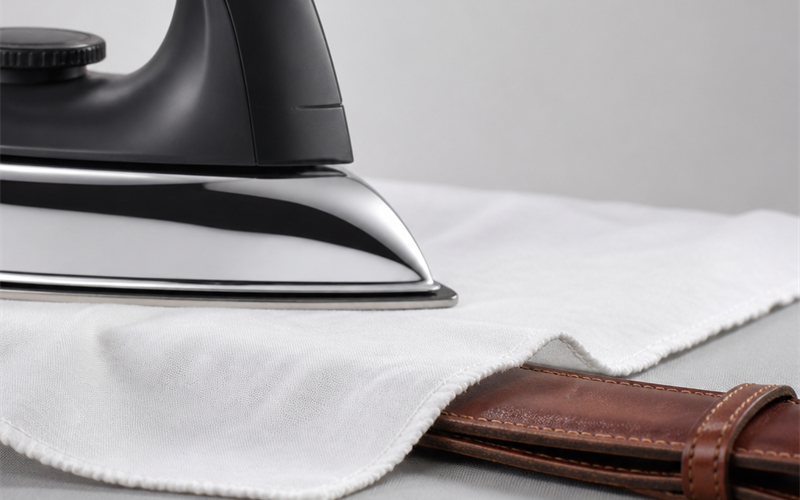
Cautiously, yes. You can use an iron on a leather belt only at the lowest heat setting, with no steam, and always with a cloth or towel between the iron and the leather. Press briefly and check often. Without these precautions, the iron will scorch, glaze, or dry out the leather permanently. Even done carefully, it carries risk.

The danger is direct heat on a material that hates it. Leather is kept supple by oils that high heat drives out, and an iron's surface easily reaches temperatures that scorch and shine leather instantly. The cloth barrier is non-negotiable — it diffuses the heat and prevents direct contact. Steam is also off-limits, because forcing moisture into the leather causes the warping and stiffening that ruins soaked belts. If you proceed, go in short, light presses on the lowest setting, lifting frequently to check. Honestly, for most people the safer methods below are the better call, with the iron as a last resort for stubborn creases.
Why is direct heat so risky for leather?
Because high, direct heat scorches the surface, creates a permanent shiny glaze, and bakes out the oils that keep leather flexible, leaving it dry and prone to cracking. Leather can't recover from a scorch or a heat-glaze the way fabric can be re-washed. The damage is instant and irreversible, which is why caution matters so much.

Key stat: A clothes iron on a medium or high setting easily exceeds the temperature at which leather scorches and permanently glazes — which is why even a few seconds of direct, barrier-free contact can ruin a belt that would have flattened fine under gentle weight.
Heat damage to leather comes in three forms, all permanent:
| Heat damage | What it looks like |
|---|---|
| Scorching | Brown/burnt marks, smell |
| Glazing | Unnatural shiny patches |
| Drying out | Stiff, cracked, dull leather |
None of these can be undone, which is the whole reason to avoid direct heat. This is the same principle behind never heat-drying a soaked belt and never trying to shrink leather with heat. Leather and high heat simply don't mix. If you value the belt, treat the iron as a method of absolute last resort, behind the gentler fixes.
What's the safest way to flatten a creased or curled belt?
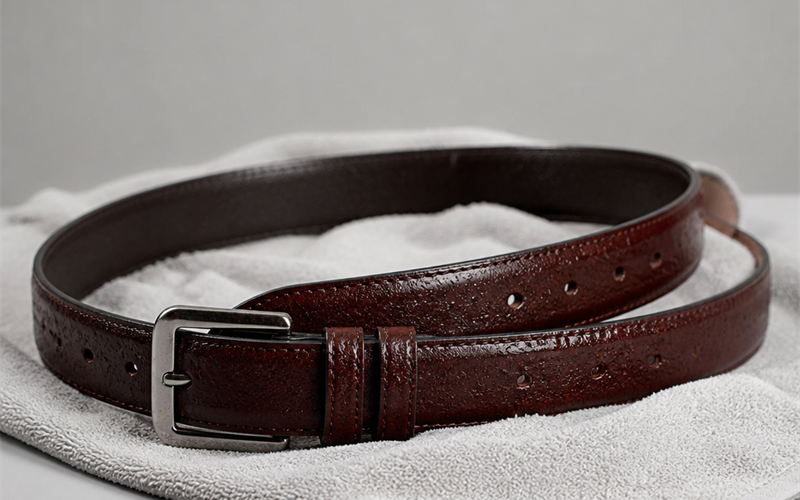
Condition and flatten under weight. Lay the belt flat, apply a light coat of leather conditioner to relax the fibers, then place it under a stack of heavy books or a flat weight for a day or two. This gently straightens creases and curl without any heat. For a coiled belt, hang it straight with a small weight, or roll it the opposite way briefly.

The no-heat approach is both safer and often more effective. Leather brand Andar calls conditioner "one of the best ways to remove wrinkles" from full-grain leather, since its natural oils "rehydrate and soften" the hide "while improving elasticity." Conditioning softens and relaxes the leather so it releases creases more willingly, and steady, even pressure under weight flattens it gradually without risk. Here are the gentle methods, in order of preference:
- Condition, then press flat under heavy books for 24–48 hours.
- Hang the belt straight with a light weight on the end to let gravity decurl it.
- Reverse-roll a curled belt loosely the opposite way for a short time.
- Gentle indirect warmth — a warm (not hot) room helps the leather relax as it sits under weight.
Persistent curl is frequently a sign the leather is dry and needs conditioning, not flattening — see how to keep a leather belt in good condition. A well-conditioned belt holds its shape far better. Proper storage prevents the problem recurring, as covered in the best way to store leather belts.
Why does a quality belt resist creasing better?
Because well-made, full-grain leather has a dense, healthy fiber structure that holds its shape and resists permanent creasing, while thin or bonded leather wrinkles and curls easily. A properly conditioned full-grain belt stays flatter and recovers from temporary creases more readily, so it rarely needs drastic measures like ironing.

Belt quality genuinely affects how much you'll fight creases. Cheap bonded or corrected-grain belts crease, curl, and stay that way because their structure is weak and often glued. A full-grain belt — kept conditioned and stored properly — naturally resists deformation and bounces back from minor creasing. This is part of the durability built into the BELTLEY standard of full-grain leather, a stainless or solid brass buckle, and sealed edges. If your belt curls persistently no matter what, it may simply be low quality, and a better-made one will solve the problem at the source. Explore belts built to hold their shape in our full-grain leather belts collection.
The Bottom Line
You can iron a leather belt, but you shouldn't unless it's a last resort — and only with the lowest heat, no steam, a cloth barrier, and brief presses, because direct heat scorches, glazes, and dries leather permanently and instantly. For nearly every crease or curl, the safer route wins: condition the leather and flatten it under weight, hang it straight, or reverse-roll it gently, no heat required. Persistent curl usually means the belt is dry and needs conditioning, and a quality full-grain belt resists creasing in the first place. Keep yours supple with our leather care guide and explore shape-holding options in our full-grain leather belts collection.
Frequently Asked Questions
Q: Can you iron a leather belt to remove creases?
Only with extreme care: lowest heat, no steam, and always a cloth or towel between the iron and the leather, pressing briefly. Direct or high heat scorches, glazes, and dries leather permanently. For most creases, conditioning and flattening under weight is safer and usually more effective than ironing.
Q: How do you get creases out of leather without an iron?
Apply a light coat of conditioner to relax the fibers, then lay the belt flat under a stack of heavy books for a day or two. For curl, hang the belt straight with a light weight, or reverse-roll it loosely. These no-heat methods straighten leather safely.
Q: Why does my leather belt keep curling?
Persistent curling often means the leather is dry and needs conditioning, or that the belt is thin or low-quality leather that doesn't hold its shape. Conditioning, flattening under weight, and proper flat storage help. A well-made full-grain belt resists curling far better than a bonded one.
Q: Will ironing damage a leather belt?
It can, easily. A medium or high iron quickly exceeds the temperature at which leather scorches and permanently glazes, and even brief direct contact without a cloth barrier can ruin a belt. If you iron at all, use the lowest heat with a cloth barrier — or better, use a no-heat method.