Can You Shrink a Leather Belt That's Too Big?
Quick answer: You can't reliably shrink a leather belt without risking damage — heat and water "shrinking" methods distort, harden, and crack leather unevenly. The right way to make a too-big belt smaller is mechanical: add extra holes for a too-long tail, or trim and re-set the buckle end to remove length. For a belt that's far too big, resizing by a leatherworker (or buying the correct size) is the real solution.
Last updated: June 2026 • By BELTLEY Editorial
TL;DR:
- Don't heat- or water-shrink leather — it distorts, hardens, and cracks unevenly.
- A too-long tail: add extra holes (easy) for a better fit.
- Too much length: trim the buckle end and re-set the buckle to remove inches.
- Far too big: have it professionally resized, or get the correct size.
You inherited a belt, ordered the wrong size, or lost some weight, and now your leather belt is too big. The internet suggests "shrinking" it with heat or water — but with leather, that's a recipe for ruin. The good news is there are proper ways to make a belt smaller that don't gamble with the material. This guide explains why shrinking fails and what actually works. For getting sizing right from the start, see how do I know what size men's belt to buy.

Can you actually shrink a leather belt?
Not safely. Leather doesn't shrink in a controlled, even way — applying heat or water to shrink it distorts the shape, hardens and cracks the fibers, and discolors the surface unpredictably. Any size you gain comes with damage you can't undo. Shrinking is not a reliable method; mechanical resizing is the correct approach.

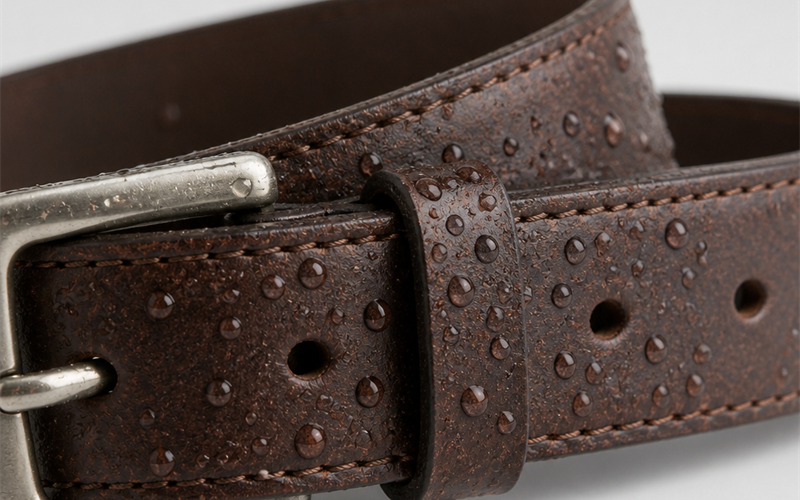
Here's why the "shrink it" advice is wrong for leather. Water swells leather and then, as it dries (especially with heat), the fibers seize up hard and brittle and the belt warps — the same destructive process behind ruined soaked belts. There's no way to make that shrinkage uniform along a belt's length, so you'd get a hardened, misshapen strap rather than a smaller well-fitting one. As leather maker NAB Leather states plainly, "leather belts will not shrink over time and there is no way to shorten the belt except by cutting it." Genuine leather is meant to be kept supple, not deliberately stiffened. Unlike rawhide, which hardens by design, finished belt leather doesn't tolerate shrink attempts. Spare your belt the risk and resize it mechanically instead.
Why does heat or water shrinking ruin leather?
Because heat and water strip the leather's oils and force the fibers to contract unevenly, leaving the belt hard, cracked, warped, and discolored. Tanned leather is processed to stay flexible and water-resistant, so deliberately soaking and heat-drying it works against everything that keeps it supple, causing permanent, irreversible damage.

Key stat: Unlike rawhide, which is untanned hide that hardens dramatically as it dries, finished belt leather is tanned specifically to stay supple — so the shrink-by-drying trick that "works" on rawhide only ruins a proper leather belt.
The distinction with rawhide is instructive. Rawhide is untanned hide that hardens and shrinks when dried — that's its nature. But your belt is tanned leather, processed precisely so it won't do that. Forcing it to shrink reverses the tanning's benefits and leaves you with a stiff, damaged belt. Here's the reality of each approach:
| Method | Result |
|---|---|
| Heat/oven "shrinking" | Cracks, hardens, warps |
| Soak-and-dry shrinking | Stiff, misshapen, discolored |
| Adding holes | Clean, easy, safe |
| Trimming + re-setting buckle | Removes length properly |
| Professional resizing | Best for big size gaps |
The safe options all work with the leather rather than against it. Whatever you do, keep heat and soaking away from a belt you want to keep wearing — the principle behind all good leather care.
What actually works to make a too-big belt smaller?
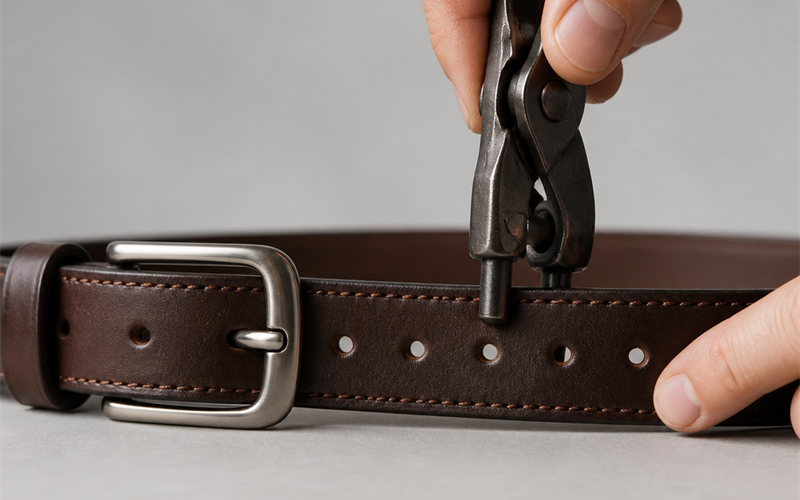
Mechanical adjustment. If the belt is only a little big (the tail is too long), add one or more holes for a tighter fit. If there's too much length overall, trim the excess from the buckle end and re-attach the buckle. For a belt that's several sizes too big, have a leatherworker resize it properly. These methods remove length without harming the leather.

The right fix depends on how much too big the belt is. For a slightly long tail, adding a hole or two is quick and safe — our guide on adding a hole to a leather belt walks through it. For genuine excess length, the proper move is to trim from the buckle (not the tip) end and re-set the buckle, which preserves the holes and tip while removing inches — covered in how to cut down a belt that's too long. For a belt that's several sizes off, a leatherworker can resize it cleanly, though at that point buying the correct size is often simpler and cheaper. None of these gamble with the leather.
When should you resize versus just buy the right size?
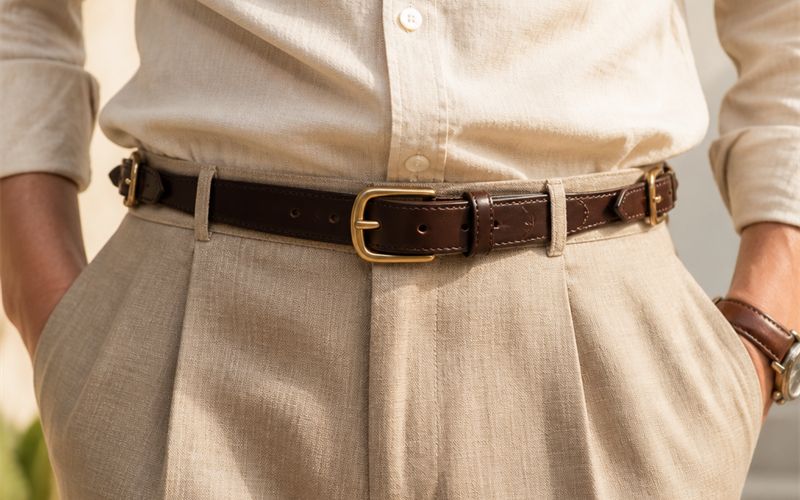
Resize when the belt is only slightly too big or is sentimental, valuable, or otherwise worth keeping. Buy the right size when the belt is several sizes off, low quality, or when resizing would cost nearly as much as a new belt. A correctly sized belt fastens comfortably on the middle hole — that's the target either way.

The decision is practical. Adding holes or trimming a beloved or high-quality belt is well worth it; extensively resizing a cheap belt usually isn't. The goal in every case is a belt that lands on the middle of its holes at a comfortable tension, as explained in which belt hole should you use. If you're constantly fighting sizing, it may be time for a belt bought to your actual measurement — and a quality full-grain belt sized right will outlast several cheap ones. Our size guide helps you get it right, and our men's belts collection covers the full range.
The Bottom Line
You can't safely shrink a leather belt — heat and water "shrinking" only distort, harden, crack, and discolor it, because tanned leather is made to stay supple, not contract. To make a too-big belt smaller, work mechanically: add holes for a long tail, trim the buckle end and re-set the buckle to remove real length, or have a leatherworker resize a belt that's far too big. For big size gaps, buying the correct size is often the smarter move. A quality belt sized right fastens comfortably on the middle hole and lasts for years. Get your fit right with our size guide and explore the range in our men's belts collection.
Frequently Asked Questions
Q: Can you shrink a leather belt with water or heat?
No — not safely. Soaking and heat-drying leather makes the fibers contract unevenly, leaving the belt hard, cracked, warped, and discolored, with permanent damage. Tanned leather is processed to stay supple, so shrink attempts reverse that and ruin the belt. Resize mechanically instead.
Q: How do you make a leather belt smaller?
For a slightly too-long tail, add one or more holes. For too much overall length, trim the excess from the buckle end and re-attach the buckle, which preserves the holes and tip. For a belt several sizes too big, have a leatherworker resize it — or buy the correct size.
Q: Should I cut a belt from the buckle end or the tip?
Remove length from the buckle end, not the pointed tip. Trimming the buckle end and re-setting the buckle keeps the holes and finished tip intact while shortening the belt. Cutting the tip would leave a raw, unfinished, holeless end and ruin the belt's proportions.
Q: Is it worth resizing a leather belt or buying a new one?
Resize a belt that's only slightly too big, sentimental, or high quality — adding holes or trimming is cheap and effective. Buy the correct size if the belt is several sizes off, low quality, or if resizing costs nearly as much as a new one. A quality belt sized right is well worth keeping.