Can You Waterproof a Leather Belt? What Actually Works
Quick answer: You can't make a leather belt fully waterproof, but you can make it significantly more water-resistant. Conditioning products like beeswax-based waxes, mink oil, and dedicated leather waterproofing sprays add a protective barrier that repels water and reduces staining. They don't make leather impervious, and some darken it, so treat water resistance as protection, not immunity, and keep up regular care.
Last updated: June 2026 • By BELTLEY Editorial
TL;DR:
- Leather can't be made fully waterproof, only more water-resistant.
- Beeswax waxes, mink oil, and leather sprays add a repellent barrier.
- Some treatments darken leather — test a hidden spot first.
- Reapply regularly; water resistance wears off and isn't permanent immunity.
Leather and water have a complicated relationship: tanning makes leather water-resistant, but never waterproof, and a real soaking can still ruin a belt. So the question of whether you can "waterproof" a belt is really about how much extra protection you can add. This guide covers what actually works, what to avoid, and how to keep a belt safer in the rain. For the broader care routine, see our leather care guide.

Can you make a leather belt waterproof?
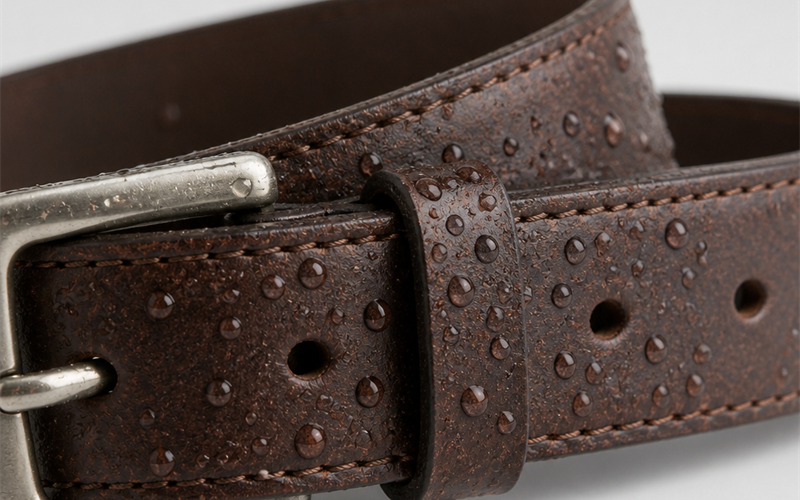
Not fully, but you can make it much more water-resistant. No treatment makes leather truly impervious to water, but waxes, oils, and waterproofing sprays add a barrier that repels water, slows absorption, and reduces staining. Think of it as raising the belt's defenses against rain and splashes, not making it immune to soaking.

The distinction matters. Waterproofing means making something "relatively unaffected by water," and for leather that means resistance, not a total seal. The tanning process already gives leather baseline water resistance; treatments boost it further by coating and conditioning the fibers so water beads and rolls off rather than soaking in. But push enough water at any leather long enough and it will eventually penetrate. So a "waterproofed" belt handles rain, spills, and humidity far better — but you should still avoid submerging it. Used realistically, water-resistance treatments meaningfully protect a belt; used as a license to ignore water, they'll disappoint.
What products waterproof a leather belt?
Three main options: beeswax-based leather waxes (strong protection, can darken), mink oil (conditions and water-resists, also darkens), and dedicated leather waterproofing sprays (lighter barrier, less color change). Each adds water repellency; the right choice depends on how much protection you want and whether darkening is acceptable.

Key stat: Many of the best leather waterproofers — beeswax and mink oil — work by filling the leather's surface pores with water-repellent fats, which is exactly why they also tend to darken the leather a shade or two as they're absorbed.
Here's how the main options compare:
| Product | Protection | Color effect | Best for |
|---|---|---|---|
| Beeswax wax | High | Darkens | Rugged, casual belts |
| Mink oil | Medium-high | Darkens | Conditioning + water resist |
| Leather spray | Medium | Minimal | Dress belts, color-sensitive |
| Saddle soap | Low (cleans/conditions) | Slight | Routine care |
Mink oil is widely used "for treating, conditioning and preserving nearly any type of leather," adding water resistance as it conditions — but like beeswax, it darkens leather, so it suits rugged belts more than light dress ones. Menswear resource Put This On found the same in side-by-side testing: paste waxes "did the best jobs of proofing the leather against water," but several products had "a significant darkening effect" once absorbed. Sprays are the choice when you want protection without much color change. Whatever you pick, always test on a hidden area first (the strap behind the buckle), and avoid over-applying, which can leave leather greasy or over-darkened.
How do you waterproof a leather belt step by step?
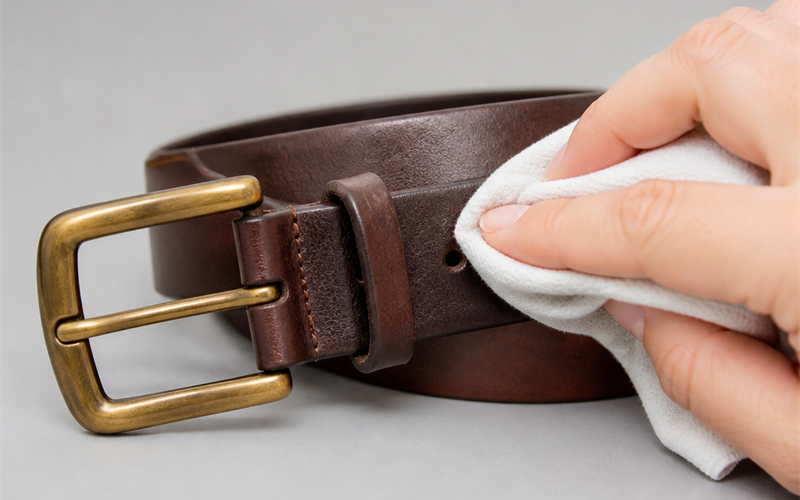
Clean it, apply the product thinly, let it absorb, then buff. First wipe the belt clean and let it dry. Apply a thin, even coat of your chosen wax, oil, or spray with a soft cloth, working it into the surface and edges. Let it absorb fully (longer for waxes and oils), then buff off any excess. Reapply periodically as the protection wears.

The method is simple but worth doing properly. Start clean, because sealing dirt in is counterproductive. Apply sparingly — thin coats absorb and protect; thick coats sit greasy on the surface. Pay attention to the edges and back, where water often gets in. Allow proper absorption time, then buff to an even finish. Crucially, this isn't a one-time job: water resistance gradually wears off with use, so reapply every so often, especially before wet seasons. This dovetails with regular conditioning, since many waterproofers condition too — see how to keep a leather belt in good condition. For belts that face frequent wet weather, this routine genuinely extends their life.
What should you avoid when waterproofing leather?
Avoid over-applying products, using unsuitable household oils, and treating waterproofing as permanent immunity. Don't drown the leather in wax or oil (it goes greasy and over-dark), don't use cooking oils or random substances (they can go rancid or stain), and don't assume a treated belt can be soaked. Also avoid heat to "set" any product.

The common mistakes all stem from overdoing it or using the wrong thing. A thin coat of a proper leather product protects; a heavy slather of mystery oil ruins. Steer clear of olive or vegetable oils, which can turn rancid in the leather, and never use heat to speed absorption. And remember the core truth: even a well-treated belt isn't soak-proof. If it does get drenched, fall back on the slow air-dry-and-condition recovery in our guide on drying a soaked leather belt. Quality leather treated sensibly handles weather well; the BELTLEY standard of full-grain leather with sealed (painted or burnished) edges already resists moisture better than bonded leather, and a periodic water-resist treatment builds on that.
The Bottom Line
You can't make a leather belt truly waterproof, but you can make it meaningfully water-resistant with beeswax waxes, mink oil, or a dedicated leather spray — each adding a repellent barrier that fends off rain, spills, and humidity. Apply thinly to clean leather, test for darkening first, and reapply periodically, because the protection wears off and never amounts to soak-proof immunity. Combined with quality full-grain leather and sealed edges, sensible water-resistance treatment keeps a belt looking good through wet weather. Keep yours protected with our leather care guide and explore moisture-resistant, well-built options in our full-grain leather belts collection.
Frequently Asked Questions
Q: Can a leather belt be made fully waterproof?
No. No treatment makes leather truly impervious to water — you can only make it more water-resistant. Waxes, oils, and sprays add a barrier that repels water and slows absorption, but enough water will eventually penetrate. Treat a "waterproofed" belt as well-protected, not soak-proof.
Q: Does mink oil waterproof a leather belt?
Mink oil increases water resistance while conditioning the leather, making it a popular dual-purpose treatment. It's not a permanent waterproof seal, and it darkens leather, so it suits rugged belts more than light dress ones. Apply thinly, test a hidden spot first, and reapply periodically.
Q: Will waterproofing darken my leather belt?
Often, yes. Beeswax waxes and mink oil fill the leather's pores with water-repellent fats, which tends to darken the leather a shade or two. Dedicated leather sprays usually cause less color change. Always test any product on a hidden area, like the strap behind the buckle, before treating the whole belt.
Q: How often should you waterproof a leather belt?
Reapply whenever the water resistance fades — typically every few months with regular wear, or before a wet season. Water beading that stops happening is your cue. Since many waterproofers also condition, this fits naturally into your routine leather care rather than being a separate chore.