How to Safely Soften a Stiff Leather Belt
Quick answer: To safely soften a stiff leather belt, condition it and flex it — slowly. Apply a thin coat of quality leather conditioner with a soft cloth, let it absorb, then gently flex and roll the belt back and forth to work the fibers loose. Repeat over a few days rather than all at once. Avoid heat, water-soaking, and harsh oils, which can over-soften, darken, or weaken the leather permanently.
Last updated: June 2026 • By BELTLEY Editorial
TL;DR:
- Soften with conditioner + gentle flexing, repeated over several days.
- Apply conditioner thinly, let it absorb, then roll and flex the belt.
- Avoid heat, soaking, and heavy oils — they over-soften, darken, or weaken leather.
- Some stiffness is good — a quality belt should stay firm enough to hold trousers.
A brand-new full-grain belt or a thick double-layer strap can feel stiff as a board at first, and a stiff belt is harder to thread and less comfortable until it relaxes. The good news is that genuine leather softens naturally with use, and you can speed it along safely. The bad news is that the internet is full of leather-wrecking shortcuts. This guide covers the safe method, the mistakes to avoid, and why you don't actually want a belt to go fully limp. For first-wear prep, see our guide to how to break in a stiff full-grain leather belt.

How do you soften a stiff leather belt safely?
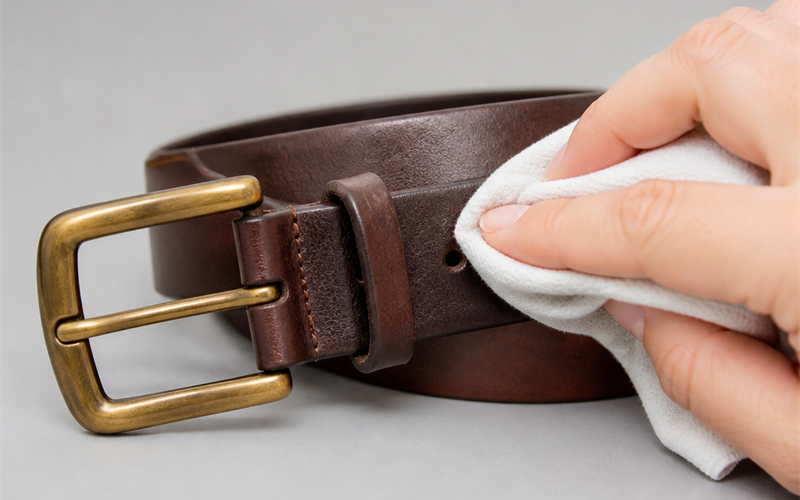
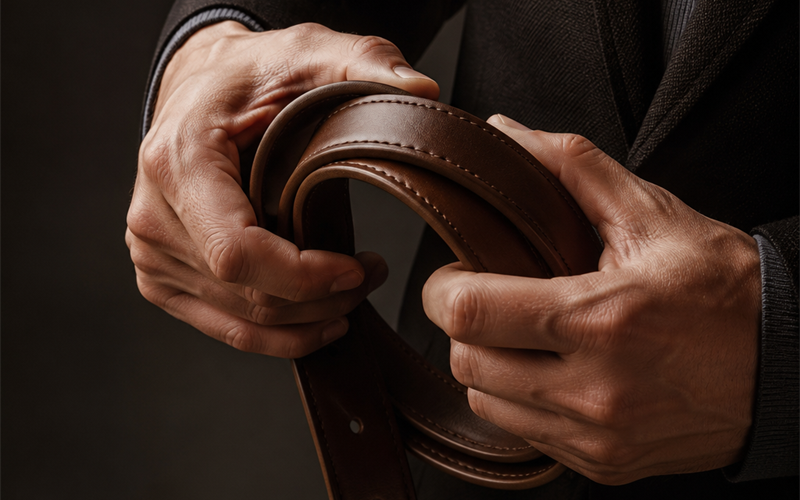
Condition and flex it gradually. Wipe the belt clean, apply a thin layer of quality leather conditioner with a soft cloth, and let it absorb for a few hours. Then gently flex, bend, and roll the belt along its length to loosen the fibers. Repeat the condition-and-flex cycle over several days. The leather softens steadily without being shocked or over-treated.

Slow and steady is the safe path. Conditioning replenishes the oils that make leather pliable, and flexing physically works the stiff fibers loose — together they soften a belt the way natural wear does, just faster. The reference on leather tanning explains that leather's character comes from how the hide's fibers are treated and bound; softening is about gently relaxing those fibers, not breaking them. Apply conditioner thinly — a little absorbs and works; a lot just sits on the surface or over-softens. Between applications, simply wearing the belt does much of the job, which is why a few days of normal use plus light conditioning usually does it.
What should you avoid when softening leather?
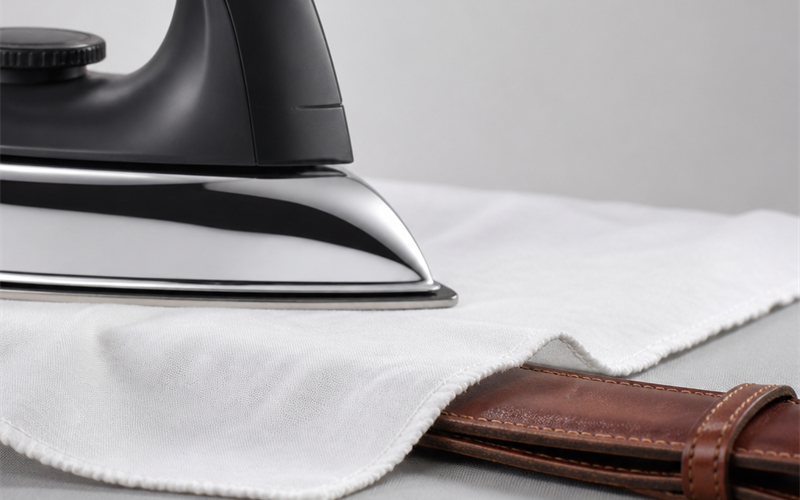
Avoid heat, soaking in water, and heavy or unsuitable oils. Hairdryers, ovens, and hot water can dry, shrink, or crack leather; soaking warps it; and dousing it in mink oil, olive oil, or other heavy oils can over-soften, darken, weaken, or go rancid in the leather. These shortcuts trade stiffness for permanent damage. Stick to proper leather conditioner used sparingly.

Key stat: Over-oiling is a one-way mistake — saturating leather with heavy oils can permanently weaken the fibers and darken the color, and unlike under-conditioning, it cannot be reversed, which is why thin, gradual application always beats a heavy soak.
The dangerous "hacks" all promise fast results and deliver regret. Here's what to skip and why:
| Avoid | Why it harms leather |
|---|---|
| Heat (hairdryer, oven) | Dries, shrinks, cracks |
| Soaking in water | Warps, stiffens as it dries |
| Mink/neatsfoot in excess | Over-softens, darkens, weakens |
| Olive/cooking oils | Can go rancid, attract grime |
| Aggressive bending | Cracks the grain |
Leather brand Steel Horse Leather warns of exactly this: "over-conditioning saturates the fibers, weakens the structure, and creates a greasy leather surface that attracts dirt," while dry heat "is one of the fastest ways to crack and permanently damage leather." The throughline is that leather rewards gentleness and punishes shortcuts — the same lesson behind preventing cracking. Use a conditioner made for leather, apply it thinly, and let time and wear do the rest. There's no safe way to rush a belt to softness in an hour.
Why is some stiffness in a belt actually good?
Because a belt's job is to hold your trousers and keep its shape, and a fully limp belt does that poorly — it sags, twists, and looks sloppy. Quality full-grain and thick leather start firm precisely because that firmness signals strength and longevity. You want a belt that relaxes to comfortable, not one softened into a floppy, weakened strap.

A little firmness is a feature, not a flaw. The stiffness of a new full-grain belt reflects dense, healthy fibers — the same fibers that give the belt its decades-long lifespan. Over-softening to remove all firmness undermines that strength and leaves a belt that won't hold its line. The goal is a belt that has relaxed enough to be comfortable and easy to thread, while staying firm enough to do its job. This is exactly why a quality belt is built to the BELTLEY standard of full-grain leather, a stainless or solid brass buckle, and sealed edges — it breaks in to supple-but-supportive, not floppy. If you want a belt that's soft from day one, choose a softer leather like deerskin or a thinner dress belt rather than over-conditioning a heavy-duty one. Our full-grain leather belts are made to relax into comfort while keeping their backbone.
How long does it take to soften a leather belt?
A few days to a couple of weeks of normal wear, with periodic conditioning. Genuine leather softens fastest through regular use, as your movement flexes the fibers naturally, and conditioning accelerates it. Thick full-grain and double-layer belts take longer than thin dress belts. There's no safe instant method — patience is part of the process.

Time is your best tool because it works the leather evenly and gently. Most belts loosen noticeably within the first week or two of wear, especially with a light conditioning at the start. Thicker, heavier-duty belts naturally take longer to relax, which is normal and worth the wait for the durability they offer. Resist the urge to force it; the slow route preserves the leather's strength. If a belt still feels stiff after a couple of weeks of wear and a couple of light conditionings, give it more time rather than more oil. For the full first-wear routine, our guide on breaking in a stiff full-grain belt walks through it step by step.
The Bottom Line
Softening a stiff leather belt is a patience game: condition it thinly, flex and roll it gently, and repeat over several days while you wear it in. Steer clear of the destructive shortcuts — heat, water-soaking, and heavy oils — which trade temporary softness for permanent damage. And remember that a little firmness is a good thing: you want a belt that relaxes to comfortable while still holding your trousers and its shape, not one softened into a weak, floppy strap. A quality full-grain belt is engineered to break in exactly that way. Find belts built to relax into supple-but-supportive comfort in our full-grain leather belts collection, and keep them healthy with our leather care guide.
Frequently Asked Questions
Q: What's the best way to soften a new leather belt?
Condition it thinly with a quality leather conditioner, let it absorb, then gently flex and roll the belt to loosen the fibers — and wear it. Repeat over several days. Regular wear does most of the work naturally; conditioning speeds it along. Avoid heat, soaking, and heavy oils.
Q: Can I use oil to soften a leather belt?
Use only proper leather conditioner, applied sparingly. Heavy oils like mink oil or olive oil used in excess can over-soften, darken, weaken, or even go rancid in the leather, and the damage can't be undone. Thin, gradual conditioning is safe; soaking the belt in oil is not.
Q: Why is my new leather belt so stiff?
Because quality full-grain and thick leather start firm — that stiffness reflects dense, strong fibers and signals durability. It's normal and temporary. The belt softens to a comfortable suppleness within a week or two of wear, especially with a light conditioning, while keeping enough firmness to hold its shape.
Q: Can you soften a leather belt too much?
Yes. Over-conditioning or soaking in heavy oils can make a belt floppy, darken its color, and permanently weaken the fibers — and that can't be reversed. You want a belt that's supple and comfortable but still firm enough to hold your trousers and keep its line, not one softened into a weak strap.