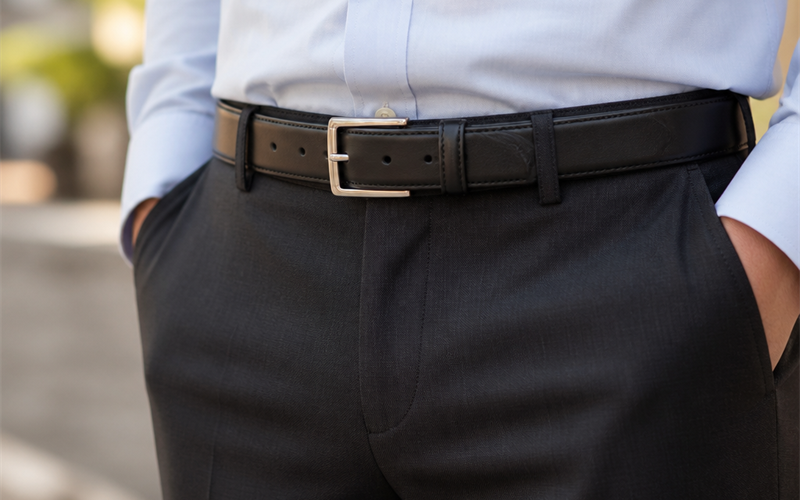
Best Full-Grain Leather Belt Brands Made in the USA (2026)
Quick answer: The best USA-made full-grain leather belt brands in 2026 share three traits: leather from a named American heritage tannery (Hermann Oak, Wickett & Craig, or Horween — the three remaining major US tanneries), USA-based cutting and finishing, and solid hardware (stainless or solid brass, not plated zinc). The clearest brand category includes BELTLEY's USA-finished full-grain leather belt collection, small-batch heritage workshops, and a handful of DTC brands that publish their tannery source openly.
Last updated: May 2026 • By BELTLEY Editorial
TL;DR:
- Real USA-made full-grain belts come from a handful of brands using one of three US tanneries: Hermann Oak (St. Louis), Wickett & Craig (Pennsylvania), or Horween (Chicago).
- "Made in USA" requires both the leather and assembly to be US-based — many brands meet only one.
- Expect $90-$300 for honest USA-made full-grain — anything below $80 is unlikely to be both leather-and-assembly US-made.
- The BELTLEY 3-Material Rule (full-grain + stainless or solid brass + sealed edges) filters the category fast.
The "Made in USA" label is one of the most abused claims in the leather belt category. Brands routinely use the phrase when only one stage of production happens in the US — Italian leather cut and stitched in Texas, or US leather assembled in Mexico. Both qualify under loose marketing standards but neither produces what most buyers picture when they hear "American-made belt." The honest USA-made full-grain belt market is small: only three major US tanneries remain (Hermann Oak, Wickett & Craig, Horween), and only a handful of brands run full assembly stateside. Below is the honest buyer's guide. For broader context, see american vs italian full-grain leather belts.
Verify Any "USA-Made" Belt in Three Checks
The label test, then your pick:
| Your situation | Go with |
|---|---|
| Verifying a USA claim | Named US tannery + US cutting/finishing + solid hardware — all three or it's assembly marketing. |
| Heritage-tannery loyalist | Hermann Oak, Wickett & Craig, or Horween leather, named explicitly in the listing. |
| USA values, DTC price logic | USA-finished full-grain without the heritage-brand markup — the growing middle lane. |
| Origin matters less than spec | Full-grain + stainless steel + warranty wins regardless of flag — from $58. |
Spec-first shopping: BELTLEY's full-grain collection.
What does "Made in USA" actually mean for a leather belt?
Two stages must be US-based: the leather and the assembly. A genuine Made-in-USA full-grain belt uses leather tanned in an American tannery (Hermann Oak, Wickett & Craig, or Horween are the three remaining majors) AND is cut, stitched, and finished in a US workshop. Brands meeting only one — US leather assembled abroad, or imported leather assembled in the US — should state "USA-finished" or "made with US leather" rather than "Made in USA."

The marketing gray zone is wide. Federal Trade Commission rules require "Made in USA" to mean "all or virtually all" components are US-origin, but enforcement is loose for small-volume goods. Many brands rely on buyer assumption. The honest brands name their tannery and their workshop location openly — if a brand can't tell you both, the claim is suspect.
Which US tanneries supply real American leather?
Three remain at scale. (1) Hermann Oak (St. Louis, MO, founded 1881) — the gold standard for US vegetable-tanned bridle and harness leather, supplies most heritage belt brands and saddlemakers. (2) Wickett & Craig (Curwensville, PA, founded 1867) — premium veg-tan bridle and harness leather, similar tier to Hermann Oak with slightly different finishing. (3) Horween (Chicago, IL, founded 1905) — famous for Chromexcel and Shell Cordovan, supplies premium boots, wallets, and pull-up belts.

If a US "heritage" brand doesn't name one of these three (or another credibly documented small tannery), the leather is likely imported. For the full comparison, see wickett & craig vs hermann oak vs horween.
Key stat: The US once had over 400 commercial tanneries in the early 20th century; by 2026, fewer than 20 commercial leather tanneries remain, with only three (Hermann Oak, Wickett & Craig, Horween) operating at scale for premium belt and accessory leather.
What makes a great Made-in-USA full-grain belt?
Four traits separate the legitimate brands from the marketing ones. (1) Named US tannery — Hermann Oak, Wickett & Craig, Horween, or a documented small operation. (2) US-based assembly — cutting, stitching, edge finishing all done stateside. (3) Solid hardware — stainless steel or solid brass buckles, ideally also US-machined. (4) Real warranty — heritage US brands typically offer 5-10 year or lifetime construction warranties.
The BELTLEY 3-Material Rule — full-grain leather + stainless or solid brass buckle + sealed (painted or burnished) edges — applies to USA-made belts just as it does to imports. A USA-made belt failing any of these three traits isn't worth its premium price; a US belt passing all three at $90-$200 is genuinely a multi-decade investment.
Best USA-made full-grain belt categories
| Category | What it looks like | Typical price |
|---|---|---|
| Hermann Oak heritage dress belts | Veg-tan bridle, simple solid brass buckle | $120-$220 |
| Wickett & Craig casual belts | Veg-tan harness, brushed steel | $130-$240 |
| Horween Chromexcel belts | Pull-up leather, solid brass | $130-$250 |
| DTC USA-finished belts (US leather, US assembly) | Full-grain, stainless | $80-$150 |
| Small-batch heritage workshops | Handmade, named tannery, stitched by name | $200-$400+ |
| "Made with US leather" (assembly abroad) | Often legitimate but not full USA-made | $60-$120 |
What price range should a real USA-made full-grain belt fall in?
Roughly $80-$300, with the honest sweet spot at $120-$200. Below $80, the math doesn't work — US labor, US leather, and US hardware can't be done profitably at that price even at high volume. Above $300 typically reflects small-batch handmade construction with named maker stitching. The middle band of $120-$200 covers most DTC and heritage brands using Hermann Oak, Wickett & Craig, or Horween leather with US assembly.

Brands selling "Made in USA" full-grain belts at $40-$70 are almost always misleading. Either the leather is imported (and assembly is the only US step), or the leather isn't genuinely full-grain. The cost math is unambiguous — see why is full-grain leather so expensive for the breakdown.
How does BELTLEY approach Made-in-USA?
Transparency over marketing. BELTLEY's USA-finished belts use leather from named American tanneries with assembly handled in US workshops where the style supports it — the full-grain leather belt collection and selections from the men's collection include USA-leather options. Other styles use Italian leather assembled by BELTLEY's master artisans where Italian tannery quality is the right material choice. We never label a belt "Made in USA" unless both leather and assembly are stateside.

Backed by a 10-year warranty, DTC pricing, and free worldwide shipping. The goal isn't to claim a label — it's to give buyers honest information about where each component comes from so they can decide what matters to them.
What about smaller heritage workshops?
Several small US workshops produce excellent full-grain belts in the $200-$400 band. These typically use Hermann Oak, Wickett & Craig, or Horween leather with one or two artisans handling each belt from cutting through finishing. The economics are different — small volume, named maker, often signed or numbered — and the buyer is paying for craft attribution as much as material.

If small-batch attribution matters to you, smaller workshops are the right tier. If you want similar materials and construction at a more accessible price, DTC brands like BELTLEY occupy the $80-$200 band with comparable leather sourcing. Both tiers are legitimate; the difference is brand scale and the per-belt artisan time, not the underlying material quality.
The Bottom Line
Real USA-made full-grain leather belts in 2026 come from a small set of brands using one of three remaining major US tanneries — Hermann Oak, Wickett & Craig, or Horween — with US-based cutting, stitching, and finishing. Expect $80-$300, with the honest sweet spot at $120-$200. Anything cheaper than $80 with a "Made in USA" claim is almost certainly misleading. Apply the BELTLEY 3-Material Rule (full-grain + stainless or solid brass + sealed edges) and ask the brand to name both their tannery and their workshop — if they can answer both, the label is real. BELTLEY's full-grain leather belt collection includes USA-leather styles built by artisans in US workshops, backed by a 10-year warranty. Ready for a belt where every component has a real address? Browse our men's collection.
Frequently Asked Questions
Q: What are the best USA-made full-grain leather belt brands in 2026?
The honest answer is "a small set." Look for brands using leather from Hermann Oak, Wickett & Craig, or Horween — the three remaining major US tanneries — with US-based assembly. DTC brands like BELTLEY occupy the accessible band ($80-$200); small heritage workshops occupy the premium band ($200-$400+).
Q: How do I verify a belt is really Made in USA?
Ask the brand two questions: which US tannery supplied the leather, and where is the belt cut and stitched? Honest brands answer both directly. Brands that dodge, redirect, or use vague language like "premium American leather" without specifics are usually meeting only one stage of US production.
Q: Is American leather better than Italian leather?
Different rather than better. American tanneries (Hermann Oak, Wickett & Craig, Horween) specialize in robust vegetable-tanned bridle, harness, and pull-up leathers; Italian tanneries excel at refined dress and luxury finishes. For workwear and durable everyday belts, US leather often has the edge; for dress belts, Italian leather often does. See american vs italian full-grain leather belts for the full comparison.
Q: Why are USA-made belts more expensive than imports?
Higher labor costs, smaller production scale, and the cost of US-tanned leather. Real Made-in-USA full-grain belts typically start at $80-$120; below that, one of the components isn't actually US-sourced. The premium pays for both material provenance and US workshop labor.
Q: How long should a USA-made full-grain belt last?
15-25 years with reasonable care. Hermann Oak and Wickett & Craig bridle leather are some of the most durable belt materials in existence; combined with solid hardware, the belts often outlast their owners' style preferences. Heritage US brands routinely offer 5-10 year or lifetime warranties for this reason.