Belt Buckle Pinching Your Stomach When You Sit? Fix It
Quick answer: Your belt buckle pinches your stomach when you sit because sitting expands your waistline by an inch or more and folds your midsection over the buckle, while a raised or bulky buckle has nowhere to go. Fix it by loosening one hole when seated, switching to a low-profile or micro-adjustable (ratchet) buckle, and wearing the belt at your natural waist rather than dug in below the belly.
Last updated: June 2026 • By BELTLEY Editorial
TL;DR:
- Sitting expands your waist by 1–2 inches, so a belt that fits standing pinches when seated.
- A bulky, raised buckle digs into the soft midsection — a low-profile buckle solves most of it.
- Ratchet (micro-adjust) buckles let you loosen a precise notch when you sit down.
- Wearing the belt at your natural waist (not below the belly) stops it folding over the buckle.
You buckle up comfortably standing at the mirror, then sit down at your desk or in the car and the buckle jabs straight into your gut. It's one of the most common belt complaints, and it's not in your head — your body genuinely changes shape when you sit. Your waist circumference grows, your midsection folds forward, and a belt that was perfectly snug now has an inch of extra body pressing against a rigid buckle. The good news is that this is entirely fixable through buckle choice, fit, and positioning. This guide explains the why and gives you a permanent fix. It pairs with our guide to the side effects of wearing a tight belt.

Why does my belt buckle dig into my stomach when I sit?
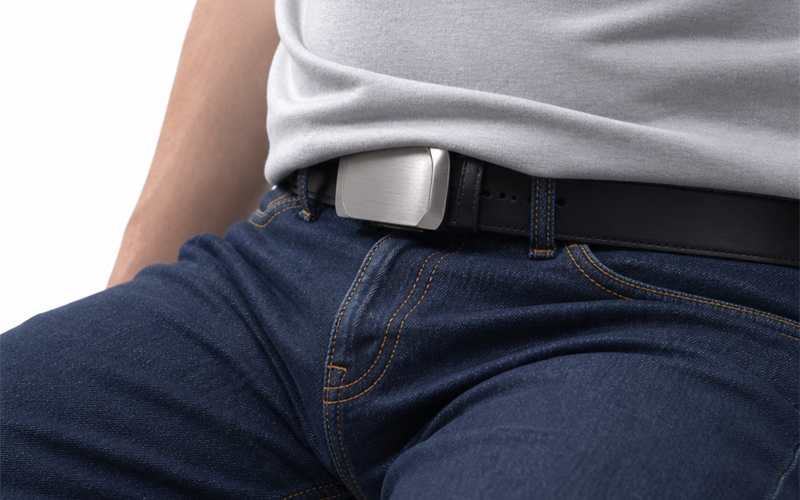
Because sitting expands your waist and folds your midsection over the buckle. When you sit, your abdomen compresses forward and your waistline grows by an inch or more, so the soft tissue presses against the belt. A raised or bulky buckle concentrates that pressure into one hard point — and it digs in.

This is normal body mechanics, not a sign you've sized wrong. The seated posture rotates your pelvis and pushes the belly outward, especially if you carry weight at the midsection. The buckle, being the most rigid and protruding part of the belt, becomes the pressure point. The same fit dynamics appear in our guides on how to wear a belt when you have a belly and how to wear a belt with a big stomach for men.
How do you stop a belt buckle from pinching when sitting?
Three fixes, in order. First, loosen the belt one hole when you'll be seated for a while — the simplest immediate relief, and a habit we cover in should you loosen your belt when sitting for long periods. Second, switch to a low-profile, flatter buckle that doesn't protrude into your stomach. Third, wear the belt at your natural waist instead of cinched below your belly, so the midsection doesn't fold over it.

Key stat: Your waist circumference can increase by 1–2 inches (3–5cm) when you sit down, which is exactly why a belt buckled comfortably while standing suddenly pinches the moment you take a seat.
These fixes target the actual mechanics. Here's how the main solutions compare:
| Fix | Effort | How well it works | Best for |
|---|---|---|---|
| Loosen one hole when seated | Instant | Good short-term | Quick relief anytime |
| Low-profile / flat buckle | Buy once | Very good | Desk workers, drivers |
| Ratchet (micro-adjust) buckle | Buy once | Excellent | Frequent sitting/standing |
| Wear at natural waist | Free | Good | Anyone wearing belt too low |
| Correct belt sizing | Free–buy once | Foundational | Everyone |
Do low-profile or ratchet buckles solve the pinching problem?
Yes — both directly target it. A low-profile buckle sits flatter against your body, so there's no raised edge to dig into your stomach when you fold forward. A ratchet (micro-adjust) buckle is even better: it adjusts in tiny increments instead of fixed holes, letting you loosen exactly one notch when you sit and re-tighten when you stand.

The ratchet system is the standout fix for people who sit and stand frequently. Traditional prong belts jump a full inch between holes, often leaving you choosing between "too tight" and "too loose"; a ratchet track offers many more positions in between, so you can dial in comfort precisely. Explore the ratchet buckle belts for micro-adjust options, or the plaque buckle belts for sleek, low-profile designs that sit flat. (A buckle that's simply too large is its own issue — our belt buckle size guide covers when a buckle is too big.)
Is my belt the wrong size or position?
Often, yes — and both are easy to fix. If you're buckling on the last tight hole just to keep your pants up, the belt is too long or worn too low, forcing it to dig in. Wear the belt at your natural waist where your body is narrowest and most stable, and confirm your belt length is correct so you're buckling near the middle holes, not at the extremes.

Position is underrated. A belt worn low, below the belly, sits exactly where the midsection bulges most when you sit — guaranteeing a pinch. Worn at the natural waist, the belt rests on a more stable, narrower part of your torso and the buckle has room to sit flat. Check your length against the size guide, and see how far a belt should extend past the buckle to confirm you've got the right fit. Menswear primers like Primer Magazine's belt questions guide make the same point about buckling near the middle holes rather than the extremes. A correctly sized full-grain belt with a flat buckle, worn at the right height, ends the pinching for good.
The Bottom Line
A belt buckle pinching your stomach when you sit isn't a fluke — sitting genuinely expands your waist by an inch or two and folds your midsection over the buckle, and a raised or bulky buckle has nowhere to go but into you. The permanent fixes are straightforward: choose a low-profile or micro-adjustable ratchet buckle that sits flat and adjusts precisely, wear the belt at your natural waist instead of below the belly, and make sure your belt is the correct length so you're not cinching on the last hole. BELTLEY builds correctly sized full-grain belts with comfortable, well-profiled hardware — including micro-adjust ratchet options — so sitting down stops being a wince. Find a flatter, smarter fit in the ratchet buckle belts and confirm your size with the size guide.
Frequently Asked Questions
Q: Why does my belt hurt my stomach only when I sit down?
Because sitting expands your waist by an inch or more and pushes your midsection forward against the belt. Standing, the belt fits fine; seated, the soft tissue presses into the rigid buckle. Loosening a hole or using a low-profile buckle relieves it.
Q: What kind of belt buckle is most comfortable for sitting?
A low-profile, flat buckle or a ratchet (micro-adjustable) buckle. The flat profile keeps anything from digging into your stomach, and the ratchet lets you loosen by a tiny increment when seated and re-tighten when you stand — ideal for desk work and driving.
Q: Should I wear my belt looser to avoid pinching?
Slightly looser when seated for long periods helps — aim for about two fingers of room. But the better long-term fix is the right buckle profile and wearing the belt at your natural waist, so you're comfortable both standing and sitting without constantly readjusting.
Q: Does wearing a belt at the natural waist really help?
Yes. Worn at the natural waist — the narrowest, most stable part of your torso — the belt sits above where the belly bulges when you sit, so it's far less likely to fold over and pinch. Worn low below the belly, it sits right in the pressure zone.